In March 2013 EPN carried an item connected with the abandonment of field training at week-long summer schools by the UK’s Open University. After 40 years of geoscientific summer schools connected with courses at Levels-1, -2 and -3 anonymous performance statistics were available for thousands of students who had studied those OU Earth Science courses that offered summer-school experiences in the field, first as compulsory modules (1971-2001) then as an optional element (2002-2011) and finally with no such provision. The March 2013 item compared statistics for the three kinds of provision. It should be noted that the OU once had possibly the world’s largest throughput of degree-level geoscience students for a single higher educational institution.
After 2001, pass rates feel abruptly and significantly; in the Science Foundation Course the rate fell from an annual average of 69 to 54%, and in level-2 Geology from 65 to 55%. This was accompanied by a significant decrease in enrolment in equally and more popular geoscience courses that had never had a summer school element. The second statistical drop was of the order of 30 to 40%. It seemed that residential schools played a vital role in boosting confidence and reinforcing home studies, as well as transferring practical field skills. After further falls in enrolment since summer schools were removed from the curriculum in 2012, the OU is in the process of completely revising its geoscientific courses and attempting to substitute virtual, on-line field and lab ‘experiences’. Time will tell if it ever manages to reach its former level of success and acceptance
So, discovering that The Geological Society of America had surveyed attendees at its Annual Meetings (Petcovic, H.L. et al. 2014. Geoscientists’ perceptions of the value of undergraduate field education. GSA Today, v. 24 (July 2014), p. 4-10) piqued my interest. Almost 90% of those polled agreed that field studies should be a fundamental requirement of undergraduate programmes; very few agreed that becoming an expert geoscientist is possible without field experience. Field courses develop the skills and knowledge specific to ‘doing’ geoscience; teach integration of fundamental concepts and broaden general understanding of them; inculcate cooperation, time management and independent thinking that have broader applications. Fieldwork also has personal and emotional impacts: reinforcing positive attitudes to the subject; creating a geoscientific esprit de corps; helping students recognise their personal strengths and limitations. Then there is the aspect of enhanced employability, highlighted by all categories of respondents.
Set against these somewhat predictable sentiments among geoscientists are the increasing strains posed by cost, time commitment, and liability, as well as the fact that some potential students do not relish outdoor pursuits. Yet overall the broad opinion was that degree programmes should involve at least one field methods course as a requirement, with other non-compulsory opportunities for more advanced field training
Plot the times of peaks in the rates of extinction during the Mesozoic against those of flood basalt outpourings closest in time to the die-offs and a straight line can be plotted through the data. There is sufficiently low deviation between it and the points that any statistician would agree that the degree of fit is very good. Many geoscientists have used this empirical relationship to claim that all Mesozoic mass extinctions, including the three largest (end-Permian, end-Triassic and end-Cretaceous) were caused in some way by massive basaltic volcanism. The fact that the points are almost evenly spaced – roughly every 30 Ma, except for a few gaps – has suggested to some that there is some kind of rhythm connecting the two very different kinds of event.
Major Mesozoic extinctions and flood basalt events (credit: S Drury)
Leaving aside that beguiling periodicity, the hypothesis of a flood-basalt – extinction link has a major weakness. The only likely intermediary is atmospheric, through its composition and/or climate; flood volcanism was probably not violent. Both probably settle down quickly in geological terms. Moreover, flood basalt volcanism is generally short-lived (a few Ma at most) and seems not to be continuous, unlike that at plate margins which is always going on at one or other place. The great basalt piles of Siberia, around the Central Atlantic margins and in Western India are made up of individual thick and extensive flows separated by fossil soils or boles. This suggests that magma blurted out only occasionally, and was separated by long periods of normality; say between 10 and 100 thousand years. Evidence for the duration of major accelerations, either from stratigraphy and palaeontology or from proxies such as peaks and troughs in the isotopic composition of carbon (e.g. EPN Ni life and mass extinction) is that they too occurred swiftly; in a matter of tens of thousand years. Most of the points on the flood-basalt – extinction plot are too imprecise in the time dimension to satisfy a definite relationship. Opinion has swung behind an instantaneous impact hypothesis for the K-P boundary event rather than one involving the Deccan Traps in India, simply because the best dating of the Deccan suggests extinction seems to have occurred when no flows were being erupted, while the thin impact-related layer in sediments the world over is exactly at the point dividing Cretaceous flora and fauna from those of the succeeding Palaeogene.
Yet no such link to an extraterrestrial factor is known to exist for any other major extinctions, so volcanism seems to be ‘the only game in town’ for the rest. Until basalt dating is universally more precise than it has been up to the present the case is ‘not proven’; but, in the manner of the Scottish criminal law, each is a ‘cold case’ which can be reopened. The previous article hardens the evidence for a volcanic driver behind the greatest known extinction at the end of the Permian Period. And in short-order, another of the Big Five seems to have been resolved in the same way. A flood basalt province covering a large area of west and north-west Australia (known as the Kalkarindji large igneous province)has long been known to be of roughly Cambrian age but does it tie in with the earliest Phanerozoic mass extinction at the Lower to Middle Cambrian boundary? New age data suggests that it does at the level of a few hundred thousand years (Jourdan, F. et al. 2014. High-precision dating of the Kalkarindji large igneous province, Australia, and synchrony with the Early-Middle Cambrian (Stage 4-5) extinction. Geology, v. 42, p. 543-546). The Kalkarindji basalts have high sulfur contents and are also associated with widespread breccias that suggest that some of the volcanism was sufficiently explosive to have blasted sulfur-oxygen gases into the stratosphere; a known means of causing rapid and massive climatic cooling as well as increasing oceanic acidity. The magma also passed through late Precambrian sedimentary basins which contain abundant organic-rich shales that later sourced extensive petroleum fields. Their thermal metamorphism could have vented massive amounts of CO2 and methane to result in climatic warming. It may have been volcanically-driven climatic chaos that resulted in the demise of much of the earliest tangible marine fauna on Earth to create also a sudden fall in the oxygen content of the Cambrian ocean basins.
The greatest mass extinction of the Phanerozoic closed the Palaeozoic Era at the end of the Permian, with the loss of perhaps as much as 90% of eukaryote diversity on land and at sea. It was also over very quickly by geological standards, taking a mere 20 thousand years from about 252.18 Ma ago. There is no plausible evidence for an extraterrestrial cause, unlike that for the mass extinction that closed the Mesozoic Era and the age of dinosaurs. Almost all researchers blame one of the largest-ever magmatic events that spilled out the Siberian Traps either through direct means, such as climate change related to CO2, sulfur oxides or atmospheric ash clouds produced by the flood volcanism or indirectly through combustion of coal in strata beneath the thick basalt pile. So far, no proposal has received universal acclaim. The latest proposal relies on two vital and apparently related geochemical observations in rocks around the age of the extinctions (Rothman, D.H. et al. 2014. Methanogenic burst in the end-Permian carbon cycle. Proceedings of the National Academy of the United States, v. 111, p. 5462-5467).
In the run-up to the extinction carbon isotopes in marine Permian sediments from Meishan, China suggest a runaway growth in the amount of inorganic carbon (in carbonate) in the oceans. The C-isotope record from Meishan shows episodes of sudden major change (over ~20 ka) in both the inorganic and organic carbon parts of the oceanic carbon cycle. The timing of both ‘excursions’ from the long-term trend immediately follows a ‘spike’ in the concentration of the element nickel in the Meishan sediments. The Ni almost certainly was contributed by the massive outflow of basalt lavas in Siberia. So, what is the connection?
Some modern members of the prokaryote Archaea that decompose organic matter to produce methane have a metabolism that depends on Ni, one genus being Methanosarcina that converts acetate to methane by a process known as acetoclastic methanogenesis. Methanosarcina acquired this highly efficient metabolic pathway probably though a sideways gene transfer from Bacteria of the class Clostridia; a process now acknowledged as playing a major role in the evolution of many aspects of prokaryote biology, including resistance to drugs among pathogens. Molecular-clock studies of the Methanosarcina genome are consistent with this Archaea appearing at about the time of the Late Permian. A burst of nickel ‘fertilisation’ of the oceans may have resulted in huge production of atmospheric methane. Being a greenhouse gas much more powerful than CO2, methane in such volumes would very rapidly have led to global warming. Before the Siberian Traps began to be erupted nickel would only have been sufficiently abundant to support this kind of methanogen around ocean-floor hydrothermal springs. Spread globally by eruption plumes, nickel throughout the oceans would have allowed Methanosarcina or its like to thrive everywhere with disastrous consequences. Other geochemical processes, such as the oxidation of methane in seawater, would have spread the influence of the biosphere-lithosphere ‘conspiracy’. Methane oxidation would have removed oxygen from the oceans to create anoxia that, in turn, would have encouraged other microorganisms that reduce sulfate ions to sulfide and thereby produce toxic hydrogen sulfide. That gas once in the atmosphere would have parlayed an oceanic ‘kill mechanism’’ into one fatal for land animals.
There is one aspect that puzzles me: the Siberian Traps probably involved many huge lava outpourings every 10 to 100 ka while the magma lasted, as did all other flood basalt events. Why then is the nickel from only such eruption preserved in the Meishan sediments, and if others are known from marine sediments is there evidence for other such methanogen ‘blooms’ in the oceans?
The lithosphere that falls into the mantle at subduction zones must end up somewhere in the deep Earth; the question is, where and what happens to it. There are hints from seismic tomography of the mantle that such slabs penetrate as deep as the boundary between the lowermost mantle and the molten outer core. The lithosphere’s two components, depleted mantle and oceanic crust, are compositionally quite different, being peridotitic and basaltic, so each is likely to be involved different petrological processes. As regards the physics, since seismic activity ceases below a depth of about 700 km neither entity behaves in a brittle fashion in the lower mantle. Such ductile materials might even pile up in the manner of intestines on the lithological equivalent of the abattoir floor; Bowels of the Earth as John Elder had it in his book of the same name.
Sketch of the lower 1000 km of the Earth’s mantle (credit: Williams, Q. 2014. Deep mantle matters. Science, v. 344, p. 800-801)
Pressure would make these recycled components mineralogically different, as indeed a relative light squeeze does in the upper mantle, where cold wet basalts become dry and denser eclogites thereby pulling more lithosphere down Wadati and Benioff’s eponymous zones to drive plate tectonics. Decades old experiments at lower-mantle pressures suggest that mantle minerals recompose from olivine with a dash of pyroxene to a mixture of more pressure-resistant iron-magnesium oxide and perovskite ((Mg,Fe)SiO3). Experiments in the early 21st century, under conditions at depths below 2600 km, revealed that perovskite transforms at the very bottom of the mantle (the D” zone) into layers of magnesium plus iron, silicon and oxygen. This is provisionally known as ‘post-perovskite’. The experiments showed that the transition releases heat. So, should oceanic lithosphere descend to the D” zone, it would receive an energy ‘kick’ and its temperature would increase. Conversely, if D”-zone materials rose to the depth of the perovskite to post-perovskite transition they would become less dense: a possible driver for deep-mantle plumes.
Now a new iron-rich phase stable in the bottom 1000 km of the mantle has emerged from experiments, seeming to result from perovskite undergoing a disproportionation reaction (Zhang, L. And 11 others 2014. Disproportionation of (Mg,Fe)SiO3 perovskite in Earth’s deep mantle. Science, v. 344, p. 877-882). In the same issue of Science other workers using laser-heated diamond anvils have revealed that, despite the huge pressures, basaltic rock may melt at temperatures considerably below the solid mantle’s ambient temperature (Andrault, D. et al. 2014. Melting of subducted basalt at the core-mantle boundary. Science, v. 344, p. 892-895). Both studies help better understand the peculiarities of the deepest mantle that emerge from seismic tomography (Williams, Q. 2014. Deep mantle matters. Science, v. 344, p. 800-801).
Huge blocks with reduced S-wave velocities that rise above the D” zone sit beneath Africa and the Pacific Ocean. There are also smaller zones at the core-mantle boundary (CMB) with shear-wave velocities up to 45% lower than expected. These ultralow-velocity zones (ULVZs) probably coincide with melting of subducted oceanic basalts, but the magma cannot escape by rising as it would soon revert to perovskite. Yet, since ultramafic compositions cannot melt under such high pressures the ULVSs indirectly show that subduction does descend to the CMB. Seismically defined horizontal layering in the D” zone thus may result from basaltic slabs whose ductility has enabled them to fold like sheets of lasagne as the reach the base of the mantle. Development of variants of the laser-heated diamond anvil set-up seem likely to offer insights into our own world’s ‘digestive’ system at a far lower cost and with vastly more relevance than the growing fad for speculating on Earth-like planets that the current ‘laws’ of physics show can never be visited and on ‘exobiology’ that cannot proceed further than the extremes of the Earth’s near-surface environment and the DNA double helix.
On close examination, the light-coloured Highlands of the Moon look remarkably like an old sign by a North American road through hunting country: they are pocked by impact craters of every size. More than that, a lengthy period of bombardment is signified by signs that the craters themselves are cratered to form a chaotic landscape dominated by interlocking and overlapping circular feature. In contrast the dark basaltic plains, called maria (seas), are pretty smooth albeit with some craters. They are clearly much younger than the Highlands. The discovery by Apollo astronauts that the older lunar Highlands are made almost exclusively of calcic plagioclase feldspar was a major surprise, requiring an astonishing event to explain them. Such anorthosites may form by flotation of low-density feldspar from a cooling and crystallising basaltic magma. Yet to form the bulk of the Moon’s early crust from such materials requires not simply a deep magma chamber, but literally an ocean of molten material at least 200 km deep. The anorthosites also turned out to be far older than the oldest rocks on Earth, close to 4.5 billion years. The most likely explanation seemed to be that the melting resulted from a gargantuan collision between two protoplanets, the Earth’s forebear and another now vanished. This would have melted and partially vaporised both bodies. After this discovery the Moon was widely believed to have formed from liquid and vaporised rock flung into orbit around what became the Earth.
Artist’s depiction of a collision between two planetary bodies likely to have formed the Moon (Credit: Wikipedia)
Such a catastrophic model for joint formation of the Earth and Moon shortly after planets of the Solar System had formed is hard to escape, but it carries two major puzzles. First, Earth and Moon seem to have very similar, indeed almost the same chemistry: So what happened to the colliding planet? If it had been identical in composition to the proto Earth there is no problem, but a different composition would surely have left some detectable trace in a Moon-Earth geochemical comparison. Initial models of the collision suggested that the other planet (dubbed Theia) was about the size of Mars and should have contributed 70 to 90% of the lunar mass: the Moon-Earth geochemical difference should have been substantial The second issue raised in the early days of the hypothesis was that since the Moon seemed to be almost totally dry (at least, the first rock analyses suggested that), then how come the Earth had retained so much water?
For decades, after an initial flurry of analyses, the Apollo samples remained in storage. Only in the last 10 years or so, when the need to gee-up space exploration required some prospect of astronauts one more to be sent beyond Earth orbit, have the samples been re-examined. With better analytical tools, the first puzzle was resolved: lunar rocks do contain measurable amounts of water, so the impact had not entirely driven off volatiles from the Moon. The bulk geochemical similarity was especially puzzling for the isotopes of oxygen. Meteorites of different types are significantly ear-marked by their relative proportions of different oxygen isotopes, signifying to planetary scientists that each type formed in different parts of the early Solar System; a suggestion confirmed by the difference between those in meteorites supposedly flung from Mars and terrestrial oxygen isotope proportions. A clear target for more precise re-examination of the lunar samples, plus meteorites reckoned to have come from the Moon, is therefore using vastly improved mass spectrometry to seek significant isotopic differences (Harwartz, D. et al. 2014. Identification of the giant impactor Theia in lunar rocks. Science, v. 344, p. 1146-1150). It turns out that there is a 12 ppm difference in the proportion of 17Oin lunar oxygen, sufficient to liken Theia’s geochemistry to that of enstatite chondrites. However, that difference may have arisen by the Earth, once the Moon had formed, having attracted a greater proportion of carbonaceous-chrondrite material during the later stages of planetary accretion by virtue of its much greater gravitational attraction. That would also account for the much higher volatile content of the Earth.
The new data do help to support the giant-impact hypothesis, but still leave a great deal of slack in the big questions: Did Theia form in a similar orbit around the Sun to that of Earth; was the impact head-on or glancing; how fast was the closure speed; how big was Theia and more besides? If Theia had roughly the same mass as the proto-Earth then modelling suggests that about half the mass of both Moon and Earth would be made of Theia stuff, giving the Moon and post-impact Earth much the same chemistry, irrespective of where Theia came from. Were William of Ockham’s ideas still major arbiters in science, then his Razor would suggest that we stop fretting about such details. But continuing the intellectual quest would constitute powerful support for a return to the Moon and more samples…
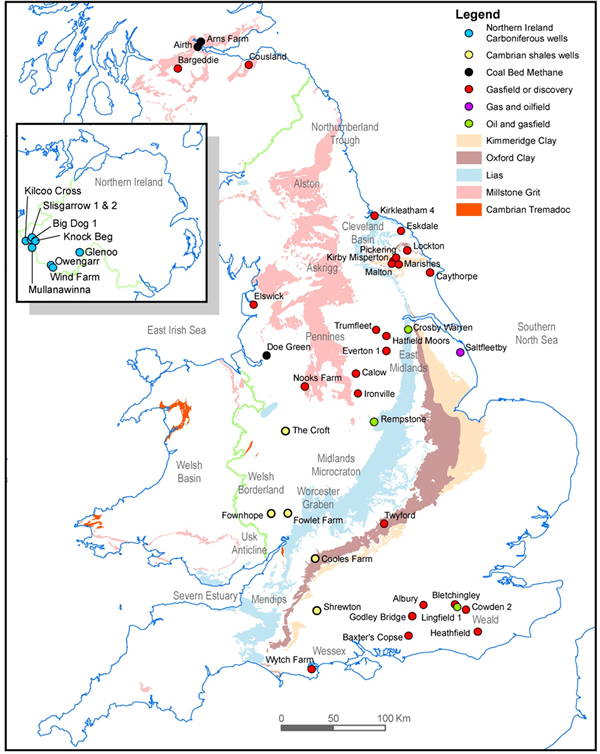
Whether or not one has read the Tractatus Logico-Philosophicus of Ludwig Wittgenstein, there can be little doubt that one of his most famous quotations can be applied to much of the furore over hydraulic fracturing (fracking) of hydrocarbon-rich shale in south-eastern Britain: ‘Whereof one cannot speak, one must remain silent’ (more pithily expressed by Mark Twain as ‘Better to remain silent and be thought a fool than to speak and remove all doubt’). A press release by the British Geological Survey in late May 2014 caused egg to appear on the shirts of both erstwhile ‘frackmeister’ David Cameron (British Prime Minister) and anti-fracking protestors in Sussex. While there are oil shales beneath the Weald, these Jurassic rocks have never reached temperatures sufficient to generate any significant gas reserves (see: Upfront, New Scientist, 31 May 2014 issue, p. 6). Yet BGS estimate the oil shales to contain a total of 4.4 billion barrels of oil. That might sound a lot, but the experience of shale fracking companies in the US is that, at best, only about 5% can be recovered and, in cases that are geologically similar to the Weald, as little as 1% might be expected. Between 44 and 220 million barrels is between two and six months’ worth of British oil consumption; and that is only if the entire Wealden shales are fracked.
Areas where petroleum-rich shales occur at the surface in Britain. (credit: British Geological Survey)
Why would any commercial exploration company, such as Cuadrilla, go to the trouble of drilling wells, even of an ‘exploratory nature’, for such meager potential returns? Well, when there is sufficient hype, and the British Government has gushed in this context for a few years, bigger fish tend to bite and cash flows improve. For instance, Centrica the owner of British Gas forked out $160 million to Cuadrilla in June 2013 for a quarter share in the well-publicised licence area near Blackpool in Lancashire; the grub stake to allow Cuadrilla to continue exploration in exchange for 25% of any profit should commercial quantities of shale-gas be produced.
Sedimentary rock sequences further north in Britain whose geological evolution buried oil shales more deeply are potential gas producers through fracking; an example is the Carboniferous Bowland Shale beneath the Elswick gasfield in west Lancashire, targeted by Cuadrilla. Far greater potential may be present in a large tract of the Pennine hills and lowlands that flank them where the Bowland Shale occurs at depth.
Few people realize just how much detail is known about what lies beneath their homes apart from maps of surface geology. That is partly thanks to BGS being the world’s oldest geological survey (founded in 1835) and partly the sheer number of non-survey geologists who have prowled over Britain for 200 years or more and published their findings. Legally, any excavation, be it an underground mine, a borehole or even the footings for a building, must be reported to BGS along with whatever geological information came to light as a result. The sheer rarity of outcropping rock in Britain is obvious to everyone: a legacy of repeated glaciation that left a veneer of jumbled debris over much of the land below 500m that lies north of the northern outskirts of the London megalopolis. Only highland areas where glacial erosion shifted mullock to lower terrains have more than about 5% of the surface occupied by bare rock. Of all the data lodged with BGS by far the most important for rock type and structure at depth are surveys that used seismic waves generated by vibrating plates deployed on specialized trucks. These and the cables that connected hundreds of detectors were seen along major and minor roads in many parts of Britain during the 1980s during several rounds of licenced onshore exploration for conventional petroleum resources. That the strange vehicles carried signs saying Highway Maintenance lulled most people apart from professional geologists as regards their actual purpose. Over 75 thousand kilometers of seismic sections that penetrated thousands of metres into the Earth now reside in the UK Onshore Geophysical Library (an Interactive Map at UKOGL allows you to see details of these surveys, current areas licenced for exploration and the locations of various petroleum wells).
Seismic survey lines in northern England (green lines) from the interactive map at the UK Onshore Geophysical Library
Such is the detail of geological knowledge that estimates of any oil and gas, conventional or otherwise, residing beneath many areas of Britain are a lot more reliable than in other parts of the world which do not already have or once had a vibrant petroleum industry. So you can take it that when the BGS says there is such and such a potential for oil or gas beneath this or that stretch of rural Britain they are pretty close to the truth. Yet it is their raw estimates that are most often publicized; that is, the total possible volumes. Any caveats are often ignored in the publicity and hype that follows such an announcement. BGS recently announced that as much as 38 trillion cubic metres of gas may reside in British shales, much in the north of England. There followed a frenzy of optimism from Government sources that this 40 years’ worth of shale gas would remove at a stroke Britain’s exposure to the world market of natural gas, currently dominated by Russia, and herald a rosy economic future to follow the present austerity similar to the successes of shale-gas in North America. Equally, there has been fear of all kinds of catastrophe from fracking on our ‘tight little island’ especially amongst those lucky enough not to live in urban wastelands. What was ignored by both tendencies was reality. In the US, fracking experience shows that only 10% at most of the gas in a fractured shale can be got out; even the mighty Marcellus Shale of the NE US underlying an area as big as Britain can only supply 6 years of total US gas demand. Britain’s entire shale-gas endowment would serve only 4 years of British gas demand.
To tap just the gas in the upper part of the Bowland basin would require 33 thousand fracking wells in northern Britain. Between 1902 and 2013 only 19 onshore petroleum wells were drilled here in an average year. To make any significant contribution to British energy markets would require 100 per annum at a minimum. Yet, in the US, the flow rate from fracked wells drops to a mere zephyr within 3 years. Fracking on a large scale may well never happen in Britain, such are the largely unstated caveats. But the current hype is fruitful for speculation that it will, and that can make a lot of cash sucked in by the prospect – without any production whatsoever.
The work done by an asteroid or a comet that hits the Earth is most obviously demonstrated by the size of the crater that it creates on impact, should it have survived erosion and/or burial by sediments. Since some is done in flinging material away from the impact, the furthest point at which ejecta land is also a rough measure of the power of the hit. All this and much more derived from the kinetic energy of the object, which from Newton’s laws of motion amounts to half the product of the body’s mass and the square of its speed (mv2/2). It’s the speed that confers most energy; doubling the speed quadruples the energy. At a minimum, the speed of an object from far-off in space is that due to acceleration by the Earth’s gravitational field; the same as Earth’s escape velocity (about 11.2 km s-1). In March 1989 Earth had a close encounter with Newton’s laws writ large; an asteroid about 500 m across passed us with just half a million kilometres to spare. Moving at 20 km s-1 it carried kinetic energy of around 4 x 10¹⁹J. Had it hit, all of this immense amount would have been delivered in about a second giving a power of 4 x 10¹⁹ W. That is more than two hundred times greater than the power of solar heating of the day-side of the Earth. A small part of that power would melt quite a lot of rock.
Vredefort Dome impact structure (credit: Wikipedia)
As well as the glass spherules that are one of the hallmarks of impact ejecta on Earth and more so on the Moon’s surface, some of the larger known impact craters are associated with various kinds of glassy rock produced by instantaneous melting. Some of this melt-rock occurs in thin dykes, but sometimes there is an entire layer of once molten ‘country’ rock at the impact site. The most spectacular is in the Manicougan crater in Quebec, Canada. In fact a 1 km thick impact-melt sheet dominates most of the 90 km wide structure and it is reputed to be the most homogeneous large rock mass known, being a chemical average of every rock type involved in the Triassic asteroid strike. Not all craters are so well endowed with an actual sheet of melt-rock. This has puzzled some geologists, especially those who studied the much larger (160 km) Vredfort Dome in South Africa, which formed around 2 billion years ago. As the name suggests this is now a positive circular topographic anomaly, probably due to rebound and erosional unloading, the structure extending down 20 km into the ancient continental lithosphere of the Kaapvaal craton. Vredfort has some cracking dykes of pseudotachylite but apparently no impact melt sheet. It has vanished, probably through erosion, but a relic has been found (Cupelli, C.L. et al. 2014. Discovery of mafic impact melt in the centre of the Vredfort dome: Archetype for continental residua of early Earth cratering? Geology, v. 42, p. 403-406). One reason for it having gone undiscovered until now is that it is mafic in composition, and resembles an igneous gabbro intrusion. Isotope geochemistry refutes that mundane origin. It is far younger than the rocks that were zapped, and may well have formed as huge energy penetrated to the lower crust and even the upper mantle to melt a sizeable percentage of 2.7 to 3.0 Ga old mafic and ultramafic rock.
Oddly, the same issue of Geology contains an article that also bears on the Vredfort Dome structure (Huber, M.S. et al. 2014. Impact spherules from Karelia, Russia: Possible ejecta from the 2.02 Ga Vredfort impact event. Geology, v. 42, p. 375-378). Drill core from a Palaeoproterozoic limestone revealed millimetre-sized glass droplets containing excess iridium – an element at high concentration in a variety of meteorites. The link to Vredfort is the age of the sediments, which are between 1.98 and 2.05 Ga, neatly bracketing the timing of the large South African impact. Using reasonably well-constrained palaeogeographic positions at that time for Karelia and the Kaapvaal craton suggests that the glassy ejecta, if indeed they are from Vredfort, must have been flung over 2500 km.
The end-Ordovician mass extinction was the first of five during the Phanerozoic, andthe first that involved multicelled organisms. It happened in two distinct phases that roughly coincided with an intense but short-lived glaciation at the South Pole, then situated within what is now the African continent. Unlike the other four, this biotic catastrophe seems unlinked to either a major impact structure or to an episode of flood volcanism.
Artist’s impression of an Ordovician shallow-sea community (credit: drtel)
In 2009 Earth Pages reported the curious occurrence in 470 Ma (Darriwilian Stage) Swedish limestones of a large number of altered chondritic meteorites, possible evidence that there may have been an extraterrestrial influence on extinction rates around that time. In support is evidence that the meteorite swarm coincided with megabreccias or olistostromes at what were then Southern Hemisphere continental margins: possible signs of a series of huge tsunamis. But in fact this odd coincidence occurred at a time when metazoan diversity was truly booming: the only known case of impacts possibly favouring life.
Number One of the Big Five mass extinctions occurred during the late-Ordovician Hirnantian stage (443-445 Ma) and has received much less attention than the later ones. So it is good see the balance being redressed by a review of evidence for it and for possible mechanisms (Harper, D.A.T et al. 2014. End Ordovician extinctions: A coincidence of causes. Gondwana Research, v. 25, p. 1294-1307). The first event of a double-whammy mainly affected free-swimming and planktonic organisms and those of shallow seas; near-surface dwellers such as graptolites and trilobites. The second, about a million years later, hit animals living at all depths in the sea. Between them, the two events removed about 85% of marines species – there were few if any terrestrial animals so this is close to the extinction level that closed the Palaeozoic at around 250 Ma.
No single process can be regarded as the ‘culprit’. However the two events are bracketed by an 80-100 m fall in sea level due to the southern hemisphere glaciation. That may have given rise to changes in ocean oxygen content and in the reduction of sulfur to hydrogen sulfide. Also climate-related may have been changes in the vertical, thermohaline circulation of the oceans, falling temperatures encouraging sinking of surface water to abyssal depths providing more oxygen to support life deep in the water column. Sea-level fall would have reduced the extent of shallow seas too. Those consequences would explain the early demise of shallow water, free swimming animals. Reversal of these trends as glaciation waned may have returned stagnancy and anoxia to deep water, thereby affecting life at all depths. The authors suggest generalized ‘tipping points’ towards which several global processes contributed.
Relative age sequences in sequences of fossiliferous sediments are frequently intricate, thanks to animal groups that evolved quickly to leave easily identifiable fossil species. Yet converting that one-after-the-other dating to absolute values of past time has been difficult and generally debateable. Up to now it has relied on fossil-based correlation with localities where parts of the sequence of interest interleave with volcanic ashes or lavas that can be dated radiometrically. Igneous rocks can provide reference points in time, so that age estimates of intervening sedimentary layers emerge by assuming constant rates of sedimentation and of faunal speciation. However, neither rate can safely be assumed constant, and those of evolutionary processes are of great biological interest.
Sunset at St Hilda’s Abbey, Whitby NE England; fabled haunt of Count Dracula (credit: epicnom)
If only we could date the fossils a wealth of information would be accessible. In the case of organisms that apparently evolved quickly, such as the ammonites of the Mesozoic, time resolution might be extremely fine. Isotopic analysis methods have become sufficiently precise to exploit the radioactive decay of uranium isotopes, for instance, at the very low concentrations found in sedimentary minerals such as calcium carbonate. So this prospect of direct calibration might seem imminent. Geochemists and palaeontologists at Royal Holloway University of London, Leicester University and the British Geological Survey have used the U-Pb method to date Jurassic ammonites (Li, Q. et al. 2014. U–Pb dating of cements in Mesozoic ammonites. Chemical Geology, v. 376, p. 76-83). The species they chose are members of the genus Hildoceras, familiar to junior collectors on the foreshore below the ruined Abbey of St Hilda at the small port of Whitby, in NE England. The abundance and coiled shape of Hildoceras was once cited as evidence for the eponymous founder of the Abbey ridding this choice locality of a plague of venomous serpents using the simple expedient of divine lithification.
Hildoceras from the Toarcian shales of Whitby (credit: Wikipedia)
The target uranium-containing mineral is the calcite formed on the walls of the ammonites’ flotation chambers either while they were alive or shortly after death. This early cement is found in all well-preserved ammonites. The Hildoceras genus is found in one of the many faunal Zones of the Toarcian Age of the Lower Jurassic; the bifrons Zone (after Hildoceras bifrons). After careful selection of bifrons Zone specimens, the earliest calcite cement to have formed in the chambers was found to yield dates of around 165 Ma with precisions as low as ±3.3 Ma. Another species from the Middle Jurassic Bajocian Age came out at 158.8±4.3 Ma. Unfortunately, these precise ages were between 10-20 Ma younger than the accepted ranges of 174-183 and 168-170 Ma for the Toarcian and Bajocian. The authors ascribe this disappointing discrepancy to the breakdown of the calcium carbonate (aragonite) forming the animals’ shells from which uranium migrated to contaminate the after-death calcite cement.
From the days when advocates of impacts by extraterrestrial objects as explanations of geological features were widely regarded as ‘whizz-bang artistes’ a great many hats have probably been eaten, albeit in closely guarded privacy. In 1986, when beds of glassy spherules similar to those found in lunar soil and in the K-T boundary sequence were reported from early Archaeangreenstone belts in Australia and South Africa, and deduced to have formed by an impact, the authors, Donald Lowe of Stanford University, USA and colleagues, were pounced on by those who thought they could plausibly explain the very odd rocks by unremarkable, Earthly processes. Subsequent work on their geochemistry overwhelmingly supported their formation by an impact of a large carbonaceous chondrite asteroid. And at one site, the Barberton Mountain Land greenstone belt in northeastern South Africa, there was evidence for at least three such impacts formed in a 20 Ma period. In hindsight, given the lunar bombardment history that peaked between 4 and 3.8 Ga, early Archaean rocks were a great deal more likely to contain materials formed by giant impacts than less antiquated ones.
Barberton greenstone belt, South Africa (credit: Barberton World Heritage Site)
Lowe has been steadily working on his original idea since then, his enthusiasm drawing in others. The latest focus is on evidence for other likely consequences in the Archaean record of the vast power unleashed by incoming asteroids travelling at speeds around 15 km s-1 (Sleep, N.H. & Lowe, D.R. 2014. Physics of crustal fracturing and chertdike formation triggered by asteroid impact, ~3.26 Ga, Barbertongreenstone belt, South Africa. Geochemistry, Geophysics, Geosystems, v. 15, doi:10.1002/2014GC005229). The damage at Barberton not only produced spherule beds but opened fractures on the shallow sea bed into which liquefied sediments, including some spherules, were injected. These swarms of up to 10 m wide cherty dykes extend up to 100 m below what was then the sea floor strewn with impact spherules, and contain evidence of successive pulses of sediment injection.
Sleep and Lowe explain these dyke swarms as fractures caused by seismicity associated with a major impact. Their complexity suggests extreme shaking for upwards of 100 seconds; far longer than that from large, tectonic earthquakes. The fact that cracks opened to accommodate the sedimentary dykes indicates extension of the affected crust, which the authors suggest resulted from gravitational sliding of the shocked surface sediments down a gentle slope. Possibly the sediments, including the direct products of impact, the spherules, were swept into the cracks by currents associated with tsunamis induced by the impact.
Interestingly, the spherules and dykes formed upon crust largely formed of mafic to ultramafic lavas, yet volcanism following close on the heels of the impact event was of felsic composition. Did the impact trigger a shift locally from oceanic magmatism to that characteristic of island arcs; that is, did it start a new subduction zone?
In April 2005 EPN reported evidence for a late Permian fall in atmospheric oxygen concentration to about 16% from its all-time high of 30% in the Carboniferous and earlier Permian.. This would have reduced the highest elevation on land where animals could live to about 2.7 km above sea level, compared with 4 to 5 today. Such an event would have placed a great deal of stress on terrestrial animal families. Moreover, it implies anoxic conditions in the oceans that would stress marine animals too. At the time, it seemed unlikely that declining oxygen was the main trigger for the end-Permian mass extinction as the decline would probably have been gradual; for instance by oxygen being locked into iron-3 compounds that give Permian and Triassic terrestrial sediments their unrelenting red coloration. By most accounts the greatest mass extinction of the Phanerozoic was extremely swift.
The possibility of extinctions being brought on by loss of oxygen from the air and ocean water has reappeared, though with suggestion of a very different means of achieving it (Wei, Y. and 10 others 2014. Oxygen escape from the Earth during geomagnetic reversals: Implications to mass extinction. Earth and Planetary Science Letters, v. 394, p. 94-98). The nub of the issue proposed by the Chinese-German authors is the dissociation and ionization by solar radiation of O2 molecules into O+ ions. If exposed to the solar wind, such ions could literally be ‘blown away’ into interplanetary space; an explanation for the lack of much in the way of any atmosphere on Mars today. Mars is prone to such ionic ablation because it now has a very weak magnetic field and may have been in that state for 3 billion years or more. Earth’s much larger magnetic field diverts the solar wind by acting as an electromagnetic buffer against much loss of gases, except free hydrogen and to a certain extent helium. But the geomagnetic field undergoes reversals, and while they are in progress, the field drops to very low levels exposing Earth to loss of oxygen as well as to dangerous levels of ionising radiation through unprotected exposure of the surface to the solar wind.
Artist’s rendition of Earth’s magnetosphere deflecting the solar wind. (credit: Wikipedia)
Field reversals and, presumably, short periods of very low geomagnetic field associated with them, varied in their frequency through time. For the past 80 Ma the reversal rate has been between 1 and 5 per million years. For much of the Cretaceous Period there were hardly any during a magnetic quiet episode or superchron. Earlier Mesozoic times were magnetically hectic, when reversals rose to rates as high as 7 per million years in the early Jurassic. This was preceded by another superchron that spanned the Permian and Late Carboniferous. Earlier geomagnetic data are haphazardly distributed through the stratigraphic column, so little can be said in the context of reversal-oxygen-extinction connections.
Geomagnetic polarity over the past 169 Ma (credit: Wikipedia)
Wei et al. focus on the end-Triassic mass extinction which does indeed coincide, albeit roughly, with low geochemically modelled atmospheric oxygen levels (~15%). This anoxic episode extended almost to the end of the Jurassic, although that was a period of rapid faunal diversification following the extinction event. Yet it does fall in the longest period of rapid reversals of the Mesozoic. However, this is the only clear reversal-oxygen-extinction correlation, the Cenozoic bucking the prediction. In order to present a seemingly persuasive case for their idea, the authors assign mass extinctions not to very rapid events – of the order of hundreds of thousand years at most – which is well supported by both fossils and stratigraphy, but to ‘blocks’ of time of the order of tens of million years.
My own view is that quite possibly magnetic reversals can have adverse consequences for life, but as a once widely considered causal mechanism for mass extinction they have faded from the scene; unlikely to be resurrected by this study. There are plenty of more plausible and better supported mechanisms, such as impacts and flood-basalt outpourings. Yet several large igneous provinces do coincide with the end of geomagnetic superchrons, although that correlation may well be due to the associated mantle plumes marking drastic changes around the core-mantle boundary. According to Wei et al., the supposed 6th mass extinction of the Neogene has a link to the general speeding up of geomagnetic reversals through the Cenozoic: not much has happened to either oxygen levels or biodiversity during the Neogene, and the predicted 6th mass extinction has more to do with human activity than the solar wind.
With the growing diversity of data from those parts of the electromagnetic spectrum that pass freely though Earth’s atmosphere, mainly acquired from orbit, an increasing number of attributes of the surface can be mapped remotely. The initial impetus to launch remote sensing satellites in the 1960’s and early 70’s had two strands: to monitor weather conditions and assess vegetation cover with the early metsats, such as TIROS-1, and the first Landsat platform that exploited green plants’ propensity for absorbing visible and largely reflecting near-infrared (NIR) radiation. With the incorporation in the Advanced Spaceborne Thermal Emission and Reflection Radiometer (ASTER) instruments of wavelength regions in which minerals show spectral diversity, in the reflected short-wave infrared (SWIR) and emitted thermal infrared (TIR), remote sensing became a viable and useful tool for geologists. It figures strongly in lithological mapping and also in the detection of minerals related to various kinds of alteration associated with metal mineralisation and the migration of hydrocarbon-related fluids. The more wavebands with narrower coverage of radiation wavelengths, the more likely are the subtle differences in mineral spectra able to be detected and mapped. Yet, apart from one experimental system (Hyperion aboard NASA’s EO-1 orbital platform) our home planet is not as well served by such hyperspectral systems as is Mars, blessed by two which have fuelled the on-going search for past habitable zones on the Red Planet.
The May 2014 issue of Scientific American includes an article on remote sensing that follows what to many might seem an odd direction: how to increase the chance of finding rich fossil deposits (Anemone, R.L. & Emerson, C.W. 2014. Fossil GPS. Scientific American, v. 310(5), p. 34-39). Apart from targeting a particular stratigraphic unit on a geological map, palaeontological collection has generally been a hit-or-miss affair depending on persistence and a keen eye, with quite a lot of luck. Once a productive locality turns up, such as the Cambrian Burgess shale, the dinosaur-rich Cretaceous sandstone of the Red Deer River badlands of southern Alberta in Canada and the hominin sites of Ethiopia’s Afar Depression, palaeontologists often look no further until its potential is exhausted. Robert Anemone and Charles Emerson felt, as may palaeobiologists do, that one fossil ‘hotspot’ is simply not enough, yet balked at the physical effort, time and frustration needed to find more by trekking through their area of interest, the vast Tertiary sedimentary basins of Wyoming, USA. They decided to try an easier tack: using the few known fossil localities as digital ‘training areas’ for a software interrogation of Landsat Enhanced Thematic Mapper data in the hope that fossiliferous spots might be subtly different in their optical properties from those that were barren.
Satellite image of the Wyoming Basin, USA. credit: Wikipedia)
The teeth and bones of early Eocene mammals that had drawn them to Wyoming turn up in sandstone beds of the basins. They are pretty distinctive elements of landscape, forming ridges of outcrop because of their relative resistance to erosion, yet for that very reason present a huge selection of possibilities. Being simple mineralogically they also presented a seemingly daunting uniformity. Anemone and Emerson decided on a purely statistical approach using the six visible, NIR and SWIR bands sensed by Landsat ETM, rather than a spectrally oriented strategy using more sophisticated ASTER data with 14 spectral bands. Their chosen algorithm was that based on an artificial neural network that the fossil rich sandstones would train to recognise patterns present in ETM data recorded over them. This purely empirical approach seems to have worked. Of 31 sites suggested by the algorithm 25 yielded abundant vertebrate fossils. Applied to another of Wyoming’s Tertiary basins it also ‘found’ the three most productive known mammal sites there. So, what is it about the fossil-rich sandstones that sets them apart from those that are more likely to be barren? The authors do not offer an explanation. Perhaps it has something to do with reducing conditions that would help preserve organic material better than would sandstones deposited in an oxidising environment. Iron minerals and thereby colour might be a key factor, oxidised sandstones are generally stained red to orange by Fe-3 oxides and hydroxides, whereas reduced sandstone facies may be grey because of iron in the form of sulfides
Eleven years on from his announcement in March 2003 of a giant member of the Family Sciuridae (squirrels) found in a lateritic lagerstätte in the Western Ghats of Karnataka State in India (see http://geocities.yahoo.com/pusiffli/squirrels.html – note: this site may no longer be extant) Professor Pandit U. Siffli of the emeritus faculty at the Sringeri Institute of Palaeontology has sent me further news of his investigations. The clay-filled pocket within the mottled zone has proved astonishingly fruitful now that Pandit Unmer has more free time following his retirement. He and his recently graduated colleague, Dr G.B. Harm, have unearthed several more exquisite specimens of Titanosciurus sringeriensis – long-standing readers will recall that the body cavity of the child-sized type specimen of T. sringeriensis contained bones of primitive hamsters, that no doubt the squirrel had consumed, confirming Siffli’s speculation that the creature was the only known member of the Sciuridae that was an obligate carnivore. This view stemmed originally from its formidable dentition.
Laterite (credit: Paul J. Morris)
Confirmation of this astounding revelation comes from two new lines of evidence discovered by Harm – the principle excavator since Siffli became encumbered by what he has described to me as his ‘blessed game leg’. In his letter he says, ‘young Grivas Bodili has informed me in a mood of solemn gaiety that there are burrows in the lagerstätte which contain complete skeletons of hamsters in a cowering posture. There are also abundant coprolites associated with one of the more corpulent specimens of T. sringeriensis that are a rich source of tiny hamster bones and one example of a partly digested avian flight feather’. The pair now have a paper in press (Harm, G.B. & Siffli, P.U. in press 2014. A large predatory sciurid from the Kudremukh laterites, Karnataka, India: evidence from a well-preserved rodent warren. Earth and Sanitary Appliance Letters, doi:11.3319/esal55164).
It seems likely that the early squirrels and hamsters borrowed into the laterite soon after intense tropical weathering has ceased due to climatic cooling associated with the onset of glaciation in Antarctica, probably in late-Eocene times. At that stage the upper laterite must have been soft enough for early mammals to dig into it. Subsequently the palaeosol became indurated as a result of regional desiccation, allowing exquisite preservation. Exact dating by the Ar-Ar method may soon be possible, given samples containing potassium-rich authigenic minerals. The search is now surely on for similar subterranean lagerstätten in the lateritic veneers covering vast tracts of the southern continents, whose formation probably came to a close at roughly the same time as did those of South India.
Artist’s impression of T. sringeriensis (credit: network54.com)
Prof Siffli tells me he would welcome communications from other sciurid and laterite researchers at pusiffli@gmail.com
The discovery around 50 years ago that in orbiting the centre of the Milky Way galaxy the solar system regularly wobbles to either side of its path. If the galaxy’s physical properties varied in a direction at right angles to the plane of the Milky Way then the Sun and its planets would experience that variation in a regular and predictable way (see Galactic controls http://earth-pages.co.uk/2011/12/15/galactic-controls/). Such oscillations might therefore show up as periodic changes in the geological record. There are loads of such cycles some not so regular, such as the accretion and disaggregation of supercontinents, and some involved in climatic change that have almost the predictability of a metronome.
One of these periodicities has thrilled geoscientists ever since it first began to emerge from improved dating of events in the geological record and more extensive knowledge of what it contained. Massive floods of basaltic magma blurt from the mantle every so often; more specifically approximately every 35 Ma. Intriguingly, there is a rough tally between the timing of such large igneous provinces and pulses in biological extinction. The wobbles in the solar system’s galactic passage are – wait for it – about every 35 Ma. A supposed link between LIPs, extinctions and galactic motions simply will not go away as a topic for speculation. Add to that some evidence that terrestrial impact cratering might have a 35 Ma period and you have ‘a story that will run and run’. The apparent periodicity of impacts, besides encouraging links with life and death and magmas, now seems to have spurred links with the dark side of cosmology.
Artist’s conception of the spiral structure of the Milky Way with two major stellar arms and a central bar (credit: Wikipedia)
It does indeed seem that the galactic magnetic field and dust concentrations vary across the plane of the Milky Way, but their affects during solar peregrinations have been raised long before now (Steiner, J. 1967. The sequence of geological events and the dynamics of the Milky Way Galaxy. Journal of the Geological Society of Australia, v. 14, p. 99–132.). The latest novelty concerns the possibility that galaxies might somehow collect the fabled but as yet undiscovered ‘dark matter’ in a flat disc within the galactic plane. Well, matter, ‘dark’ or not, should have mass, and mass must have a gravitational effect (thanks of course to the Higgs boson), even if it is hidden. Instead of some Nemesis or Death Star, as once was proposed to nudge comets from the outer reaches of the solar system, a gigantic dish of dark matter through which the Sun might pass on a regular basis might serve more plausibly (Randall, L. & Reece, MM. 2014. Dark matter as a trigger for periodic comet impacts. Physical Review Letters. arXiv:1403.0576 [astro-ph.GA]). Interestingly, Comments on the paper at the arXiv site read “Accepted by Physical Review Letters. 4 figures, no dinosaurs”
Solar System, in Perspective (credit: NASA Goddard SFC)
A large number of water-oriented tropes have been applied to Earth for ‘artistic effect’, ranging from Waterworld to the Blue Planet, but from a geoscientific perspective H2O in its many forms – liquid, solid, gas, supercritical fluid and chemically bound – has as much influence over the way the world works as do its internal heat production and transfer. Leaving aside surface processes, the presence of water has dramatic effects on the temperature at which rocks – felsic, mafic and ultramafic – begin to melt and deform and on the rates of important chemical reactions bound up with internal processes.
For a long while many geologists believed that the oceans were the product of water being transferred from the mantle by degassing through volcanoes so that the deep Earth has steadily been desiccated. But now it has become clear that such is the rate at which subduction can shift water back to the mantle that the entire volume of modern ocean water may have been cycled back and forth more than 3 times in Earth history (see Subduction and the water cycle). Besides, it is conceivable that accretion of cometary material up to about 3.8 Ga may have delivered the bulk of it.
An important aspect of the deep part of the water cycle concerns just how far into the mantle subduction can transport this most dominant volatile component of our planet. Ultra high-pressure experimental petrology has reached the stage when conditions at depths more than halfway to the core-mantle boundary (pressures up to 50 GPa) can be sustained using diamond anvils surrounding chemical mixtures that approximate mantle ultramafic materials. Previously, it was thought that serpentinite, the hydrous mineral most likely to be subducted, broke down into magnesium-rich, anhydrous silicates at around 1250 km down. This would prevent the deepest mantle from gaining any subducted water and retaining any that it had since the Earth formed. A team of Japanese geochemists has discovered a hint that hydrous silicates can, through a series of phase changes, achieve stability under the conditions of the deepest mantle (Nishi, M. 2014. Stability of hydrous silicate at high pressures and water transport to the deep lower mantle. Nature Geoscience, v. 7, p. 224-227). Their experiments yielded a yet unnamed mineral (phase H or MgSiH2O4) from approximate mantle composition that could remain stable in subducted slabs down to the core-mantle boundary. This development may help explain why the lowermost mantle is able to participate in plume activity through reduction in viscosity at those depths.
A parallel discovery concerns conditions at the base of the upper mantle; the 410 to 660 km mantle seismic transition zone. It comes from close study of a rare class of Brazilian diamonds that have been swiftly transported to the Earth’s surface from such depths, probably in kimberlite magma pipes, though their actual source rock has yet to be discovered. These ultra-deep diamonds prove to contain inclusions of mantle materials from the transition zone (Pearson, D.G. and 11 others 2014. Hydrous mantle transition zone indicated by ringwoodite included within diamond. Nature, v. 507, p. 221-224). Australian geochemist Ted Ringwood pioneered the idea in the 1950s and 60s that the mantle transition zone might be due to the main mantle mineral olivine ((Mg,Fe)2SiO4) being transformed to structures commensurate with extremely high pressures, including one akin to that of spinel. Such a mineral was first observed in stony meteorites that had undergone shock metamorphism, and was dubbed ringwoodite in honour of its eponymous predictor. Yet ringwoodite had never been found in terrestrial rocks, until it turned up in the Brazilian diamonds thanks to Pearson and colleagues.
Partial cross-section of the Earth showing the location of ringwoodite in the mantle Credit: Kathy Mather
Earlier experimental work to synthesise ultra-deep minerals discovered that ringwoodite may contain up to 2% water (actually OH groups) in its molecular lattice: an astonishing thing for material formed under such extreme conditions. The ringwoodite inclusions in diamond show infrared spectra that closely resemble its hydrous form. From this it may be inferred that the 401-660 km transition zone contains a vast amount of water; roughly the same as in all the oceans combined, though the find is yet to be confirmed in a wider selection of diamonds. One of the puzzles about diamondiferous kimberlites is that the magma must have been rich in water and carbon dioxide. That can now be explained by volatile-rich materials at the depths where diamonds form, But that does not necessarily implicate the whole transition zone: there may be pockets ripe for kimberlitic magma formation in a more widely water-poor mantle.
Related articles
Keppler, H. 2014. Earth’s deep water reservoir. Nature , v. 507, p. 174-175
Warming surface currents of the North Atlantic (credit: Wikipedia)
A stupendous amount of heat is shifted by ocean-surface currents, so they have a major influence over regional climates. But they are just part of ocean circulation systems, the other being the movement of water in the deep ocean basins. One driver of this world-encompassing system is water density; a function of its temperature and salinity. Cold saline water forming at the surface tends to sink, the volume that does being replaced by surface flow towards the site of sinking: effectively, cold downwellings ‘drag’ major surface currents along. This is especially striking in the North Atlantic where sinking cold brines are focused in narrow zones between Canada and Greenland and between Greenland and Iceland. From there the cold water flows southwards towards the South Atlantic at depths between 1 and 5 km. The northward compensating surface flow, largely from tropical seas of the Caribbean, is the Gulf Stream/North Atlantic Current whose warming influence on climate of western and north-western Europe extends into the Arctic Ocean.
Circulation in the Atlantic Ocean. the orange and red water masses are those of the Gulf stream and North Atlantic Deep Water (credit: Science, Figure 1 in Galaasen et al. 2014)
Since the discovery of this top-to-bottom ‘conveyor system’ of ocean circulation oceanographers and climatologists have suspected that sudden climate shifts around the North Atlantic, such as the millennial Dansgaard-Oeschger events recorded in the Greenland ice cores, may have been forced by circulation changes. The return to almost full glacial conditions during the Younger Dryas, while global climate was warming towards the interglacial conditions of the Holocene and present day, has been attributed to huge volumes of meltwater from the North American ice sheet entering the North Atlantic. By reducing surface salinity and density the deluge slowed or shut down the ‘conveyor’ for over a thousand years, thereby drastically cooling regional climate. Such drastic and potentially devastating events for humans in the region seem not to have occurred during the 11.5 thousand years since the end of the Younger Dryas. Yet their suspected cause, increased freshwater influx into the North Atlantic, continues with melting of the Greenland ice cap and reduction of the permanent sea-ice cover of the Arctic Ocean, particularly accelerated by global warming.
The Holocene interglacial has not yet come to completion, so checking what could happen in the North Atlantic region depends on studying previous interglacials, especially the previous one – the Eemian – from 130 to 114 ka. Unfortunately the high-resolution climate records from Greenland ice cores do not extend that far back. On top of that, more lengthy sea-floor sediment cores rarely have the time resolution to show detailed records, unless, that is, sediment accumulated quickly on the deep sea bed. One place that seems to have happened is just south of Greenland. Cores from there have been re-examined with an eye to charting the change in deep water temperature from unusually thick sediment sequences spanning the Eemian interglacial (Galaasen, E.V. and 7 others 2014. Rapid reductions in North Atlantic Deep Water during the peak of the last interglacial period. Science, v. 343, 1129-1132).
The approach taken by the consortium of scientiosts from Norway, the US, France and Britain was to analyse the carbon-isotope composition of the shells of foraminifers that lived in the very cold water of the ocean floor during the Eemian. The ratio of 13C to 12C, expressed as δ13C, fluctuates according to the isotopic composition of the water in which the forams lived. What show up in the 130-114 ka period are several major but short-lived falls in δ13C from the general level of what would then have been North Atlantic Deep Water (NADW). It seems that five times during the Eemian the flow of NADW slowed and perhaps stopped for periods of the order of a few hundred years. If so, then the warming influence of the Gulf Stream and North Atlantic Current would inevitably have waned through the same intervals. Confirmation of that comes from records of surface dwelling forams. This revelation should come as a warning: if purely natural shifts in currents and climate were able to perturb what had been assumed previously to be stable conditions during the last interglacial, what might anthropogenic warming do in the next century?
To set against five brief episodes of mass extinction – some would count the present as being the beginning of a sixth – is one short period when animals with hard parts appeared for the first time roughly simultaneously across the Earth. Not only was the Cambrian Explosion sudden and pervasive but almost all phyla, the basic morphological divisions of multicellular life, adopted inner or outer skeletons that could survive as fossils. Such an all-pervading evolutionary step has never been repeated, although there have been many bursts in living diversity. Apart from the origin of life and the emergence of its sexual model, the eukaryotes, nothing could be more important in palaeobiology than the events across the Cambrian-Precambrian boundary.
One of the evolutionary experiments during the Cambrian, Opabinia regalis, from the Burgess Shale. (credit: Wikipedia)
This eminent event has been marked by most of the latest issue of the journal Gondwana Research (volume 25, Issue 3 for April 2014)in a 20-paper series called Beyond the Cambrian Explosion: from galaxy to genome (summarized by Isozaki, Y., Degan, S.., aruyama,, S.. & Santosh, M. 2014. Beyond the Cambrian Explosion: from galaxy to genome.Gondwana Research, v. 25, p. 881-883). Of course, these phenomenal events have been at issue since the 19th century when the division of geological time began to be based on the appearance and vanishing of well preserved and easily distinguished fossils in the stratigraphic column. On this basis roughly the last ninth of the Earth’s history was split on palaeontological grounds into the 3 Eras, 11 Periods, and a great many of the briefer Epochs and Ages that constitute the Phanerozoic. Time that preceded the Cambrian explosion was for a long while somewhat murky mainly because of a lack of means of subdivision and the greater structural and metamorphic damage that had been done to the rocks that had accumulated over 4 billion years since the planet accreted. Detail emerged slowly by increasingly concerted study of the Precambrian, helped since the 1930s by the ability to assign numerical ages to rocks. Signs of life in sediments that had originally been termed the Azoic (Greek for ‘without life’) gradually turned up as far back as 3.5 Ga, but much attention focused on the 400 Ma immediately preceding the start of the Cambrian period once abundant trace fossils had been found in the Ediacaran Hills of South Australia that had been preceded by repeated worldwide glacial epochs. The Ediacaran and Cryogenian Periods (635-541 and 850-635 Ma respectively) of the Neoproterozoic figure prominently in 9 of the papers to investigate or review the ‘back story’ from which the crucial event in the history of life emerged. Six have a mainly Cambrian focus on newly discovered fossils, especially from a sedimentary sequence in southern China that preserves delicate fossils in great detail: the Chengjian Lagerstätte. Others cover geochemical evidence for changes in marine conditions from the Cryogenian to Cambrian and reviews of theories for what triggered the great faunal change.
Since the hard parts that allow fossils to linger are based on calcium-rich compounds, mainly carbonates and phosphates that bind the organic materials in bones and shells, it is important to check for some change in the Ca content of ocean water over the time covered by the discourse. In fact there are signs from Ca-isotopes in carbonates that this did change. A team of Japanese and Chinese geochemists drilled through an almost unbroken sequence of Ediacaran to Lower Cambrian sediments near the Three Gorges Dam across the Yangtse River and analysed for 44Ca and 42Ca (Sawaki, Y. et al. 2014. The anomalous Ca cycle in the Ediacaran ocean: Evidence from Ca isotopes preserved in carbonates in the Three Gorges area, South China.Gondwana Research, v. 25, p. 1070-1089) calibrated to time by U-Pb dating of volcanic ash layers in the sequence (Okada, Y. et al. 2014. New chronological constraints for Cryogenian to Cambrian rocks in the Three Gorges, Weng’an and Chengjiang areas, South China. Gondwana Research, v. 25, p. 1027-1044). They found that there were significant changes in the ratio between the two isotopes. The isotopic ratio underwent a rapid decrease, an equally abrupt increase then a decrease around the start of the Cambrian, which coincided with a major upward ‘spike’ and then a broad increase in the 87Sr/86Sr isotope ratio in the Lower Cambrian. The authors ascribe this to an increasing Ca ion concentration in sea water through the Ediacaran and a major perturbation just before the Cambrian Explosion, which happens to coincide with Sr-isotope evidence for a major influx of isotopically old material derived from erosion of the continental crust. As discussed in Origin of the arms race (May 2012) perhaps the appearance of animals’ hard parts did indeed result from initial secretions of calcium compounds outside cells to protect them from excess calcium’s toxic effects and were then commandeered for protective armour or offensive tools of predation.
Artists impression of a Snowball Earth event 640 Ma ago (credit: guano via Flickr)
Is there is a link between the Cambrian Explosion and the preceding Snowball Earth episodes of the Cryogenian with their associated roller coaster excursions in carbon isotopes? Xingliang Zhang and colleagues at Northwest University in Xian, China (Zhang, X. et al. 2014. Triggers for the Cambrian explosion: Hypotheses and problems. Gondwana Research, v. 25, p. 896-909) propose that fluctuating Cryogenian environmental conditions conspiring with massive nutrient influxes to the oceans and boosts in oxygenation of sea water through the Ediacaran set the scene for early Cambrian biological events. The nutrient boost may have been through increased transfer o f water from mantle to the surface linked to the start of subduction of wet lithosphere and expulsion of fluids from it as a result of the geotherm cooling through a threshold around 600 Ma (Maruyama, S. et al. 2014. Initiation of leaking Earth: An ultimate trigger of the Cambrian explosion.Gondwana Research, v. 25, p. 910-944). Alternatively the nutrient flux may have arisen by increased erosion as a result of plume-driven uplift (Santosh, M. et al. 2014. The Cambrian Explosion: Plume-driven birth of the second ecosystem on Earth. Gondwana Research, v. 25, p. 945-965).
A bolder approach, reflected in the title of the Special Issue, seeks an interstellar trigger (Kataoka, R. et al. 2014. The Nebula Winter: The united view of the snowball Earth, mass extinctions, and explosive evolution in the late Neoproterozoic and Cambrian periods. Gondwana Research, v. 25, p. 1153-1163). This looks to encounters between the Solar System and dust clouds or supernova remnants as it orbited the galactic centre: a view that surfaces occasionally in several other contexts. Such chance events may have been climatically and biologically catastrophic: a sort of nebular winter, far more pervasive than the once postulated nuclear winter of a 3rd World War. That is perhaps going a little too far beyond the constraints of evidence, for there should be isotopic and other geochemical signs that such an event took place. It also raises yet the issue that life on Earth is and always has been unique in the galaxy and perhaps the known universe due to a concatenation of diverse chance events, without structure in time or order, which pushed living processes to outcomes whose probabilities of repetition are infinitesimally small.
Perhaps the most evocative traces of our ancestors are their footprints preserved in once soft muds or silts, none more so than the 3.6 Ma old hominin trackway at Laetoli in Tanzania, discovered by Mary Leakey and colleagues in 1978. Such records of living beings’ activities are by no means vanishingly rare. In 2003 footprints of Neanderthal children emerged in volcanic ash that had formed on the slopes of an Italian volcano. The fact that the tracks zig-zagged and included handprints seemed to suggest that the children were playing on a tempting slope of soft sediment, much as they do today (see The first volcanologists? and Walking with the ancestors). The muddy sediments of the Severn and Mersey estuaries in England yield younger footprints of anatomically modern humans of all sizes every time tidal flows rip up the sedimentary layers. Now similar examples have been unearthed from 1.0 to 0.78 Ma old Pleistocene interglacial sediments at a coastal site in Norfolk, England, in which stone tools had been found in 2010 .
Coastal exposure of Pleistocene laminated sediments at Happisburgh; the top surface exposes the hominin trackway (credit: Ashton et al. 2014 PLOS1)
A team funded by the Pathways to Ancient Britain Project, involving scientists from a consortium of British museums and universities, rapidly conserved a 12 m2 surface of laminated sediments fortuitously exposed on the foreshore at Happisburgh (pronounced ‘Haze-burra’) by winter storms. It was covered in footprints (Ashton, N. and 11 others 2014. Hominin Footprints from Early Pleistocene Deposits at Happisburgh, UK. PLoS ONE v. 9: e88329. doi:10.1371/journal.pone.0088329). Analysis of the prints suggested a band of individuals who had tramped southwards across mudflats at the edge of an estuary. They were possibly members of an early human species, known as Homo antecessor, skeletal remains of whom are known from northern Spain. The Happisburgh individuals were of mixed size, probably including adults and juveniles: three footprint sets suggested 1.6 to 1.73 m stature; nine less than 1.4 m.
View from above of the well-trodden trackway at Happisburgh, with an enlarged example of one of the foot prints (credit: Ashton et al. 2014 PLoS1)
From pollen samples, East Anglia during the interglacial had a cool climate with pine, spruce, birch and alder tree cover with patches of heath and grassland. That it had attracted early humans to travel so far north from the Mediterranean climate where skeletal remains are found, suggests that food resources were at least adequate. It is hard to imagine the band having been seasonal visitors from warmer climes further south. They must have been hardy, and from the stone tools we know they were well equipped and capable of killing sizeable prey animals, bones of which marked by clear cut marks being good evidence for their hunting skills.
Note: Earth-Pages will be closing as of early July, but will continue in another form atEarth-logs
For many geoscientists and lay people the water cycle is considered to be part of the Earth’s surface system. That is, the cycle of evapotranspiration, precipitation and infiltration involving atmosphere, oceans, cryosphere, terrestrial hydrology and groundwater. Yet it links to the mantle through subduction of hydrated oceanic lithosphere and volcanism. The rate at which water vapour re-enters the surface part of the water cycle through volcanoes is reasonably well understood, but the same cannot be said about ‘recharge’ of the mantle through subduction.
The water cycle as visualised by the US Geological Survey (credit: Wikipedia)
Subducted oceanic crust is old, cold and wet: fundamentals of plate theory. The slab-pull that largely drives plate tectonics results from phase transitions in oceanic crust that are part and parcel of low-temperature – high-pressure metamorphism. They involve the growth of the anhydrous minerals garnet and high-pressure pyroxene that constitute eclogite, the dense form taken by basalt that causes the density of subducted lithosphere to exceed that of mantle peridotite and so to sink. This transformation drives water out of subducted lithosphere into the mantle wedge overlying a subduction zone, where it encourages partial melting to produce volatile-rich andesitic basalt magma – the primary magma of island- and continental-arc igneous activity. Thus, most water that does reenter the mantle probably resides in the ultramafic lithospheric mantle in the form of hydrated olivine, i.e. the mineral serpentine, and that is hard to judge.
Water probably gets into the mantle lithosphere when the lithosphere bends to begin its descent. That is believed to involve faults – cold lithosphere is brittle – down which water can diffuse to hydrate ultramafic rocks. So the amount of water probably depends on the number of such bend-related faults. A way of assessing the degree of such faulting and thus the proportion of serpentinite is analysis of seismic records from subduction zones. This has been done from earthquake records from the West Pacific subduction zone descending beneath northern Japan (Garth, T. & Rietbrock, A. 2014. Order of magnitude increase in subducted H2O due to hydrated normal faults within the Wadati-Bennioff zone. Geology, on-line publication doi:10.1130/G34730.1). The results suggest that between 17 to 31% of the subducted mantle there has been serpentinised.
In a million years each kilometre along the length of this subduction zone would therefore transfer between 170 to 318 billion tonnes of water into the mantle; an estimate more than ten times previous estimates. The authors observe that at such a rate a subduction zone equivalent to the existing, 3400 km long Kuril and Izu-Bonin arcs that affect Japan would have transferred sufficient water to fill the present world oceans 3.5 times over the history of the Earth. Had the entire rate of modern subduction along a length of 55 thousand kilometres been maintained over 4.5 billion years, the world’s oceans would have been recycled through the mantle once every 80 million years. To put that in perspective, since the Cretaceous Chalk of southern England began to be deposited, the entire mass of ocean water has been renewed. Moreover, subduction has probably slowed considerably through time, so the transfer of water would have been at a greater pace in the more distant past.
Remote sensing, including mapping of topographic elevation, and the recent exploits of three surface vehicles – the Spirit, Opportunity and Curiosity Rovers – have provided lots of data for a host of geological interpreters. Producing a time frame for Martian geological and geomorphological events has, understandably, been limited mainly to the use of stratigraphic principles. Various rock units and surface features can be placed in relative time order through simple stratigraphic principles, such as what sits on top of what and which features cut through pre-existing rock units or are masked by them. The most important guide up to now has been interpretation of the relations between impact craters and both rock units and other geomorphological features. The Inner Planets are assumed to have recorded the same variation through time of the frequency and energies of bombardment, and that has been calibrated to some extent by radiometric dating of impact-related rocks returned from the Moon by the crewed Apollo missions. Some detail of relative timings also emerge from some craters cutting earlier ones. The only other source of Martian ages has been from rare meteorites (there are only 114 of them) whose stable isotope compositions are different from those of terrestrial rocks and more common meteorites. By a process of elimination it is surmised that they were flung from Mars as a result of large impacts in the past to land eventually on Earth. The oldest of them date back to 4.5 Ga, much the same as the estimated age of the earliest crystallisation of magmas on Earth.
Colorised relief map of the western hemisphere of Mars, showing Valles Marineris at centre and the four largest volcanoes on the planet (credit: Wikipedia)
But all Martian stratigraphy is still pretty vague by comparison with that here, with only 4 time divisions based on reference to the lunar crater chronology and 3 based on evidence from detailed orbital spectroscopy and Rover data about the alteration of minerals on the Martian surface. Apart from meteorite dates there is very little knowledge of the earliest events, other than Mars must have had a solid, probably crystalline crust made of mainly anhydrous igneous minerals. This was the ‘target’ on which much of the impact record was impressed: by analogy with the Moon it probably spanned the period of the Late Heavy Bombardment from about 4.1 to 3.7 Ga, equivalent to the Eoarchaean on Earth. That period takes its name – Noachian – from Noachis Terra (‘land of Noah’), an intensely cratered, topographically high region of Mars’s southern hemisphere, whose name was given to this large area of high albedo by classical astronomers. Perhaps coincidentally, the Noachian provides the clearest evidence for the former presence of huge amounts of water on the surface of Mars and its erosional power that formed the gigantic Valles Marineris canyon system. The rocky surface that the craters punctured is imaginatively referred to as the pre-Noachian. A major episode of volcanic activity that formed Olympus Mons and other lava domes is named the Hesperian (another legacy of early astronomical nomenclature). It is vaguely ascribed to the period between 3.7 and 3.0 Ga, and followed by three billion years during which erosion and deposition under hyper-arid conditions formed smooth surfaces with very few craters and rare evidence for the influence of surface water and ice. It is named, inappropriately as it turns out, the Amazonian.
Remote sensing has provided evidence of episodes of mineral alteration. Clay minerals have been mapped on the pre-Noachian surface, suggesting that aqueous weathering occurred during the earliest times. Sulfates occur in exposed rocks of early Hesperian age, suggesting abundant atmospheric SO2 during this period of massive volcanicity. The last 3.5 billion years saw only the development of the surface iron oxides whose dominance led to Mars being nickname the ‘Red Planet’.
A ‘selfie’ of Curiosity Rover drilling in Gale Crater (credit: Euclid vanderKroew)
A recent paper (Farley, K.A. and 33 others plus the entire Mars Science Laboratory 2014. In Situ Radiometric and Exposure Age Dating of the Martian Surface. Science, v. 343, online publication DOI: 10.1126/science.1247166) suggests that radiometric ages can be measured ‘in the field’, as it were, by instruments carried by the Curiosity rover. How is that done? Curiosity carries a miniature mass spectrometer and other analytical devices. Drilling a rock surface produces a powder which is then heated to almost 900°C for half an hour to drive off all the gases present in the sample. The mass spectrometer can measure isotopes of noble gases, notably 40Ar, 36Ar, 21Ne and 3He. Together with potassium measured by an instrument akin to and XRF, the 40Ar yields a K-Ar age for the rock. A sample drilled from a fine-grained sedimentary in Gale Crater gave an age of 4.2 Ga, most likely that of the detrital feldspars derived from the ancient rocks that form the crater’s wall, rather than an age of sedimentation. The values for 36Ar, 21Ne and 3He provide a means for establishing how long the rock has been exposed at the surface: all three isotopes can be generated by cosmic-ray bombardment. The sample from Gale Crater gave an age of about 78 Ma that probably dates the eventual exposure of the rock by protracted wind erosion.
By themselves, these ages do not tell geologists a great deal about the history of Mars, but if Curiosity makes it through the higher levels of the sediments that once filled Gale Crater – and there is enough power to repeat the mass spectrometry at other levels – it could provide a benchmark for Noachian events. The exposure age, interesting in its own right, also suggests that sediments in the crater have not been exposed to cosmic-ray bombardment for long enough to have destroyed any organic materials that the science community longs for.
A rough-and-ready way of assessing the rate at which silicic magmatic activity has varied through time is to separate out grains of zircon that have accumulated in sedimentary rocks of different ages. Zircon is readily datable using the U-Pb method, if you have access to mass spectrometry. While some of the zircons will date from much older continental crust that was exposed while the sediments originated, sometimes there are grains that formed only a few million years before the sediments accumulated. Those are likely to have crystallized from silica-rich volcanic rocks above subduction zones where ocean-floor has been driven beneath continental crust; i.e. at continental volcanic arcs. Such young zircons therefore help assess the tectonic conditions close to sedimentary basins. The potential of detrital zircon geochronology was first suggested to me by Dr M.V.N. Murthy of the Geological Survey of India in 1978, long before anyone could aspire to mass zircon dating. M.V.N. had by then amassed kilograms of zircon grains from every imaginable source in India, and may have been the first geologist to realise their potential. It has become a lot quicker and cheaper in the last two decades, thanks to methods of dating single zircon grains both precisely and accurately and M.V.N.’s prescient suggestion has been borne out globally.
A detrital zircon grain about 0.25 mm long. (Photo credit: Wikipedia)
Results for the late Precambrian to early Palaeozoic have recently been compiled (McKenzie, N.R. et al. 2014. Plate tectonic influences on Neoproterozoic-early Paleozoic climate and animal evolution. Geology, online publication doi:10.1130/G34962.1). One of the striking correlations is between the abundance of ‘young’ zircons relative to Cambrian sedimentary deposition and the pace of diversification of animal faunas during the Cambrian. During the Cambrian Period there may have been far more continental-margin arc volcanism than in the preceding late Neoproterozoic or later in the early Palaeozoic. That would match with evidence for the Cambrian atmosphere having reached the greatest CO2 concentration of Phanerozoic times and the fact that the Gondwana supercontinent (comprising the present southern continents plus India) was assembled at that time by collision of several Precambrian continental masses. Global temperatures must have been rising.
Earth at abround the start of the Cambrian showing the cratons that collided to form Gondwana (Photo credit: Wikipedia)
The rapid emergence of all the major animal groups by the middle Cambrian – the Cambrian Explosion – took place during and despite climatic warming. Environmental stress, perhaps increased calcium and bicarbonate ions in sea water as a result of acid conditions, may have forced animals to develop means of getting both ions out of their cells to form carbonate skeletons: the Cambrian Explosion really marks the first appearance of shelly faunas and a good chance of fossilisation. Yet at the peak of volcanically-induced warming faunal diversity, especially of reef-building animals, fell-off dramatically to create what some palaeobiologsts have termed the Cambrian ‘dead interval’. Marine life really took-off in a big way during the Ordovician while temperatures were falling globally; so much so that the close of the Ordovician was marked by the first major glaciation focused on Gondwana. The zircon record indicates that continental-arc volcanism also declined during the Ordovician, and maybe the Cambrian silicic volcanics were chemically weathered during that Period to remove carbon-dioxide from the atmosphere, along with renewed reef building to bury carbonate fossils.
Although the frigid conditions at the last glacial maximum, around 19 to 20 thousand years ago, gradually relinquished their grip through slow global warming, this amelioration came to sudden stop around 12 800 years before the present. Northern hemisphere ice-core and other climate records show that there was a return to glacial conditions over a period of a few decades at most, to launch what is known as the Younger Dryas stadial that lasted over a thousand years until about 11 500 years ago, with the onset of the warm, climatically more stable Holocene that launched the transformation of the human way of life. The start of the Younger Dryas had dramatic effects throughout the northern hemisphere, the cold conditions emerging suddenly from an immense oceanographic change; a weakening or the halt of the North Atlantic thermohaline circulation in which cold, very salty surface waters at the fringe of the Arctic Ocean sink to drag warmer water to high latitudes. In short, the Gulf Stream slowed or stopped its warming influence at high northern latitudes. Current thoughts centre on a freshening of surface sea water following the collapse of the North American ice sheet to gush meltwater and icebergs into the North Atlantic to buoy-up surface waters.
Major climate shifts in Europe since 18 ka (credit: Wikipedia)
Most of the data about this climatic shock can only be dated accurately to within a few centuries: it is clear that the initial cooling was very rapid, on the scale of a few years, as was the warming that closed the Younger Dryas and marked the start of the Holocene, but the ‘when’ is known only to within a few hundred years. To resolve the start and stop ages needs records that include several indicators: clear signs of the beginning and end of the episode, an accurate means of dating them and confirmation from other sites, which presupposes a cast-iron means of correlating the records over large distances. The most reliable markers for correlation are volcanic ashes that can be dated radiometrically and which drift on the wind to be deposited over very large areas. If sedimentary sequences that accumulated continuously preserve such ashes, contain clear signs of climatic change and clearly record the passage of time in great detail, there is a chance of resolving climatic events very accurately; but they are no common. A British-German team have located and analysed two such promising sites (Land, C.S. et al. 2013. Volcanic ash reveals time transgressive abrupt climate change during the Younger Dryas. Geology, v. 41, p. 1251-1254). One of them is from the bed of a lake that formed by a single volcanic eruption (Meerfelder Maar) in the Eifel region of western Germany. Quiet sediment accumulation has occurred there continuously to form very narrow, alternating dark and light layers, the variegation being due to sedimentation under ice in winter and open water in summer respectively. Twelve thousand of these annual varves provide a means of dating potentially with a precision of ± 1 year, but calibration to absolute time is necessary. The maar sediments contain three ash layers, two of which are from small local eruptions; the older having an age of 12 900 years before 2000 AD, the other being 11 000 years old, showing that the entire Younger Dryas is spanned by the Meerfelder Maar sediments. The third was dated by varve counting, showing the eruption had taken place 12 140 years ago. That age coincides closely with that of major eruption in Iceland.
A typical volcanic maar in Eifel Region of Germany (credit: Wikipedia)
One prominent climatic feature of the Younger Dryas of Europe is a shift around halfway through: it started with the fiercest cold and then ameliorated. This change shows up in the Meerfelder Maar record as a reduction in mean varve thickness and an increase in the titanium content of the clays, the latter taking place in about a year (12 250 years ago) some 100 years before the Icelandic ash was deposited. The same kind of change occurs in records from lakes as far north as the Arctic Circle. One of the core records from Kråkenes in Northern Norway also contains the tell-tale Icelandic ash (as do ice cores from Greenland), but in its case it occurs 20 years before the abrupt climate shift. This clearly shows that major climate changes at the end of the last ice age occur at different times from place to place. The authors ascribe the 120 year difference between the two records to the times when prevailing, warm westerly winds began to affect central and northern Europe, linked to a gradual northward migration of the polar front. The data from both lakes also suggest that the Younger Dryas ended about 20 years earlier in Norway than in Germany, although Lane et al. do not comment..
Hitherto, correlation between climate records has been based on an assumption that major climate changes were at the same time, so that climate proxies such those discussed here have been ‘wiggle-matched’. Quite probably a lot of subtleties have thereby been missed.
One of the major shale-gas source strata in the eastern USA, the Middle Cambrian Conasauga Shale, formed in a shallow inland sea. Consequently the sedimentology of the lowest Palaeozoic Era of the region and the strange structures affecting it during deformation that formed the Appalachian Mountains have become a focus of intense tectonic and stratigraphic interest – economic potential generally helps fund academic research at a time when money for pure science is short. This has extended into the deepest part of the Cambrian lying unconformably just above the crystalline Precambrian basement. The Lower Cambrian of the Appalachians marks the earliest stage of rifting that flooded former dry land and comprises the multicoloured mudstones, siltstones and sandstones of the Rome Formation. Though only sparsely fossiliferous, the Rome formation contains archetypical trilobites of the genus Olenellus, typical of the Lower Cambrian and used tocorrelate sedimentary rocks of this age far and wide. They occur far across the North Atlantic in coeval rocks of the Northwest Highlands of Scotland, but not in those a mere couple of hundred kilometres to the south in Wales. This faunal disparity forms a major line of evidence that the olenelid fauna occupied one side of a once major ocean – Iapetus – another different bunch of early trilobites being characteristic of its opposite flank. The almost hemispherical extent of similar faunas was long regarded as an indication that they inhabited open ocean water. In fact, their wide distribution is as much due to juvenile arthropods being planktonic, while adults may have occupied all sorts of marine environments. It now turns out that Olenellus lived in very shallow water (Mángano, M.G. et al. 2014. Trilobites in early Cambrian tidal flats and the landward expansion of the Cambrian explosion. Geology, online pre-publication doi:10.1130/G34980.1).
Gabriela Mángano of the University of Saskatchewan and colleagues from Argentina and the US found that the Rome Formation is full of sedimentary structures typical of modern intertidal zones. Tidal-flat strata are full of suncracks but are also criss-crossed by tracks made by substantial arthropods, only fossil olenellid trilobites being big enough to have made them while feeding , maybe on microbial mats formed on the mudflats or on worms that burrowed the muds. Clearly these animals were literally only a few steps away from colonising the land very shortly after abundant, sturdy animal life appeared in the Cambrian Explosion. Currently the dominant hypothesis for permanent entry of animals onto land is that the colonizers first adapted to fresh- or brackish water habitats. Yet, apparently, there was little to stop a direct invasion from the sea.
Analysis of DNA from ancient humans has revealed its power decisively in the last few years, and especially at the beginning of 2014 with publication of the sixth full genome of an individual who was not an anatomically modern human (Prüfer, K. and 44 others 2014. The complete genome sequence of a Neanderthal from the Altai Mountains. Nature, v. 505, p. 43-49). The newly sequenced material came from a toe bone found in the Denisova Cave in the Altai Mountains of southern Siberia; the same location made famous in 2010 by genetic evidence for unknown late hominins, the Denisovans . The bone occurred in the same layer of cave sediment, dated at 50.3 ka, which yielded the Denisovan finger bone, but from a lower sublayer. So there is no firm evidence that both groups cohabited the cave.
The genome reveals that the individual was female and related to the three Neanderthals from Croatia and another infant Neanderthal from the Caucasus, also analysed previously by Svante Pääbo’s team at the Max Planck Institute for Evolutionary Anthropology in Leipzig, Germany (Note that the toe-bone team also includes co-workers from US, Chinese, Austrian, French and Russian institutions). The closest statistical link is to the Caucasian infant Neanderthal’s DNA. Interestingly, it proved possible to demonstrate that the Siberian Neanderthal woman was from a population that was clearly inbred, her parents having been related at the level of half siblings. Her mtDNA shows that she shared a common ancestor with all 6 Neanderthals from whom mtDNA has been analysed.
Comparing genomes from the single Denisovan, the 5 Neanderthals and living humans from sub-Saharan Africans gives an estimated 550 to 765 ka time of divergence of a population leading to anatomically modern humans from the progenitors of Neanderthals and the Denisovan. The Neanderthal-Denisovan split was roughly 380 ka ago. It was already known that non-African living humans contain genetic evidence for past interbreeding with Neanderthals and that some people in Asia, Australia, Melanesia and the Philippines had acquired genes from Denisovans. More refined comparisons now show Oceanians to have 3 to 6% Denisovan make-up with Asians in general sharing 0.2%. Neanderthal to modern non-African gene flow is now estimated at between 1.5 and 2.1%, with Asians and Native Americans being at the high end. Neanderthals and Denisovans also interbred, but only at the level of about 0.5% inheritance. However, that genetic sharing involved DNA regions known to confer aspects of immunity and sperm function, that also made their way into living non-African humans.
Since the common ancestor of Neanderthals and Denisovans left Africa long before modern humans appeared on the scene it would be expected that living Africans’ genomes would show the same level of similarity with both the now extinct groups, if all three originally shared a common ancestor. A surprising outcome from comparison of Neanderthal and Denisovan genomes with those of living sub-Saharan Africans is that there is a significant bias towards Neanderthal rather than Denisovan comparability. There are three possibilities for this bias. After the Neanderthal-Denisovan split the former group may have continued to interbreed with the group leading to modern Africans (and indeed to modern non-Africans): that would require Neanderthal genetics to have originated in Africa before they migrated to Eurasia. Secondly, the gene flow could have been from the ancestors of modern humans to Neanderthal progenitors, making descendant Neanderthals more like modern humans. Prüfer et al. suggest that the evidence is less supportive of both and weighs towards a third possibility; that the Denisovans interbred with an unknown contemporary hominin, whose genetic make-up was yet more different from that of all three known groups of the late Pleistocene and therefore their common ancestor . This may have been Homo antecessor or possibly H. erectus who survived until as late as 20 ka in SE Asia.
Family tree of the four groups of early humans living in Eurasia 50,000 years ago and the gene flow between the groups due to interbreeding. Image credit: Kay Prüfer et al.
As other commentators on the paper (Birney, E. & Pritchard J.K. 20113. Four makes a party. Nature, v. 505, p. 32-34) have observed, ‘…Eurasia during the late Pleistocene was an interesting place to be a hominin, with individuals of at least four quite diverged groups living, meeting and occasionally having sex.’ All this arises quite convincingly from the genetics of only 7 ancient individuals, to show that it may no longer be appropriate to consider human evolution as a tree or a bush linking permanently separated species. Either it is the history of a single, polymorphic species – remains of 1.7 Ma old Homo georgicus show clear evidence of such polymorphism – or a better metaphor for human development is an interwoven basket or twine. Rumour has it that attempts are being made to sequence an H. antecessor dated at 900 ka from Gran Dolina Cave in the Atapuerca Mountains in Northern Spain: as they say, ‘Watch this space’!
The great Tohoku earthquake (moment magnitude 9.0) of 11 March 2011 beneath the Pacific Ocean off the largest Japanese island of Honshu resulted in the devastating tsunami that tore many kilometres inland along its northern coast line and affected the entire Pacific Basin (see NOAA animation of the tsunami’s propagation) .
Railway locomotive thrown aside by the 11 March 2011 Tsunami in Japan. (credit: Wikipedia)
This article can now be read in full at Earth-logs in the Geohazardsarchive for 2017