
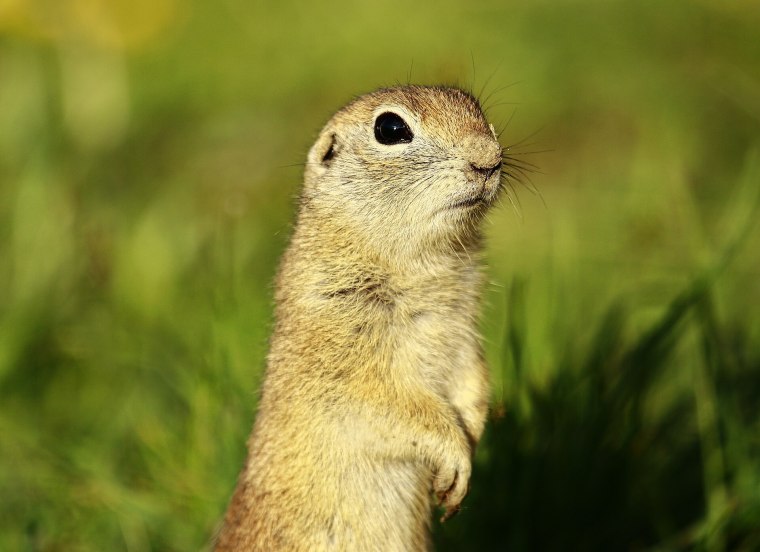
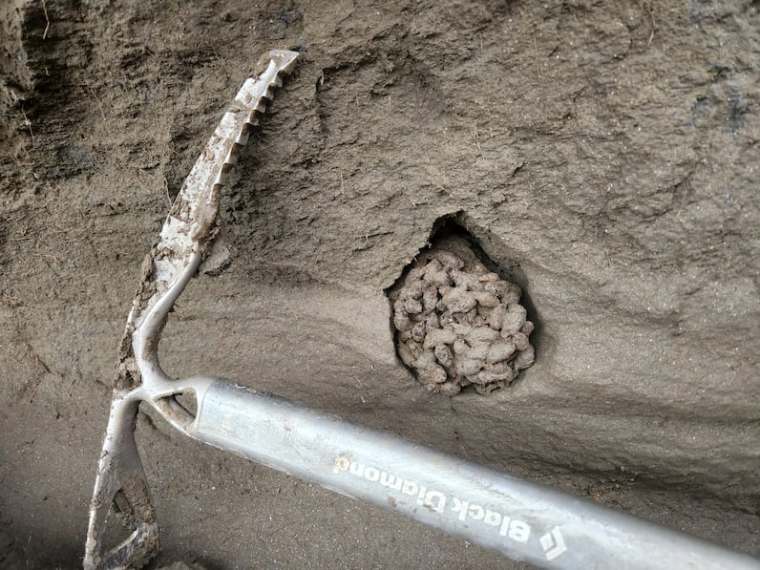
Lately, North American ground squirrels have been observed hunting, dismembering and eating voles. European tree squirrels also have a side that negates their nut-nibbling popular personae. They regularly take fledglings from bird nests. No more Mr Cute Squirrel then! In fact they’ll eat just about anything, including roadkill and even washed-up dead whales. A team of forensic ecologists from Canada, Sweden, Denmark and the US has harnessed this trait into a possibly ground-breaking study of how the Yukon Territory ecosystem evolved during the Pleistocene since 700 ka ago (Murchie, T.J. and 15 others 2026. Ground squirrel coprolites preserve complex archives of ancient environmental DNA over 700,000 years. Nature Communications, v. 17, article 4868; DOI: 10.1038/s41467-026-72977-6). Between 2007 and 2021 Tyler Murchie and colleagues collected ground squirrels’ faecal pellets from 14 latrine chambers or middens in their ancient burrows in a sequence of permafrost layers at the famous Klondike goldfields. The uppermost layers were dated using the 14C method, and for samples from deeper levels – older than 50 ka – using volcanic ash layers in the frozen sediments. Fourteen of the samples spanning 17 to 700 ka ago yielded fragmentary DNA from the squirrels’ diet.
Obviously this was dominated by their own DNA and gut bacteria, but contained fragments from an astonishing range of organisms that they had eaten. There were signs of at least 200 plant species: trees, shrubs grasses and flowering herbs known from the Pleistocene ‘mammoth steppe’ and tundra. Animal DNA included that from spiders, ants, moths, beetles, and grasshoppers, together with parasitic worms. But the most astonishing range of their appetites covers a great many mammals. As well as small mammals, such as mice, there are also signs of bison, mammoths, horses, sheep, wolves, and big cats having been eaten. It hardly needs to be emphasised that the Pleistocene ground squirrels did not hunt and overwhelm such prey, but they certainly did not reject a free meal of carrion lying on the tundra.
The wealth of species unwittingly archived by ground squirrels’ tendency to hide their droppings within their burrow systems offers a novel means of tracking the evolution of the ecosystem of which they were a part. It seems to outweigh the use of DNA extraction from soil horizons or even fossil bones. But to take matters further would require many more samples spread more evenly through the history of the mammoth steppe and tundra – most of the samples are from the last 90 ka. The Klondike goldfields are not representative of the whole of Arctic North America, being in a rugged terrain. Moreover, the Yukon Territory was repeatedly glaciated, as was the Canadian Shield itself. So, intact permafrost sequences spanning even the last glacial period are rare.
See also: A snapshot in time: Ancient ground squirrel droppings, dating back 700,000 years, reveal rich details about evolutionary history of the Arctic. EurekAlert 9 June 2026.


