Asteroid Bennu: a ‘lucky dip’ for NASA and planetary science

I must have been about ten years old when I last saw a ‘lucky dip’ or ‘bran tub’ at a Christmas fair.  You paid two shillings (now £0.1) to rootle around in the bran for 30 seconds and grab the first sizeable wrapped object that came to hand:. In my case that would be a cheap toy or trinket, but you never knew your luck as regards the top prize. There is a small asteroid called 101955 Bennu, about half a kilometre across, whose orbit around the Sun crosses that of the Earth. So it’s a bit scary, being predicted to pass within 750,000 km of Earth in September 2060 and has a 1 in 1,880 chance of colliding with us between 2178 and 2290 CE. Because Earth-crossing asteroids are a cheaper target than those in the Asteroid Belt, in 2016 NASA launched a mission named OSIRIS-REx to intercept Bennu, image it in great detail, snaffle a sample and ultimately return the sample to Earth for analysis. This wasn’t a shot in the dark, as a lot of effort and funds were expended to target and then visit Bennu. But unlike me at the fair ground, NASA will be very happy with the outcome.

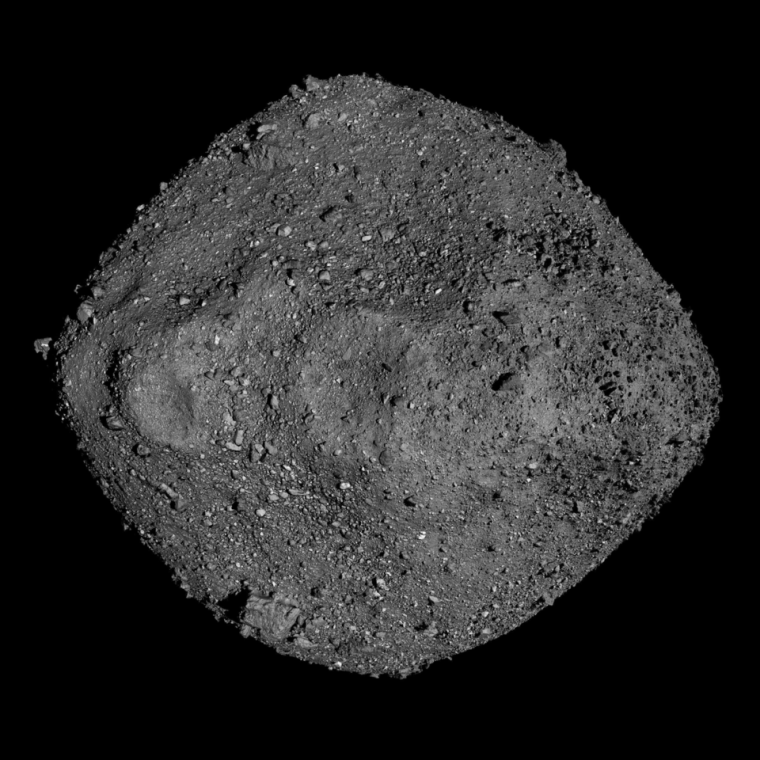
The asteroid Bennu, showing its oblate spheroidal shape, due to rotation, and its rubbly structure. Source: NASA/Goddard/University of Arizona via Wikimedia Commons

Bennu is a product of what might be regarded as ‘space sedimentation’, indeed a kind of conglomerate, being made up of boulders up to 58 m across set in gravelly and finer debris or ‘regolith’. High-resolution images revealed veins of carbonate minerals in the boulders. They suggest hydrothermal activity in a much larger parent body – one of many proto-planets accreted from interstellar gas and dust as the Solar System first began to form over 4.5 billion years ago. Its collision with another sizeable body knocked off debris to send a particulate cloud towards the Sun, subsequently to clump together as Bennu by mutual gravitational attraction. The carbonate veins can only have formed by circulation of water inside Benno’s  parent.

The ‘REx’ in the mission’s name is an acronym for ‘Regolith Explorer’. Sampling was accomplished on 20 October 2020 by a soft landing that drove a sample into a capsule, and then OSIRIS-REx ‘pogo-sticked’ off with the booty. The capsule was dropped off by parachute after the mission’s return on 24 September 2023, in the manner of an Amazon delivery by drone to a happy customer. So, you can understand my ‘lucky dip’ metaphor. And NASA certainly was ‘lucky’ as the contents turned out to be astonishing, as related two years later by the analytical team in the US, led by NASA’s Angel Mojarro (Mojarro, A. et al. 2025.Prebiotic organic compounds in samples of asteroid Bennu indicate heterogeneous aqueous alteration. Proceedings of the National Academy of Science, v. 122, article e2512461122; DOI: 10.1073/pnas.2512461122).

The rock itself is made from bits of carbonaceous chondrite, the most primitive matter orbiting the Sun. It contains fifteen amino acids, including all five nucleobases that make up RNA and DNA – adenine (A), guanine (G), cytosine (C), thymine (T) and uracil (U) – as in AUGC and AGCT. Benno’s complement of amino acids included 14 of the 20 used by life on Earth to synthesise proteins. The fifteenth, tryptophan, has never confidently been seen in extraterrestrial material before. Alkylated polycyclic aromatic hydrocarbons, also found in Bennu, are seen in abundance in interstellar gas clouds and comets by detecting their characteristic fluorescence when illuminated by mid-infrared radiation from hot stars using data from the Spitzer and James Webb Space Telescopes. These prebiotic organic compounds have been suggested to have played a role in the origin of life, but exposure to many produced by human activities are implicated in many cancers and cardiovascular issues.  A second paper by Japanese biochemists and colleagues from the US was also published in early December 2025 (Furukawa, Y. and 13 others 2025. Bio-essential sugars in samples from asteroid Bennu. Nature Geoscience, v. 12, online article; DOI: 10.1038/s41561-025-01838). The authors identified several kinds of sugars in a sample from Bennu, including ribose – essential for building RNA – and glucose. Bennu also contains formaldehyde – a precursor of sugars – perhaps originally in the same brines in which the amino acids formed.

Yet another publication coinciding with the aforementioned two focuses on products of the oldest event in the formation of Bennu: its content of pre-solar grains (Nguyen, A.N. et al. 2025. Abundant supernova dust and heterogeneous aqueous alteration revealed by stardust in two lithologies of asteroid Bennu. Nature Astronomy, v. 9, p. 1812-1820; DOI: 10.1038/s41550-025-02688-3).  In 1969 a 2 tonne carbonaceous chondrite fell near Allende in Mexico. The largest of this class ever found, it contained tiny, pale inclusions that eight years of research revealed to represent materials completely alien to the Solar System. They are characterised by proportions of isotopes of many elements that are very different from those in terrestrial materials. The anomalies could only have formed by decay of extremely short-lived isotopes that highly energetic cosmic rays produce in a manner analogous to neutron bombardment: they are products of nuclear transmutation. It is possible to estimate when the parent isotopes produced the anomalous ‘daughter’ products. One study found ages ranging from 4.6 to 7.5 Ga: up to three billion years before the Solar System began to form. It is likely that the grains are literally ‘star dust’ formed during supernovae in nearby parts of the Milky Way galaxy. Bennu samples contain six-times more presolar grains than any other chondritic meteorites. Nguyen et al. geochemically teased out grains with different nucleosynthetic origins. These ancient relics point to Bennu’s formation in a region of the presolar cloud that preceded the protoplanetary disk and was a mix of products from several stellar settings.

The results from asteroid Bennu support the key idea that that amino acid building blocks for all proteins and the nucleobases of the genetic code, together with other biologically vital compounds arose together in a primitive asteroid.  Its evolution provided the physical conditions, especially the trapping of water, for the interaction of simpler components manufactured in interstellar clouds. Such ‘fertile’ planetesimals and debris from them almost certainly accreted to form planets and endowed them with the potential for life. What astonishes me is that Bennu contains the five nucleobases used in terrestrial genetics and 70% of the amino acids from which all known proteins are assembled by terrestrial life. But, as I try to explain in my book Stepping Stones: The Making of Our Home World, life as we know it arose, survived and evolved through a hugely complex concatenation of physical and chemical events lasting more than 4.5 billion years. The major events and the sequences in which they manifested themselves may indeed have been unique. Earth is a product of luck and so are we!

See also: Tabor, A. et al. 2025. Sugars, ‘Gum,’ Stardust Found in NASA’s Asteroid Bennu Samples. NASA article 2 December 2025. Glavin, D.P. and 61 others 2025. Abundant ammonia and nitrogen-rich soluble organic matter in samples from asteroid (101955) Bennu. Nature Astronomy, v. 9, p. 199-210; DOI: 10.1038/s41550-024-02472-9

Evidence for geologically aware Neanderthals using sparks to light fires

As early as 3.4 Ma bones with cut marks first appear in Ethiopia suggesting that meat had by then entered the hominin diet. Access to such a rich source of protein has been suggested to have encouraged the evolution of larger hominin brains. By around2.4 Ma ago it may have led to the first known human species (Homo habilis) with a brain larger than those of australopithecines. Homo ergaster, with a significantly larger brain size, first appeared at about 1.8 Ma. As the probable inventor of bifacial stone tools and being the first hominin to leave Africa, H. ergaster needed greater cognitive abilities.It is quite likely that discovery of means to cook food then provided a further boost to human evolution. Cooking unfolds the proteins in meat and also breaks down the constituents of raw vegetables making both more palatable and easier to digest. Also, many potentially nutritious tubers are toxic if not processed and cooked. Another evolutionary advantage is that such an increased uptake of nutrients without needing an increase in successful hunting and foraging reduces the length of the ‘working day’. Fire itself provides warmth, protection from large predators and light, which further increases the time available for social and mental activities.

Being able to cook demands the controlled use of fire. But when was fire first harnessed? After 3 Ma the climate in East Africa cooled to open up dry savannah, prone to wildfires. Finding naturally roasted carcases may have been an incentive for hominins to use smouldering patches to cook meat. The next breakthrough would have been carrying embers to light fires elsewhere. The earliest tentative evidence for such a fire was discovered at Swartkrans in South Africa. Crudely dated between 2 to 1 Ma, it was a reddened patch of soil containing charred, cut marked bones and burnt biface tools. Definite evidence only appears with the burnt teeth of large carp-like fish from a 780 ka site found at Gesher Benot Ya’aqob in Israel. So, archaeological evidence for cooking is very rare. Imagine, then, the excitement of a group of archaeologists from the British Museum and the Natural History Museum in London and several universities in the UK and Netherlands at finding a small, 400 ka-old Neanderthal hearth at Barham in Kent, England containing direct evidence of how the fire was lit (Davis, R. and 14 others 2025. Earliest evidence of making fireNature, online advance publication. DOI: 10.1038/s41586-025-09855-6). Apparently, there are signs that fires had been lit at the hearth on twelve or more occasions. So, clearly, the spot was used regularly by Neanderthals.

Striking sparks with flint and pyrite. Credit: Craig Williams, The Trustees of the British Museum

The burnt-earth site yielded fire-cracked flint hand axes and fragments of the mineral pyrite (FeS2). Pyrite, named from the Greek word for ‘fire’ – i.e. ‘fire stone’ – creates showers of sparks when scraped with a hard, sharp tool. Struck into dry grass tinder the sparks cause it to smoulder and then burst into flame when blown on. This approach has been used throughout historic times. Interestingly, pyrite is not found in local rocks and had to have been brought from outcrops of Cretaceous Chalk 15 km away, which is also a major source of flint for stone tools. Not only had the Neanderthal ‘campers’ mastered this fire lighting method, they knew where to get the minerals required. With these skills, they could have lit fires on demand wherever they were; to cook, keep warm, light the night and keep predators at bay. The find is a lucky one, for pyrite eventually oxidises in damp air. The skill may have been acquired long before 400 ka. Yet, as most school children used to know, you can also produce fire, or at least embers and smoke(!), by abrading softwood (a schoolroom desk top) with hardwood (a wooden ruler) … Other abrasive methods are available, but none so handy as a flint-pyrite tinderbox.

See also: Smith, K.N. 2025. Getting lit: This is the oldest evidence of people starting fires. Ars Technica; 10 December 2025

The ‘boring billion’ years of the Mesoproterozoic: plate tectonics and the eukaryotes

The emergence of the eukaryotes – of which we are a late-entry member – has been debated for quite a while. In 2023 Earth-logs reportedthat a study of ‘biomarker’ organic chemicals in Proterozoic sediments suggests that eukaryotes cannot be traced back further than about 900 Ma ago using such an approach. At about the same time another biomarker study showed signs of a eukaryote presence at around 1050 Ma. Both outcomes seriously contradicted a ‘molecular-clock’ approach based on the DNA of modern members of the Eukarya and estimates of the rate of genetic mutation. That method sought to deduce the time in the past when the last eukaryotic common ancestor (LECA) appeared. It pointed to about 2 Ga ago, i.e. a few hundred million years after the Great Oxygenation Event got underway. Since eukaryote metabolism depends on oxygen, the molecular-clock result seems reasonable. The biomarker evidence does not. But were the Palaeo- and Mesoproterozoic Eras truly ‘boring’? A recent paper by Dietmar Müller and colleagues from the Universities of Sydney and Adelaide, Australia definitely shows that geologically they were far from that (Müller, R.D. et al. 2025. Mid-Proterozoic expansion of passive margins and reduction in volcanic outgassing supported marine oxygenation and eukaryogenesis. Earth and Planetary Science Letters, v. 672; DOI: 10.1016/j.epsl.2025.119683).

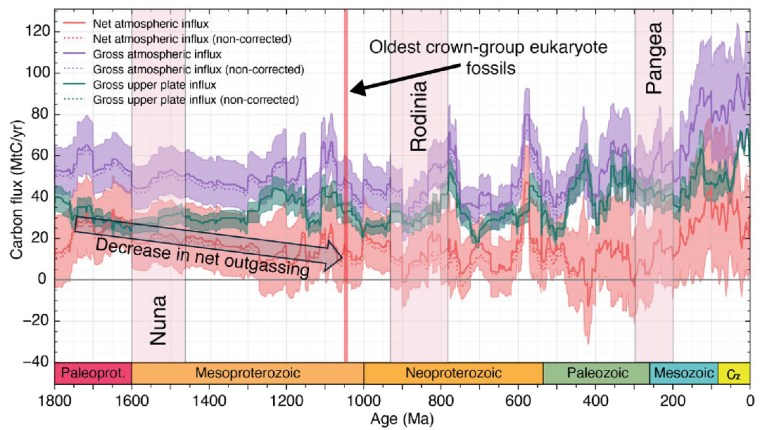
Carbon influx (million tons per year) into tectonic plates and into the ocean-atmosphere system from 1800 Ma to present. The colour bands represent: total carbon influx into the atmosphere (mauve); sequestered in tectonic plates (green); net atmospheric influx i.e. total minus carbon sequestered into plates (orange). The widths of the bands show the uncertainties of the calculated masses shown as darker coloured lines.

From 1800 to 800 Ma two supercontinents– Nuna-Columbia and Rodinia – aggregated nearly all existing continental masses, and then broke apart. Continents had collided and then split asunder to drift. So plate tectonics was very active and encompassed the entire planet, as Müller et al’s palaeogeographic animation reveals dramatically. Tectonics behaved in much the same fashion through the succeeding Neoproterozoic and Phanerozoic to build-up then fragment the more familiar supercontinent of Pangaea. Such dynamic events emit magma to form new oceanic lithosphere at oceanic rift systems and arc volcanoes above subduction zones, interspersed with plume-related large igneous provinces and they wax and wane. Inevitably, such partial melting delivered carbon dioxide to the atmosphere. Reaction on land and in the rubbly flanks of spreading ridges between new lithosphere and dissolved CO2 drew down and sequestered some of that gas in the form of solid carbonate minerals. Continental collisions raised the land surface and the pace of weathering, which also acted as a carbon sink. But they also involved metamorphism that released carbon dioxide from limestones involved in the crustal transformation. This protracted and changing tectonic evolution is completely bound up through the rock cycle with geochemical change in the carbon cycle.

From the latest knowledge of the tectonic and other factors behind the accretion and break-up of Nuna and Rodinia, Müller et al. were able to model the changes in the carbon cycle during the ‘boring billion’ and their effects on climate and the chemistry of the oceans. For instance, about 1.46 Ga ago, the total length of continental margins doubled while Nuna broke apart. That would have hugely increased the area of shallow shelf seas where living processes would have been concentrated, including the photosynthetic emission of oxygen. In an evolutionary sense this increased, diversified and separated the ecological niches in which evolution could prosper. It also increased the sequestration of greenhouse gas through reactions on the flanks of a multiplicity of oceanic rift systems, thereby cooling the planet. Translating this into a geochemical model of the changing carbon cycle (see figure) suggests that the rate of carbon addition to the atmosphere (outgassing) halved during the Mesoproterozoic. The carbon cycle and probable global cooling bound up with Nuna’s breakup ended with the start of Rodinia’s aggregation about 1000 Ma ago and the time that biomarkers first indicate the presence of eukaryotes.

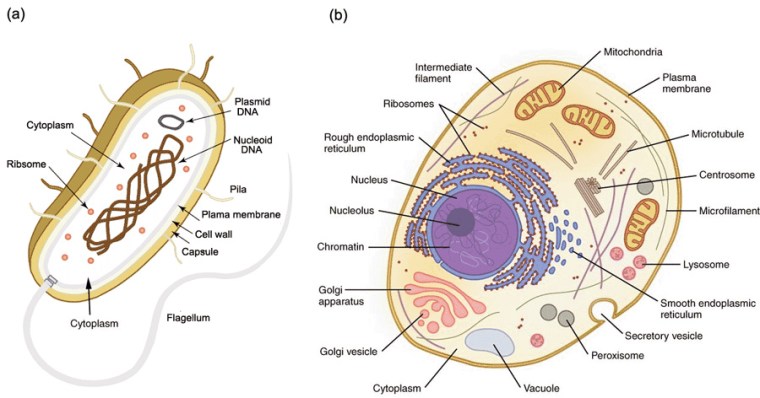
Simplified structures of (a) a prokaryote cell; (b) a simple eukaryote animal cell. Plants also contain organelles called chloroplasts

So, did tectonics play a major role in the rise of the Eukarya? Well, of course it did, as much as it was subsequently the changing background to the appearance of the Ediacaran animals and the evolutionary carnival of the Phanerozoic. But did it affect the billion-year delay of ‘eukaryogenesis’ during prolonged availability of the oxygen that such a biological revolution demanded? Possibly not. Lyn Margulis’s hypothesis of the origin of the basic eukaryote cell by a process of ‘endosymbiosis’ is still the best candidate 50 years on. She suggested that such cells were built from various forms of bacteria and archaea successively being engulfed within a cell wall to function together through symbiosis. Compared with prokaryote cells those of the eukaryotes are enormously complex. At each stage the symbionts had to be or become compatible to survive. It is highly unlikely that all components entered the relationship together. Each possible kind of cell assembly was also subject to evolutionary pressures. This clearly was a slow evolutionary process, probably only surviving from stage to stage because of the global presence of a little oxygen. But the eukaryote cell may also have been forced to restart again and again until a stable form emerged.

See also: New Clues Show Earth’s “Boring Billion” Sparked the Rise of Life. SciTechDaily, 3  November 2025

The hand of Paranthropus boisei

One of the longest-lived hominin species that we know of was Paranthropus boisei, remains of which occur in East African sediments between 2.6 and 1.3 Ma. Others, including our own species, lasted nowhere near as long, except perhaps for Homo erectus who emerged around 1.9 Ma ago and is believed by some to have lingered on in Java until about 112 ka ago. However, when the unresolved muddle in the Middle Pleistocene of similar-looking hominin fossils is eventually unravelled – as now seems to be on the cards – that may limit the range of H. erectus to 1.9 -1.0 Ma. Paranthropoid remains are easily distinguished from those of their contemporary hominins – australopithecines and early species of Homo – being extremely robust compared with the ‘gracile’ members of the human line. They were also bipedal, but their fossil skulls are distinctive: massive teeth and jaws, and a bone crest on top of the cranium to which very powerful chewing muscles were attached. Once regarded as a sort of upright gorilla with vegetarian habits, evidence has accumulated since their first discovery that they may have been far more remarkable.

Reconstruction of a Paranthropus head (Credit: Jerry Humphrey, Pinterest)

The earliest paranthropoid was P. aethiopicus from Ethiopia, dated at around 2.7 to 2.3 Ma, and believed to be the common ancestor of P. boisei and P. robustus found in Tanzania and South Africa respectively. Stone and bone tools associated with paranthropoid remains have been found in South and East Africa, some of which show signs of having been burnt. The connection between paranthropoids and both tool- and fire-making is clearly impossible to verify with certainty, and so too for their known association with australopithecine remains – or even the earliest known humans (Homo habilis) for that matter. Palaeoanthropologists are not likely to find a near-complete skeleton of any of these candidates with a tool grasped in the remains of a hand! The issue can be partly resolved if it can be shown that a fossil hand was capable of making and using tools. The fabled ‘opposable thumb’ that is capable of touching the tips of all four fingers is essential for the necessary ‘precision grip’. Isolated, 2 Ma-old thumb bones probably able to do that were found in the famous Swartkrans Cave in South Africa, but with no clue as to which hominin species had yielded them. In fact had that matter been resolved there and then, it would be not take the hominin story very far, simply because evidence for tool use – tools and cut marks on bone – goes back as far as 3.3 Ma, again with more than one candidate for the usefully endowed hominin species.

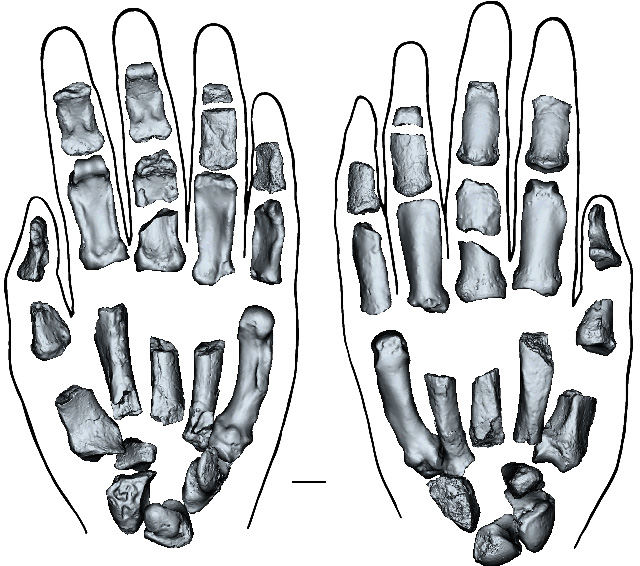
The left hand of Paranthropus boisei reconstructed from individual bones, palm-up on the left, palm down on the right. Credit: Mongle et al, Fig 3.

Remarkably, a group of scientists from the US, Canada, Australia, South Africa and Kenya have indeed unearthed from 1.5 Ma sediments on the shore of Lake Turkana in Kenya a near-complete left hand associated with cranial bones and teeth from Paranthropus boisei  (Mongle,C.S. and 29 others 2025. New fossils reveal the hand of Paranthropus boisei. Nature v. 647, p. 944–951; DOI: 10.1038/s41586-025-09594-8). It is clear that the P. boisei hand shared some of the manipulative capacity of modern human hands, though it bears some resemblance to gorilla hands. That hand was probably nimble enough to make and use simple stone tools. It would also have had a powerful grip, sufficient for climbing and wielding a large stick. Yet again, it does not indicate which species first adopted tool making and use.

There are several interesting possibilities. It may be that a form of convergent evolution enabled two separate genera to become capable of such skills and the intellect to put them to use: tools, however simple, confer enormous evolutionary advantages. Had the antecedents of humans – presumably a species of Australopithecus – been the first, paranthropoids may have observed and adopted tools or vice versa. Just as possible, the – as yet unknown – common ancestor of both may have made this fundamental leap, which would have benefitted both vegetarian and omnivorous descendants. In that case the physiology of each group may have diverged with their lifestyles. Eating roots and leaves requires considerably more physical effort than getting sufficient protein and fats partly by devouring flesh.

AI unravels chemical signs of the earliest life on Earth

Evidence for the earliest life on Earth has largely relied on finding signs of structures that may have been created during the Archaean Eon by micro-organisms. Actual fossils don’t turn up until the Proterozoic. The most distinctive and diverse of these are members of the Ediacaran fauna dated at around 635 Ma . The oldest widely accepted multi-celled eukaryote fossil was found in 2.1 billion-year old sediments from Gabon (see: The earliest multicelled life; July 2010). There have been a few claims for biogenic material, such as microscopic tubular structures in 3.5 billion-year (Ga) old pillow lavas and 3.2 Ga cherts from South Africa (see: Early biomarkers in South African pillow lavas; April 2004 and Believable Archaean fossils; March 2010) which some researchers dispute. Then there are Archaean stromatolites, which may be evidence for bacterial mats. The oldest of them have been claimed to occur in the famous, 3.77 Ga Isua metasediments of West Greenland. But such early fossils are chance finds, so geochemists have entered the arena with attempts to find irrefutable chemical signatures for life in ancient rocks.

One approach is isotope geochemistry. Carbon isotope data have been widely used, because life processes, such as photosynthesis, result in a deficiency of 13C relative to 12C. This was tried on graphite crystals trapped in sedimentary phosphate minerals from Isua. The results were at first acclaimed as a sign of life at around 3.8 Ga, but then refuted. In 2015 a similar approach was applied to graphite trapped in a 4.1 Ga detrital zircon, seemingly pushing back evidence for life into the Hadean. But zircon is a mineral produced by crystallisation of magma, so the fractionation of carbon isotopes in trapped graphite seem unlikely to shed light on the earliest life. The main drawback to using carbon isotopes is because metamorphism, Fischer-Tropsch mechanisms in hydrothermal environments, and volcanic processes may be responsible for enrichment of lighter carbon isotopes relative to 13C. The relative abundance of the different isotopes of iron in Archaean sediment may give clues to the transient availability of oxygen generated by bacterial photosynthesis that would oxidise soluble Fe2+ to insoluble Fe3+. Promising results were obtained in 2013 from 3.8 Ga banded ironstones at Isua. But doubt was again raised, so the only generally accepted evidence is that of the microfossils found in hydrothermal cherts in Palaeoarchaean pillow lavas from South Africa and Western Australia and the earliest stromatolites, all around 3.4 to 3.5 Ga old. However, recent research may have opened up a more convincing route to tracking down ancient life forms –actual organic molecules that make up or are produced by organisms.

Michael Wong and co-workers at the Carnegie Institution for Science in Washington, DC, USA together with other colleagues from the US, Austria, Canada, China, Belgium, Norway, Australia, the UK and France used artificial intelligence to wade through the results of geochemical analysis of over 400 ancient and modern carbon-bearing samples. (Wong, M.I. and 28 others 2025. Organic geochemical evidence for life in Archean rocks identified by pyrolysis–GC–MS and supervised machine learning. Proceedings of the National Academy of Sciences, v. 122, article e2514534122: DOI: 10.1073/pnas.2514534122). Their objective was to track the presence of organically derived molecules as far back as possible. Their approach bears a passing resemblance to that used to build genomes of ancient fossils from broken bits of DNA that reside in them. Like DNA, bio-molecules degrade over time, but leave fragments in rocks that can be detected using pyrolysis gas chromatography and mass spectrometry. In itself PGC-MS is not especially new, but using artificial intelligence (machine learning) on a massive date set certainly is: perhaps the first major trial of AI in geology.

Percentages of samples designated as biogenic by Wong et al’s AI analysis. Credit: Wong et al, Fig 4

Their samples were not just ancient rocks going back into the Archaean as far back as 3.5 Ga, but included modern biological material, meteorites presumed to have been devoid of life since their origin in pre-solar system times and synthetic samples. Wong et al divided 272 samples with known biological affinities into 9 groups to train the AI algorithm. The analytical method breaks down organic and inorganic carbonaceous materials into fragments of molecules: the opposite of DNA sequencing. When subjected to PGC-MS each type of living organism, from bacteria to animals produces a distinct pattern of molecular fragments. The AI analysis is based on a sophisticated statistical algorithm being trained to recognise ‘debris’ from organic and inorganic carbonaceous compounds according to each sample’s geochemical ‘fingerprint’. Part of the ‘training’ was based on sediments that contain irrefutable fossil samples from as far back in time as the Mesoproterozoic (1000 Ma). Another part was based on definitely inorganic materials, such as carbonaceous meteorites. AI proved able to distinguish biological from inorganic material with a probability up to 0.9 (90%). These results suggested that older, more biologically uncertain material could be assessed.

The AI was able to distinguish general biogenic affinities from inorganic ones in samples with decreasing success going back in time: as high as 0.93 in the Phanerozoic to 0.47 in the Archaean. The oldest samples that reached the probability threshold for this distinction (0.6) were 3.3 Ga cherts from the Barberton Greenstone Belt in South Africa. Another distinction between photosynthetic and and non-photosynthetic affinities among the samples that ‘passed’ as probably biotic reached the 0.6 probability threshold at 2.5 Ga for a sample from South Africa. Non-photosynthetic, but still probably biotic samples extend as far back as 3.5 Ga in South African and Western Australian Greenstone Belts.

Although Wong et al’s preliminary exploration with their novel approach doesn’t take us beyond the current 3.4 to 3.5 Ga age for the earliest tangible suggestions of life. However, they note ‘…our sample inventory is notably lacking in ancient abiogenic samples’. This is a good indication of the promise for further progress that the approach offers. Previous research has sought intact biogenic molecules, with not a great deal of luck, over several decades. Their final conclusion is ‘…information-rich attributes of ancient organic matter, even though highly degraded and with few if any surviving biomolecules, have much to reveal about the nature and evolution of life.’ They have opened a very important avenue in palaeobiological research , as their methodology seems capable of fine tuning to all manner of pro- and eukaryote biochemical distinctions. It could even be used with extraterrestrial material, should we ever get any …

See also: Walsh, E. 2025. Researchers report earliest molecular evidence of photosynthetic life. Chemical & Engineering News, 18 November 2025.

A ‘worm’ revolution and ecological transition before the Cambrian explosion

Bioturbated ‘pipe rock’ of the basal Cambrian sandstones of NW Scotland. Credit: British Geological Survey photograph P531881

About 530 Ma ago most of the basic body plans of today’s living organisms can be detected as fossils, i.e. preserved hard parts. Yet studies of trace fossils (ichnofossils) – marks left in sediments by active soft bodied creatures suggest that many modern phyla arose before the start of the Cambrian (~539 Ma), as early as 545 Ma. So the term ‘Cambrian explosion’ seems to be a bit of a misnomer on two counts: it lasted around 15 Ma and began before the Cambrian. Preceding it was the Ediacaran Period that began around 100 Ma earlier in the Neoproterozoic Era. Traces of its eponymous fauna of large soft-bodied organisms are found on all continents, but apparently none of them made it into the Phanerozoic fossil record. Another characteristic of the Ediacaran is that its sedimentary rocks – and those of earlier times – show no signs of burrowing: they are not bioturbated. That may be why the Ediacaran pancake-, bun-, bag- and pen-like lifeforms are so remarkably well preserved. But a lack of burrowing did not extend to the beginning of Cambrian times. The most likely reason why it was absent during the early Ediacaran Period is that sea-floor sediments then were devoid of oxygen so eukaryote animals could not live in them. But the presence of these large organisms showed that seawater must have been oxygenated. Now clear signs of burrowing have emerged from study of Ediacaran rocks exposed in the Yangtze Gorge of Hubei,southern China ( Zhe Chen & Yarong Liu 2025. Advent of three-dimensional sediment exploration reveals Ediacaran-Cambrian ecosystem transition. Science Advances, v. 11, article eadx9449; DOI: 10.1126/sciadv.adx9449).

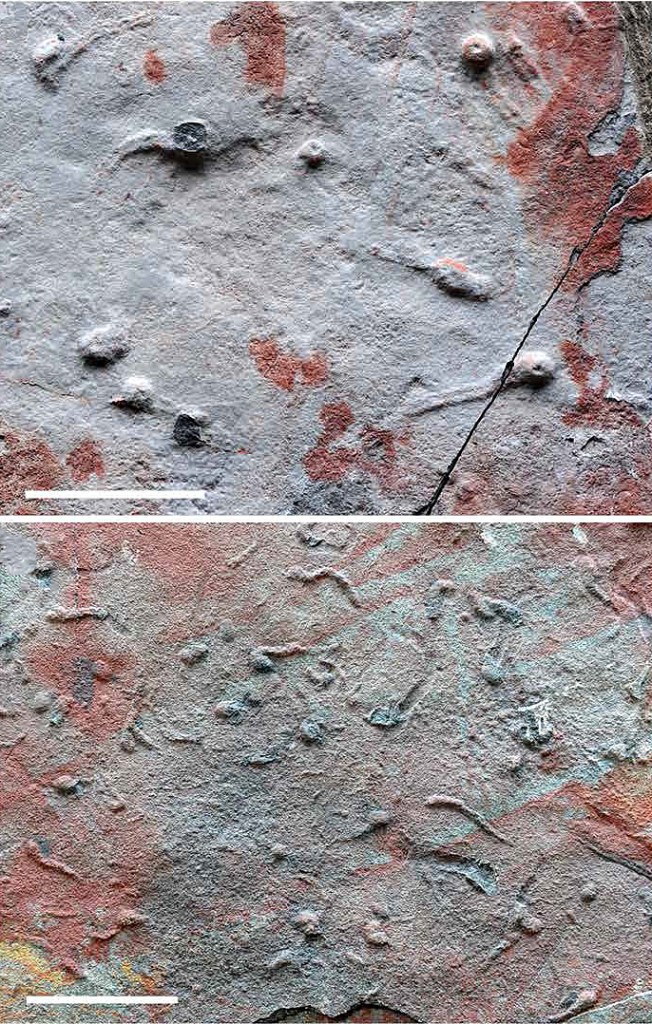
Tadpole-like trace fossils from the Ediacaran Dengying Formation in the Yangtze Gorge: 5 cm scale bars. The ‘heads’ show tiny depressions suggesting that there maker probed into the sediments as well as foraging horizontally. Credit: Zhe Chen & Yarong Liu; Figs 3B and 3D

Zhe Chen and Yarong Liu of the Nanjing Institute of Geology and Palaeontology and Chinese Academy of Sciences in China examined carbonates of the upper Ediacaran Dengying Formation. This overlies the Doushantuo Formation (550 to 635 Ma), known for tiny fossils of possibly the oldest deuterostome Saccorhytus coronaries; a potential candidate for the ancestor of modern bilaterian phyla. In the Yangtze Gorge locality sediments at this level show only traces of browsing of bacterial mats on the sediment surface; i.e. 2-D feeders. The basal Dengying sediments host clear signs that organisms could then penetrate into the sediments. These 3-D feeders , would have had access to buried organic remains, hitherto unexploited by living organisms. Such animal-sediment interactions would have disturbed and diminished the living microbial mats that held the sediment surface in place, and thus began to dismantle the substrate for the typical Edicaran fauna. Similar 3-D feeders occur throughout the 11 Ma represented by the Dengying Formation to the start of the Cambrian. This beginning of bioturbation heralded a period during which the Ediacaran fauna steadily waned. It also released nutrients into deep water, and opened up new ecological niches for more advanced animals on the seabed.  Dissolved oxygen could only slowly enter the sediments since atmospheric and oceanic O2 levels were low. But by the earliest Cambrian it had risen to about 5 to 10% by volume to support many other kinds of burrowing animals that could penetrate more deeply, as witnessed by the abundant sandstones that occur at the base of the Cambrian in Britain.

A hint of proto-Earth that predates Moon formation by giant impact  

Artist’s impression of the impact of a roughly Mars-size planet with the proto-Earth to form an incandescent cloud, from part of which the Moon formed.

Geochemists have gradually built a model of the proportions of the 92 naturally occurring elements that characterise the Solar System. It is based on systematic chemical analysis of meteorites, especially the ‘stony’ ones. One hypothesis for Earth formation is that the bulk of it chemically resembles a class of meteorites known as C1 carbonaceous chondrites. But there are important deviations between that and reality. For instance the relative proportions of the isotopes of several elements in meteorites have been found to differ. Because nuclei of all the elements and their individual isotopes have been shown to form in supernovae through nucleosynthesis, such instances are known as ‘nucleosynthetic anomalies’. An example is that of the isotopes of potassium (K), which was investigated by a team of geochemists from the Carnegie Institution for Science in Washington DC, USA and the Chengdu University of Technology, China led by Nicole Nie  (Nie, N.X. et al. 2023. Meteorites have inherited nucleosynthetic anomalies of potassium-40 produced in supernovae. Science, v.379, p, 372-376; DOI: 10.1126/science.abn1783).

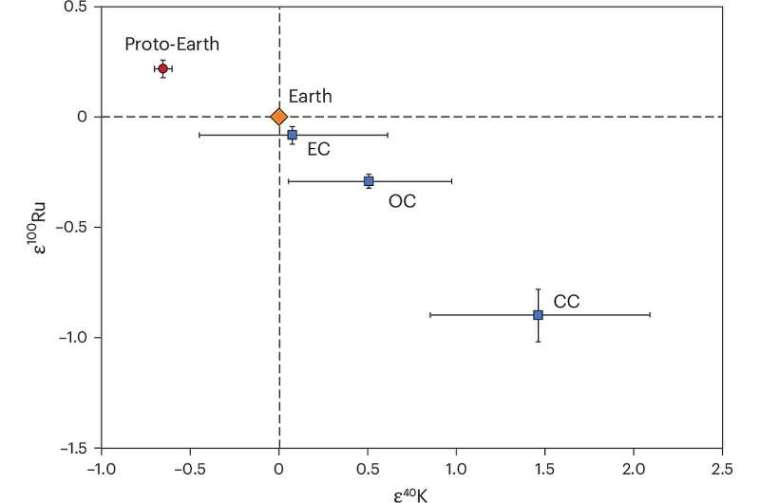
A measure for the magnitude of this nucleosynthetic anomaly  is the ratio between the abundance in a sample of potassium’s  rarest (40K) and its most common isotope (39K), divided by the ratio in an accepted standard of terrestrial rock. Since isotopically identical samples would yield a value of 1, the result has 1.0 subtracted from it to emphasise anomalies. Samples that are relatively depleted in 40K give negative values, whereas enriched samples give positive values. This measure is signified by ε40K, ε being the Greek letter epsilon. The authors found significant and variable positive anomalies of ε40K in carbonaceous chondrite (CC) meteorites, compared with non-carbonaceous (NC) meteorites. They also found that ε40K data in terrestrial rocks are quite different from those of CC meteorites. Indeed, they suggested that Earth was more likely to have formed from NC meteoritic material. Clearly, there seems to be something seriously amiss with the hypothesis that Earth largely accreted from C1 carbonaceous chondrites.

The correlation between ε40K and ε100Ru in meteorites (EC – enstatite chondrites, OC – ordinary chondrites; CC – carbonaceous chondrites), Earth and a geochemically modelled proto-Earth. Credit: Da Wang et al., Fig 2

Three of the authors of Nie et al. and other researchers from MIT in Cambridge MA and Scripps Institution of Oceanography in San Diego CA, USA and ETH in Zurich, Switzerland have produced more extensive potassium isotope data to examine Earth’s possible discrepancy with the chondritic Earth hypothesis (Da Wang et al. 2025. Potassium-40 isotopic evidence for an extant pre-giant-impact component of Earth’s mantle. Nature Geoscience, v. 18, online article; DOI: 10.1038/s41561-025-01811-3). To better approximate the bulk Earth’s potassium isotopes they analysed a large number of terrestrial rock samples of all kinds and ages to compare with meteorites of different classes. Meteorites also have variable  nucleosynthetic anomalies for ruthenium-100 (ε100Ru). So, ε40K  and ε100Ru may be useful tracers with regards to Earth’s history. But, for some reason, the research group did not analyse ruthenium isotopes in the terrestrial samples.

Most samples of igneous rocks from different kinds of Phanerozoic volcanic provinces (continental flood basalts, island arcs, and ocean ridge basalts) showed no evidence of anomalous potassium isotopes. However, some young ocean-island basalts from Réunion and Hawaii showed considerable depletion in 40K. A quarter of early Archaean (>3.5 Ga) metamorphosed basaltic rocks from greenstone belts also showed clear 40K depletion. Yet no samples of granitic crust of similar antiquity showed any anomaly and nor did marine sediments derived from younger continental crust. Even the oldest known minerals – zircon grains from Jack Hills Western Australia – showed no anomalies. The authors suggest that both the anomalous groups of young and very ancient terrestrial basalts show signs that their parent magmas may have formed by partial mantle melting of substantial bodies of the relics of proto-Earth. To account for this anomalous mantle Da Wang et al. suggest from modelling that proto-Earths 40K deficit may have arisen from early accretion of meteorites with that property. Later addition of material more enriched with that isotope, perhaps as meteorites or through the impact with a smaller planet that triggered Moon-formation. That cataclysm was so huge that it left the Earth depleted in ‘volatile’ elements and in a semi-molten state. It reset Earth geochemistry as a result of several processes including the mixing induced by very large-scale melting. No radiometric dating has penetrated that far back in Earth history. However, in February 2004, Alex Halliday used evidence from several isotopic systems (Pb, Xe, Sr, W) to show that about two thirds of Earth’s final mass may have accreted in the first 11 to 40 Ma of its history.

Curiously, none of the hundreds of meteorites that have been geochemically analysed show the level of 40K depletion in the terrestrial samples. Nicole Nie has comments, “… our study shows that the current meteorite inventory is not complete, and there is much more to learn about where our planet came from.”

I’m persuaded to write this by ‘Piso Mojado’. And today – 23rd October – is the anniversary of the Creation of Earth, Life and the Universe in 4004 BCE, according to Archbishop James Ussher (1581-1656) by biblical reckoning, which always tickles me!

See also: Chu, J. 2025. Geologists discover the first evidence of 4.5-billion-year-old “proto Earth”. MIT News, 14 October 2025.

The final closure of the Iapetus Ocean

A symposium hosted by the Royal Society in 1965 aimed at resurrecting Alfred Wegener’s hypothesis of continental drift. During the half century since Wegener made his proposal in 1915, it had been studiously ignored by most geologists. The majority had bumbled along with the fixist ideology of their Victorian predecessors. The symposium launched what can only be regarded as a revolution in the Earth Sciences. In the three years following the symposium, the basic elements of plate tectonics had emerged from a flurry of papers, mainly centred on geophysical evidence. Geology itself became part of this cause célèbre through young scientists eager to make a name for themselves. The geological history of Britain, together with that of the eastern North America, became beneficiaries only four years after the Royal Society meeting (Dewey, J. 1969. Evolution of the Appalachian/Caledonian Orogen. Nature 222, 124–129; DOI: 10.1038/222124a0).

In Britain John Dewey, like a few other geologists, saw plate theory as key to understanding the many peculiarities revealed by geological structure, igneous activity and stratigraphy of the early Palaeozoic. These included very different Cambrian and Ordovician fossil assemblages in Scotland and Wales, now only a few hundred kilometres apart. The Cambro-Ordovician of NW Scotland was bounded to the SE by a belt of highly deformed and metamorphosed Proterozoic to Ordovician sediments and volcanics forming the Scottish Highlands. That was terminated to the SE by a gigantic fault zone containing slivers of possible oceanic lithosphere. The contorted and ‘shuffled’ Ordovician and Silurian sediments of the Southern Uplands of Scotland. The oldest strata seemed to have ocean-floor affinities, being deposited on another sliver of ophiolites.  A few tens of km south of that there was a very different Lower Palaeozoic stratigraphy in the Lake District of northern England. It included volcanic rocks with affinities to those of modern island arcs. A gap covered by only mildly deformed later Palaeozoic shelf and terrestrial sediments, dotted by inliers of Proterozoic sediments and volcanics separated the Lake District from yet another Lower Palaeozoic assembly of arc volcanics and marine sediments in Wales. Intervening in Anglesey was another Proterozoic block of deformed sediments that also included ophiolites.

Dewey’s tectonic assessment from this geological hodge-podge, which had made Britain irresistible to geologists through the 19th and early 20th centuries, was that it had resulted from blocks of crust (terranes), once separated by thousands of kilometres, being driven into each other. Britain was thus formed by the evolution and eventual destruction of an early Palaeozoic ocean, Iapetus: a product of plate tectonics. Scotland had a fundamentally different history from England and Wales; the unification of several terranes having taken over 150 Ma of diverse tectonic processes. Dewey concluded that the line of final convergence lay at a now dead, major subduction zone – the Iapetus Suture – roughly beneath the Solway Firth. During the 56 years since Dewey’s seminal paper on the Caledonian-Appalachian Orogeny details and modifications have been added at a rate of around one to two publications per year. The latest seeks to date when and where the accretion of 6 or 7 terranes was finally completed (Waldron, J.W.F. et al. 2025. Is Britain divided by an Acadian suture?  Geology, v. 53, p. 847–852; DOI: 10.1130/G53431.1).

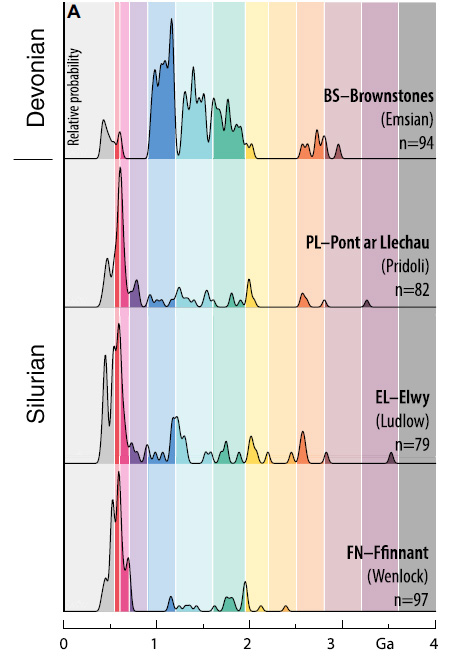
Kernel density plots – smoothed versions of histograms – of detrital zircon ages in Silurian and Devonian sandstones from Wales. The bracketed words are stratigraphic epochs. Credit: Waldron et al. 2025, Fig 3A

John Waldron and colleagues from the University of Alberta and Acadia University in Canada and the British Geological Survey addressed this issue by extracting zircons from four late Silurian and early Devonian sandstones in North and South Wales. These sediments had been deposited between 433 and 393 Ma ago at the southernmost edge of the British Caledonide terrane assemblage towards the end of terrane assembly. The team dated roughly 250 zircons from each sandstone using the 207Pb/206Pb and 206Pb/238U methods. Each produced a range of ages, presumed to be those of igneous rocks from whose magma the zircon grains had crystallised. These data are expressed as plots of probable frequency against age.  Each pattern of ages is assumed to be a ‘fingerprint’ for the continental crust from which the zircons were eroded and transported to their resting place in their host sediment. In this case, the researchers were hoping to see signs of continental crust from the other side of the Caledonian orogen; i.e. from the Precambrian basement of the Laurentia continent.

The three late-Silurian sediments showed distinct zircon-age peaks around 600 Ma and a spread of smaller peaks extending to 2.2 Ga. This tallied with a sediment source in Africa, from which the southernmost Caledonian terrane was said to have split and moved northwards.  The Devonian sediment lacked signs of such an African ‘heritage’ but had a prominent age peak at about 1.0 Ga, absent from the Welsh Silurian sediments.  Not only is this a sign of different sediment provenance but closely follows the known age of a widespread magmatic pulse in the Laurentian continent. So, sediment transport from the opposite side of the Iapetus Ocean across the entire Caledonian orogenic belt was only possible after the end of the Silurian Period at around 410 Ma. There must have been an intervening barrier to sediment movement from Laurentia before that, such as deep ocean water further north. Previous studies from more northern Caledonian terranes show that Laurentian zircons arrived in the Southern Uplands of Scotland and the English Lake District around 432 Ma in the mid-Silurian. Waldron et al. suggest, on these grounds that the suture marking the final closure of the Iapetus Ocean lies between the English Lake District and Anglesey, rather than beneath the Solway. They hint that the late-Silurian to early Devonian granite magmatism that permeated the northern parts of the Caledonian-Appalachian orogen formed above northward subduction of the last relics of Iapetus, which presaged widespread crustal thickening known as the Acadian orogeny in North America.

Readers interested in this episode of Earth history should download Waldron et al.’s paper for its excellent graphics, which cannot be reproduced adequately here.

Gravity survey reveals signs of Archaean tectonics in Canadian Shield

Much of the Archaean Eon is represented by cratons, which occur at the core of continental parts of tectonic plates. Having low geothermal heat flow they are the most rigid parts of the continental crust.  The Superior Craton is an area that makes up much of the eastern part of the Canadian Shield, and formed during the Late Archaean from ~4.3 to 2.6 billion years (Ga) ago. Covering an area in excess of 1.5 million km2, it is the world’s largest craton. One of its most intensely studied components is the Abitibi Terrane, which hosts many mines. A granite-greenstone terrain, it consists of volcano-sedimentary supracrustal rocks in several typically linear greenstone belts separated by areas of mainly intrusive granitic bodies. Many Archaean terrains show much the same ‘stripey’ aspect on the grand scale. Greenstone belts are dominated by metamorphosed basaltic volcanic rock, together with lesser proportions of ultramafic lavas and intrusions, and overlying metasedimentary rocks, also of Archaean age. Various hypotheses have been suggested for the formation of granite-greenstone terrains, the latest turning to a process of ‘sagduction’. However the relative flat nature of cratonic areas tells geologists little about their deeper parts. They tend to have resisted large-scale later deformation by their very nature, so none have been tilted or wholly obducted onto other such stable crustal masses during later collisional tectonic processes. Geophysics does offer insights however, using seismic profiling, geomagnetic and gravity surveys.

The Geological Survey of Canada has produced masses of geophysical data as a means of coping with the vast size and logistical challenges of the Canadian Shield. Recently five Canadian geoscientists have used gravity data from the Canadian Geodetic Survey to model the deep crust beneath the huge Abitibi granite-greenstone terrain, specifically addressing variations in its density in three dimensions. They also used cross sections produced by seismic reflection and refraction data along 2-D survey lines (Galley, C. et al. 2025. Archean rifts and triple-junctions revealed by gravity modeling of the southern Superior Craton. Nature Communications, v. 16, article 8872; DOI: 10.1038/s41467-025-63931-z). The group found that entirely new insights emerge from the variation in crustal density down to its base at the Moho (Mohorovičić discontinuity). These data show large linear bulges in the Moho separated by broad zones of thicker crust.

Geology of the Abitibi Terrane (upper),; Depth to the Moho beneath the Abitibi Terrane with rifts and VMS deposits superimposed (lower). Credit: After Galley et al. Figs 1 and 5.

Galley et al. suggest that the zones are former sites of lithospheric extensional tectonics and crustal thinning: rifts from which ultramafic to mafic magmas emerged. They consider them to be akin to modern mid-ocean and continental rifts. Most of the rifts roughly parallel the trend of the greenstone belts and the large, long-lived faults that run west to east across the Abitibi Terrain. This suggests that rifts formed under the more ductile lithospheric condition of the Neoarchaean set the gross fabric of the granites and greenstones. Moreover, there are signs of two triple junctions where three rifts converge: fundamental features of modern plate tectonics. However, both rifts and junctions are on a smaller scale than those active at present. The rift patterns suggest plate tectonics in miniature, perhaps indicative of more vigorous mantle convection during the Archaean Eon.

There is an interesting spin-off. The Abitibi Terrane is rich in a variety of mineral resources, especially volcanic massive-sulfide deposits (VMS). Most of them are associated with the suggested rift zones. Such deposits form through sea-floor hydrothermal processes, which Archaean rifting and triple junctions would have focused to generate clusters of ‘black smokers’ precipitating large amounts of metal sulfides. Galley et al’s work is set to be applied to other large cratons, including those that formed earlier in the Archaean: the Pilbara and Kaapvaal cratons of Australia and South Africa. That could yield better insights into earlier tectonic processes and test some of the hypotheses proposed for them

See also: Archaean Rifts, Triple Junctions Mapped via Gravity Modeling. Scienmag, 6 October 2025

A possible Chinese ancestor for Denisovans, Neanderthals and modern humans

Assigning human fossils older than around 250 ka to different groups of the genus Homo depends entirely on their physical features. That is because ancient DNA has yet to be found and analysed from specimens older than that. The phylogeny of older human remains is also generally restricted to the bones that make up their heads; 21 that are fixed together in the skull and face, plus the moveable lower jaw or mandible. Far more teeth than crania have been discovered and considerable weight is given to differences in human dentition. Teeth are not bones, but they are much more durable, having no fibrous structure and vary a great deal. The main problem for palaeoanthropologists is that living humans are very diverse in their cranial characteristics, and so it is reasonable to infer that all ancient human groups were characterised by such polymorphism, and may have overlapped in their physical appearance. A measure of this is that assigning fossils to anatomically modern humans, i.e. Homo sapiens, relies to a large extent on whether or not their lower mandible juts out to define a chin. All earlier hominins and indeed all other living apes might be regarded as ‘chinless wonders’! This pejorative term suggests dim-wittedness to most people, and anthropologists have had to inure themselves to such crude cultural conjecture.

The extraction, sequencing and comparison of ancient DNA from human fossils since 2010 has revealed that three distinct human species coexisted and interbred in Eurasia. Several well preserved examples of ancient Neanderthals and anatomically modern humans (AMH) have had their DNA sequenced, but a Denisovan genome has only emerged from a few bone fragments from the Denisova Cave in western Siberia. Whereas Neanderthals have well-known robust physical characters, until 2025 palaeoanthropologists had little idea of what Denisovans may have looked like. Then proteins and, most importantly, mitochondrial DNA (mtDNA) were extracted from a very robust skull found around 1931 in Harbin, China, dated at 146 ka. Analysis of the mtDNA and proteins, from dental plaque and bone respectively, reveal that the Harbin skull is likely to be that of a Denisovan. Previously it had been referred to as Homo longi, or ‘Dragon Man’, along with several other very robust Chinese skulls of a variety of ages.

The distorted Yunxian cranium (right) and its reconstruction (middle) [Credit: Guanghui Zhao] compared with the Harbin Denisovan cranium (left) [Hebei Geo University]

The sparse genetic data have been used to suggest the times when the three different coexisting groups diverged. DNA in Y chromosomes from Denisovans and Neanderthals suggest that the two lineages split from a common ancestor around 700 ka ago, whereas Neanderthals and modern humans diverged genetically at about 370 ka. Yet the presence of sections of DNA from both archaic groups in living humans and the discovery that a female Neanderthal from Denisova cave had a Neanderthal mother and a Denisovan father reveals that all three were interfertile when they met and interacted. Such admixture events clearly have implications for earlier humans. There are signs of at least 6 coexisting groups as far back as the Middle Pleistocene (781 to 126 ka), referred to by some as the ‘muddle in the middle’ because such an association has increasingly mystified palaeoanthropologists. A million-year-old, cranium found near Yunxian in Hubei Province, China, distorted by the pressure of sediments in which it was buried, has been digitally reconstructed.

This reconstruction encouraged a team of Chinese scientists, together with Chris Stringer of the UK Museum of Natural History, to undertake a complex statistical study of the Yunxian cranium. Their method compares it with anatomical data for all members of the genus Homo from Eurasia and Africa, i.e. as far back as the 2.4 Ma old H. habilis (Xiabo Feng and 12 others 2025. The phylogenetic position of the Yunxian cranium elucidates the origin of Homo longi and the Denisovans. Science, v. 389, p. 1320-1324; DOI: 10.1126/science.ado9202). The study has produced a plausible framework that suggests that the five large-brained humans known from 800 ka ago – Homo erectus (Asian), H. heidelbergensis, H. longi (Denisovans), H. sapiens, and H. neanderthalensis – began diverging from one another more than a million years ago. The authors regard the Yuxian specimen as an early participant in that evolutionary process. The fact that at least some remained interfertile long after the divergence began suggests that it was part of the earlier human evolutionary process. It is also possible that the repeated morphological divergence may stem from genetic drift. That process involves small populations with limited genetic diversity that are separated from other groups, perhaps by near-extinction in a population bottleneck or as a result of the founder effect when a small group splits from a larger population during migration. The global population of early humans was inevitably very low, and migrations would dilute and fragment each group’s gene pool.

The earliest evidence for migration of humans out of Africa emerged from the discovery of five 1.8 Ma old crania of H. erectus at Dmanisi to the east of the Black Sea in Georgia. similar archaic crania have been found in eastern Eurasia, especially China, at various localities with Early- to Middle Pleistocene dates. The earliest European large-brained humans – 1.2 to 0.8 Ma old H. antecessor from northern Spain – must have migrated a huge distance from either Africa or from eastern Eurasia and may have been a product of the divergence-convergence evolutionary framework suggested by Xiabo Feng and colleagues. Such a framework implies that even earlier members of what became the longi, heidelbergensis, neanderthalensis, and sapiens lineages may await either recognition or discovery elsewhere. But the whole issue raises questions about the widely held view that Homo sapiens first appeared 300 ka ago in North Africa and then populated the rest of that continent. Was that specimen a migrant from Eurasia or from elsewhere in Africa? The model suggested by Xiabo Feng and colleagues is already attracting controversy, but that is nothing new among palaeoanthropologists. Yet it is based on cutting edge phylogeny derived from physical characteristics of hominin fossils: the traditional approach by all palaeobiologists. Such disputes cannot be resolved without ancient DNA or protein assemblages. But neither is a completely hopeless task, for Siberian mammoth teeth have yielded DNA as old as 1.2 Ma and the record is held by genetic material recovered from sediments in Greenland that are up to 2.1 Ma old. The chances of pushing ancient human DNA studies back to the ‘muddle’ in the Middle Pleistocene depend on finding human fossils at high latitudes in sediments of past glacial maxima or very old permafrost, for DNA degrades more rapidly as environmental temperature rises.

See also: Natural History Museum press release. Analysis of reconstructed ancient skull pushes back our origins by 400,000 years to more than one million years ago. 25 September 2025; Bower, B. 2025. An ancient Chinese skull might change how we see our human roots. ScienceNews, 25 September 2025; Ghosh, P. 2025. Million-year-old skull rewrites human evolution, scientists claim. The Guardian, 25 September 2025