Origin of life: some news

For self-replicating cells to form there are two essential precursors: water and simple compounds based on the elements carbon, hydrogen, oxygen and nitrogen (CHON). Hydrogen is not a problem, being by far the most abundant element in the universe. Carbon, oxygen and nitrogen form in the cores of stars through nuclear fusion of hydrogen and helium. These elemental building blocks need to be delivered through supernova explosions, ultimately to where water can exist in liquid form to undergo reactions that culminate in living cells. That is only possible on solid bodies that lie at just the right distance from a star to support average surface temperatures that are between the freezing and boiling points of water. Most important is that such a planet in the ‘Goldilocks Zone’ has sufficient mass for its gravity to retain water. Surface water evaporates to some extent to contribute vapour to the atmosphere. Exposed to ultraviolet radiation H2O vapour dissociates into molecular hydrogen and water, which can be lost to space if a planet’s escape velocity is less than the thermal vibration of such gas molecules. Such photo-dissociation and diffusion into outer space may have caused Mars to lose more hydrogen in this way than oxygen, to leave its surface dry but rich in reddish iron oxides.

Despite liquid water being essential for the origin of planetary life it is a mixed blessing for key molecules that support biology. This ‘water paradox’ stems from water molecules attacking and breaking the chemical connections that string together the complex chains of proteins and nucleic acids (RNA and DNA). Living cells resolve the paradox by limiting the circulation of liquid water within them by being largely filled with a gel that holds the key molecules together, rather than being bags of water as has been commonly imagined. That notion stemmed from the idea of a ‘primordial soup’, popularised by Darwin and his early followers, which is now preserved in cells’ cytoplasm. That is now known to be wrong and, in any case, the chemistry simply would not work, either in a ‘warm, little pond’ or close to a deep sea hydrothermal vent, because the molecular chains would be broken as soon as they formed. Modern evolutionary biochemists suggest that much of the chemistry leading to living cells must have taken place in environments that were sometimes dry and sometimes wet; ephemeral puddles on land. Science journalist Michael Marshall has just published an easily read, open-source essay on this vexing yet vital issue in Nature (Marshall, M. 2020. The Water Paradox and the Origins of Life. Nature, v. 588, p. 210-213; DOI: 10.1038/d41586-020-03461-4). If you are interested, click on the link to read Marshall’s account of current origins-of-life research into the role of endlessly repeated wet-dry cycles on the early Earth’s surface. Fascinating reading as the experiments take the matter far beyond the spontaneous formation of the amino acid glycine found by Stanley Miller when he passed sparks through methane, ammonia and hydrogen in his famous 1953 experiment at the University of Chicago. Marshall was spurred to write in advance of NASA’s Perseverance Mission landing on Mars in February 2021. The Perseverance rover aims to test the new hypotheses in a series of lake sediments that appear to have been deposited by wet-dry cycles  in a small Martian impact crater (Jezero Crater) early in the planet’s history when surface water was present.

Crystals of hexamethylenetetramine (Credit: r/chemistry, Reddit)

That CHON and simple compounds made from them are aplenty in interstellar gas and dust clouds has been known since the development of means of analysing the light spectra from them. The organic chemistry of carbonaceous meteorites is also well known; they even smell of hydrocarbons. Accretion of these primitive materials during planet formation is fine as far as providing feedstock for life-forming processes on physically suitable planets. But how did CHON get from giant molecular clouds into such planetesimals. An odd-sounding organic compound – hexamethylenetetramine ((CH2)6N4), or HMT – formed industrially by combining formaldehyde (CH2O) and ammonia (NH3) – was initially synthesised in the late 19th century as an antiseptic to tackle UTIs and is now used as a solid fuel for lightweight camping stoves, as well as much else besides. HMT has a potentially interesting role to play in the origin of life.  Experiments aimed at investigating what happens when starlight and thermal radiation pervade interstellar gas clouds to interact with simple CHON molecules, such as ammonia, formaldehyde, methanol and water, yielded up to 60% by mass of HMT.

The structure of HMT is a sort of cage, so that crystals form large fluffy aggregates, instead of the gases from which it can be formed in deep space. Together with interstellar silicate dusts, such sail-like structures could accrete into planetesimals in nebular star nurseries under the influence of  gravity and light pressure. Geochemists from several Japanese institutions and NASA have, for the first time, found HMT in three carbonaceous chondrites, albeit at very low concentrations – parts per billion (Y. Oba et al. 2020. Extraterrestrial hexamethylenetetramine in meteorites — a precursor of prebiotic chemistry in the inner Solar SystemNature Communications, v. 11, article 6243; DOI: 10.1038/s41467-020-20038-x). Once concentrated in planetesimals – the parents of meteorites when they are smashed by collisions – HMT can perform the useful chemical ‘trick’ of breaking down once again to very simple CHON compounds when warmed. At close quarters such organic precursors can engage in polymerising reactions whose end products could be the far more complex sugars and amino acid chains that are the characteristic CHON compounds of carbonaceous chondrites. Yasuhiro Oba and colleagues may have found the missing link between interstellar space, planet formation and the synthesis of life through the mechanisms that resolve the ‘water paradox’ outlined by Michael Marshall.

See also: Scientists Find Precursor of Prebiotic Chemistry in Three Meteorites (Sci-news, 8 December 2020.)


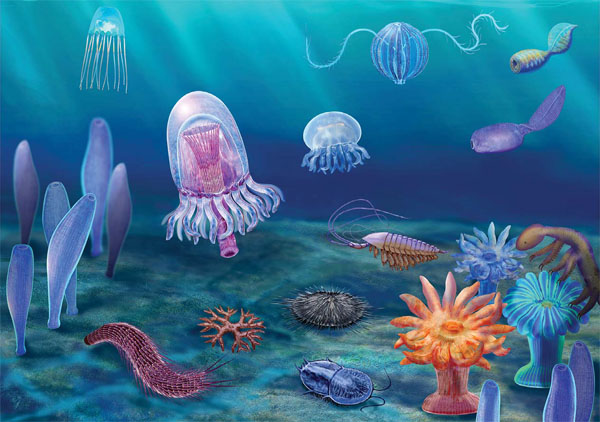
Up-to-date review of animals before the Cambrian ‘Explosion’

Artist’s impression of the Ediacaran Fauna (credit: Science)

Since I began this blog in 2000 one of my most regular topics concerns the animals of the latest Precambrian: the Ediacaran fauna. If you want to browse through the items use ‘Ediacaran’ in the Search Earth-logs box. New material and ideas about those precursors to modern life forms (and some that are still puzzling) appear on a regular basis. Science journalist Traci Watson has just summarised the latest developments in an essay for Nature. It is a nicely written and copiously illustrated piece with lots of links. Rather than precis her article, I suggest that you go straight to it, if the topic piques your interest.

(Watson, T. 2020. The bizarre species that are rewriting animal evolution. Nature, v. 586, p. 662-665; DOI: 10.1038/d41586-020-02985-z)

Photosynthesis, arsenic and a window on the Archaean world

At the very base of the biological pyramid life is far simpler than that which we can see.  It takes the form of single cells that lack a nucleus and propagate only by cloning: the prokaryotes as opposed to eukaryote life such as ourselves. It is almost certain that the first viable life on Earth was prokaryotic, though which of its two fundamental divisions – Archaea or Bacteria – came first is still debated. At present, most prokaryotes metabolise other organisms’ waste or dead remains: they are heterotrophs (from the Greek for ‘other nutrition’). But there are others that are primary producers getting their nutrition by themselves, exploiting the inorganic world in a variety of ways: the autotrophs. Biogeochemical evidence from the earliest sedimentary rocks suggests that, in the Archaean prokaryotic autotrophs were dominant, mainly exploiting chemical reactions to gain energy necessary for building carbohydrates. Some reduced sulfate ions to those of sulphide, others combined hydrogen with carbon dioxide to generate methane as a by-product. Sunlight being an abundant energy resource in near-surface water, a whole range of prokaryotes exploit its potential through photosynthesis. Under reducing conditions some photosynthesisers convert sulfur to sulfuric acid , yet others combine photosynthesis with chemo-autotrophy. Dissolved material capable of donating electrons – i.e. reducing agents – are exploited in photosynthesis: hydrogen, ferrous iron (Fe2+), reduced sulfur, nitrite, or some organic molecules. Without one group, which uses photosynthesis to convert CO2 and water to carbohydrates and oxygen, eukaryotes would never have arisen, for they depend on free oxygen. A transformation 2400 Ma ago marked a point in Earth history when oxygen first entered the atmosphere and shallow water (see: Massive event in the Precambrian carbon cycle; January, 2012), known as Great Oxygenation Event (GOE). It has been shown that the most likely sources of that excess oxygen were extensive bacterial mats in shallow water made of photosynthesising blue-green bacteria that produced the distinctive carbonate structures known as stromatolites. These had formed in Archaean sedimentary basins for 1.9 billion years. It has been generally assumed that blue-green bacteria had formed them too, before the oxygen that they produced overcame the reducing conditions that had generally prevailed before the GOE. But that may not have been the case …

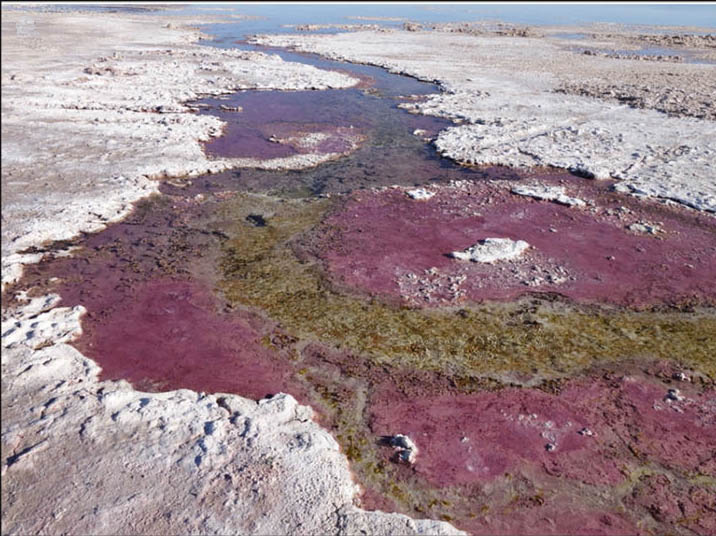
Microbial mats made by purple sulfur bacteria in highly toxic spring water flowing into a salt-lake in northern Chile. (credit: Visscher et al. 2020; Fig 1c)

Prokaryotes are a versatile group and new types keep turning up as researchers explore all kinds of strange and extreme environments, for instance: hot springs; groundwater from kilometres below the surface and highly toxic waters. A recent surprise arose from the study of anoxic springs laden with dissolved salts, sulfide ions and arsenic that feed parts of hypersaline lakes in northern Chile (Visscher, P.T. and 14 others 2020. Modern arsenotrophic microbial mats provide an analogue for life in the anoxic ArcheanCommunications Earth & Environment, v. 1, article 24; DOI: 10.1038/s43247-020-00025-2). This is a decidedly extreme environment for life, as we know it, made more challenging by its high altitude exposure to high UV radiation. The springs’ beds are covered with bright-purple microbial mats. Interestingly the water’s arsenic concentration varies from high in winter to low in summer, suggesting that some process removes it, along with sulfur, according to light levels: almost certainly the growth and dormancy of mat-forming bacteria. Arsenic is an electron donor capable of participating in photosynthesis that doesn’t produce oxygen. The microbial mats do produce no oxygen whatever – uniquely for the modern Earth – but they do form carbonate crusts that look like stromatolites. The mats contain purple sulfur bacteria (PSBs) that are anaerobic photosynthesisers, which use sulfur, hydrogen and Fe2+ as electron donors. The seasonal changes in arsenic concentration match similar shifts in sulfur, suggesting that arsenic is also being used by the PSBs. Indeed they can, as the aio gene, which encodes for such an eventuality, is present in the genome of PSBs.

Pieter Visscher and his multinational co-authors argue for prokaryotes similar to modern PSBs having played a role in creating the stromatolites found in Archaean sedimentary rocks. Oxygen-poor, the Archaean atmosphere would have contained no ozone so that high-energy UV would have bathed the Earth’s surface and its oceans to a considerable depth. Moreover, arsenic is today removed from most surface water by adsorption on iron hydroxides, a product of modern oxidising conditions (see: Arsenic hazard on a global scale; May 2020): it would have been more abundant before the GOE. So the Atacama springs may be an appropriate micro-analogue for Archaean conditions, a hypothesis that the authors address with reference to the geochemistry of sedimentary rocks in Western Australia deposited in a late-Archaean evaporating lake. Stromatolites in the Tumbiana Formation show, according to the authors, definite evidence for sulfur and arsenic cycling similar to that in that Atacama springs. They also suggest that photosynthesising blue-green bacteria (cyanobacteria) may not have viable under such Archaean conditions while microbes with similar metabolism to PSBs probably were. The eventual appearance and rise of oxygen once cyanobacteria did evolve, perhaps in the late-Archaean, left PSBs and most other anaerobic microbes, to which oxygen spells death, as a minority faction trapped in what are became ‘extreme’ environments when long before they ‘ruled the roost’. It raises the question, ‘What if cyanobacteria had not evolved?’. A trite answer would be, ‘I would not be writing this and nor would you be reading it!’. But it is a question that can be properly applied to the issue of alien life beyond Earth, perhaps on Mars. Currently, attempts are being made to detect oxygen in the atmospheres of exoplanets orbiting other stars, as a ‘sure sign’ that life evolved and thrived there too. That may be a fruitless venture, because life happily thrived during Earth’s Archaean Eon until its closing episodes without producing a whiff of oxygen.

See also: Living in an anoxic world: Microbes using arsenic are a link to early life. (Science Daily, 22 September 2020)

Can a supernova affect the Earth System?

The easy answer is yes, simply because chemical elements with a greater relative atomic mass than that of iron are thought to be created in supernovae when dying giant stars collapse under their own gravity and then explode. Interstellar dust and gas clouds accumulate their debris. If the clouds are sufficiently dense gravity forms clumps that may become new stars and the planets that surround them. Matter from every once-nearby supernova enters these clouds and thus contributes to the formation of a planet. This was partly proven when pre-solar grains were found in the Murchison meteorite, some of which are as old as 7.5 billion years (Ga) – 3 Ga older than the Solar System (see: Mineral grains far older than the Solar System; January 15, 2020). Murchison is a carbonaceous chondrite, a class of meteorite which likely contributed lots of carbon-based compounds to the early Earth, setting the stage for the emergence of life. It has been estimated that a near-Earth supernova (closer than 1000 light years) would have noticeable effects on the biosphere, mainly because of the effects on atmospheric composition of the associated high-energy gamma-ray burst. That would create sufficient nitrogen oxides to destroy the ozone layer that shields the surface from harmful radiation. There are reckoned to have been 20 nearby supernovae during the last 10 Ma or so from the presence of anomalously high levels of the isotope 60Fe in marine sediment layers on the Pacific floor. Yet there is no convincing evidence that they coincided with detectable extinctions in the fossil record. But supernovae have been suggested as a possible cause of more ancient mass extinctions, such as that at the end of the Ordovician Period (but see: The late-Ordovician mass extinction: volcanic connections; July 2017).

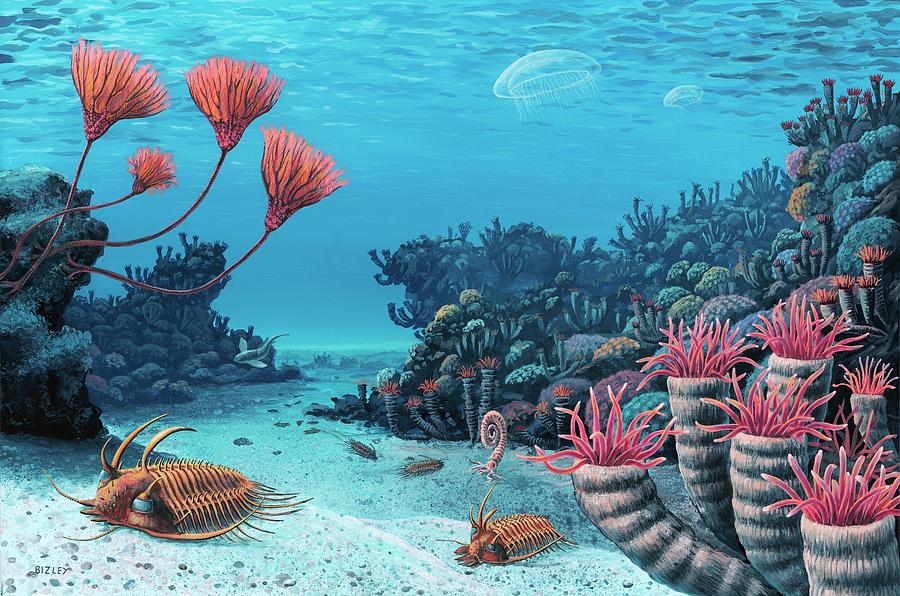
Diorama of an Early Devonian reef with tabulate and rugose corals and trilobites (Credit: Richard Bizley)

The Late Devonian is generally accepted to be one of the ‘Big Five’ mass extinction events. However, unlike the others, the event was a protracted decline in biodiversity, with several extinction peaks). In particular it marked the end of Palaeozoic reef-building corals. Some have put down the episodic faunal decline to the effects of species moving from one marine basin to another as global sea levels fluctuated: much like the effects of the ‘invasion’ of the coral-eating Crown of Thorns sea urchin that has helped devastate parts of the Great Barrier Reef during present-day global warming (see: Late Devonian: mass extinction or mass invasion? January 2012). Recently, attention has switched to evidence for ultra-violet damage to the morphology of spores found in the strata that display faunal extinction; i.e. to the possibility of the ozone layer having been lost or severely depleted. One suggestion has been sudden peaks in volcanic activity, hinted at by spikes in the abundance of mercury of marine sediments. Brian Fields of the University of Illinois, with colleagues from the USA, UK, Estonia and Switzerland, have closely examined the possibility and the testability of a supernova’s influence (Fields. B.D. et al. 2020.  Supernova triggers for end-Devonian extinctions. Proceedings of the National Academy of Sciences, v. 117, article 202013774; DOI: 10.1073/pnas.2013774117).

They propose the deployment of mass-spectrometric analysis for anomalous stable-isotope abundances in the sediments that contain faunal evidence for accelerated extinction, particularly those of 146Sm, 235U and the long-lived plutonium isotope 244Pu (80 Ma hal-life). They suggest that the separation of the extinction into several events, may be a clue to a supernova culprit. A gamma-ray burst would arrive at light speed, but dust – containing the detectable isotopes –  although likely to be travelling very quickly would arrive hundred to thousands of years later, depending on the distance to the supernova. Cosmic rays generated by the supernova, also a possible kill mechanism, given a severely depleted ozone layer, travel about half the speed of light. Three separate arrivals for the products of a single stellar explosion are indeed handy as an explanation for the Late Devonian extinctions. But someone needs to do the analyses. The long-lived  plutonium isotope is the best candidate: even detection of a few atoms in a sample would be sufficient proof. But that would require a means of ruling out contamination by anthropogenic plutonium, such as analysing the interior of fossils. But would even such an exotic discovery prove the sole influence of a galactic even?

Fossil fuel, mercury and the end-Palaeozoic catastrophe

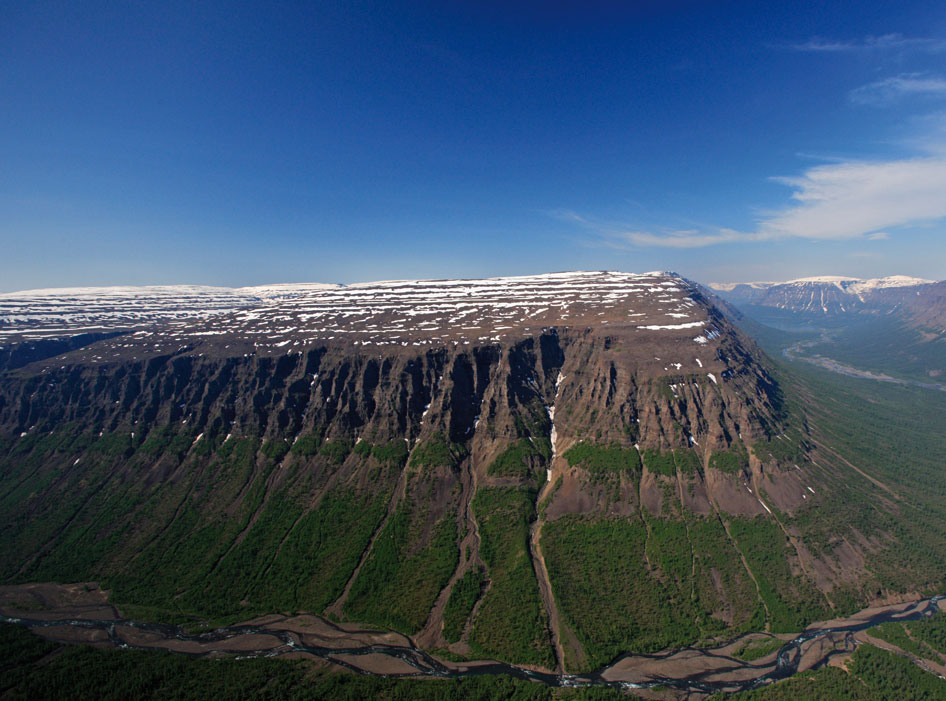
Siberian flood-basalt flows in the Putorana Plateau, Taymyr Peninsula, Russia. (Credit: Paul Wignall)

The end of the Permian Period (~252 Ma ago) saw the loss of 90% of marine fossil species and 70% of those known from terrestrial sediments: the greatest known extinction in Earth’s history. In their naming of newly discovered life forms, palaeontologists can become quite lyrical. Extinctions, however, really stretch their imagination. They call the Permo-Triassic boundary event ‘The Great Dying’. Why not ‘Permageddon’? Sadly, that was snaffled in the 1980s by an astonishingly short-haired heavy-metal tribute band. Enough bathos … The close of the Palaeozoic left a great many ecological niches to be filled by adaptive radiation during the Triassic and later Mesozoic times. Coinciding with the largest known flood-basalt outpouring – the three million cubic kilometres of Siberian Traps – the P-Tr event seemed to be ‘done and dusted’ after that possible connection was discovered in the mid 1990s. Notwithstanding, the quest for a gigantic, causative impact crater continues (see: Palaeobiology Earth-logs, May, September and October 2004), albeit among a dwindling circle of enthusiasts. The Siberian Traps are suitably vast to snuff the fossil record, for their eruption must have belched all manner of climate-changing gases and dusts into the atmosphere; CO2 to encourage global warming; SO2 and dusts as cooling agents. There is also evidence of a role for geochemical toxicity (see: Nickel, life and the end-Permian extinction, June 2014). The extinctions accompanied not only climate change but also a catastrophic fall in atmospheric oxygen content (see: Homing in on the great end-Permian extinction, April 2003; When rain kick-started evolution, December 2019). Recovery of the biosphere during the early Triassic was exceedingly slow.

Research focussed on the P-Tr boundary eventually uncovered an element of pure chance. Shales in Canada that span the boundary show major, negative δ13C excursions in the carbon-isotope record that coincide with fly ash in the analysed layers. This material is similar in all respects to that emitted from coal-fired power stations (see: Coal and the end-Permian mass extinction, March 2011). The part of Siberia onto which the flood basalts were erupted is rich in Permian coal measures and oil shales that lay close to the surface 252 Ma ago. The coal ash and massive emissions of CO2 may have resulted from their burning by the flood basalt event. Now evidence has emerged that this did indeed happen (Elkins-Tanton, L.T. et al. 2020. Field evidence for coal combustion links the 252 Ma Siberian Traps with global carbon disruption. Geology, v. 48, early publication; DOI: 10.1130/G47365.1).

The US, Canadian and Russian team found large quantities of burnt coal and woody material, and bituminous blobs in 600 m thick volcanic ashes at the base of the Siberian traps themselves. They concluded that the magma chamber from which the flood basalts emerged had incorporated sizeable volumes of the coal measures, leading to their combustion and distillation. This would have released CO2 enriched in light 12C due to isotopic fractionation by biological means, i.e. its δ13C would have been sufficiently negative to affect the carbon locked up in the Canadian P-Tr boundary-layer shales that show the sharp isotopic anomalies. The magnitude of the anomalies suggest that between six to ten thousand billion tons of carbon released as CO2 or methane by interaction of the Siberian Traps with sediments through which their magma passed could have created the global δ13C anomalies. That is about one tenth of the organic carbon originally locked in the Permian coal measures beneath the flood basalts

Another paper whose publication coincided with that by Elkins-Tanton et al. suggests that environmental mercury appears to have followed the same geochemical course as did carbon at the end of the Palaeozoic Era (Dal Corso, J. and 9 others 2020. Permo–Triassic boundary carbon and mercury cycling linked to terrestrial ecosystem collapse. Nature Communications, v. 11, paper 2962; DOI: 10.1038/s41467-020-16725-4). This group, based at Leeds and Oxford Universities, UK and the University of Geosciences in Wuhan, China, base their findings on biogeochemical modelling of the global carbon and mercury cycles at the end of the Permian. Their view is that the coincidence in marine sediments at the P-Tr boundary of a short-lived spike in mercury and an anomaly in its isotopic composition with the depletion in 13C, described earlier, shows an intimate link between mercury and the biological carbon cycle in the oceans at the time. They suggest that this synergy marks ecosystem collapse and derives ‘from a massive oxidation of terrestrial biomass’; i.e. burning of organic material on the land surface. Their modelling hints at huge wildfires in equatorial peatlands but also a role for the Siberian flood-basalt volcanism and the incorporation of coal measures into the Siberian Trap magma chamber.

Geochemistry and the Ediacaran animals

Hopefully, readers will be fairly familiar with the sudden appearance of the Ediacaran fauna – the earliest abundant, large animals – at the start of the eponymous Period of the Neoproterozoic around 635 Ma. If not, use the Search Earth-logs box in the side bar to find extensive coverage since the start of the 21st century. A June 2019 Earth-logs review of the general geochemical background to the Ediacaran Period can be found here. Ten years ago I covered the possible role of the element phosphorus (P) – the main topic here – in the appearance of metazoans (see: Phosphorus, Snowball Earth and origin of metazoans – November 2010).

One of the major changes in marine sedimentation seen during the Ediacaran was a rapid increase in the deposition on the ocean floor of large bodies of P-rich rock (phosphorite), on which a recent paper focuses (Laakso, T.A. et al. 2020. Ediacaran reorganization of the marine phosphorus cycle. Proceedings of the National Academy of Sciences, v. 117, p. 11961-11967; DOI: 10.1073/pnas.1916738117). It has been estimated that on million-year time scales phosphorites remove only a tiny amount of the phosphorus carried into the oceans by rivers. So, conversely, an increase in deposition of marine P-rich sediment would have little effect on the overall availability of this essential nutrient from the oceans. The Ediacaran boost in phosphorites suggests a connection between them and the arrival of totally new ecosystems: the global P-cycle must somehow have changed. This isn’t the only change in Neoproterozoic biogeochemistry. Thomas Laakso and colleagues note signs of slightly increased ocean oxygenation from changes in sediment trace-element concentrations, a major increase in shallow-water evaporites dominated by calcium sulfate (gypsum) and changes in the relative proportions of different isotopes of sulfur.

Because all marine cycles, both geochemical and those involving life, are interwoven, the authors suggest that changes in the fate of dead organic matter may have created the phosphorus paradox. Phosphorus is the fifth most abundant element in all organisms after carbon, hydrogen, nitrogen and oxygen, followed by sulfur (CHNOPS), P being a major nutrient that limits the sheer bulk of marine life. Perhaps changes to dead organic matter beneath the ocean floor released its phosphorus content, roughly in the manner that composting garden waste releases nutrients back to the soil. Two chemical mechanisms can do this in the deep ocean: a greater supply of sinking organic matter – essentially electron donors – and of oxidants that are electron acceptors. In ocean-floor sediments organic matter can be altered to release phosphorus bonded in organic molecules into pore water and then to the body of the oceans to rise in upwellings to the near surface where photosynthesis operates to create the base of the ecological food chain.

Caption The Gondwana supercontinent that accumulated during the Neoproterozoic to dominate the Earth at the time of the Ediacaran (credit: Fama Clamosa, at Wikimedia Commons)

There is little sign of much increase in deep-ocean oxygen until hundreds of million years after the Ediacaran. It is likely, therefore, that increased availability of oxidant sulfate ions (SO42-) in ocean water and their reduction to sulfides in deep sediment chemically reconstituted the accumulating dead organic matter to release P far more rapidly than before. This is supported by the increase in CaSO4 evaporites in the Ediacaran shallows. So, where did the sulfate come from? Compressional tectonics during the Neoproterozoic Era were at a maximum, particularly in Africa, South America, Australia and Antarctica, as drifting continental fragments derived from the break-up of the earlier Rodinia supercontinent began to collide. This culminated during the Ediacaran around 550 Ma ago with assembly of the Gondwana supercontinent. Huge tracts of it were new mountain belts whose rapid erosion and chemical weathering would have released plenty of sulfate from the breakdown of common sulfide minerals.

So the biological revolution and a more productive biosphere that are reflected in the Ediacaran fauna ultimately may have stemmed from inorganic tectonic changes on a global scale

Genetic material from a baby dinosaur

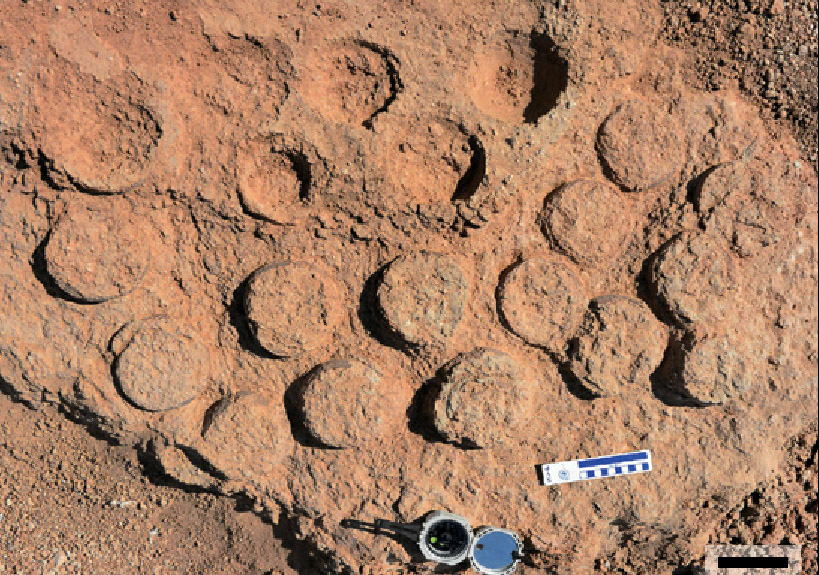
A clutch of Massospondylus carinatus eggs from the Jurassic of South Africa (credit: Brett Eloff)

Recently, a lot of publicity focussed on stunning CT scans of embryos preserved in fossilised eggs of a Jurassic sauropodomorph dinosaur, which were obtained using very high energy X-rays generated by a synchrotron in France (Chapelle, K.E.J. et al. 2020. Conserved in-ovo cranial ossification sequences of extant saurians allow estimation of embryonic dinosaur developmental stages. Nature Scientific Reports, v. 10, article 4224; doi: 10.1038/s41598-020-60292-z). The images suggest that the embryos’ skulls developed in much the same way as do those of living reptiles. Within a week there emerged an even more compelling dinosaurian scoop: a fossil nestling of a duck-billed dinosaur (hadrosaur) from the Upper Cretaceous of Montana is reported to have yielded evidence for a broad spectrum of cellular materials (Bailleul, A.M. et al. 2020. Evidence of proteins, chromosomes and chemical markers of DNA in exceptionally preserved dinosaur cartilage. National Science Review, v. 7, advance publication NWZ206; DOI: 10.1093/nsr/nwz206).

Alida Bailleul, who works at the Chinese Academy of Sciences in Beijing, and fellow molecular palaeontologists from Canada, the US and Sweden, examined material from the nestling’s skull that was suspected to contain traces of cartilage. Their methods involved microscopic studies of thin sections together with staining and fluorochemical analysis of cellular material extracted by dissolving away bone tissue in acid. The same methodologies were also applied to similar material from modern emu chicks as a means of validating the results from the fossil. Staining used the same chemical that previously had revealed blood proteins in a specimen of Tyrannosaurus rex (see: Blood of the dinosaurs  in Palaeobiology, January 2011). The fluorescence approach dosed the dinosaur cartilage with antibodies against bird collagen, and revealed an immune reaction (green fluorescence) in both fossil material and that from the baby emus.

The researchers also isolated cartilage cells (chondrocytes) from the dinosaur preparations. Two stains (PI and DAPI, for short) that show up DNA were applied, giving positive responses. The PI (propidium iodide) stain is useful as it does not respond to DNA in living material, bit only to that in dead cells, thereby helping to rule out contamination with modern material. Apparently, the double-staining experiments support the presence of double-stranded material that involves at least six base pairs (of ACTG amino acids). This does not prove the existence of dinosaur DNA, but does demonstrate that the hadrosaur’s cell nuclei are preserved.

Does that suggest that the hunt is on for a dinosaur genome, with all its connotations? OK, a complete genome has been extracted from a frozen Siberian mammoth a few tens of thousand years old, which encourages ‘re-wilding’ aficionados, but that animal preserved intact cells of many kinds. A 70 Ma old dinosaur fossil, however exquisitely preserved, is mostly ‘rock’, in that preservation is through mineralisation of bone and tissue, and even cells … Moreover, it is possible that what the team found may even be material from post-mortem bacterial colonisation of any age younger than 70 Ma.

See also: De Lazaro, E. 2020. Scientists Use X-rays to Peer inside Fossilized Dinosaur Eggs Sci News, 10 April 2020; Black, R. 2020. Possible dinosaur DNA has been found. Scientific American, 17 April 2020

Pterosaur corner

I recall an anecdote related by David Attenborough about a celebrity reception that he once attended one evening after he had been filming for a sequence on the aerodynamics of pterodactyls. A venerable and obviously well connected lady engaged him in conversation, and asked him what he had been doing recently. “Actually, today I was flying a pterodactyl”. To which the old lady retorted, “Yes, they are so graceful, aren’t they”. They do have a large following, perhaps second only to dinosaurs, and three interesting items came to my attention in the last couple of weeks.

One of the known pterosaur groups is the Tapejaridae, comprising small to medium-sized pterosaurs with wingspans up to 4 m. They are quite spectacular in appearance, having large crests relative to their overall size. Their fossils have turned up in Cretaceous sediments in South America, Europe and China, and a new find in Morocco (Afrotapejara zouhrii) extends their range to Africa (Martill, D.M. et al. 2020. A new tapejarid (Pterosauria, Azhdarchoidea) from the mid-Cretaceous Kem Kem beds of Takmout, southern Morocco. Cretaceous Research. V. 112: onlin, 104424; DOI: 10.1016/j.cretres.2020.104424). See also: De Lazaro, E. 2020. New species of pterosaur discovered in Morocco (Sci News, 6 April)

Also reported in Cretaceous Research are three new species of toothed, fish-eating pterosaurs of the ornithocheirid group. They too come from the Cretacous Kem Kem beds of Morocco, and again adding Africa to the range of the genera to which they belong. Even the largest flying animals known to science have emerged from the same strata. These are the azhdarchid pterosaurs, the largest of which had a wing span of more than 9 metres and stood at the height of a giraffe when on the ground.

See: Anderson, N, 2020. New pterosaur fossils unearthed in Morocco (Sci News, 26 March)

Being so widely spread, these pterosaur group’s mode of flight must have been extremely efficient, perhaps even matching that of today’s albatrosses, which use turbulence over ocean waves to glide effortlessly, indeed the epitome of graceful travel. How they achieved such vast ranges is partly due to their extremely light-weight bones that were paper thin but strong because they contained vesicles filled with gas, much like the expanded polystyrene used in model pterosaurs of the kind flown by ‘Whispering Dave’ as Sir David Attenborough is fondly known. Their bone structures are similar, in this respect, to those of modern birds.

launch of Hatzegopteryx
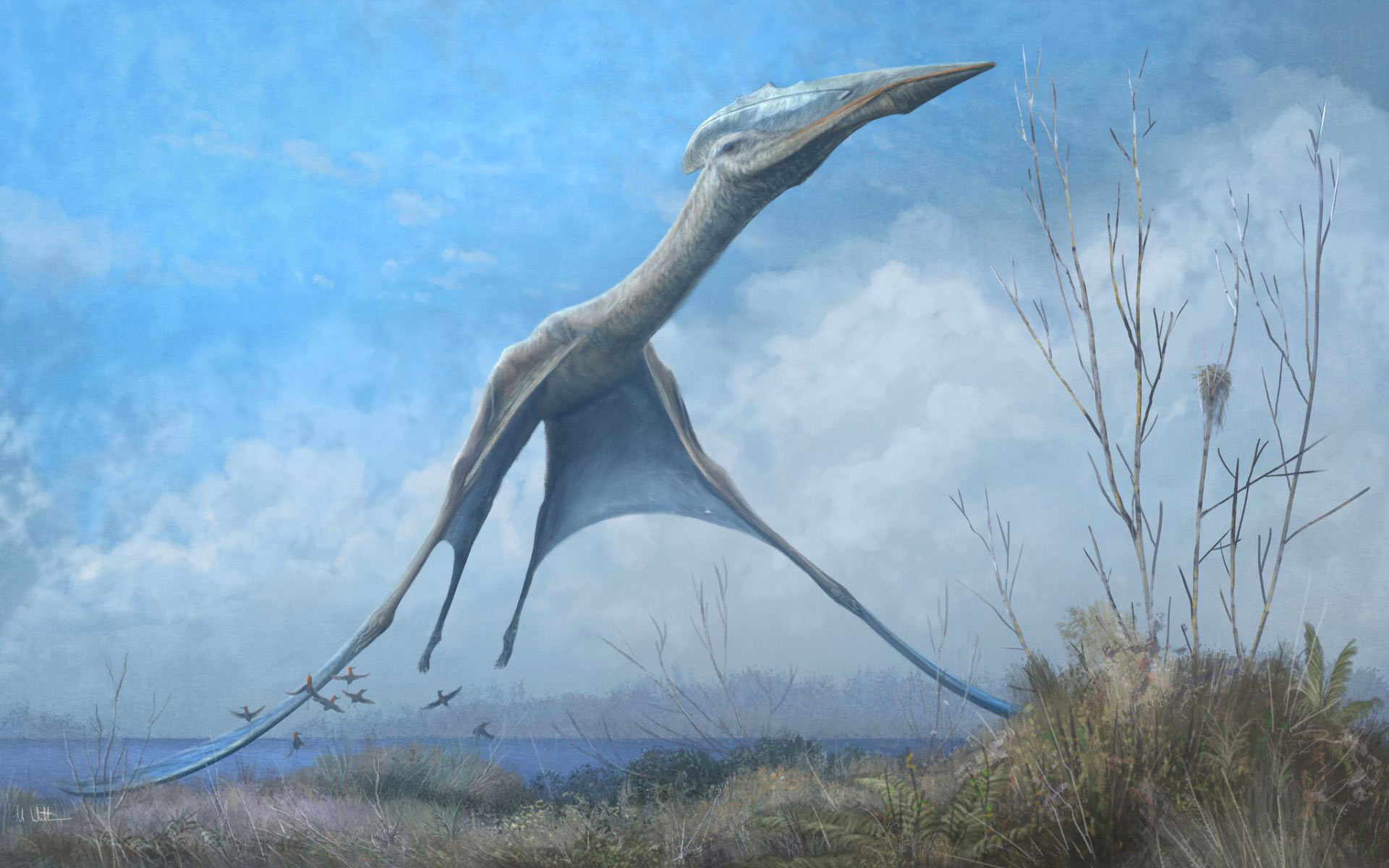
Reconstruction of the giant pterosaur Hatzegopteryx launching into the air, just after the forelimbs have left the ground (credit: Mark Witton)

So, how did these graceful beasts fly? Like those of bats, pterosaurs’ wings were membranes, but rather than being supported by five elongated digits, as in bats, those of pterosaurs extended from their bodies to a single elongated ‘finger’ or digit: hence their old name pterodactyl, translated from the Greek as ‘wing finger’. For a long while, it was believed that pterosaurs had to live on high ground, even cliffs, in order to launch themselves in the manner of a hang glider. Reconstructions of their gait on the ground generally look extremely ungainly: they walked on their ‘wrists’ and the other three, small ‘fingers’ of their forelimbs.. How they probably launched themselves emerges from a detailed paper linking natural flight modes of birds, bats and pterosaurs to conceivable developments in aeronautics inspired by them (Martin-Silverstone, E. et al. 2020. Volant fossil vertebrates: potential for bioinspired flight technology. Trends in Ecology and Evolution, v. 35, in press 9 April 2020; DOI: 10.1016/j.tree.2020.03.005). The authors point to the great strength of the membrane structure itself, conferred by its three-layered structure, and to the aerodynamic properties of the wing. They conclude that, whereas pterosaurs were probably incapable of high-speed flight, they were extremely efficient at low speeds, ideal for soaring and for low-speed landing that would not endanger their fragile bodies. Simply by springing into the air using all four limbs they could attain sustained flight, although the largest of them were close to the limit. The necessary muscles actually made up about 40% of their body mass. See a reconstruction of the launch of the largest pterosaur, Quetzalcoatlus from the Late Cretaceous of North America

See also: Fossil Flyers Hold Secrets to Better Flight Technologies (Sci News, 18 April)

How did monkeys get to South America?

This is one of the great mysteries of palaeontology. There are plenty of monkey species in South and Central America and in Mexico. They are members of five families, collectively known as platyrrhine (‘flat-nosed’) primates, all having wide-spaced nostrils compared with the primates of the ‘Old World’. They are the catarrhines (‘hook-nosed). There are other differences, such as the unique prehensile tails of many ‘New World’ monkeys. The two monkey groups are genetically related, but their last common ancestor is estimated, using the ‘molecular clock’ approach, to have lived at least 31 Ma ago, in the Oligocene. The earliest platyrrhine primates of the Americas date to around the Eocene-Oligocene boundary (34 Ma). Interestingly, they are predated by the earliest rodent remains by only a few million years (41 Ma). Both primates and rodents had been inhabiting other continents long before this, so it is certain that, somehow, members of the two groups must have migrated to become isolated in the Americas. The problem lies with palaeogeography. By the late-Eocene the Americas were completely separated from Eurasia and Africa by the actively spreading Atlantic Ocean, then between 1500 to 2000 km wide. Complete isolation of the Americas dates from around 60 Ma ago, when the northernmost part of the North Atlantic began to open. The South Atlantic had become a wide ocean long before that, beginning in the far south during the early Cretaceous Period (138 Ma), with the mid-Atlantic Ridge steadily propagating northwards thereafter.

35 Ma
World palaeogeography at the Eocene-Oligocene boundary. The site of a recent fossil primate discovery in eastern Peru is marked by the yellow dot.

Since 60 Ma years ago it would have been impossible for the ancestors of ‘New World’ rodents and primates simply to have walked there. In any case the earliest known primate fossils from China are just 55 Ma old. Island hopping across the far northern, narrowest part of the North Atlantic during the Eocene may have been possible, although many islands there could have been subject to intense volcanic activity, as is Iceland today. The only alternative is a sea trip across the mighty Atlantic. Unless, that is, there is a hitherto undiscovered land bridge. The Walvis-Rio Grande Rise – a hotspot track – that spans the South Atlantic Ocean floor from Namibia to São Paulo in Brazil, has been the subject of some speculation since it is dotted with sea mounts and in places has micro-continental fragments. But it is too deep to have emerged as a result of falls in sea level. To suggest that the > 1500 km migration to the Americas of ancestral platyrrhine primates, or rodents for that matter, involved their being carried on drifting vegetation rafts obviously invites scepticism. For starters, why only two groups of animals? Or, could that imply a one-off event carrying only ancestral rodents and monkeys? It would need to be a special kind of raft: large enough to provide security against storm waves; immune to waterlogging, and carrying substantial food. On the plus side, there are powerful east-to-west currents in the equatorial Atlantic and trade winds going in the same direction, thanks to the Coriolis effect and ultimately Earth’s rotation. Islands as ‘way-points’ or temporary refuges are less convincing, for they would have to be heavily vegetated themselves to provide onward rafts. Apparently, in the absence of anything more plausible, Sherlock Holmes’s principle points to trans-Atlantic rafting.

This issue recently became ‘live’ again, with a fossil discovery in Peru, in an upper Amazon river bank close to at the Andean watershed but around 4000 km from the east coast of South America (Seiffert, E.R.  et al. 2020. A parapithecid stem anthropoid of African origin in the Paleogene of South America. Science, v. 368, p. 194-197; DOI: 10.1126/science.aba1135). The site had previously yielded both playrrhine monkey and rodent remains. To these have been added teeth with distinct similarities to those of fossils previously known only from Egypt, Libya and Tanzania: parapithecid anthropoids whose teeth are sufficiently different from those of platyrrhines to warrant a separate suborder, which includes baboons and primates. This is the only trace of parapithecids in South America and it may be assumed that, although they were possibly fellow-travellers with New World monkey ancestors, they were unable to compete and became extinct.

However, there is another possibility. Albeit with a sparse record of fossils resembling primates, North America does have at least one. George Gaylord Simpson (1902-1984), once the doyen of US palaeontologists, found a marmoset-like fossil in the early-Eocene of Wyoming, which he named Teilhardinia after the French Jesuit philosopher and palaeontologist Teihard de Chardin. It is about 56 Ma old and the size of a mouse. So was this diminutive the pioneer New World primate that crossed the northern North Atlantic? If so it would have had an equally perilous journey to reach South America, because the Isthmus of Panama was also open sea until around 4.5 Ma ago. With Teilhardinia, the plot thickens for there are several known species: in the US T. brandti from Wyoming and T. magnoliana from Mississippi; in Asia and Europe T. asiatica and T. belgica respectively. An embarrassment of riches that may well ignite: it has been suggested that North American Teilhardinia may have been the first of all primates and spread across the Eocene forests of North America, Europe and Asia. That hypothesis sort of implies that the entry of monkeys into South America may well have started with the tiny continent hopper who passed on its proclivities to its descendants in Africa

See also: Godinot, M. 2020. Rafting on a wide and wild ocean. Science, v. 368, p. 136-137; DOI: 10.1126/science.abb4107; Ancient teeth from Peru hint now-extinct monkeys crossed Atlantic from Africa. Science Daily, 9 April 2020. Oldest-known ancestor of modern primates may have come from North America, not Asia. Science Daily, 29 November 2018

Early days of the dog

Wolves and dogs are interfertile and the mating of a domestic dog with a wolf results in fertile offspring, unlike the case with hybrids of horse and donkey, lion with tiger etc. This suggests that both canids are so closely related that domestication of wolves led to the entire range of dog breeds shown at Crufts every year. The question is, “When did humans first domesticate wolves”? Provided the instinctive ‘rules’ of wolves are followed by a human a wolf pup can become a pet, if it is taken from its mother between 14 and 21 days after birth. But, not only are they expensive to feed on raw meat, they may well attack a stranger as they would in the wild go for a wolf from another pack. They are often loyal and playful towards whoever raised them, but are strictly ‘one-person’ animals, and difficult to train because they easily become bored. Taming wolf puppies and deliberate selection is one route to domestication and the first dogs, another being ‘self-domestication’ when wolves become dependent on humans for a share in food.

pet wolf
Raven the wolf greets a visitor to the Mission: Wolf sanctuary in Colorado USA (credit: Wikipedia)

Comparison of wolf (Canis lupus) and domestic dog (Canis familiaris) genomes suggest an age of divergence for the two populations may have occurred between 20 to 60 thousand years ago. Indeed the DNA of wolf remains from Siberia showed it to belong to a wolf population whose descendants contributed to domestication of sledge dogs, such as Greenlandic huskies and Alaskan malemutes. Yet this approach is difficult and the results uncertain. Discovery of canid skulls associated with the remains of humans and mammoths at a 28.5 ka old site in the Czech Republic seems to have resolved both a minimum age for domestication and how it was achieved (Prassack, K.A. et al. 2020.  Dental microwear as a behavioral proxy for distinguishing between canids at the Upper Paleolithic (Gravettian) site of Předmostí, Czech Republic. Journal of Archaeological Science, v. 115, published online; DOI: 10.1016/j.jas.2020.105092).paleolithic dog

The Předmostí canids show two skull shapes: one with long jaws like wolves, the other with shorter, more dog-like jaws. Kari Prassack of the US National Park Service and colleagues from the USA, the Czech Republic and Belgium, turned to dental micro-wear patterns to resolve differences between the two groups as regards diet. Teeth from the more wolf-like group showed wear patterns consistent with a diet dominated by raw flesh, whereas the short-jawed canids ate mainly hard, brittle foods, probably bones. A truly remarkable find at the site was a near-complete canid skull of the short-jawed type, with a bone between its front teeth. Could this be a sign of a carefully buried pet ‘proto-dog’?

Earlier studies of the Předmostí canids included isotopic analyses of their bones, and those of associated humans. Interestingly, the more wolf-like group and the humans had diets dominated by mammoth flesh. The possible proto-dogs had focused on reindeer and other prey, as had the lions whose bones also occur at the site. This further complicates interpretation. Did both wolves and proto-dogs accompany the humans, the first being fed with mammoth meat that they helped bring down, while the second were fed scraps from smaller, more commonly killed prey? Perhaps the early dogs developed over a long period as scavengers on the kills of lions, and then became associates of humans. Yet neither canid would find a mammoth easy prey, even hunting in packs. So did the ice-age hunters have two companion animals, perhaps one to help in hunting mammoth, the other for more day-to-day hunting, which became more domesticated and even kept as pets? As the authors conclude; more data are needed.

See also: Dog domestication during ice age (Science Daily)

A lowly worm from the Ediacaran?

Humans are more or less symmetrical, our left and right sides closely resembling each other. That is not so comprehensive for our innards, except for testes and ovaries, kidneys, lungs, arteries and veins, lymph and nervous systems. We have front- and rear ends, top and bottom, input and output orifices. All that we share with almost all other animals from mammals to worms, particularly at the earliest, embryonic stage of development. We are bilaterians, whereas sponges, ctenophores, placozoans and cnidarians are not – having either no symmetry at all, or just a bottom and a top – and are in a minority.  Fossil collections from Cambrian times also reveal bilaterians in the majority, at least insofar as preservation allows us to tell. Before 541 Ma ago, in the Precambrian, there are few signs of such symmetry and faunas are dominated by the flaccid, bag like creatures that form much of the Ediacaran Fauna, although there are traces of creatures that could move and graze, and had a rudimentary sense of direction (see: Burrowers: knowing front from back, July 2012 and Something large moved 2 billion years ago). Unsurprisingly, palaeobiologists would like to know when ‘our lot’ arose. One route is via comparative genetics among living animals, using DNA differences and the ‘molecular clock’ approach to estimate the age of evolutionary separation between ‘us’ and ‘them’. But the spread of estimated ages is so broad as to render them almost meaningless. And the better constrained ages of very old trace fossils rely on accepting an assumption that they were, indeed, formed by bilaterians. Yet ingenuity may have revealed an actual early bilaterian from such traces.lowly worm

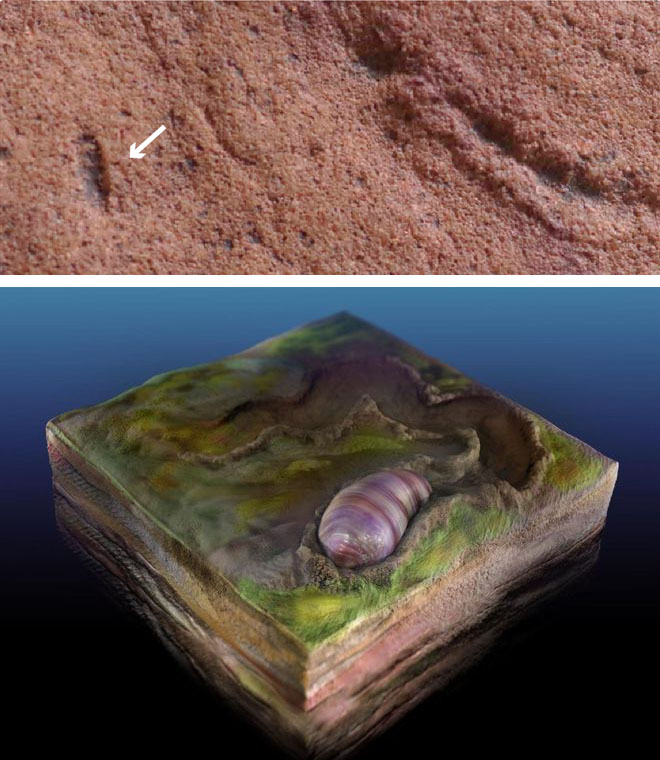
Palaeobiologists from the US and Australia have scoured the famous Ediacara Hills of South Australia for traces of burrowing and signs of the animal that did it (Evans, S.D. et al. 2020. Discovery of the oldest bilaterian from the Ediacaran of South Australia. Proceedings of the National Academy of Sciences, v. 117, online; DOI: 10.1073/pnas.2001045117). One Ediacaran trace fossil, known as Helminthoidichnites is preserved as horizontal trails on the tops and bottoms of thin, discontinuous sand bodies. Luckily, these are sometimes accompanied by elongate ovoids, like large grains of rice. From numerous laser scans of these suspected burrowers, and the traces that they left the authors have reconstructed them as stubby, possibly segmented, worm-like animals that they have called Ikaria wariootia, which may have grazed on algal mats. This name is derived from the local Adnyamathanha people’s word (Ikara  or ‘meeting place’) for the locality, a prominent landmark, near Warioota Creek. The age of the sedimentary sequence is between 551 to 560 Ma, and perhaps a little earlier. They could be the earliest-known bilaterians, but the sandy nature of the rocks in which they occur precludes preservation of the necessary detail to be absolutely sure: that would require silt- or. clay-sized granularity

See also: Fossil worm shows us our evolutionary beginnings (BBC, Science and Environment)

Dinosaur corner

Many adjectives have been applied to dinosaurs: terrifying; lumbering; long-dead; fierce; huge; nimble, carnivorous; herbivorous and so on. But exquisite and tiny do not immediately spring to mind. The mineral amber – strictly speaking a mineraloid because it isn’t crystalline – having formed from resins exuded by trees, preserves materials, including animals, that became trapped in the resin. The shores of the Baltic Sea used to be the main source of this semi-precious gemstone, but it has been overtaken by high-quality supplies from Kachin State in Myanmar. Most specimens contain small invertebrates, including spiders and insects, in varying states of preservation. Once in a while truly spectacular amber pebbles turn up. In early March 2020 the world’s media splashed a unique find: a miniature dinosaur (Xing, L. et al. 2020. Hummingbird-sized dinosaur from the Cretaceous period of Myanmar. Nature v. 579, p. 245–249; DOI: 10.1038/s41586-020-2068-4).

Amber pebble from Myanmar containing a tiny vertebrate’s skull (credit: Lida Xing, China University of Geosciences)

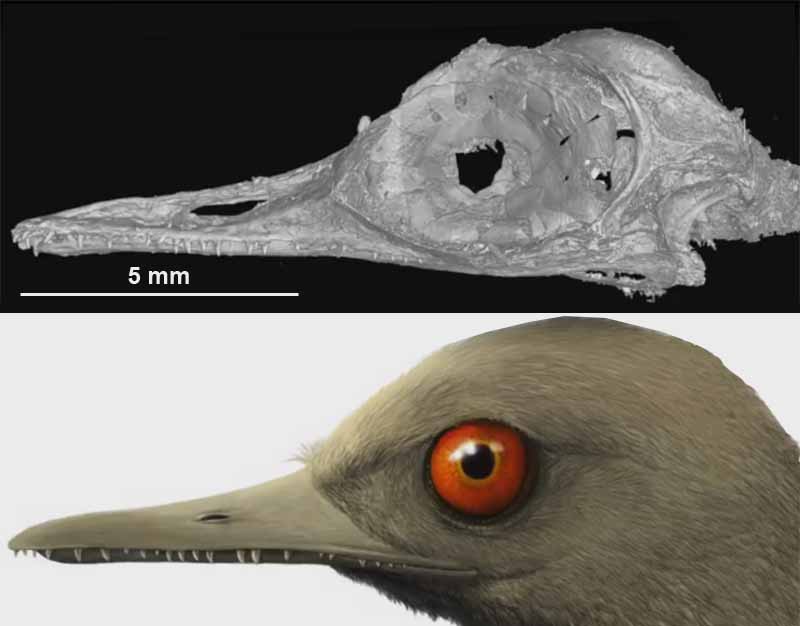
The amber specimen, from Middle Cretaceous (99 Ma) sediments, contains a perfectly preserved skull less than 2 cm long. At first glance it appears to be that of a tiny bird. The authors used micro-CT scanning to reconstruct the entire skull in 3-D. Although superficially resembling that of a bird, with eye sockets ringed by scleral ossicles that modern birds also have. These suggest that the animal was active during the daytime. Its beak-like jaws have many small teeth, as do many ancient fossil birds but not modern ones. These features led to its name: Oculudentavis khaungraaeI, translated as ‘eye-tooth bird’. So, is it a bird? A number of features shown by the skull suggest that, strictly speaking, it is not. Anatomically, it is a dinosaur, possibly descended from earlier types, such as the Jurassic winged and feathered dinosaur Archaeopterix, which evolved to early, true birds with which Oculudentavis coexisted during the Cretaceous Period. Having teeth, it was probably carnivorous and preyed on invertebrates: it may have been fatally attracted to tree resin in which insects had been trapped.

Micro-CT image of Oculudentavis khaungraaeI skull (top); artist’s impression of it in life (bottom) (credits: Xing, L. et al. 2020; Jingmai O’Connor, China University of Geosciences)

Even if it was a bird , it is smaller than the smallest living example, the bee hummingbird (Mellisuga helenae) and, weighing an estimated 2 grams,  Oculudentavis is about one-sixth the size of the smallest known fossil bird. As a dinosaur, it is two orders of magnitude smaller than the most diminutive example of those found as fossils, the chicken-sized Compsognathus. Rather than being just an oddity, Oculudentavis demonstrates that extreme miniaturisation among avian dinosaurs held out evolutionary advantages.

Watch a video about the discovery and analysis of the tiny dinosaur

See also: Benson, R.B.J. 2020. Tiny bird fossil might be the world’s smallest dinosaur. Nature, v. 579, p. 199-200; DOI: 10.1038/d41586-020-00576-6.

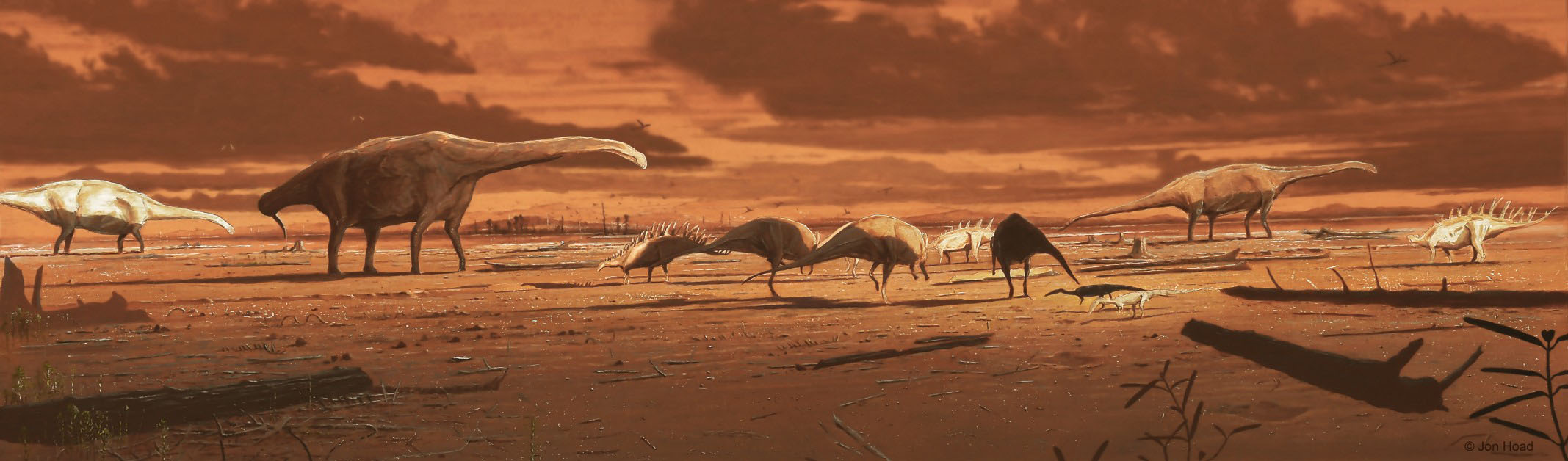
Artist’s rendering of a Middle Jurassic coastal plain in what is now the Isle of Skye across which a mixed dinosaur megafauna is migrating (credit: De Polo et al. 2020; Fig. 24; artist Jon Hoad)

And now for the lumbering and sometimes scary kinds of dinosaur. Since discovery of Middle Jurassic sauropod and theropod trackways with up to 0.5 m wide footprints at Brothers’ Point on the Trotternish Peninsula of Skye, the Inner Hebridean island has become a magnet for those wishing to commune with big beasts. Now the same team from the University of Edinburgh report more from the same locality (De Polo, P.E. and 9 others 2020. Novel track morphotypes from new tracksites indicate increased Middle Jurassic dinosaur diversity on the Isle of Skye, Scotland. PLoS ONE, v. 15, article e0229640; DOI: 10.1371/journal.pone.0229640). One set, referred to as Deltapodus was probably made by a species of stegosaur: the one with vertical plates on its back and a tail armed with large spikes, animated caricatures of which figure in inane YouTube clips, especially beating off Tyrannosaurs. The new locality preserves 50 dinosaur tracks that suggest a rich community of species. The most prominent suggest bipedal ornithopod herbivores and small, possible carnivorous theropods, both with three-toed feet, large quadripedal sauropods whose prints resemble those of elephants, as well as those with larger back feet than front attributed to stegosaurs. The sediment sequence displaying the tracks contains structures typical of deposition on a wide coastal plain.

Closure for the K-Pg extinction event?

Anyone who has followed the saga concerning the mass extinction at the end of the Cretaceous Period (~66 Ma ago) , which famously wiped out all dinosaurs except for the birds, will know that its cause has been debated fiercely over four decades. On the one hand is the Chicxulub asteroid impact event, on the other the few million years when the Deccan flood basalts of western India belched out gases that would have induced major environmental change across the planet. Support has swung one way or the other, some authorities reckon the extinction was set in motion by volcanism and then ‘polished-off’ by the impact, and a very few have appealed to entirely different mechanism lumped under ‘multiple causes’. One factor behind the continuing disputes is that at the time of the Chicxulub impact the Deccan Traps were merrily pouring out Disentanglement hangs on issues such as what actual processes directly caused the mass killing. Could it have been starvation as dust or fumes shut down photosynthesis at the base of the food chain? What about toxic gases and acidification of ocean water, or being seared by an expanding impact fireball and re-entering incandescent ejecta? Since various lines of evidence show that the late-Cretaceous atmosphere had more oxygen that today’s the last two may even have set the continents’ vegetation ablaze: there is evidence for soots in the thin sediments that mark the K-Pg boundary. The other unresolved issue is timing: of volcanogenic outgassing; of the impact, and of the extinction itself. A new multi-author, paper may settle the whole issue (Hull, P.M and 35 others 2020. On impact and volcanism across the Cretaceous-Paleogene boundary. Science, v. 367, p. 266-272; DOI: 10.1126/science.aay5055).

K-Pg oxygen
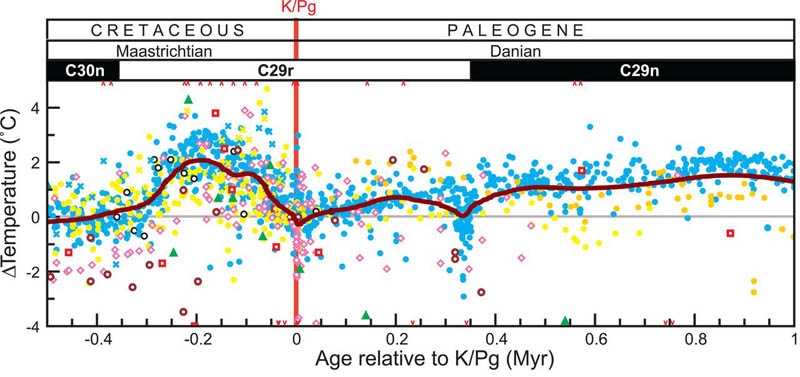
Marine temperature record derived from δ18O and Mg/Ca ratios spanning 1.5 Ma that includes the K-Pg boundary: the bold brown line shows the general trend derived from the data points (Credit: Hull et al. 2020; Fig 1)

The multinational team approached the issue first by using oxygen isotopes and the proportion of magnesium relative to calcium (Mg/Ca ratio) in fossil marine shells (foraminifera and molluscs) in several ocean-floor sediment cores, through a short interval spanning the last 500 thousand years of the Cretaceous and the first  million years of the Palaeocene. The first measures are proxies for seawater temperature. The results show that close to the end of the Cretaceous temperature rose to about 2°C above the average for the youngest Cretaceous (the Maastrichtian Age; 72 to 66 Ma) and then declined. By the time of the mass extinction (66 Ma) sea temperature was back at the average and then rose slightly in the first 200 ka of Palaeocene to fall back to the average at 350 ka and then rose slowly again.

Changes in carbon isotopes (δ13C) of bulk carbonate samples from the sediment cores (points) and in deep-water foraminifera (shaded areas) across the K-Pg boundary. (Credit: Hull et al. 2020; Fig 2A)

The second approach was to look in detail at carbon isotopes (δ13C) – a measure of changes in the marine carbon cycle –  and oxygen isotopes (δ18O) in deep water foraminifera and bulk carbonate from the sediment cores, in comparison to the duration of Deccan volcanism (66.3 to 65.4 Ma). The δ13C measure from bulk carbonate stays roughly constant in the Maastrichtian, then falls sharply at 66 Ma.  The δ13C of the deep water forams rises to a peak at 66 Ma. The δ18O measure of temperature peaks and declines at the same times as it does for the mixed fossils. Also examined was the percentage of coarse sediment grains in the muds from the cores. That measure is low during the Maastrichtian and then rises sharply at the K-Pg boundary.

Since warming seems almost certainly to be a reflection of CO2 from the Deccan (50 % of total Deccan outgassing), the data suggest not only a break in emissions at the time of the mass extinction but also that by then the marine carbon system was drawing-down its level in air. The δ13C data clearly indicate that the ocean was able to absorb massive amounts of CO2 at the very time of the Chicxulub impact and the K-Pg boundary. Flood-basalt eruption may have contributed to the biotic aftermath of the extinction for as much as half a million years. The collapse in the marine fossil record seems most likely to have been due to the effects of the Chicxulub impact. A third study – of the marine fossil record in the cores – undertaken by, presumably, part of the research team found no sign of increased extinction rates in the latest Cretaceous, but considerable changes to the marine ecosystem after the impact. It therefore seems that the K-Pg boundary impact ‘had an outsized effect on the marine carbon cycle’. End of story? As with earlier ‘breaks through’; we shall see.

See also: Morris, A. 2020 Earth was stressed before dinosaur extinction (Northwestern University)

How marine animal life survived (just) Snowball Earth events

diamict3
A Cryogenian glacial diamictite containing boulders of many different provenances from the Garvellach Islands off the west coast of Scotland. (Credit: Steve Drury)

Glacial conditions during the latter part of the Neoproterozoic Era extended to tropical latitudes, probably as far as the Equator, thereby giving rise to the concept of Snowball Earth events. They left evidence in the form of sedimentary strata known as diamictites, whose large range of particle size from clay to boulders has a range of environmental explanations, the most widely assumed being glacial conditions. Many of those from the Cryogenian Period are littered with dropstones that puncture bedding, which suggest that they were deposited from floating ice similar to that forming present-day Antarctic ice shelves or extensions of onshore glaciers. Oceans on which vast shelves of glacial ice floated would have posed major threats to marine life by cutting off photosynthesis and reducing the oxygen content of seawater. That marine life was severely set back is signalled by a series of perturbations in the carbon-isotope composition of seawater. Its relative proportion of 13C to 12C (δ13C) fell sharply during the two main Snowball events and at other times between 850 to 550 Ma. The Cryogenian was a time of repeated major stress to Precambrian life, which may well have speeded up evolution, sediments of the succeeding Ediacaran Period famously containing the first large, abundant and diverse eukaryote fossils.

For eukaryotes to survive each prolonged cryogenic stress required that oxygen was indeed present in the oceans. But evidence for oxygenated marine habitats during Snowball Earth events has been elusive since these global phenomena were discovered. Geoscientists from Australia, Canada, China and the US have applied novel geochemical approaches to occasional iron-rich strata within Cryogenian diamictite sequences from Namibia, Australia and the south-western US in an attempt to resolve the paradox (Lechte, M.A. and 8 others 2019. Subglacial meltwater supported aerobic marine habitats during Snowball Earth. Proceedings of the National Academy of Sciences, 2019; 201909165 DOI: 10.1073/pnas.1909165116). Iron isotopes in iron-rich minerals, specifically the proportion of 56Fe relative to that of 54Fe (δ56Fe), help to assess the redox conditions when they formed. This is backed up by cerium geochemistry and the manganese to iron ratio in ironstones.

In the geological settings that the researchers chose to study there are sedimentological features that reveal where ice shelves were in direct contact with the sea bed, i.e. where  they were ‘grounded’. Grounding is signified by a much greater proportion of large fragments in diamictites, many of which are striated through being dragged over underlying rock. Far beyond the grounding line diamictites tend to be mainly fine grained with only a few dropstones. The redox indicators show clear changes from the grounding lines through nearby environments to those of deep water beneath the ice. Each of them shows evidence of greater oxidation of seawater at the grounding line and a falling off further into deep water. The explanation given by the authors is fresh meltwater flowing through sub-glacial channels at the base of the grounded ice fed by melting at the glacier surface, as occurs today during summer on the Greenland ice cap and close to the edge of Antarctica. Since cold water is able to dissolve gas efficiently the sub-glacial channels were also transporting atmospheric oxygen to enrich the near shore sub-glacial environment of the sea bed. In iron-rich water this may have sustained bacterial chemo-autotrophic life to set up a fringing food chain that, together with oxygen, sustained eukaryotic heterotrophs. In such a case, photosynthesis would have been impossible, yet unnecessary. Moreover, bacteria that use the oxidation of dissolved iron as an energy source would have caused Fe-3 oxides to precipitate, thereby forming the ironstones on which the study centred. Interestingly, the hypothesis resembles the recently discovered ecosystems beneath Antarctic ice shelves.

Small and probably unconnected ecosystems of this kind would have been conducive to accelerated evolution among isolated eukaryote communities. That is a prerequisite for the sudden appearance of the rich Ediacaran faunas that colonised sea floors globally once the Cryogenian ended. Perhaps these ironstone-bearing diamictite occurrences where the biological action seems to have taken place might, one day, reveal evidence of the precursors to the largely bag-like Ediacaran animals

When rain kick-started evolution

The end of the Palaeozoic Era was marked by the greatest known mass extinction at the Permian-Triassic boundary 252 Ma ago. An estimated 96% of known marine fossil species simply disappeared, as did 70% of vertebrates that lived on land. Many processes seem to have conspired against life on Earth although it seems that one was probably primary: the largest known flood-basalt event, evidence for which lies in the Siberian Traps. It took as long as 50 Ma for ecosystems to return to their former diversity. But, oddly, it was animals at the top of the marine food chain that recovered most quickly, in about 5 million years. There must have been food in the sea, but it was at first somewhat monotonous. The continents were still configured in the Pangaea supercontinent, so much land was far from oceans and thus dry. Oxygen was being drawn down from the atmosphere to combine with iron in Fe2O3 to form vast tracts of redbeds for which the Triassic is famous. From a peak of 30% in the Permian, atmospheric oxygen descended to 16% in the early Triassic, so living even at sea level would have been equivalent to surviving today at 2.7 km elevation today. Potential ecological niches were vastly reduced in fertility and in altitude, and Pangaea still had vast mountain ranges inherited from its formative tectonics as well as being arid, apart from in polar regions. Unsurprisingly, recovery of terrestrial diversity, especially among vertebrates, was slow during the early Triassic.

Triassic grey terrestrial sediments on the Somerset coast of SW England (credit: Margaret W. Carruthers; https://www.flickr.com/photos/64167416@N03/albums/72157659852255255)

Then, about halfway through the Triassic Period, it began to rain across Pangaea. Whether that was continual or seasonal is uncertain, although the presence of large mountains and high plateaus would favour monsoon circulation, akin to the present-day Indian monsoon associated with the Himalaya and Tibetan Plateau. How do geologists know that central Pangaea became wetter? The evidence lies in grey sedimentary strata between the otherwise universal redbeds, which occur in the Carnian Age and span one to two million years around 232 Ma (Marshall, M. 2019. Did a million years of rain jump-start dinosaur evolution? Nature, v. 576, p. 26-28; doi: 10.1038/d41586-019-03699-7). A likely driver for this change in colour is a rise in water tables that would exclude oxygen from sediments deposited recently. The red Iron-3 oxides were reduced, so that soluble iron-2 was leached out. Some marine groups, such as crinoids, underwent a sudden flurry of extinctions, as did plants and amphibians on land. But others received a clear boost from this Carnian Pluvial Event. A few dinosaurs first appear in older Triassic sediments, but during the Carnian they began to diversify from diminutive bipedal species into the main groups so familiar to many: ornithischians that lead to Stegosaurus and Triceratops and the forerunners of the saurischians that included huge long-necked herbivores and the bipedal theropods and birds. Within 4 Ma dinosaurs had truly begun their global hegemony. Offshore in shallow seas, the scleractinian corals, which dominate modern coral reef systems, also exploded during the Carnian from small beginnings in the earlier Triassic. It is even suspected that the Carnian nurtured the predecessor of mammals, although the evidence is only from isolated fossil teeth.

A Carnian shift in carbon isotopes, measured in Triassic limestones of the Italian Dolomites, to lower proportions of the heavier 13C suggests that a huge volume of the lighter 12C had entered the atmosphere. That could have resulted from large-scale volcanism, the 232 Ma old laves of the Wrangell Mountains in Alaska being a likely suspect. Such an input would have had a warming climatic outcome that would have increased tropical evaporation of ocean water and the humidity over continental masses. The once ecologically monotonous core of Pangaea may have greatly diversified into many more niches awaiting occupants, thereby stimulating the terrestrial evolutionary burst. Perhaps ironically, and fortunately, a volcanic near snuffing-out of life on Earth was soon followed by another with the opposite effect. Yet another negative outcome arrived with the flood basalts of the Central Atlantic Magmatic Province at the end of the Triassic (201 Ma), to be followed by further adaptive radiation among those organisms that survived into the Jurassic.

Extraterrestrial sugar

The coding schemes for Earth’s life and evolution (DNA and RNA), its major building blocks and basic metabolic processes have various sugars at their hearts. How they arose boils down to two possibilities: either they were produced right here by the most basic, prebiotic processes or they were supplied from interplanetary or interstellar space. All kinds of simple carbon-based compounds turn up in spectral analysis of regions of star formation, or giant molecular clouds: CN, CO, C­2H, H2CO up to 10 or more atoms that make up recognisable compounds such as benzonitrile (C6H5CN). Even a simple amino acid (glycene –CH2NH2COOH) shows up in a few nearby giant molecular clouds. Brought together in close proximity, instead of dispersed through huge volumes of near-vacuum, a riot of abiotic organic chemical reactions could take place. Indeed, complex products of such reactions are abundant in carbonaceous meteorites whose parent asteroids formed within the solar system early in its formation. Some contain a range of amino acids though not, so far, the five bases on which genetics depends: in DNA adenine, cytosine, guanine and thymine (replaced by uracil in RNA). Yet, surprisingly, even simple sugars have remained elusive in both molecular clouds and meteorites.

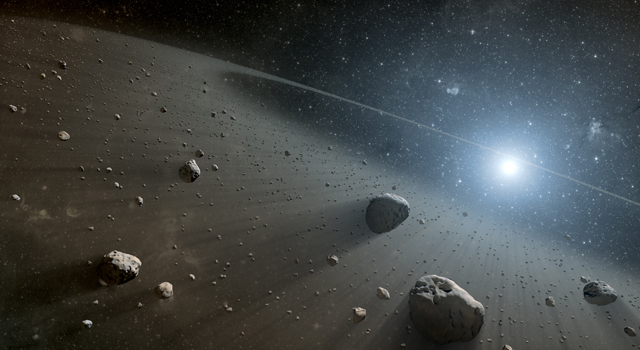
Artist’s impression of the asteroid belt from which most meteorites are thougtht to originate (Credit: NASA/JPL)

A recent paper has broken through that particular barrier (Furukawa, Y. et al. 2019. Extraterrestrial ribose and other sugars in primitive meteorites. Proceedings of the National Academy of Sciences. Online; DOI: 10.1073/pnas.1907169116). Yoshihiro Furukawa and colleagues analysed three carbonaceous chondrites and discovered traces of 4 types of sugars. It seems that sugar compounds have remained elusive because those now detected are at concentrations thousands of times lower than those of amino acids. Contamination by terrestrial sugars that may have entered the meteorites when they slammed into soil is ruled out by their carbon isotope ratios, which are very different from those in living organisms. One of the sugars is ribose, a building block of RNA (DNA needs deoxyribose). Though a small discovery, it has great significance as regards the possibility that the components needed for living processes formed in the early Solar System. Moon formation by giant impact shortly after accretion of the proto-Earth would almost certainly have  destroyed such organic precursors. So, if the Earth’s surface was chemically ‘seeded’ in this way it is more likely to have occurred at a later time, perhaps during the Late Heavy Bombardment 4.1 to 3.8 billion years ago (see: Did mantle chemistry change after the late heavy bombardment? In Earth-logs September 2009)

What followed the K-Pg extinction event?

A study of boron isotopes in the tests of foraminifera that lived deep in the oceans and near their surface just after the K-Pg boundary event has revealed that ocean water suddenly became more acidic (Henehan, M.J. and 13 others 2019. Rapid ocean acidification and protracted Earth system recovery followed the end-Cretaceous Chicxulub impact. Proceedings of the National Academy of Sciences. Online; DOI: 10.1073/pnas.1905989116). Because the data came from marine sediment sequences exposed in Europe and North America  and from ocean-floor cores beneath the Atlantic and Pacific Oceans, the acidification was global in scope. The sharp fall in pH, almost certainly due to massive release of sulphuric and carbonic acids from thick anhydrite  and limestone beds beneath the Chicxulub impact site was instrumental in the collapse of marine ecosystems. A rebound to higher, more alkaline pH values (overshooting those of the preceding Late Cretaceous) was equally rapid. That is ascribed to the post-extinction dearth of marine organisms that take up calcium in their shells so that dissolved Ca became more abundant. Within less than 100 ka of the Chicxulub impact ocean pH had returned to its pre-impact levels. Since Deccan flood-basalt volcanism was active until long after, Henehan et al. consider that its influence on ocean acidification was minimal and that The Chicxulub impact ‘was key in driving end-Cretaceous mass extinction’.

Records of marine fossils are both more abundant and continuous than are those of land-based organisms. That animal extinctions on the continents were dramatic has been clear for over a century. Entire classes, notably the dinosaurs (except for birds), as well as orders, families, genera and species disappear from the fossil record. The event more than decimated plant taxa too. How and at what pace the vacated ecological niches were reoccupied during the evolutionary radiation among what became modern fauna and flora remain poorly understood. For the first million years of post-impact time fossils of terrestrial and freshwater organisms are very rare. Well-dated sedimentary sequences are patchily distributed, and fossils preserved in them as rare as proverbial hen’s teeth, apart from a few, better endowed strata separated by thick, unproductive sediments. A Lower Palaeocene site near Denver in Colorado, USA extends for 27 km. At first sight it does not impress palaeontologists, but it carries concretions that yield rich hauls of tiny vertebrate fossils. Dating using U-Pb dating of interleaved volcanic ash layers, stratigraphy based on normal and reversed polarity of remanent magnetism, and plant pollen variations. The 250 m thick sedimentary unit can be divided into 150 levels that represent the first million years flowing the Chicxulub impact (Lyson, T.R. and 15 others 2019. Paleogene mass extinction -Exceptional continental record of biotic recovery after the Cretaceous. Science, online first release; DOI: 10.1126/science.aay2268.

Taeniolabis_NT_small
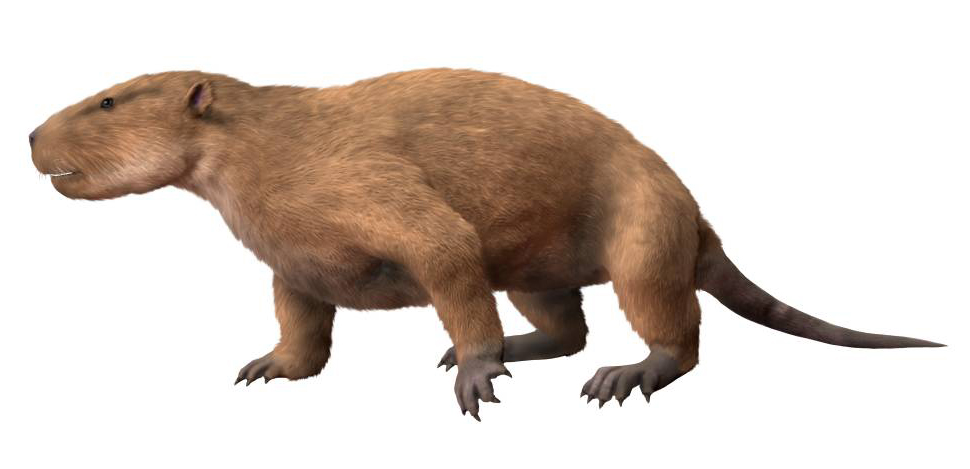
Reconstruction of the 35 kg early Palaeocene mammal Taeniolabis (credit: Wikipedia)

The levels contain abundant remains of early Cenozoic mammals, particularly skulls that are vitally important in taxonomy and size estimation. During the last few hundred thousand years of the Cretaceous, mammals about the size of a modern racoon (~8 kg) were abundant. The oldest Palaeocene holds nothing bigger than a 600 g rat, and few of them. Then, remarkably, the numbers, diversity and mean body mass of mammals grow; raccoon-size back within 100 ka then, in a series of steps, beasts around 25, 35 and 45 kg emerged successively during the next 600 ka. Clearly, the local food chain had to support this growth in size as well as numbers. Pollen records reveal a terrain first dominated by ferns – not especially nutritious – then after 200 ka by palms and finally legumes (pulses) appear. The diversification of animals and plants changed in lockstep. Studies of fossil-leaf shapes (toothed = cooler; smooth = warmer) indicated a similarly triple-stepwise amelioration in climate from cool, post-impact to hot by 65 Ma ago. This climatic warming may have been connected to successive pulses of Deccan volcanism that drove up atmospheric CO2 levels. Geologically, that is pretty quick. In the context of a possible, equally rapid mass extinction as a result of anthropogenic factors, such a pace of recovery is hardly reassuring…

Ordovician ice age: an extraterrestrial trigger

The Ordovician Period is notable for three global events; an explosion in biological diversity; an ice age, and a mass extinction. The first, colloquially known as the Great Ordovician Biodiversification Event, occurred in the Middle Ordovician around 470 Ma ago (see The Great Ordovician Diversification, September 2008) when the number of recorded fossil families tripled. In the case of brachiopods, this seems to have happened in no more than a few hundred thousand years. The glacial episode spanned the period from 460 to 440 Ma and left tillites in South America, Arabia and, most extensively, in Africa. Palaeogeographic reconstructions centre a Gondwanan ice cap in the Western Sahara, close to the Ordovician South Pole. It was not a Snowball Earth event, but covered a far larger area than did the maximum extent the Pleistocene ice sheets in the Northern Hemisphere. It is the only case of severe global cooling bracketing one or the ‘Big Five’ mass extinctions of the Phanerozoic Eon. In fact two mass extinctions during the Late Ordovician rudely interrupted the evolutionary promise of the earlier threefold diversification, by each snuffing-out almost 30% of known genera.

ord met
L-chondrite meteorite in iron-stained Ordovician limestone together with a nautiloid (credit: Birger Schmitz)

A lesser-known feature of the Ordovician Period is a curious superabundance of extraterrestrial debris, including high helium-3, chromium and iridium concentrations, preserved in sedimentary rocks, particularly those exposed around the Baltic Sea (Schmitz, B. and 19 others 2019. An extraterrestrial trigger for the mid-Ordovician ice age: Dust from the breakup of the L-chondrite parent body. Science Advances, v. 5(9), eaax4184; DOI: 10.1126/sciadv.aax4184). Yet there is not a sign of any major impact of that general age, and the meteoritic anomaly occupies a 5 m thick sequence at the best studied site in Sweden, representing about 2 Ma of deposition, rather than the few centimetres at near-instantaneous impact horizons such as the K-Pg boundary. Intact meteorites are almost exclusively L-chondrites dated at around 466 Ma. Schmitz and colleagues reckon that the debris represents the smashing of a 150 km-wide asteroid in orbit between Mars and Jupiter. Interestingly, L-chondrites are more abundant today and in post-Ordovician sediments than they were in pre-Ordovician records, amounting to about a third of all finds. This suggests that the debris is still settling out in the Inner Solar System hundreds of million years later. Not long after the asteroid was smashed a dense debris cloud would have entered the Inner Solar System, much of it in the form of dust.

The nub of Schmitz et al’s hypothesis is that considerably less solar radiation fell on Earth after the event, resulting in a sort of protracted ‘nuclear winter’ that drove the Earth into much colder conditions. Meteoritic iron falling the ocean would also have caused massive phytoplankton blooms that sequestered CO2 from the Ordovician atmosphere to reduce the greenhouse effect. Yet the cooling seems not to have immediately decimated the ‘booming’ faunas of the Middle Ordovician. Perhaps the disruption cleared out some ecological niches, for new species to occupy, which may explain sudden boosts in diversity among groups such as brachiopods. Two sharp jumps in brachiopod species numbers are preceded and accompanied by ‘spikes’ in the number of extraterrestrial chromite grains in one Middle Ordovician sequence. One possibility, suggested in an earlier paper (Schmitz, B. and 8 others 2008. Asteroid breakup linked to the Great Ordovician Biodiversification Event. Nature Geoscience, v. 1, p. 49-53; DOI: 10.1038/ngeo.2007.37)  is that the undoubted disturbance may have killed off species of one group, maybe trilobites, so that the resources used by them became available to more sturdy groups, whose speciation filled the newly available niches. Such a scenario would make sense, as mobile predators/scavengers (e.g. trilobites) may have been less able to survive disruption, thereby favouring the rise of less metabolically energetic filter feeders (e.g. brachiopods).

See also: Sokol, J. 2019. Dust from asteroid breakup veiled and cooled Earth. Science, v. 365, pp. 1230: DOI: 10.1126/science.365.6459.1230, How the first metazoan mass extinction happened (Earth-logs, May 2014)

A dinosaur nesting colony

Imagine visiting a colony of nesting seagulls on an exposed sandbar. Their nests are roughly equally spaced, out of pecking range. As well as incubating individuals on their nests the air is full of screaming birds swooping towards you, and even pecking or buffeting your head. Only a relative few bird species nest in colonies. Some bury their eggs communally in warm sand or compost abandoning them for solar energy to hatch. The last approach is also that of many reptiles, notably turtles and crocodiles, but some crocodiles do behave like gulls, females guarding their buried clutches, so why not dinosaurs? Brooding in colonies has been suspected of dinosaurs, although most fossil eggs had been buried.

Upper Cretaceous sedimentary rocks in Mongolia have yielded more dinosaur eggs than most other places, especially in the northern Gobi Desert’s largely unvegetated outcrops. It is from there that exquisitely preserved, firm evidence has emerged of dinosaurs nesting communally (Kanaka, K. and 9 others 2019. Exceptional preservation of a Late Cretaceous dinosaur nesting site from Mongolia reveals colonial nesting behavior in a non-avian theropod. Geology, v. 47, p. 1-5; DOI: 10 .1130 /G46328.1). The site exposes 15 clutches about 1.5 m apart that, together, contain more than 50 spherical eggs 10 to 15 cm in diameter. Modern erosion has dissected the occurrences, and it is estimated that up to 32 clutches may have been laid in an area of ~286 m2. That the eggs had been laid on the surface, covered – possibly with organic matter – and then incubated is clearly evidenced by all of them resting in pockets on an erosion surface covered by the same thin, continuous layer of bright red sand. About 60% of them seem to have hatched successfully. Each eggshell contains the same doubled-layered infill of fine sediment made of surrounding sediment and broken shell fragments.

dino nest
Clutch of near-spherical dinosaur eggs from Mongolia: scale bar = 10 cm. (Credit: Kanaka et al. 2019; Fig. 2A)

The detail of the nests suggests that they were created on an exposed surface during a single dry season and after hatching, when their infills formed, they were gently flooded as stream levels rose to deposit the thin, red covering layer. Whether or not the eggs were brooded or merely protected cannot be assessed, despite the excellence of preservation. But the high hatching success suggests that adults fended off predators during incubation. Egg shape and size point to their having been laid by a single species of theropod dinosaur; probably not ancestral to birds, but a group that includes velociraptors and tyrannosaurs. Yet nest-tending has clear parallels among later birds.

Geochemical background to the Ediacaran explosion

The first clear and abundant signs of multicelled organisms appear in the geological record during the 635 to 541 Ma Ediacaran Period of the Neoproterozoic, named from the Ediacara Hills of South Australia where they were first discovered in the late 19th century. But it wasn’t until 1956, when schoolchildren fossicking in Charnwood Forest north of Leicester in Britain found similar body impressions in rocks that were clearly Precambrian age that it was realised the organism predated the Cambrian Explosion of life. Subsequently they have turned-up on all continents that preserve rocks of that age (see: Larging the Ediacaran, March 2011). The oldest of them, in the form of small discs, date back to about 610 Ma, while suspected embryos of multicelled eukaryotes are as old as the very start of the Edicaran (see; Precambrian bonanza for palaeoembryologists, August 2006).

Artist’s impression of the Ediacaran Fauna (credit: Science)

The Ediacaran fauna appeared soon after the Marinoan Snowball Earth glaciogenic sediments that lies at the top of the preceding Cryogenian Period (650-635 Ma), which began with far longer Sturtian glaciation (715-680 Ma). A lesser climatic event – the 580 Ma old Gaskiers glaciation – just preceded the full blooming of the Ediacaran fauna. Geologists have to go back 400 million years to find an earlier glacial epoch at the outset of the Palaeoproterozoic. Each of those Snowball Earth events was broadly associated with increased availability of molecular oxygen in seawater and the atmosphere. Of course, eukaryote life depends on oxygen. So, is there a connection between prolonged, severe climatic events and leaps in the history of life? It does look that way, but begs the question of how Snowball Earth events were themselves triggered. Continue reading “Geochemical background to the Ediacaran explosion”

A role for iron in the origin of life

Experiments aimed at suggesting how RNA and DNA – prerequisites for life, reproduction and evolution – might have formed from a ‘primordial soup’ have made slow progress. Another approach to the origin of life is investigation of the most basic chemical reactions that it engages in. Whatever the life form, prokaryote or eukaryote, its core processes involve reducing carbon dioxide, or other simple carbon-bearing compounds, and water to synthesise organic molecules that make up cell matter. Organisms also engage in metabolising biological compounds to generate energy. At their root, these two processes mirror each other; a creative network of reactions and another that breaks compounds down, known as the Krebs- and the reverse-Krebs cycles. In living organisms both are facilitated by other organic compounds that, of course, are themselves produced by cells. How such networks arose under inorganic conditions remains unknown, but three biochemists at the University of Strasbourg in France (Muchowska, K.B. et al. 2019. Synthesis and breakdown of universal metabolic precursors promoted by iron. Nature, v. 569, p. 104-107;  DOI: 10.1038/s41586-019-1151-1) have designed an inorganic experiment. They aimed to investigate how two simple organic compounds, which conceivably could have formed in a lifeless early environment, might have been encouraged to kick-start basic living processes. These are glyoxylate (HCOCO2) and pyruvate (CH3COCO2).

The most difficult chemical step in building complex organic compounds is inducing carbon atoms to bond together through C-C bonds; a process that thermodynamics tends to thwart but is accomplished in living cells by adenosine tri-phosphate (ATP). Previous workers focussed on interactions between reactive compounds, such as cyanide and formaldehyde, as candidates for the precursors of life, but such chemistry is totally different from what actually goes on in organisms. Joseph Moran, one of the co-authors of the paper, and his research group recently settled on five fundamental linkages of C, H and O as ‘universal hubs’ at the core of the Krebs cycle and its reverse. Kamila Muchowska and co-workers found that glyoxylate and pyruvate introduced into a simulated hydrothermal fluid that contains ions of ferrous iron (reduced Fe2+) were able to combine in producing all five ‘universal hubs. Ferrous iron clearly acted as a catalyst, through being a powerful reducing agent or electron donor, to get around the stringencies of classic thermodynamics. Moran’s team had previously shown that pyruvate itself can form inorganically from CO2 in water laced with iron, cobalt and nickel ions. Formation of glyoxylate in such a manner has yet to be demonstrated. Nevertheless, the two together in a watery soup of transition metal ions seem destined to produce an abundance of exactly the compounds at the root of living processes. In fact the experiment showed that all but two of the eleven components of the Krebs cycle can be synthesised inorganically.

407458aa.2
Metal-rich ‘black smoker’ at a hydrothermal vent on the mid-Atlantic ridge(credit: MARUM, Germany)

Until the rise of free oxygen in the Earth system some 2400 Ma ago, the oceans would have been awash with soluble ferrous iron. This would have been especially the case around hydrothermal vents that result from the interaction between water and hot mafic lavas of the oceanic crust, together with less abundant transition-metal ions, such as those of nickel and cobalt. The ocean-vent hypothesis for the origin of life seems set for a surge forward.

See also: Katsnelson, A. 2019. Iron can catalyse metabolic reactions without enzymes.

Read more on Palaeobiology

A bad day at the end of the Cretaceous

The New Yorker magazine normally features journalism, commentary, criticism, essays, fiction, satire, cartoons, and poetry. So it is odd that this Condé Nast glossy for the chattering classes snaffled online what may be the geological scoop of the 21st century so far (Preston, D. 2019. The day the dinosaurs died. The New Yorker 8 April 2019 issue). The paper that lies at the centre of the story had not been published and nor had the issue of The New Yorker in which Douglas Preston’s story was scheduled for publication. The very day (29 March 2019) that Britain was thwarted of its Brexit moment the world’s media was frothing with news about the end of another era; the Mesozoic. The paper itself was published online on April Fools’ Day with a title that is superficially arcane (DePalma, R.A. and 11 others 2019. A seismically induced onshore surge deposit at the KPg boundary, North Dakota. Proceedings of the National Academy of Science, early online publication;p DOI: 10.1073/pnas.1817407116). But its contents are the stuff of dreams for any aspiring graduate student of palaeontology; the Indiana Jones opportunity.

An ‘onshore surge deposit’ occurs at many Western Hemisphere sites where the K-Pg boundary outcrops in terrestrial or shallow-marine sediments. The closer to the Chicxulub crater north of Mexico’s Yucatan Peninsula the more obvious they are, for they result from the tsunamis that immediately followed the asteroid impact. Lead author Robert DePalma, now of the University of Kansas, became focussed on the dinosaur-rich, Late Cretaceous Hell Creek Formation of North Dakota as an undergraduate. Accepted for graduate studies he was directed to a project on the fauna of lacustrine sediments close to the K-Pg boundary layer, which is well-known in the area, and that’s what he has been engaged with ever since. In 2012 he was guided to a remarkable locality by a rockhound, disappointed because it exposed extremely fossil-rich sediments but was so soft that none could be extracted intact with a hammer and chisel. It turned out to have resulted from a surge along a sinuous river that had washed debris onto a point-bar deposit at the inside of a meander. The debris includes remains of both marine and terrestrial organisms and shows clear signs of having been swept upriver, i.e. from the sea and possibly the result of a tsunami. Being capped by a thin, iridium-rich layer of impactite, the 1.5 metre surge deposit is part of the K-Pg boundary layer, and probably represented only a few hours before being blanketed by ejecta.

This Event Deposit comprises two graded, fining-upwards units and thus two distinct surges, with a thin mat of vegetation fragments immediately below the Ir-rich clay cap that also contains sparse shocked quartz grains. The Event Deposit contains altered glass spherules throughout, which cgradually become smaller higher in the 1.5 m sequence. Some of the larger spherules produced ‘micro-craters’ in the sediments. Fossils include marine ammonite fragments (some still nacreous) and freshwater fish (paddlefish and sturgeon). The fish are so complete as to suggest an absence of scavengers. The paper itself contains little of the information that dominated Preston’s New Yorker article and the global media coverage. This included clear evidence that the fish ingested spherules, found clogging their gills and possible causing their death. There are examples of spherules embedded in amber formed from plant sap, which suggests sub-aerial fall of ejecta, and among the marine faunal samples are teeth of fish and reptiles (see DePalma et al’s Supplemental Data). The most startling finds reported by Preston are nowhere to be found in DePalma et al’s paper or its supplement. These include possible dinosaur feathers; a fragment of ceratopsian dinosaur skin attached to a hip bone; a burrow containing a mammal jaw that penetrates the K-Pg boundary layer; dinosaur remains, including an egg (complete with embryo) and hatchlings of dinosaurian groups found at deeper levels in the Hell Creek Formation. Previously, palaeontologists had found no dinosaur remains less than 3 m below the K-Pg boundary layer anywhere on Earth, prompting the suggestion that they had become extinct before the near-instantaneous effects of Chicxulub, and were perhaps victims of the general effects of the Deccan Trap volcanism. If verified in later peer-reviewed publications, DePalma et al’s work would help resolve the gradual vs sudden hypotheses for the end-Cretaceous mass extinction.

gill spherules
X-ray and CT images of impact spherules in the gills of a fossil sturgeon from the Tanis K-Pg site, North Dakota (credit DePalma et al. 2019; Fig. 6)

Preston reports some academic scepticism about DePalma’s work, and emphasises his showmanship at conferences; for instance, he named the site ‘Tanis’ after the ancient city in Egypt featured in the 1981 film Raiders of the Lost Ark. There are geophysical queries too. If the inundation was by the on-shore effects of a tsunami it doesn’t tally with the abundance of ejecta fallout of glass spherules: tsunamis propagate in shallow seawater at speeds less than 50 km h-1  and more slowly still in channels, whereas impact ejecta travel much faster. This is acknowledged in the paper’s supplement, and the paper refers to a seiche wave activated by seismic waves associated with the Chicxulub impact which could have arrived in North Dakota at about the same time as its ejecta blanket. The paper’s authorship includes the imprimatur of other authorities in different geoscientific fields, including Walter Alvarez, jointly famed with his father Luis for the discovery of the K-Pg boundary horizon and its impact connections in 1981. So it carries considerable weight. No doubt further comment and further papers on the Tanis site will emerge: DePalma has yet to complete his PhD. It may become the lagerstätte of the K-Pg extinction; in DePalma’s words, ‘It’s like finding the Holy Grail clutched in the bony fingers of Jimmy Hoffa, sitting on top of the Lost Ark.’ …

Read more on Palaeobiology and Impacts

The Cambrian Explosion: a broader view

The base of the Cambrian has long been defined as the level where abundant shelly fossils and most phyla first occur in the stratigraphic record. That increase in diversity led to the nickname ‘Cambrian Explosion’, despite the fact that sheer numbers and diversity of lesser taxa took a long time to rise to ‘revolutionary’ levels. Yet a great deal of animal evolution was going on during the preceding Proterozoic Era that was revealed once palaeobiological research blossomed in rocks of that age range. Today, the earliest occurrences, or at least hints, of quite a few phyla can be traced to the last 100 Ma of the Precambrian. Clearly, the Cambrian Explosion needs a fresh look now that so many data are in. Any palaeontologist would benefit from reading a Perspective article in the latest issue of Nature Ecology & Evolution (Wood, R. and 8 others 2019. Integrated records of environmental change and evolution challenge the Cambrian Explosion. Nature Ecology & Evolution, v. 3, online publication; DOI: 10.1038/s41559-019-0821-6)

Rachel Wood of Edinburgh University and co-authors working elsewhere in Britain, Canada, Japan and Finland sift the growing wealth of fossil and trace-fossil evidence that predate the start of the Cambrian. They also consider the geochemical events that stand out in the Ediacaran Period that succeeds the Snowball Earth events of the Cryogenian. Their account recognises that the geochemical changes – principally a series of carbon-isotope (δ13C) excursions – may have resulted from tectonic changes. The carbon-isotope data mark a series of short-lived penetrations of oxygen-rich conditions deep into the ocean water column and longer periods of oxygen-starved deep water. Such perturbations in oceanic redox conditions ‘speed-up’ thorough the late-Ediacaran into the Cambrian: a profound and protracted transition from the Neoproterozoic world to that of the Phanerozoic. Over the same time span there is a ‘progressive addition of biological novelty’ in the form and function of the evolving biota, so that  each successive assemblage builds on the earlier advances.

The fossil evidence suggests that the earliest Ediacaran fauna was metazoan but with no sign of bilaterian affinities (i.e. having ‘heads’ and ‘tails’). The rise of bilaterians of which most animal phyla are members occupied the later Ediacaran , with the first evidence of locomotion – and almost by definition animals with ‘fore’ and ‘aft’ – being around 560 Ma. Each discrete shift from more to less oxic conditions in the oceans seems to have knocked-back animal life, the reverse being accompanied by diversification of survivors. Oxygenation at the very start of the Cambrian marked the beginnings of a diversification clearly manifested by animals capable of biomineralisation and the secretion of hard parts with clear patterns. Such ‘shelly faunas’ are present in the latest Ediacaran sediments but with a multiplicity of seemingly arbitrary forms, although trace fossils suggest soft-bodied animals did have definite morphological pattern.

407458aa.2
Diorama of the Lower Cambrian Qingjiang fauna (Credit: Fu et al. 2019; Fig 4)

Adding yet more information to early metazoan history is the recently discovered Cambrian Qingjiang lagerstätte of Hubei Province in southern China dated at 518 Ma; similar in its exquisite preservation to the Burgess (508 Ma) and Chengjiang (518 Ma) biotas (Fu, D. and 14 others 2019. The Qingjiang biota—A Burgess Shale-type fossil Lagerstätte from the early Cambrian of South China. Science, v. 363, p. 1338-1342; DOI: 10.1126/science.aau8800). The two previously discovered Cambrian lagerstättes are notable for their very diverse arthropod and sponge faunas. That at Qingjiang adds an abundance of cnidarians, jellyfish, sea anemones, corals and comb jellies, rare in the other two biotas, plus kinorhynchs or mud dragons – moulting invertebrates known only from Cambrian and modern sediments. The fossils at Qingjiang include only about 8% of the taxa of the same age found at Chengjiang, suggesting different environments

The idea of a sudden, discrete explosive event in the history of life, which coincided with the start of the Cambrian, now seems difficult to support. This should not damage the status of 541 Ma as the start of the Phanerozoic because stratigraphy basically gives form to the passage of time and has done since its emergence in the 19th century, so keeping the names of the divisions is essential to continuity.

Related articles: Daley, A.C. 2019. A treasure trove of Cambrian fossils. Science, v. 363, p. 1284-1285; DOI: 10.1126/science.aaw8644. Switek, B. 2019. Fossil Treasure Trove of Ancient Animals Unearthed in China (Smithsonian.com)

Read more on Palaeobiology

Better dating of Deccan Traps, and the K-Pg event

Predictably, the dialogue between the supporters of the Deccan Trap flood basalts and the Chicxulub impact as triggers that were responsible for the mass extinction at the end of the Mesozoic Era (the K-Pg event) continues. A recent issue of Science contains two new approaches focussing on the timing of flood basalt eruptions in western India relative to the age of the Chicxulub impact. One is based on dating the lavas using zircon U-Pb geochronology (Schoene, B. et al. 2019. U-Pb constraints on pulsed eruption of the Deccan Traps across the end-Cretaceous mass extinction. Science, v. 363, p. 862-866; DOI: 10.1126/science.aau2422), the other using 40Ar/39Ar dating of plagioclase feldspars (Sprain, C.G. et al. 2019. The eruptive tempo of Deccan volcanism in relation to the Cretaceous-Paleogene boundary. Science, v. 363, p. 866-870; DOI: 10.1126/science.aav1446). Both studies were initiated for the same reason: previous dating of the sequence of flows in the Deccan Traps was limited by inadequate sampling of the flow sequence and/or high analytical uncertainties. All that could be said with confidence was that the outpouring of more than a million cubic kilometres of plume-related basaltic magma lasted around a million years (65.5 to 66.5 Ma) that encompassed the sudden extinction event and the possibly implicated Chicxulub impact. The age of the impact, as recorded by its iridium-rich ejecta found in sediments of the Denver Basin in Colorado, has been estimated from zircon U-Pb data at 66.016 ± 0.050 Ma; i.e. with a precision of around 50 thousand years.

407458aa.2
The Deccan Traps in the Western Ghats of India (Credit: Wikipedia)

Because basalts rarely contain sufficient zircons to estimate a U-Pb age of their eruption, Blair Schoene and colleagues collected them from palaeosols or boles that commonly occur between flows and sometimes incorporate volcanic ash. Their data cover 23 boles and a single zircon-bearing basalt. Sprain et al. obtained 40Ar/39Ar ages from 19 flows, which they used to supplement 5 ages obtained by their team in previous studies that used the same analytical methods and 4 palaeosol ages from an earlier paper by Schoene’s group.

The zircon U-Pb data from palaeosols, combined with estimates of magma volumes that contributed to the lava sequence between each dated stratigraphic level, provide a record of the varying rates at which lavas accumulated. The results suggest four distinct periods of high-volume eruption separated by long. periods of relative quiescence. The second such pulse precedes the K-Pg event by up to 100 ka, the extinction and impact occurring in a period of quiescence. A few tens of thousand years after the event Deccan magmatism rose to its maximum intensity. Schoene’s group consider that this supports the notion that both magmatism and bolide impact drove environmental deterioration that culminated in mass extinction.

The Ar-Ar data derived from the basalt flows themselves, seem to tell a significantly different story. A plot of basalt accumulation, similarly derived from dating and stratigraphy, shows little if any sign of major magmatic pulses and periods of quiescence. Instead, Courtney Sprain’s team distinguish an average eruption rate of around 0.4 km3 per year before the K-Pg event and 0.6 km3 per year following it. Yet they observe from climate proxy data that there seems to have been only minor climatic change (about 2 to 3 °C warming) during the period around and after the K-Pg event when some 75% of the lavas flooded out. Yet during the pre-extinction period of slower effusion global temperature rose by 4°C then fell back to pre-eruption levels immediately before the K-Pg event. This odd mismatch between magma production and climate, based on their data, prompts Sprain et al. to speculate on possible shifts in the emission of climate-changing gases during the period Deccan volcanism: warming by carbon dioxide – either from the magma or older carbon-rich sediments heated by it; cooling induced by stratospheric sulfate aerosols formed by volcanogenic SO2 emissions. That would imply a complex scenario of changes in the composition of gas emissions of either type. They suggest that one conceivable trigger for the post-extinction climate shift may have been exhaustion of the magma source’s sulfur-rich volatile content before the Chicxulub impact added enough energy to the Earth system to generate the massive extrusions that followed it. But their view peters out in a demand for ‘better understanding of [the Deccan Traps’] volatile release’.

A curious case of empiricism seeming to resolve the K-Pg conundrum, on the one hand, yet pushing the resolution further off, on the other …

Read more on Palaeobiology and Magmatism

Plants first to succumb to the end-Permian event

We have become accustomed to thinking that up to 90% of organisms were snuffed out by the catastrophe at the Permian-Triassic boundary 252 Ma ago. Those are the figures for marine organisms, whose record in sediments is the most complete. It has also been estimated to have lasted a mere 60 ka, and the recovery in the Early Triassic to have taken as long as 10 Ma. There are hints of three separate pulses of extinction related to: initial gas emission from the Siberian Traps; coal fires; and release of methane from sea-floor gas hydrates at the peak of global warming. Various terrestrial sequences record the collapse of dense woodlands, so that the Early Triassic is devoid of coals that are widespread in the preceding Late Permian. A new detailed study of terrestrial sediments in the Sydney Basin of eastern Australia reveals something new (Fielding, C.R. and 10 others 2019. Age and pattern of the southern high-latitude continental end-Permian extinction constrained by multiproxy analysis. Nature Communications, v. 10, online publications: DOI: 10.1038/s41467-018-07934-z).

407458aa.2
The distinctive, tongue-like form of Glossopteris leaves that dominate the coal-bearing Permian strata of the southern coninents. Their occurrence in South America, Africa, India, Australia, New Zealand, and Antarctica prompted Alfred Wegener to suggest that these modern continents had been united in Pangaea by Permian times: a key to continental drift. (Credit: Getty Images)

Christopher Fielding or the University of Nebraska-Lincoln and colleagues focused on pollens, geochemistry and detailed dating of the sedimentary succession across the P-Tr boundary exposed on the New South Wales coast. The stratigraphy is intricately documented by a 1 km deep well core that penetrates a more or less unbroken fluviatile and deltaic sequence that contains eleven beds of volcanic ash. The igneous layers are key to calibrating age throughout the sequence (259.10 ± 0.17 to 247.87 ± 0.11 Ma using zircon U-Pb methods). The pollens change abruptly from those of a Permian flora, dominated by tongue-like glossopterid plants, to a different association that includes conifers. The change coincides with a geochemical ‘spike’ in the abundance of nickel and a brief change in the degree of alteration of detrital fledspars to clay minerals. The first implicates the delivery of massive amounts of nickel to the atmosphere, probably by the eruption of the Siberian Traps , which contain major economic nickel deposits. The second feature suggests a brief period of warmer and more humid climatic conditions. A third geochemical change is the onset of oscillations in the abundance of 13C that are thought to record major changes in plant life across the planet. These features would have been an easily predicted association with the 252 Ma mass extinction were it not for the fact that the radiometric dating places them about 400 thousand years before the well-known changes in global animal life. Detailed dating of the Siberian Traps links the collapse of Glossopteris and coal formation to the earliest extrusion of flood basalts, which suggests that the animal extinctions were driven by cumulative effects of the later outpourings

Related article: Chris Fielding comments on the paper at Nature Research/Ecology and Evolution

Read more on Palaeobiology and Stratigraphy