More dinosaur trackways from the Jurassic of the Isle of Skye, Scotland

The Isle of Skye off the northwestern coast of Scotland is one of several areas in Britain that are world-class geological gems. Except for the Cuillin Hills that require advanced mountaineering skills it is easy to explore and has become a major destination for both beginners and expert geoscientists of all kinds. Together with the adjacent Isle of Raasay the area is covered by a superb, free geological guidebook (Bell, B. 2024. The Geology of the Isles of Skye and Raasay. Geological Society of Glasgow) together with 60 standalone excursion guides, and even an introduction to Gaelic place names and pronunciation. It is freely available from https://www.skyegeology.com/
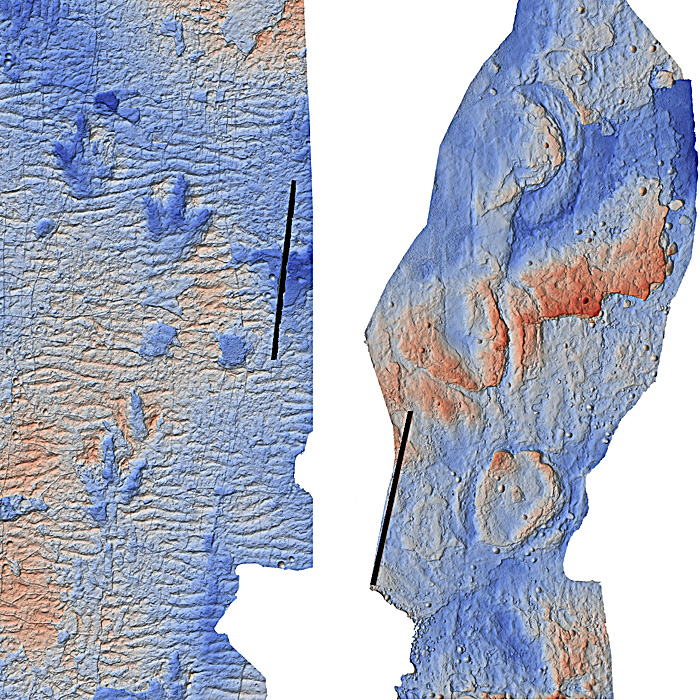
Fig Dinosaur trackways at Prince Charles’s Point on the Isle of Skye: Left carnivorous theropods; Right herbivorous sauropods. The black scales are 1 m long. The images are enhanced fine-scale elevation models of the exposed surfaces that were derived from vertical photographs. Credit: Blakesley et al., Figs 9 and 27.

Since 2018 Skye has also become a must-visit area for vertebrate palaeontologists. Beneath Palaeocene flood basalts is a sequence of Jurassic strata, both shallow marine and terrestrial. One formation, the Great Estuarine Group of Middle Jurassic (Bathonian, 174–164 Ma) age covers the time when meat-eating theropod- and herbivorous sauropod dinosaurs began to grow to colossal sizes from diminutive forebears. While other Jurassic sequences on Skye have notable marine faunas, its Bathonian strata have yielded a major surprise: some exposed bedding surfaces are liberally  dotted with trackways of the two best known groups of dinosaur. The first to be discovered were at Rubha Nam Brathairean (Brothers’ Point) suggesting a rich diversity of species that had wandered across a wide coastal plain, also including the somewhat bizarre Stegosaurus. The latest finds are from a rocky beach at Prince Charles’s Point where the Young Pretender to the British throne, Charles Edward Stuart, landed and hid during his flight from the disastrous Battle of Culloden (16 April 1746). It was only in the last year or so that palaeontologists from the universities of Edinburgh and Liverpool, and the Staffin Museum came across yet more footprints (131 tracks) left there by numerous dinosaurs in the rippled sands of a Bathonian lagoon (Blakesley, T. et al. 2025. A new Middle Jurassic lagoon margin assemblage of theropod and sauropod dinosaur trackways from the Isle of Skye, Scotland. PLOS One, v. 20, article e0319862; DOI: 10.1371/journal.pone.0319862.

The Prince Charles’s Point site is partly covered by large basalt boulders, which perhaps account for the excellent preservation of the bedding surfaces from wave action. Two kinds of footprint are preserved (see image): those made by three-toed feet and by elephant-like feet that ‘squidged-up’ sediment surrounding than. Respectively these are suggested to represent the hind limbs of bipedal carnivorous theropods and quadrupedal herbivorous sauropods. They show that individual dinosaurs moved in multiple directions, but there is no evidence for gregarious behaviour, such as parallel trackways of several animals. They occur on two adjacent bedding surfaces so represent a very short period of time, perhaps a few days. The authors suggest that several individual animals were milling around, with more sauropods than theropods. What such behaviour represents is unclear. The water in an estuarine lagoon would likely have been fresh or brackish. They may have been drinking or perhaps there was some plants or carcases worth eating ? That might explain both kinds of dinosaurs’ milling around. The sizes of both sauropod and theropod prints average about 0.5 m. The stride lengths of the theropods suggest that they were between 5 to 7 metres long with a hip height of around 1.85 m. Their footprints resemble those reconstructed from skeletal remains of Middle Jurassic Megalosaurus, the first dinosaur to be named (by William Buckland in 1827). The sauropods had estimated hip heights of around 2 m so they may have been similar in size (around 16 m) to the Middle Jurassic Cetiosaurus, the first sauropod to be named (by Richard Owen in 1842).

A fully revised edition of Steve Drury’s book Stepping Stones: The Making of Our Home World can now be downloaded as a free eBook

Life’s origins: a new variant on Darwin’s “warm little pond”

In 1871 Charles Darwin wrote to his friend Joseph Hooker, a botanist:

“It is often said that all the conditions for the first production of a living organism are now present, which could ever have been present. But if (& oh what a big if) we could conceive in some warm little pond with all sorts of ammonia & phosphoric salts, light, heat, electricity &c present, that a protein compound was chemically formed, ready to undergo still more complex changes, at the present day such matter wd be instantly devoured, or absorbed, which would not have been the case before living creatures were formed.”

There have been several attempts over the last 150 years, starting with Miller and Urey in 1952, to create physical analogues for this famous insight (See:  The origin of life on Earth: new developments). What such a physico-chemical environment on the early Earth could have been like has also been a fertile topic for discussion: literally warm pools at the surface; hot springs; seawater around deep-ocean hydrothermal vents; even droplets in clouds in the early atmosphere. Attention has recently moved to Darwin’s original surface pools through examination of modern ones. The most important content would be dissolved phosphorus compounds, because that element helps form the ‘backbone’ of the helix structure of RNA and DNA. But almost all natural waters today have concentrations of phosphorus that are far too low for such linkages to form by chemical processes, and also to produce lipids that form cell membranes and the ATP (adenosine triphosphate) so essential in all living metabolism. Phosphorus availability has been too low for most of geological time simply because living organisms are so efficient at removing what they need in order to thrive.

Mono Lake in semi-arid eastern California – a ‘soda lake’- is so concentrated by evaporation that pillars of carbonate grow above its surface

For the first life to form, phosphorus would somehow have had to be concentrated in watery solution as phosphate ions – [PO ₄]³⁻. The element’s source, like that of all others in the surface environment, is in magmas and the volcanic rocks that they form. Perhaps early chemical weathering or reactions between lavas and hydrothermal fluids could have released phosphate ions to solution from a trace mineral present in all lavas: the complex phosphate apatite (Ca10(PO4)6(OH,F,Cl)2). But that would still require extreme concentration for it to be easily available to the life-forming process. In January 2024 scientists at the University of Washington in Seattle, USA (Haas, S. et al. 2024. Biogeochemical explanations for the world’s most phosphate-rich lake, an origin-of-life analog. Nature Communications, v. 5, article 28; DOI: 10.1038/s43247-023-01192-8) showed that the highest known concentrations of dissolved phosphorus occur in the so called “soda lakes” that are found in a variety of modern environments, from volcanically active continental rifts to swampy land. They contain dissolved sodium carbonate (washing soda) at very high concentrations so that they are extremely alkaline and often highly salty. Usually, they are shallow and have no outlet so that dry weather and high winds evaporate the water. Interestingly, the streams that flow into them are quite fresh, so soda lakes form where evaporation exceeds annual resupply of rainwater.

The high evaporation increases the dissolved content of many ions in such lakes to levels high enough for them for them to combine and precipitate calcium, sodium and magnesium as carbonates. In some, but not all soda lakes, such evaporative concentration also increases their levels of dissolved phosphate ions higher than in any other bodies of water. That is odd, since it might seem that phosphate ions should combine with dissolved calcium to form solid calcium phosphate making the water less P-rich.  Haas et al. found that lakes which precipitate calcium and magnesium together in the form of dolomite (Ca,Mg)CO3 have high dissolved phosphate. Removal of Ca and other metal ions through bonding to carbonate (CO3) deprives dissolved phosphate ions in solution of metal ions with which they can bond. But why has dissolved phosphate not been taken up by organisms growing in the lakes: after all, it is an essential nutrient. The researchers found that some soda lakes that contain algal mats have much lower dissolved phosphate – it has been removed by the algae. But such lakes are not as salty as those rich in dissolved phosphate. They in turn contain far less algae whose metabolism is suppressed by high levels of dissolved NaCl (salt). Hass et al.’s hypothesis has now been supported by more research on soda lakes.

In an early, lifeless world phosphate concentrations in alkaline, salty lakes would be controlled by purely inorganic reactions. This strongly suggests that ‘warm little soda lakes’ enriched in dissolved sodium carbonate by evaporation, and which precipitated dolomite could have enabled phosphorus compounds to accumulate to levels needed for life to start. They might have been present on any watery world in the cosmos that sustained volcanism.

See also: Service, R.F. 2025. Early life’s phosphorus problem solved? Science, v. 387, p. 917; DOI: 10.1126/science.z78227f; Soda Lakes: The Missing Link in the Origin of Life? SciTechDaily, 26 January 2024. .

A fully revised edition of Steve Drury’s book Stepping Stones: The Making of Our Home World can now be downloaded as a free eBook

The origin of life on Earth: new developments

Debates around the origin of Earth’s life and what the first organism was like resemble the mythical search for the Holy Grail. Chivalric romanticists of the late 12th and early 13th centuries were pretty clear about the Grail – some kind of receptacle connected either with the Last Supper or Christ’s crucifixion – but never found it. Two big quests that engage modern science centre on how the chemical building blocks of the earliest cells arose and the last universal common ancestor (LUCA) of all living things. Like the Grail’s location, neither is likely to be fully resolved because they can only be sought in a very roundabout way: both verge on the imaginary. The fossil record is limited to organisms that left skeletal remains, traces of their former presence, and a few degraded organic molecules. The further back in geological time the more sedimentary rock has either been removed by erosion or fundamentally changed at high temperatures and pressures. Both great conundrums can only be addressed by trying to reconstruct processes and organisms that occurred or existed more than 4 billion years ago.

Artistic impression of the early Earth dominated by oceans (Credit: Sci-news.com)

In the 1950s Harold Urey of the University of Chicago and his student Stanley Miller mixed water, methane, ammonia and hydrogen sulfide in lab glassware, heated it up and passed electrical discharges through it. They believed the simple set-up crudely mimicked Hadean conditions at the Earth surface. They were successful in generating more complex organic chemicals than their starting materials, though the early atmosphere and oceans are now considered to have been chemically quite different. Such a ‘Frankenstein’ approach has been repeated since with more success (see Earth-logs April 2024), creating 10 of the 20 amino acids plus the peptide bonds that link them up to make all known proteins, and even amphiphiles, the likely founders of cell walls. The latest attempt has been made by Spanish scientists at the Andalusian Earth Sciences Institute, the Universities of Valladolid and Cadiz, and the International Physics Centre in San Sebastian (Jenewein, C. et al 2024. Concomitant formation of protocells and prebiotic compounds under a plausible early Earth atmosphere. Proceedings of the National Academy of Sciences, v. 122, article 413816122; DOI: 10.1073/pnas.241381612).

Biomorphs formed by polymerisation of HCN (Credit: Jenewein, C. et al 2024, Figure 2)

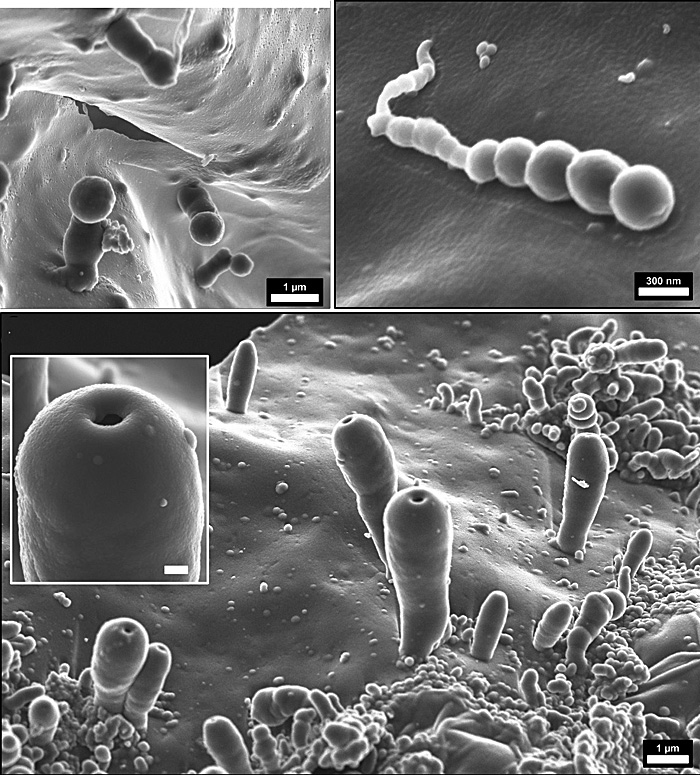
Jenewein and colleagues claim to have created cell-like structures, or ‘biomorphs’ at nanometre- and micrometre scale – spheres and polyp-like bodies – from a more plausible atmosphere of CO2 , H2O, and N2. These ‘protocells’ seem to have formed from minutely thin (150 to 3000 nanometres) polymer films built from hydrogen cyanide that grew  on the surface of the reaction chamber as electric discharges and UV light generated HCN and more complex ‘prebiotic’ chemicals. Apparently, these films were catalysed by SiO2 (silica) molecules from the glass reactor. Note:  In the Hadean breakdown of olivine to serpentinite as sea water reacted with ultramafic lavas would have released abundant silica. Serpentinisation also generates hydrogen. Intimate release of gas formed bubbles to create the spherical and polyp-like ‘protocells’. The authors imagine the Hadean global ocean permanently teeming with such microscopic receptacles. Such a veritable ‘primordial soup’ would be able to isolate other small molecules, such as amino acids, oligopeptides, nucleobases, and fatty acids, to generate more complex organic molecules in micro-reactors en route  to the kind of complex, self-sustaining systems we know as life.

So, is it possible to make a reasonable stab at what that first kind of life may have been? It was without doubt single celled. To reproduce it must have carried a genetic code enshrined in DNA, which is unique not only to all species, but to individuals. The key to tracking down LUCA is that it represents the point at which the evolutionary trees of the fundamental domains of modern life life – eukarya (including animals, plants and fungi), bacteria, and archaea – converge to a single evolutionary stem. There is little point in using fossils to resolve this issue because only multicelled life leaves tangible traces, and the first of those was found in 2,100 Ma old sediments in Gabon (see: The earliest multicelled life; July 2010). The key is using AI to compare the genetic sequences of the hugely diverse modern biosphere. Modern molecular phylogenetics and computing power can discern from their similarities and differences the relative order in which various species and broader groups split from others. It can also trace the origins of specific genes that provides clues about earlier genetic associations. Given a rate of mutation the modern differences provide estimates of when each branching occurred. The most recent genetic delving has been achieved by a consortium based at various institutions in Britain, the Netherlands, Hungary and Japan  (Moody, E.R.R. and 18 others 2024. The nature of the last universal common ancestor and its impact on the early Earth system. Nature Ecology & Evolution, v.8, pages 1654–1666; DOI: 10.1038/s41559-024-02461-1).

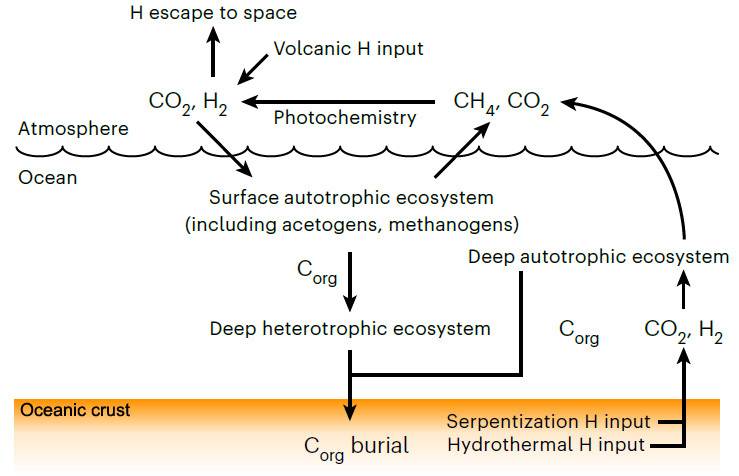
Moody et al have pushed back the estimated age of LUCA to halfway through the Hadean, between 4.09 to 4.33 billion years (Ga), well beyond the geologically known age of the earliest traces of life (3.5 Ga). That age for LUCA in itself is quite astonishing: it could have been only a couple of hundred million years after the Moon-forming interplanetary collision. Moreover, they have estimated that Darwin’s Ur-organism had a genome of around 2 million base pairs that encoded about 2600 proteins: roughly comparable to living species of bacteria and archaea, and thus probably quite advanced in evolutionary terms. The gene types probably carried by LUCA suggest that it may have been an anaerobic acetogen; i.e. an organism whose metabolism generated acetate (CH3COO) ions. Acetogens may produce their own food as autotrophs, or metabolise other organisms (heterotrophs). If LUCA was a heterotroph, then it must have subsisted in an ecosystem together with autotrophs which it consumed, possibly by fermentation. To function it also required hydrogen that can be supplied by the breakdown of ultramafic rocks to serpentinites, which tallies with the likely ocean-world with ultramafic igneous crust of the Hadean (see the earlier paragraphs about protocells). If an autotroph, LUCA would have had an abundance of CO2 and H2 to sustain it, and may have provided food for heterotrophs in the early ecosystem. The most remarkable possibility discerned by Moody et al is that LUCA may have had a kind of immune system to stave off viral infection.

The carbon cycle on the Hadean Earth (Credit: Moody et al. 2024; Figure 3e)

The Hadean environment was vastly different to that of modern times: a waterworld seething with volcanism; no continents; a target for errant asteroids and comets; more rapidly spinning with a 12 hour day; a much closer Moon and thus far bigger tides. The genetic template for the biosphere of the following four billion years was laid down then. LUCA and its companions may well have been unique to the Earth, as are their descendants. It is hard to believe that other worlds with the potential for life, even those in the solar system, could have followed a similar biogeochemical course. They may have life, but probably not as we know it  . . .

See also: Ball, P. 2025. Luca is the progenitor of all life on Earth. But its genesis has implications far beyond our planet. The Observer, 19 January 2025.

A fully revised edition of Steve Drury’s book Stepping Stones: The Making of Our Home World can now be downloaded as a free eBook

Multiple Archaean gigantic impacts, perhaps beneficial to some early life

In March 1989 an asteroid half a kilometre across passed within 500 km of the Earth at a speed of 20 km s-1. Making some assumptions about its density, the kinetic energy of this near miss would have been around 4 x 10¹⁹ J: a million times more than Earth’s annual heat production and humanity’s annual energy use; and about half the power of detonating every thermonuclear device ever assembled. Had that small asteroid struck the Earth all this energy would have been delivered in a variety of forms to the Earth System in little more than a second – the time it would take to pass through the atmosphere. The founder of “astrogeology” and NASA’s principal geological advisor for the Apollo programme, the late Eugene Shoemaker, likened the scenario to a ‘small hill falling out of the sky’. (Read a summary of what would happen during such an asteroid strike).  But that would have been dwarfed by the 10 to 15 km impactor that resulted in the ~200 km wide Chicxulub crater and the K-Pg mass extinction 66 Ma ago. Evidence has been assembled for Earth having been struck during the Archaean around 3.6 billion years (Ga) ago by an asteroid 200 to 500 times larger: more like four Mount Everests ‘falling out of the sky’ (Drabon, N. et al. 2024. Effect of a giant meteorite impact on Paleoarchean surface environments and life. Proceedings of the National Academy of Sciences, v. 121, article e2408721121; DOI: 10.1073/pnas.2408721121

Impact debris layer in the Palaeoarchaean Barberton greenstone belt of South Africa, which contains altered glass spherules and fragments of older carbonaceous cherts. (Credit: Credit: Drabon, N. et al., Appendix Fig S2B)

In fact the Palaeoarchaean Era (3600 to 3200 Ma) was a time of multiple large impacts. Yet their recognition stems not from tangible craters but strata that contain once glassy spherules, condensed from vaporised rock, interbedded with sediments of Palaeoarchaean ‘greenstone belts’ in Australia and South Africa (see: Evidence builds for major impacts in Early Archaean; August 2002, and Impacts in the early Archaean; April 2014), some of which contain unearthly proportions of different chromium isotopes (see: Chromium isotopes and Archaean impacts; March 2003). Compared with the global few millimetres of spherules at the K-Pg boundary, the Barberton greenstone belt contains eight such beds up to 1.3 m thick in its 3.6 to 3.3 Ga stratigraphy. The thickest of these beds (S2) formed by an impact at around 3.26 Ga by an asteroid estimated to have had a mass 50 to 200 times that of the K-Pg impactor.

Above the S2 bed are carbonaceous cherts that contain carbon-isotope evidence of a boom in single-celled organisms with a metabolism that depended on iron and phosphorus rather than sunlight. The authors suggest that the tsunami triggered by impact would have stirred up soluble iron-2 from the deep ocean and washed in phosphorus from the exposed land surface, perhaps some having been delivered by the asteroid itself. No doubt such a huge impact would have veiled the Palaeoarchaean Earth with dust that reduced sunlight for years: inimical for photosynthesising bacteria but unlikely to pose a threat to chemo-autotrophs. An unusual feature of the S2 spherule bed is that it is capped by a layer of altered crystals whose shapes suggest they were originally sodium bicarbonate and calcium carbonate. They may represent flash-evaporation of up to tens of metres of ocean water as a result of the impact. Carbonates are less soluble than salt and more likely to crystallise during rapid evaporation of the ocean surface than would NaCl.   

Time line of possible events following a huge asteroid impact during the Palaeoarchaean. (Credit: Drabon, N. et al. Fig 8)

So it appears that early extraterrestrial bombardment in the early Archaean had the opposite effect to the Chicxulub impactor that devastated the highly evolved life of the late Mesozoic. Many repeats of such chaos during the Palaeoarchaean could well have given a major boost to some forms of early, chemo-autotrophic life, while destroying or setting back evolutionary attempts at photo-autotrophy.

See also: King, A. 2024. Meteorite 200 times larger than one that killed dinosaurs reset early life. Chemistry World 23 October 2024.

Evidence for Earth’s magnetic field 3.7 billion years ago

If ever there was one geological locality that  ‘kept giving’ it would have to be the Isua supracrustal belt in West Greenland. Since 1971 it has been known to be the repository of the oldest known metasedimentary rocks, dated at around 3.7 Ga. Repeatedly, geochemists have sought evidence for life of that antiquity, but the Isua metasediments have yielded only ambiguous chemical signs. A more convincing hint emerged from iron-rich silica layers (jasper) in similarly aged metabasalts on Nuvvuagittuk Island in Quebec on the east side of Hudson Bay, Canada, which may be products of Eoarchaean sea-floor hydrothermal vents. X-ray micro-tomography and electron microscopy of the jaspers revealed twisted filaments, tubes, knob-like and branching structures up to a centimetre long that contain minute grains of carbon, phosphates and metal sufides, but the structures are made from hematite (Fe2O3­) so an inorganic formation is just as likely as the earliest biology. Isua’s most intriguing contribution to the search for the earliest life has been what look like stromatolites in a marble layer (see: Signs of life in some of the oldest rocks; September 2016). Such structures formed in later times on shallow sea floors through the secretion of biofilms by photosynthesising blue-green bacteria.

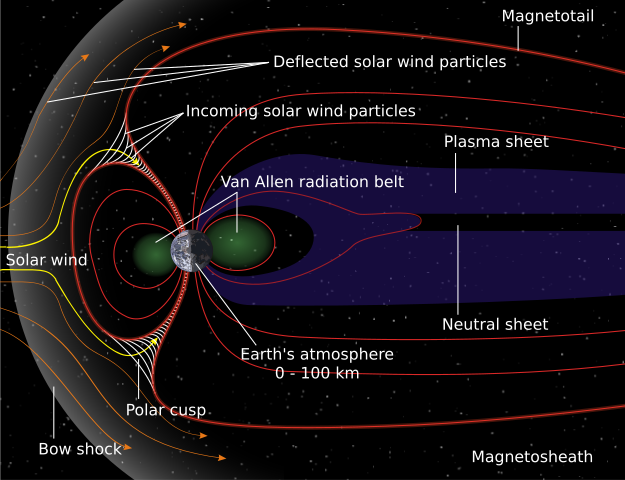
Structure of the Earth’s magnetosphere that deflects charged particles which form the solar wind. (Credit: Wikipedia Commons)

For life to form and survive depends on its complex molecules being protected from high-energy charged particles in the solar wind. In turn that depends on a strong geomagnetic field deflecting the solar wind as it does today, except for a small proportion that descend towards the poles and form aurora during solar mass ejections. In  visits to Isua in 2018 and 2019, geophysicists from the Massachusetts Institute of Technology, USA and Oxford University, UK drilled over 300 rock cores from metasedimentary ironstones (Nichols, C.I.O. and 9 others 2024. Possible Eoarchean records of the geomagnetic field preserved in the Isua Supracrustal Belt, southern West Greenland. Journal of Geophysics Research (Solid Earth), v. 129, article e2023JB027706; DOI: 10.1029/2023JB027706 Magnetisation preserved in the samples (remanent magnetism) suggest that it was formed by a geomagnetic field strength of at least 15 microtesla, similar to that which prevails today. The minerals magnetite (Fe3O4) and apatite (a complex phosphate) in the ironstones have been dated using U-Pb geochronometry and record a metamorphic event only slightly younger that the age of the Isua belt (3.69 and 3.63 Ga respectively). There is no sign of any younger heating above the temperatures that would reset the ironstones’ magnetisation. The Isua remanent magnetisation is at least 200 Ma older than that found in igneous rocks from north-eastern South Africa dated at between 3.2 to 3.45 Ga. So even in the Eoarchaean it seems likely that life, had it formed, would have avoided the hazard of exposure to the high energy solar wind. In all likelihood, however, in a shallow marine environment it would have had to protect itself somehow from intense ultraviolet radiation. That is now vastly reduced by stratospheric ozone (O3) which could only form once the atmosphere had appreciable oxygen (O2) content, i.e. after the Great Oxygenation Event beginning about 2.4 Ga ago. Undoubted stromatolites as old as 3.5 Ga suggest that early photosynthesising bacteria clearly had cracked the problem of UV protection somehow.

Snowball Earth and the rise of multi-celled life

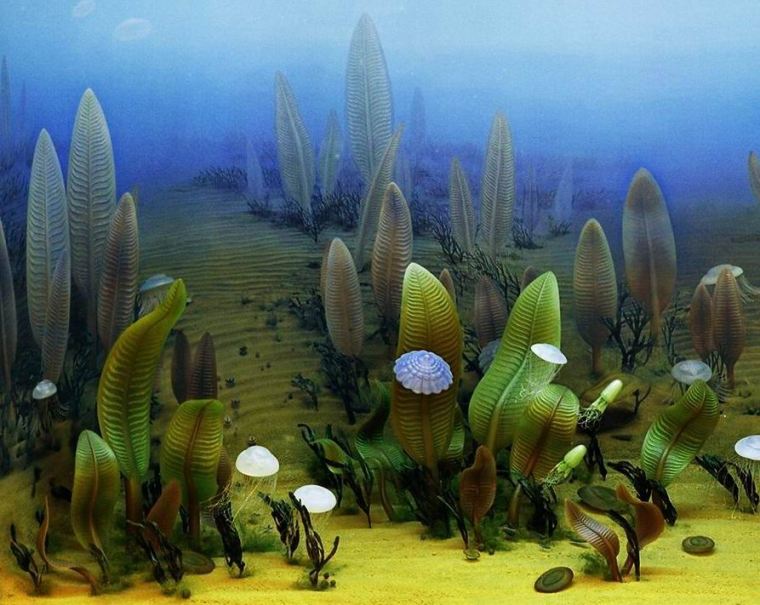
You can follow my ‘reportage’ on the long running story of the Snowball Earth events during the Neoproterozoic Cryogenian Period (850 to 635 Ma) since 2000 through the index to annual Palaeoclimatology logs (15 posts). Once these dramatic events were over sedimentary rocks deposited around the world during the Ediacaran Period (635 to 541 Ma) record the sudden appearance of large-bodied fossils: the first multicellular animals. This explosion from slimy biofilms and colonies of single-celled prokaryotes and eukaryotes laid the basis for the myriad ecological niches that have characterised Planet Earth ever since. The change saw specialised eukaryote cells (see: The rise of the eukaryotes; December 2017), whose precursors had originated in single-celled forms, begin to cooperate inthe development of complex tissues, organs, and organ systems to form bodies rather than just cell walls. The pulsating evolution, diversification and repeated extinction that followed during the last one tenth of geological time shaped a planet that is unique in the Solar System and possibly in the galaxy, if not the entire universe. The simple biosphere that preceded it, on the other hand, may have emerged on innumerable rocky planets blessed with liquid water to survive little changed for billions of years, as have Earths’ prokaryotes, the Archaea and Bacteria.  

Artist’s impression of the Ediacaran Fauna (credit: Science)

The Ediacaran biological revolution followed repeated changes in the geochemistry of the oceans, which carbon isotope data from the Cryogenian and Ediacaran suggest to have ‘gone haywire’. This turmoil involved dramatic changes in the cycling of sulfur and phosphorus that help ‘fertilise’ the marine food chain and in the production of oxygen by photosynthesis that is essential for metazoan animals.  The episodes when the Earth was iced over reduced the availability of nutrients through decreased rates of ocean-floor burial of dead organisms. Such Snowball events would also have reduced penetration of sunlight in the oceans. Less photosynthesis would not only have reduced oxygen production but also the amounts of autotrophic organisms. Furthermore, decreased water temperature would have increased its viscosity thereby slowing the spread of nutrients. The food chain for heterotrophs was decimated. Each Snowball event ended with warming, ice-free conditions so that the marine biosphere could burgeon

A great deal of data and numerous theories have accumulated since the Snowball concept was first mooted, but there has been little progress in understanding the rise of multi-celled life. Four geoscientists from the Massachusetts Institute of Technology, the Santa Fe Institute and the University of Colorado (Boulder), USA have developed an interesting hypothesis for how this enormous evolutionary step may have developed (Crockett, W.W. et al. 2024. Physical constraints during Snowball Earth drive the evolution of multicellularity. Proceedings of the Royal Society B: Biological Sciences, v. 291; DOI: 10.1098/rspb.2023.2767). The concatenation of huge events during the Cryogenian and Ediacaran presented continually changing patterns of selective pressures on simple organisms that preceded that time period. Crockett et al. review them in the light of fundamental biology to suggest how multicellular animals emerged as the Ediacara Fauna. Intuitively, such harsh conditions suggest at worst mass, even complete, extinction, at best a general reduction in size of all organism to cope with scarce resources. That the size of eukaryotes should have grown hugely goes against the grain of most biologists’ outlook.

The authors consider the crucial factor to be fundamental differences between prokaryotes and early eukaryotes. Prokaryote cells are very small, and whether autotrophs of heterotrophs they absorb nutrients through their walls by diffusion. Single-celled eukaryotes are far larger than prokaryotes and typically have a flagellum or ‘tail’ so that they can move independently and more easily gather resources. Crockett et al. used computer modelling to simulate the type of life form that could grow and thrive under Snowball conditions. They found that prokaryotes could only grow smaller, being ‘stunted’ by scarce resources. On the other hand eukaryotes would be better equipped to gather resources, the more so if they adopted a simple multicellular form – a hollow, self-propelled sphere about the size of a pea, which the authors dub a choanoblastula. Although no such form is known today, it does resemble the green Volvox algae, and plausibly could have evolved further to the simple forms of the Ediacaran fauna. The next task is either to find a fossil of such an organism, or to grow one.

The peptide bond that holds life together may have an interstellar origin

In the 1950s Harold Urey of the University of Chicago and his student Stanley Miller used basic lab glassware containing 200 ml of water and a mix of the gases methane (CH4), ammonia (NH3) and hydrogen sulfide (H2S) to model conditions on the early Earth. Heating this crude analogue for ocean and atmosphere and continuous electrical discharge through it did, in a Frankensteinian manner, generate amino acids. Repeats of the Miller-Urey experiment have yielded 10 of the 20 amino acids from which the vast array of life’s proteins have been built. Experiments along similar lines have also produced the possible precursors of cell walls – amphiphiles. In fact, all kinds of ‘building blocks’ for life’s chemistry turn up in analyses of carbonaceous chondrite meteorites and in light spectra from interstellar gas clouds. The ‘embarrassment of riches’ of life’s precursors from what was until the 20th century regarded as the ‘void’ of outer space lacks one thing that could make it a candidate for life’s origin, or at least for precursors of proteins and the genetic code DNA and RNA. Both kinds of keystone chemicals depend on a single kind of connector in organic chemistry.

Reaction between two molecules of the amino acid glycene that links them by a peptide bond to form a dipeptide. (Credit: Wikimedia Commons)

Molecules of amino acids have acidic properties (COOH – carboxyl) at one end and their other end is basic (NH2 – amine). Two can react by their acid and basic ‘ends’ neutralising. A hydroxyl (OH) from carboxyl and a proton (H+) from amine produce water. This gives the chance for an end-to-end linkage between the nitrogen and carbon atoms of two amino acids – the peptide bond. The end-product is a dipeptide molecule, which also has carboxyl at one end and amine at the other. This enables further linkages through peptide bonds to build chains or polymers based on amino acids – proteins. Only 20 amino acids contribute to terrestrial life forms, but linked in chains they can form potentially an unimaginable diversity of proteins. Formation of even a small protein that links together 100 amino acids taken from that small number illustrates the awesome potential of the peptide bond. The number of possible permutations and combinations to build such a protein is 20100 – more than the estimated number of atoms in the observable universe! Protein-based life has almost infinite options: no wonder that ecosystems on Earth are so diverse, despite using a mere 20 building blocks. Simple amino acids can be chemically synthesised from C, H, O and N. About 500 occur naturally, including 92 found in a single carbonaceous chondrite meteorite. They vastly increase the numbers of conceivable proteins and other chain-molecules analogous to RNA and DNA: a point seemingly lost on exobiologists and science fiction writers!

Serge Kranokutski of the Max Planck Institute for Astronomy at the Friedrich Schiller University in Jena, German and colleagues from Germany, the Netherlands and France have assessed the likelihood of peptides forming in interstellar space in two publications (Kranokutski S.A. and 4 others 2022. A pathway to peptides in space through the condensation of atomic carbon. Nature Astronomy, v, 6, p. 381–386; DOI: 10.1038/s41550-021-01577-9. Kranokutski, S.A. et al. 2024. Formation of extraterrestrial peptides and their derivatives. Science Advances, v. 10, article eadj7179; DOI: 10.1126/sciadv.adj7179). In the first paper the authors show experimentally that condensation of carbon atoms on cold cosmic dust particles can combine with carbon monoxide (CO) and ammonia (NH3) form amino acids. In turn, they can polymerise to produce peptides of different lengths. The second demonstrates that water molecules, produced by peptide formation, do not prevent such reactions from happening. In other words, proteins can form inorganically anywhere in the cosmos. Delivery of these products, through comets or meteorites, to planets forming in the habitable ‘Goldilocks’ zone around stars may have been ‘an important element in the origins of life’ – anywhere in the universe. Chances are that, compared with the biochemistry of Earth, such life would be alien in an absolute sense. There are effectively infinite options for the proteins and genetic molecules that may be the basis of life elsewhere, quite possibly on Mars or the moons of Jupiter and Saturn: should it or its chemical fossils be detectable.

An astronomical background to flood basalt events and mass extinctions?

Michael Rampino and Ken Caldeira of New York University and the Carnegie Institute have for at least three decades been at the forefront of studies into mass extinctions and their possible causes, including flood-basalt volcanism, extraterrestrial impacts and climate change. As early as 1993 the duo reported an ubiquitous 26-million year cycle in plate tectonic and volcanic activity. In Rampino’s 2017 book Cataclysms: A New Geology for the Twenty-First Century the notion of a process similar to Milutin Milankovich’s prediction of Earth’s orbital characteristics underpinning climate cyclicity figured in his thinking (see Shock and Er … wait a minute, Earth-logs, October 2017). Rampino postulated then that this longer-term geological cyclicity could be linked to gravitational changes during the Solar System’s progress around the Milky Way galaxy. He was by no means the first to turn to galactic forces, Johann Steiner having made a similar suggestion in 1966. The notion stems from the Solar System’s wobbling path as it orbits the centre of the Milky Way galaxy about every 250 Ma, which may result in its passage through a vast layered variation in several physical properties aligned at right angles to galactic orbital motions. This grand astronomical theory is ‘a story that will run and run’; and it has. It is possible that the galaxy has corralled dark matter in a disc within the galactic plane, which Rampino and Caldeira latched onto that notion a year after it appeared in Physical Review Letters in 2014.

As I commented in my brief review of Rampino’s book: “As for Rampino’s galactic hypothesis, the statistics are decidedly dodgy, but chasing down more forensics is definitely on the cards.” Indeed they have been chased in a recent review by the pair and their colleague Sedelia Rodriguez (Rampino, M.R., Caldeira, K. & Rodriguez, S. 2023. Cycles of ∼32.5 My and ∼26.2 My in correlated episodes of continental flood basalts (CFBs), hyper-thermal climate pulses, anoxic oceans, and mass extinctions over the last 260 My: Connections between geological and astronomical cycles. Earth-Science Reviews, v. 246 ; DOI: 10.1016/j.earscirev.2023.104548; reprint available on request from Rampino). They base their amplified case on much more than radiometric dates of continental flood basalt (CFB) events matched against the stratigraphic record of biotic diversity. Among the proxies are published measurements of mercury and osmium isotope anomalies in oceanic sediments that are best explained by sudden increases in basaltic magma eruption; signs of deep ocean anoxia; new dating of marine and non-marine extinctions in the fossil record, and episodes of sudden extreme climatic heating.

Statistical analysis of the ages of anoxic events and marine extinctions has yielded cycles of 32.5 and 26.2 Ma, those for CFBs having a 32.8 Ma periodicity. A note of caution, however: their data only cover the last 266 Ma – about one orbit of the solar system around the galactic centre. The authors attribute their interpretation of the cycles “to the Earth’s tectonic-volcanic rhythms, but the similarities with known Milankovitch Earth orbital periods and their amplitude modulations, and with known Galactic cycles, suggest that, contrary to conventional wisdom, the geological events and cycles may be paced by astronomical factors”.

Whether or not a detailed record of appropriate proxies can be extended back beyond the Late Permian, remains to be seen. The main fly-in-the-ointment is the tendency of CFB provinces to form high ground so that they are readily eroded away. Pre-Mesozoic signs of their former presence lie in basaltic dyke swarms that cut through older  crystalline continental crust. The marine sedimentary record is somewhat better preserved. A search for distinctive anomalies in osmium isotopes and mercury concentrations, which are useful proxies for global productivity of basaltic magmas, will be costly. Moreover, dating will depend to a large degree on the traditional palaeontology of strata, which in Palaeozoic rocks is more difficult to calibrate precisely by absolute radiometric dating.

Darwin’s ‘warm little pond’: a new discovery

There may still be a few people around today who, like Aristotle did, reckon that frogs form from May dew and that maggots and rats spring into life spontaneously from refuse. But the idea that life emerged somehow from the non-living is, to most of us, the only viable theory. Yet the question, ‘How?’, is still being pondered on. Readers may find Chapter 13 of Stepping Stones useful. There I tried to summarise in some detail most of the modern lines of research. But the issue boils down to means of inorganically creating the basic chemical building blocks from which life’s vast and complex array of molecules might have been assembled. Living materials are dominated by five cosmically common elements: carbon, hydrogen, oxygen, nitrogen and phosphorus – CHONP for short. Organic chemists can readily synthesise countless organic compounds from CHONP. And astronomers have discovered that life is not needed to assemble the basic ingredients: amino acids, carbon-ring compounds and all kinds of simpler CHONP molecules occur in meteorites, comets and even interstellar molecular clouds. So an easy way out is to assume that such ingredients ended up on the early Earth simply because it grew through accretion of older materials from the surrounding galaxy. Somehow, perhaps, their mixing in air, water and sediments together with a kind of chaotic shuffling did the job, in the way that an infinity of caged monkeys with access to typewriters might eventually create the entire works of William Shakespeare.  But, aside from the statistical and behavioural idiocy of that notion, there is a real snag: the vaporisation of the proto-Earth’s outer parts by a Moon-forming planetary collision shortly after initial accretion.

In 1871 Charles Darwin suggested to his friend Joseph Hooker that:

          ‘… if (and Oh, what a big if) we could conceive in some warm little pond, with all sorts of ammonia and phosphoric salts, light, heat, electricity, etc., present that a protein compound was chemically formed, ready to undergo still more complex changes, at the present day such matter would be instantly devoured or absorbed, which would never have been the case before living creatures were formed’.

Followed up in the 1920s by theorists Alexander Oparin and J.B.S. Haldane, a similar hypothesis was tested practically by Harold Urey and Stanley Miller at the University of Chicago. They devised a Heath-Robinson simulation of an early atmosphere and ocean seeded with simple CHONP (plus a little sulfur) chemicals, simmered it and passed electrical discharges through it for a week. The resulting dark red ‘soup’ contained 10 of the 20 amino acids from which a vast array of proteins can be built. A repeat in 1995 also yielded two of the four nucleobases at the heart of DNA – adenine and guanine.  But simply having such chemicals around is unlikely to result in life, unless they are continually in close contact: a vessel or bag in which such chemicals can interact. The best candidates for such a containing membrane are fatty acids of a form known as amphiphiles. One end of an amphiphile chain has an affinity for water molecules, whereas the other repels them. This duality enables layers of them, when assembled in water, spontaneously to curl up to make three dimensional membranes looking like bubbles. In the last year they too have been created in vitro (Purvis, G. et al. 2024. Generation of long-chain fatty acids by hydrogen-driven bicarbonate reduction in ancient alkaline hydrothermal vents. Nature Communications (Earth & Environment), v. 5, article 30; DOI: 10.1038/s43247-023-01196-4).

Cell-like membranes formed by fatty acid amphiphiles

Graham Purvis and colleagues from Newcastle University, UK allowed three very simple ingredients – hydrogen and bicarbonate ions dissolved in water and the iron oxide magnetite (Fe3O4) – to interact. Such a simple, inorganic mixture commonly occurs in hydrothermal vents and hot springs. Bicarbonate ions (HCO3) form when CO2 dissolves in water, the hydrogen and magnetite being generated during the breakdown of iron silicates (olivines) when  ultramafic igneous rocks react with water:

3Fe2SiO4 + 2H2O → 2 Fe3O4 + 3SiO­2 +3H2

Various simulations of hydrothermal fluids had previously been tried without yielding amphiphile molecules. Purvis et al. simplified their setup to a bicarbonate solution in water that contained dissolved hydrogen – a simplification of the fluids emitted by hydrothermal vents – at 16 times atmospheric pressure and a temperature of 90°C. This was passed over magnetite. Under alkaline conditions their reaction cell yielded a range of chain-like hydrocarbon molecules. Among them was a mixture of fatty acids up to 18 carbon atoms in length. The experiment did not incorporate P, but its generation of amphiphiles that can create cell-like structures are but a step away from forming the main structural components of cell membranes, phospholipids.

When emergence of bag-forming membranes took place is, of course, hard to tell. But in the oldest geological formations ultramafic lava flows are far more common than they are today. In the Hadean and Eoarchaean, even if actual mantle rocks had not been obducted as at modern plate boundaries, at the surface there would have been abundant source materials for the vital amphiphiles to be generated through interaction with water and gases: perhaps in ‘hot little ponds’. To form living, self-replicating cells requires such frothy membranes to have captured and held amino acids and nucleobases. Such proto-cells could become organic reaction chambers where chemical building blocks continually interacted, eventually to evolve the complex forms upon which living cells depend.

Why did the largest ever primate disappear?

Chinese apothecary shops sell an assortment of fossils. They include shells of brachiopods that when ground up and dissolved in water allegedly treat rheumatism, skin diseases, and eye disorders. Traditional apothecaries also supply  ‘dragons’ teeth’, said by Dr Subhuti Dharmananda, Director of the Institute for Traditional Medicine in Portland, Oregon to treat epilepsy, madness, manic running about, binding qi (‘vital spirit’) below the heart, inability to catch one’s breath, and various kinds of spasms, as well as making the body light, enabling one to communicate with the spirit light, and lengthening one’s life. Presumably have done a roaring trade in ‘dragons’ teeth’ since they were first mentioned in a Chinese pharmacopoeia (the Shennong Bencao Jing) from the First Century of the Common Era. In 1935 the anthropologist Gustav von Koenigswald came across two ‘dragons’ teeth’ in a Hong Kong shop. They were unusually large molars and he realised they were from a primate, but far bigger (20  × 22 mm) than any from living or fossil monkeys, apes or humans.

Eventually, in 1952 (he had been interned by Japanese forces occupying Java), von Koenigswald formally described the teeth and others that he had found. Their affinities and size prompted him to call the former bearer the ‘Huge Ape’ (Gigantopithecus). By 1956 Chinese palaeontologists had tracked down the cave site in Guangxi province where the teeth had been sourced, and a local farmer soon unearthed a complete lower jawbone (mandible) that was indeed gigantic. More teeth and mandibles have since been found at several sites in Southern and Southeast Asia, with an age range from about 2.0 to 0.3 Ma. Anatomical differences between teeth and mandibles suggest that there may have been 4 different species. Using mandibles as a very rough guide to overall size it has been estimated that Gigantopithecus may have been up to 3 m tall weighing almost 600kg.

Above: Size comparison of G. blacki with a 1.8 m tall human male; NB G.blacki probably walked on all fours, as do living orangutans when they rarely descend from the forest canopy. (Credit: Frido Welker) Below: Mandible of Gigantopithecus blacki from India (Credit: Prof. Wei Wang, Photo retouched by Theis Jensen)

Plaque on some teeth contain evidence for fruit, tubers and roots, but not grasses, which suggest suggest that Gigantopithecus had a vegetarian diet based on forest plants. Mandibles also showed affinities with living and fossil orangutans (pongines). Analysis of proteins preserved in tooth enamel confirm this relationship (Welker, F. and 17 others 2019. Enamel proteome shows that Gigantopithecus was an early diverging pongine. Nature, v.576, p. 262–265; DOI: 10.1038/s41586-019-1728-8). It was one of the few members of the southeast Asian megafauna to go extinct at the genus level during the Pleistocene. Its close relative Pongo the orangutan survives as three species in Borneo and Sumatra. Detailed analysis of material from 22 southern Chinese caves that have yielded Gigantopithecus teeth has helped resolve that enigma (Zhang, Y. and 20 others 2024. The demise of the giant ape Gigantopithecus blacki. Nature, v. 625; DOI: 10.1038/s41586-023-06900-0).

At the time Gigantopithecus first appeared in the geological record of China (~2.2 Ma), it ranged over much of south-western China. The early Pleistocene ecosystem there was one of diverse forests sufficiently productive to support large numbers of this enormous primate and also the much smaller orangutan Pongo weidenreichi.  By 295 to 215 ka, the age of the last known Gigantopithecus fossils, its range had shrunk dramatically. The teeth show marked increases in size and complexity by this time, which suggests adaptation of diet to a changing ecosystem. That is confirmed by pollen analysis of cave sediments which reveal a dramatic decrease in forest cover and increases in fern and non-arboreal flora at the time of extinction. One physical sign of environmental stress suffered by individual late G. blacki is banding in their teeth defined by large fluctuations of barium and strontium concentrations relative to calcium. The bands suggest that each individual had to change its diet repeatedly over its lifetime. Closely related orangutans, on the other hand survived into the later Pleistocene of China, having adapted to the changed ecosystem, as did early humans in the area. It thus seems likely that Gigantopithecus was an extreme specialist as regards diet, and was unable to adapt to changes brought on by the climate becoming more seasonal. Today’s orangutans in Indonesia face a similar plight, but that is because they have become restricted to forest ‘islands’ in the midst of vast areas of oil palm plantations. Their original range seems to have been much the same as that of Gigantopithecus, i.e. across south-eastern Asia, but Pongo seems to have gone extinct outside of Indonesia (by 57 ka in China) during the last global cooling and when forest cover became drastically restricted.