Gravity survey reveals signs of Archaean tectonics in Canadian Shield

Much of the Archaean Eon is represented by cratons, which occur at the core of continental parts of tectonic plates. Having low geothermal heat flow they are the most rigid parts of the continental crust.  The Superior Craton is an area that makes up much of the eastern part of the Canadian Shield, and formed during the Late Archaean from ~4.3 to 2.6 billion years (Ga) ago. Covering an area in excess of 1.5 million km2, it is the world’s largest craton. One of its most intensely studied components is the Abitibi Terrane, which hosts many mines. A granite-greenstone terrain, it consists of volcano-sedimentary supracrustal rocks in several typically linear greenstone belts separated by areas of mainly intrusive granitic bodies. Many Archaean terrains show much the same ‘stripey’ aspect on the grand scale. Greenstone belts are dominated by metamorphosed basaltic volcanic rock, together with lesser proportions of ultramafic lavas and intrusions, and overlying metasedimentary rocks, also of Archaean age. Various hypotheses have been suggested for the formation of granite-greenstone terrains, the latest turning to a process of ‘sagduction’. However the relative flat nature of cratonic areas tells geologists little about their deeper parts. They tend to have resisted large-scale later deformation by their very nature, so none have been tilted or wholly obducted onto other such stable crustal masses during later collisional tectonic processes. Geophysics does offer insights however, using seismic profiling, geomagnetic and gravity surveys.

The Geological Survey of Canada has produced masses of geophysical data as a means of coping with the vast size and logistical challenges of the Canadian Shield. Recently five Canadian geoscientists have used gravity data from the Canadian Geodetic Survey to model the deep crust beneath the huge Abitibi granite-greenstone terrain, specifically addressing variations in its density in three dimensions. They also used cross sections produced by seismic reflection and refraction data along 2-D survey lines (Galley, C. et al. 2025. Archean rifts and triple-junctions revealed by gravity modeling of the southern Superior Craton. Nature Communications, v. 16, article 8872; DOI: 10.1038/s41467-025-63931-z). The group found that entirely new insights emerge from the variation in crustal density down to its base at the Moho (Mohorovičić discontinuity). These data show large linear bulges in the Moho separated by broad zones of thicker crust.

Geology of the Abitibi Terrane (upper),; Depth to the Moho beneath the Abitibi Terrane with rifts and VMS deposits superimposed (lower). Credit: After Galley et al. Figs 1 and 5.

Galley et al. suggest that the zones are former sites of lithospheric extensional tectonics and crustal thinning: rifts from which ultramafic to mafic magmas emerged. They consider them to be akin to modern mid-ocean and continental rifts. Most of the rifts roughly parallel the trend of the greenstone belts and the large, long-lived faults that run west to east across the Abitibi Terrain. This suggests that rifts formed under the more ductile lithospheric condition of the Neoarchaean set the gross fabric of the granites and greenstones. Moreover, there are signs of two triple junctions where three rifts converge: fundamental features of modern plate tectonics. However, both rifts and junctions are on a smaller scale than those active at present. The rift patterns suggest plate tectonics in miniature, perhaps indicative of more vigorous mantle convection during the Archaean Eon.

There is an interesting spin-off. The Abitibi Terrane is rich in a variety of mineral resources, especially volcanic massive-sulfide deposits (VMS). Most of them are associated with the suggested rift zones. Such deposits form through sea-floor hydrothermal processes, which Archaean rifting and triple junctions would have focused to generate clusters of ‘black smokers’ precipitating large amounts of metal sulfides. Galley et al’s work is set to be applied to other large cratons, including those that formed earlier in the Archaean: the Pilbara and Kaapvaal cratons of Australia and South Africa. That could yield better insights into earlier tectonic processes and test some of the hypotheses proposed for them

See also: Archaean Rifts, Triple Junctions Mapped via Gravity Modeling. Scienmag, 6 October 2025

Ancient mining pollutants in river sediments reveal details of early British economic history

People have been mining in Britain since Neolithic farmers opened the famous Grimes Graves in Norfolk – a large area dotted with over 400 pits up to to 13 metres deep. The target was a layer of high quality black flint in a Cretaceous limestone known as The Chalk. Later Bronze Age people in Wales and Cornwall drove mine shafts deeper underground to extract copper and tin ores to make the alloy bronze. The Iron Age added iron ore to the avid search for sources of metals. The production and even export of metals and ores eventually attracted the interest of Rome. Roman invasion in 43 CE during the reign of Claudius annexed most of England and Wales to create the province of Britannia. This lasted until the complete withdrawal of Roman forces around 410 CE. Roman imperialism and civilisation depended partly on lead for plumbing and silver coinage to pay its legionaries. Consequently, an important aspect in Rome’s four-century hegemony was mining, especially for lead ore, as far north as the North Pennines. This littered the surface in mining areas with toxic waste. Silver occurs in lead ore in varying proportions. In the Bronze Age early metallurgists extracted silver from smelted, liquid lead by a process known as cupellation. The molten Pb-Ag alloy is heated in air to a much higher temperature than its melting point, when lead reacts with oxygen to form a solid oxide (PbO) and silver remains molten.

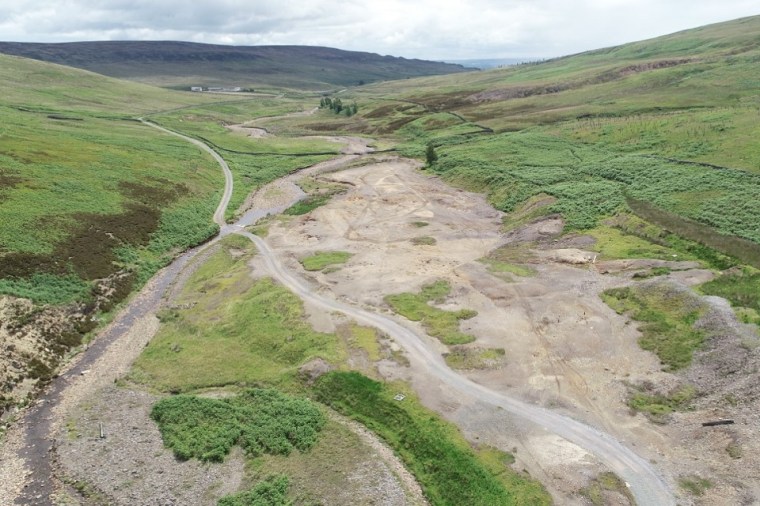
Mine waste in the North Pennine orefield of England. Credit: North Pennines National Landscape

Until recently, historians believed that the fall of the Western Empire brought economic collapse to Britain. Yet archaeologists have revealed that what was originally called the “Dark Ages” (now Early Medieval Period) had a thriving culture among both the remaining Britons and Anglo Saxon immigrants. A means of tracking economic activity is to measure the amount of pollutants from mining waste at successive levels in the alluvium of rivers that flow through orefields. Among the best known in Britain is the North Pennine Orefield of North Yorkshire and County Durham through which substantial rivers flow eastwards, such as the River Ure that flows through the heavily mined valley of Wensleydale. A first attempt at such geochemical archaeology has been made by a British team led by Christopher Loveluck of Nottingham University (Loveluck, C.P. and 10 others 2025. Aldborough and the metals economy of northern England, c. AD 345–1700: a new post-Roman narrative. Antiquity: FirstView, online article; DOI: 10.15184/aqy.2025.10175). Aldborough in North Yorkshire – sited on the Romano-British town of Isurium Brigantum – lies in the Vale of York, a large alluvial plain. The River Ure has deposited sands, silts and muds in the area since the end of the last Ice Age, 11 thousand years ago.

Loveluck et al. extracted a 6 m core from the alluvium on the outskirts of Aldborough, using radiocarbon and optically-stimulated luminescence of quartz grains to calibrate depth to age in the sediments.  The base of the core is Mesolithic in age (~6400 years ago) and extends upwards to modern times, apparently in an unbroken sequence. Samples were taken for geochemical analysis every 2 cm through the upper 1.12 m of the core, which spans the Roman occupation (43 to 410 CE), the early medieval (420 to 1066 CE), medieval (1066 to 1540 CE), post-medieval (1540 to 1750 CE) and modern times (1750 CE to present). Each sample was analysed for 56 elements using mass spectrometry; lead, silver, copper, zinc, iron and arsenic being the elements of most interest in this context. Other data gleaned from the sediment are those of pollen, useful in establishing climate and ecological changes. Unfortunately, the metal data begin in 345 CE, three centuries after the Roman invasion, by which time occupation and acculturation were well established. The authors assume that Romans began the mining in the North Pennines. They say nothing about the pre-mining levels of pollution from the upstream orefield nor mining conducted by the Iron Age Brigantes. For this kind of survey, it is absolutely essential that a baseline is established for the pollution levels under purely natural conditions. The team could have analysed sediment from the Mesolithic when purely natural weathering, erosion and transport could safely be assumed, but they seem not to have done that.

The team has emphasised that their data suggest that mining for lead continued and even increased through the ‘Dark Ages’ rather than declining, in an economic ‘slump’ once the Romans left, as previous historians have suggested. Lead pollution continued at roughly the same levels as during the Roman occupation through the Early Medieval Period and then rose to up to three times higher after the late 14th century. The data for silver are different. The Ag data from Aldborough show a large ‘spike’ in 427 to 427 CE. Interestingly this is after the Roman withdrawal. Its level in alluvium then ‘flatlines’ at low abundances until the beginning of the 14th century when again there is a series of ‘booms’. This seems to me to mark sudden spells of coining, after the Romans left perhaps first to ensure a money economy remained possible, and then as a means of funding wars with the French in the 14th century. The authors also found changing iron abundances, which roughly double from low Roman levels to an Early Medieval peak and then fall in the 11th century: a result perhaps of local iron smelting. The overall patterns for zinc and copper differ substantially from those of lead, as does that for arsenic which roughly follows the trend for iron. That might indicate that local iron production was based on pyrite (FeS2) which can contain arsenic at moderate concentrations: pyrite is a common mineral in the ore bodies of the North Pennines’ The paper by Loveluck et al. is worth reading as a first attempt to correlate stratigraphic geochemistry data with episodes in British and, indeed, wider European history. But I think it has several serious flaws, beyond the absence of any pre-Roman geochemical baseline, as noted above. No data are presented for barium (Ba) and fluorine (F) derived from the gangue minerals baryte (BaSO4) and fluorite (CaF2), which outweigh lead and zinc sulfides in North Pennine ore bodies, yet had no use value until the Industrial Revolution. They would have made up a substantial proportion of mine spoil heaps – useful ores would have been picked out before disposal of gangue – whose erosion, comminution and transport would make contributions to downstream deposition of alluvium consistent with the pace of mining. That is: Ba and F data would be far better guides to industrial activity. There is a further difficulty with such surveys in northern Britain. The whole of the upland areas were subjected to repeated glaciation, which would have gathered exposed ore and gangue and dumped it in till, especially in the numerous moraines exposed in valleys such as Wensleydale. Such sources may yield sediment in periods of naturally high erosion during floods. Finally, the movement of sediment downstream is obviously not immediate, especially when waste is disposed in large dumps near mines Therefore phases of active mining may not contribute increased toxic waste far downstream until decades or even centuries later. These factors could easily have been clarified by a baseline study from earlier archaeological periods when mining was unlikely, into which the Aldborough alluvium core penetrates

A cure for the Great British Pothole Plague?

Anyone who read the manifestos of the mainstream political parties in the UK – there may not be many who did – would have been amused to see that all promised to resolve the plague of potholes in the countries roads, both major and minor. For decades road users have been alarmed when hitting a pothole and in some cases had damage inflicted on their vehicles, and in the case of those on two wheels, on themselves. The RAC (Royal Automobile Club) has estimated that there are, on average, six potholes per mile on Britain’s roads: the greatest density in Europe. The AA (Automobile Association) estimated that almost £0.6 billion was spent in 2024 repairing pothole-damaged vehicles. This is not a new phenomenon. Before the advent of turnpike trusts in the late 18th century, which maintained roads travelled by Britain’s mail coach services, it was not uncommon to encounter potholes up to two metres deep. Legend has it that on one such route through northern Nottinghamshire two coach horses fell into a pothole and drowned. Scottish engineer, John Loudon McAdam invented a solution around 1820: crushed stone laid on the road surface in slightly convex layers, the topmost being bonded with stone dust. This ‘macadam’ surface created cambered highways that drained rainwater to the sides and downwards. Modern roads are still based on that principle, with the addition of tar or bitumen to the top layer to produce a hard, impermeable surface, which also prevents aggregate and dust being sucked from the surface by fast moving vehicles.

A spore of the club moss Lycopodium

So, why the potholes? Several reasons: increased traffic; heavier vehicles; less maintenance; patching rather than resurfacing. Most important: the materials and the weather. Dry, hot weather softens the bitumen and drives out volatile hydrocarbons making the bitumen less plastic. The pounding of tyres in cooler weather fractures the now stiffened bitumen, mainly at microscopic scales. Wetting of the tarmac seeps water into the microfractures. The formation of ice films jacks opens the microfractures and produces more in the cold stiff bitumen, eventually to separate the particles of aggregate in the asphalt. The wearing course begins to crumble so that aggregate grains escape and scatter. Thus weakened, the top layer breaks up into larger fragments and a pit forms to join up with others so that a pothole forms and grows. Wheels of traffic bounce when they cross a pothole, the shock of which causes the centre of degradation to shift and create more cavities. Simply filling the existing potholes merely serves to create new ones: a vicious cycle that can only be broken by complete resurfacing: the traffic cones come out!.

All this has been known for well over a century by civil engineers. Around the start of the 21st century – maybe slightly earlier – it dawned on engineers that the critical problem was degradation of bitumen. A petroleum derivative, occurring naturally as surface seeps in some oilfields, bitumen is chemically complex: a combination of asphaltenes and maltenes (resins and oils). Deterioration of bitumen through evaporation, oxidation and exposure to ultraviolet radiation decreases the maltene content and stiffens the binding agent in asphalt. So the earliest attempts at reducing pothole formation centred on rejuvenation by periodically adding substitutes for maltenes to road surfaces. Diesel (gas-oil) works, but is obviously hazardous. More suitable are vegetable oils such as waste cooking oils or those produced by pyrolysis of cotton, straw, wood waste and even animal manure. The problem is getting the rejuvenators into existing asphalt surfaces: clearly, simply spraying them on the surface seems a recipe for disaster! A solution that dawned on engineers around 2005 was to make bitumen that is ‘self-healing’.

Schematic of the production of microcapsules from club moss spores to contain sunflower oil to be used in self-healing asphalt (Credit: Alpizar-Reyes, E. et al. 2022)

Simply mixing rejuvenators into bitumen during asphalt manufacture will not do the trick, for the result would be a weakened binding agent at the outset. For the last 15 years researchers have sought means of adding rejuvenators in  porous capsules, to release them as microfractures begin to form: on demand, as it were. There have been dozens of publications about experiments that found ‘sticking points’. However, in early 2025 what seems to be a viable breakthrough splashed in the British press. It was made by an interdisciplinary team of scientists from King’s College London and Swansea University, in collaboration with scientists in Chile. They chemically treated spores of Lycopodium club mosses to perforate their cell walls and clear out their contents to be replaced by sunflower oil, an effective bitumen rejuvenator. Experiments showed that such microcapsules released the oil to heal cracks in aged  bitumen samples in around an hour. Mixed into bitumen to be added to asphalt they would remain ‘dormant’ until a microfracture formed in their vicinity released it, thereby making the asphalt binder self healing.

Will such an advance finally resolve the pothole plague? It may take a while …

See: Alpizar-Reyes, E. et al. 2022. Biobased spore microcapsules for asphalt self-healing. ACS Applied Materials & Interfaces, v. 14, p. 31296-31311; DOI: 10.1021/acsami.2c07301

A fully revised edition of Steve Drury’s book Stepping Stones: The Making of Our Home World can now be downloaded as a free eBook

Global natural hydrogen resources: a CO2 free future??

The idea of a ‘Hydrogen Economy’ has been around for at least six decades, its main attraction being that when hydrogen is burned it combines with oxygen to form H2O. It might seem to be the ultimate ‘green’ energy source, but it is currently being touted by governments and petroleum companies in what is widely regarded as ‘green washing’. The technology favoured by that axis uses steam reforming of the methane that dominates natural petroleum gas, through the reaction:

CH4 + H2O  → CO + 3H2

It’s actually not much different from producing coke gas from coal, which began in the 19th century and is now largely abadoned. Because carbon monoxide (CO) reacts with atmospheric oxygen to form CO2 this process is by no means ‘green’ and is properly referred to as ‘grey’ hydrogen. Only if the CO is stored permanently underground could steam reforming not add to greenhouse warming. That puts the approach in the same category as ‘carbon capture and storage’, with all the possible difficulties inherent in that technology, which has yet to be demonstrated on a large scale. Such hydrogen is classified as a ‘blue’. Colour coding hydrogen is described nicely by the British National Grid. They give another six varieties. Green and yellow hydrogen are produced by electrolysing water using wind or solar power respectively. The pink variety uses nuclear power in the same fashion. Black or brown hydrogen is that produced by coking coal or stewing-up brown coal (lignite) which amazingly are contemplated in Australia and Germany. There is even a turquoise variety can be produced if methane is somehow turned into hydrogen and solid carbon using renewables. There is another category (white) which is hydrogen produced by a variety of natural, geochemical processes.

Distribution of ophiolites around the Eastern Mediterranean and Black Seas. Many orogenic belts are endowed to a similar extent. (Credit: Gültekin Topuz, Istanbul Technical University)

Earth-logs discussed white hydrogen in March 2023 when news emerged of gas that was 98% hydrogen leaking from a water borehole in Mali. The local people harnessed this surprising resource to generate electricity for their village. It also emerges in springs from ultramafic rocks, having formed through weathering of the mineral olivine:

3Fe2SiO4 + 2H2O → 2 Fe3O4 + 3SiO­2 +3H2

Much the same reaction occurs beneath the ocean floor where hydrothermal fluids alter basalts and in geothermal springs that emerge from onshore basalt lavas. Such ‘white’ hydrogen emissions are widespread. So an unknown, but possibly huge amount of hydrogen is leaking into the atmosphere continuously. Because of its tiny nucleus – just a single proton – atmospheric hydrogen quickly escapes to outer space: what a waste! Equally as interesting is that inducing the breakdown of ultramafic rock to yield hydrogen, by pumping water and carbon dioxide into them, may also be a means of leak-free carbon sequestration. This produces the complex mineral serpentine and magnesium carbonate. The reaction gives off heat and so is self sustaining until pumping is stopped.

It has been estimated that by 2050 the annual global demand for hydrogen will reach 530 million t.  Just how big is the potential resource to meet such a demand? Natural weathering and hydrothermal processes have always functioned. Some of the hydrogen produced by them may have built-up in reservoirs like the one in Mali, some is escaping. Neither the magnitude of annual natural generation of hydrogen nor the amount trapped in porous sedimentary rocks are known in any detail. A recent survey of how much may be trapped gives a range from 103 to 1010 million metric tons (Ellis, G.S. & Gelman, S.E. 2024. Model predictions of global geologic hydrogen resources. Science Advances, v. 10, article eado0955; DOI: 10.1126/sciadv.ado0955), most probably 5.6 trillion t. If only a tenth of that is recoverable, replacing fossil-fuel energy with that from white hydrogen to achieve net-zero CO2 emissions would be sustainable for about 400 years. That magnitude of trapped hydrogen reserves well exceeds all proven reserves of natural gas.

This estimate assumes using only hydrogen that has been naturally produced and stored beneath the Earth’s surface. Basalts and ultramafic rocks exposed at the land surface as ophiolites – ancient oceanic crust thrust onto continental crust – are abundant on every continent. Inducing hydrogen-producing chemical reactions in them by pumping water and CO2 into them is little different from the technology being used in fracking. This potential resource is effectively limitless. Combined with renewable energy technology, a hydrogen economy has no conceivable need for fossil fuels, except as organic-chemistry feedstock. Such a scenario for stabilising climate is almost certainly feasible. It could use the capital, technology and skills currently deployed by the petroleum industry that is currently driving society and the Earth in the opposite direction. It is capable of drilling 10 km below the continental surface or the ocean floor, and even into the Earth’s mantle that is made of . . . ultramafic rock.

Best wishes for the festive season to all Earth-logs followers and visitors

A major breakthrough in carbon capture and storage?

Carbon capture and storage is in the news most weeks and is increasingly on the agenda for some governments. But plans to implement the CCS approach to reducing and stopping global warming increasingly draws scorn from scientists and environmental campaigners. There is a simple reason for their suspicion. State engagement, in the UK and other rich countries, involves major petroleum companies that developed the oil and gas fields responsible for unsustainably massive injection of CO2 into the atmosphere. Because they have ‘trousered’ stupendous profits they are a tempting source for the financial costs of pumping CO2 into porous sedimentary rocks that once contained hydrocarbon reserves. Not only that, they have conducted such sequestration over decades to drive out whatever petroleum fluids remaining in previously tapped sedimentary strata. For that second reason, many oil companies are eager and willing to comply with governmental plans, thereby seeming to be environmentally ‘friendly’. It also tallies with their ambitions to continue making profits from fossil-fuel extraction. But isn’t that simply a means of replacing the sequestered greenhouse gas with more of it generated by burning the recovered oil and natural gas; i.e. ‘kicking the can down the road’? Being a gas – technically a ‘free phase’ – buried CO2 also risks leaking back to the atmosphere through fractures in the reservoir rock. Indeed, some potential sites for its sequestration have been deliberately made more gas-permeable by ‘fracking’ as a means of increasing the yield of petroleum-rich rock. Finally, a litre of injected gas can drive out pretty much the same volume of oil. So this approach to CCS may yield a greater potential for greenhouse warming than would the sequestered carbon dioxide itself.

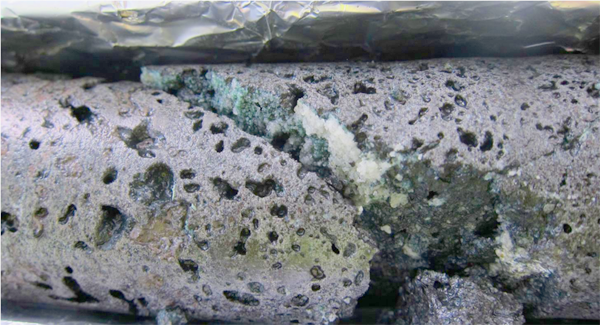
Image of calcite (white) and chlorite (cyan) formed in porous basalt due to CO2-charged water-rock interaction at the CarbFix site in Iceland. (Credit: Sandra Ósk Snæbjörnsdóttir)

Another, less widely publicised approach is to geochemically bind CO2 into solid carbonates, such as calcite (CaCO­3), dolomite (CaMgCO3), or magnesite (MgCO3). Once formed such crystalline solids are unlikely to break down to their component parts at the surface, under water or buried. One way of doing this is by the chemical weathering of rocks that contain calcium- and magnesium-rich minerals, such as feldspar (CaAl2Si2O8), olivine ([Fe,Mg]2SiO4) and pyroxene ([Fe,Mg]CaSi2O6) . Mafic and ultramafic rocks, such as basalt and peridotite are commonly composed of such minerals. One approach involves pumping the gas into a Icelandic borehole that passes through basalt and letting natural reactions do the trick. They give off heat and proceed quickly, very like those involved in the setting of concrete. In two experimental field trials 95% of injected CO2 was absorbed within 18 months. Believe it or not, ants can do the trick with crushed basalt and so too can plant roots. There have been recent experiments aimed at finding accelerants for such subsurface weathering (Wang, J. et al. 2024. CO2 capture, geological storage, and mineralization using biobased biodegradable chelating agents and seawater. Science Advances, v. 10, article eadq0515; DOI: 10.1126/sciadv.adq0515). In some respects the approach is akin to fracking. The aim is to connect isolated natural pores to allow fluids to permeate rock more easily, and to release metal ions to combine with injected CO2.

Chelating agents are biomolecules that are able to dissolve metal ions; some are used to remove toxic metals, such as lead, mercury and cadmium, from the bodies of people suffering from their effects. Naturally occurring ones extract metal ions from minerals and rocks and are agents of chemical weathering; probably used by the aforesaid ants and root systems. Wang and colleagues, based at Tohoku University in Japan, chose a chelating agent GLDA (tetrasodium glutamate diacetate –  C9H9NNa4O8) derived from plants, which is non-toxic, cheap and biodegradable. They injected CO2 and seawater containing dissolved GDLA into basaltic rock samples. The GDLA increases the rock’s porosity and permeability by breaking down its minerals so that Ca and Mg ions entered solution and were thereby able to combine with the gas to form carbonate minerals. Within five days porosity was increased by 16% and the rocks permeability increased by 26 times. Using electron microscopy the authors were able to show fine particles of carbonate growing in the connected pores. In fact these carbonate aggregates become coated with silica released by the induced mineral-weathering reactions. Calculations based on the previously mentioned field experiment in Iceland suggest that up to 20 billion tonnes of CO2 could be stored in 1.3 km3 of basalt treated in this way: about 1/25000 of the active rift system in Iceland (3.3 x 10⁴ km2 covered by 1 km of basalt lava). In 2023 fossil fuel use emitted an estimated 36.6 bllion tons of CO2 into the atmosphere.

So, why do such means of efficiently reducing the greenhouse effect not receive wide publicity by governments or the Intergovernmental Panel on Climate Change? Answers on a yellow PostIt™ please . . .

Geology cracks Stonehenge mysteries

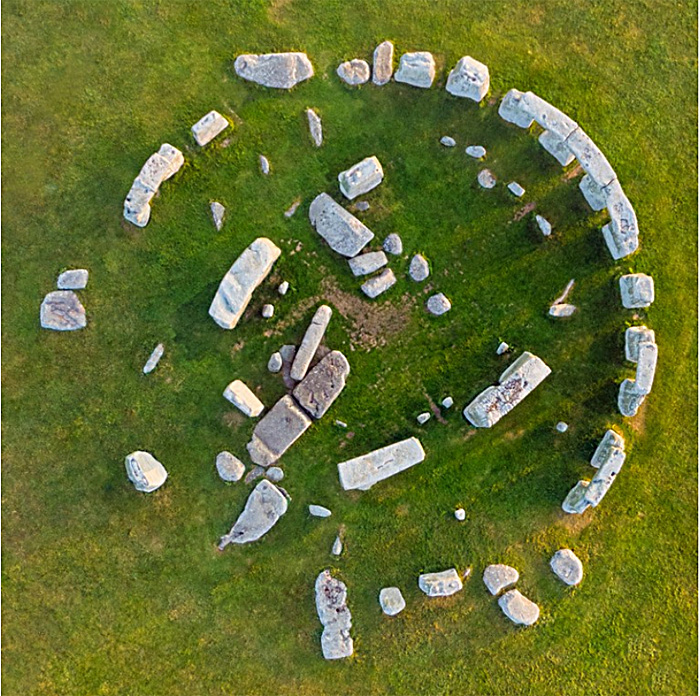
High resolution vertical aerial photograph of Stonehenge. (Credit: Gavin Hellier/robertharding/Getty)

During the later parts of the Neolithic the archipelago now known as the British Isles and Ireland was a landscape on which large stone buildings with ritual and astronomical uses were richly scattered. The early British agricultural societies also built innumerable monuments beneath which people of the time were buried, presumably so that they remained in popular memory as revered ancestors. Best known among these constructions is the circular Stonehenge complex of dressed megaliths set in the riot of earlier, contemporary and later human-crafted features of the Chalk downs known as Salisbury Plain. Stonehenge itself is now known to have been first constructed some five thousand years ago (~3000 BCE) as an enclosure surrounded by a circular ditch and bank, together with what seems to have been a circular wooden palisade. This was repeatedly modified during the following two millennia. Around 2600 BCE the wooden circle was replaced by one of stone pillars, each weighing about 2 t. These ‘bluestones’ are of mainly basaltic igneous origin unknown in the Stonehenge area itself. The iconic circle of huge, 4 m monoliths linked by 3 m lintel stones that enclose five even larger trilithons arranged in a horseshoe dates to the following two-centuries to 2400 BCE coinciding with the Early Bronze Age when newcomers from mainland Europe – perhaps as far away as the steppe of western Russia – began to replace or assimilate the local farming communities. This phase included several major modifications of the earlier bluestones.

It might seem that the penchant for circular monuments began with the Neolithic people of Salisbury Plain, and then spread far and wide across the archipelago in a variety of sizes. However, it seems that building of sophisticated monuments, including stone circles, began some two centuries earlier than in southern England in the Orkney Islands 750 km further north and, even more remote, in the Outer Hebrides of Scotland. A variety of archaeological and geochemical evidence, such as the isotopic composition of the bones of livestock brought to the vicinity of Stonehenge during its period of development and use, strongly suggests that people from far afield participated. Remarkably, a macehead made of gneiss from the Outer Hebrides turned up in an early Stonehenge cremation burial. Ideas can only have spread during the Neolithic through the spoken word. As it happens, the very stones themselves came from far afield. The earliest set into the circular structure, the much tinkered-with bluestones, were recognised to be exotic over a century ago. They match late Precambrian dolerites exposed in western Wales, first confirmed in the 1980s through detailed geochemical analyses by the late Richard Thorpe and his wife Olwen Williams-Thorpe of the Open University. Some suggested that they had been glacially transported to Salisbury Plain, despite complete lack of any geological evidence. Subsequently their exact source in the Preseli Hills was found, including a breakage in the quarry that exactly matched the base of one of the Stonehenge bluestones. They had been transported 230 km to the east by Neolithic people, using perhaps several means of transport. The gigantic monoliths, made of ‘sarsen’ – a form of silica-cemented sandy soil or silcrete – were sourced from some 25 km away where Salisbury Plain is still liberally scattered with them. Until recently, that seemed to be that as regards provenance, apart from a flat, 5 x 1 m slab of sandstone weighing about 6 t that two fallen trilithon pillars had partly hidden. At the very centre of the complex, this had been dubbed the ‘Altar Stone’, originally supposed to have been brought with the bluestones from west Wales.

The stones of Stonehenge colour-coded by lithology. The sandstone ‘Altar Stone’ lies beneath fallen blocks of a trilithon at the centre of the circle. (Credit: Clarke et al. 2024, Fig 1a)

A group of geologists from Australia and the UK, some of whom have long been engaged with Stonehenge, recently decided to apply sophisticated geochemistry at two fragments broken from the Altar Stone, presumably when the trilithons fell on it (Clarke, A. J. I. et al.2024.  A Scottish provenance for the Altar Stone of Stonehenge. Nature v.632, p. 570–575; DOI: 10.1038/s41586-024-07652-1). In particular they examined various isotopes and trace-elements in sedimentary grains of zircon, apatite and rutile that weathering of igneous rocks had contributed to the sandstone, along with quartz, feldspar, micas and clay minerals. It turned out that the zircon grains had been derived from Mesoproterozoic and Archaean sources beneath the depositional site of the sediment (the basement). The apatite and rutile grains show clear signs of derivation from 460 Ma old (mid-Ordovician) granites. The basement beneath west Wales is by no stretch of the imagination a repository of any such geology. That of northern Scotland certainly does have such components, and it also has sedimentary rocks derived from such sources: the Devonian of Orkney and mainland Scotland surrounding the Moray Firth. Unlike the lithologically unique bluestones, the sandstone is from a thick and widespread sequence of terrestrial sediments colloquially known as the ‘Old Red Sandstone’. The ORS of NE Scotland was deposited mainly during the Devonian Period (419 to 369 Ma) as a cyclical sequence in a vast, intermontane lake basin. Much the same kinds of rock occur throughout the sequence, so it is unlikely that the actual site where the ‘Alter Stone’ was selected will ever be known.

To get the ‘Alter Stone’ (if indeed that is what it once was) to Stonehenge demanded transport from its source over a far more rugged route, three times longer than the journey that brought the bluestones from west Wales: at least 750 km. It would probably have been dragged overland. Many Neolithic experts believe that transport of such a large block by boat is highly unlikely; it could easily have been lost at sea and, perhaps more important, few would have seen it. An overland route, however arduous, would have drawn the attention of everyone en route, some of whom might have been given the honour of helping drag such a burden for part of the way. The procession would certainly have aroused great interest across the full extent of Britain. Its organisers must have known its destination and what it signified, and the task would have demanded fervent commitment. In many respects it would have been a project that deeply unified most of the population. That could explain why people from near and far visited the Stonehenge site, herding livestock for communal feasting on arrival. Evidence is now pointing to the construction and use of the ritual landscape of Salisbury Plain as an all-encompassing joint venture of most of Neolithic Britain’s population. It would come as no surprise if objects whose provenance is even further afield come to light. It remained in use and was repeatedly modified during the succeeding Bronze Age up to 1600 BCE. By that time, the genetic group whose idea it was had been assimilated, so that only traces of its DNA remain in modern British people. This seems to have resulted from waves of immigrants from Central Europe, the Yamnaya, who brought new technology and the use of metals and horses.

See also: Gaind, N. & Smith, R. 2024. Stonehenge’s enigmatic centre stone was hauled 800 kilometres from Scotland. Nature, v. 632, p. 484-485; DOI: 10.1038/d41586-024-02584-2; Addley, E. 2024. Stonehenge megalith came from Scotland, not Wales, ‘jaw-dropping’ study finds. The Guardian, 14 August 2024.

The Moon may have water resources in its soil

Apart from signs of water ice in permanently shadowed areas of some polar craters, the Moon’s surface has generally been considered to be very dry. Rocks returned by the various Apollo missions contain minute traces of water by comparison with similar rocks on Earth. They consist only of anhydrous minerals such as feldspars, pyroxenes and olivines. But much of the lunar surface is coated by regolith: a jumble of rock fragments and dust ejected from a vast number of impact craters over billions of years. It is estimated to be between 3 and 12 m deep. Much of the finer grained regolith is made up of silicate-glass spherules created by the most powerful impacts.

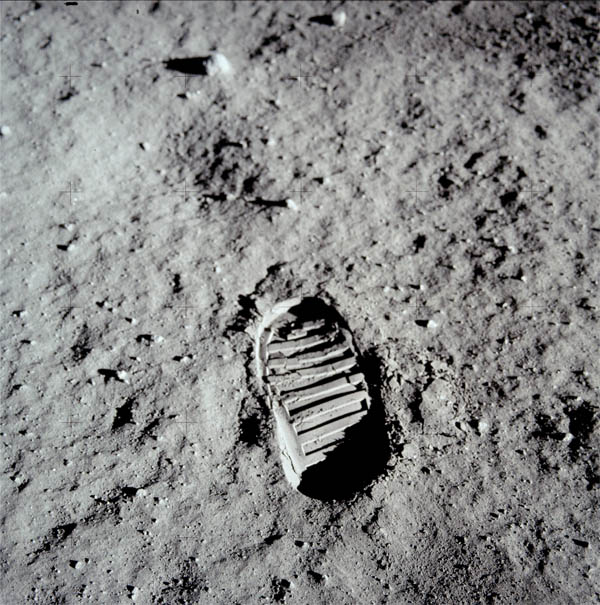
The lunar regolith at Tranquillity Base bearing an astronaut’s bootprint (Credit: Buzz Aldrin, NASA Apollo 11, Photo ID AS11-40-5877)

The scientific and economic (i.e. mining) impetus for the establishment of long term human habitation on the lunar surface hangs on the possibility of extracting water from the Moon itself. It is needed for human consumption and as a source through electrolysis of both oxygen and hydrogen for breathing and also for rocket fuel. The stupendous cost, in both monetary and energy terms, of shifting mass from Earth to the Moon clearly demands self-sufficiency in water for a lunar base occupied for more than a few weeks.

Remote sensing that focussed on the ability of water molecules and hydroxyl (OH) ions to absorb solar radiation with a wavelength of 2.8 to 3.0 micrometres was deployed by the Indian lunar orbiter Chandrayaan-1 that collected data for several months in 2008-9. The results suggested that OH and H2O were detectable over a large proportion of the lunar surface at concentrations estimated at between 10 parts per million (ppm) up to about 0.1%. Where did these hydroxyl ions and water molecules come from and what had locked them up? There are several possibilities for their origin: volcanic activity that tapped the Moon’s mantle (magma could not have formed had some water not been present at great depths); impacts of icy bodies such as comets; even the solar wind that carries protons, i.e. hydrogen atoms stripped of their electrons. Conceivably, protons could react with oxygen in silicate material at the surface to produce both OH and H2O to be locked within solid particles. To assess the possibilities a group of researchers at Chinese and British institutions have examined in detail the 1.7 kg of lunar-surface materials collected and returned to Earth by the 2020 Chinese Chang’e 5 lunar sample return mission (He, H. and 27 others 2023. A solar wind-derived water reservoir on the Moon hosted by impact glass beads. Nature Geoscience, online article; DOI: 10.1038/s41561-023-01159-6)

He et al. focussed on glass spherules formed by impact melting of lunar basalts, whose bulk composition they retain. The glass ‘beads’ contain up to 0.2 % water, mainly concentrated in their outermost parts. This alone suggests that the water and hydroxyl ions were formed by spherules being bathed in the solar wind rather than being of volcanic or cometary origin and trapped in the glass. An abnormally low proportion of deuterium (2H) relative to the more abundant 1H isotope of hydrogen in the spherules is consistent with that hypothesis. Indeed, the high temperatures involved in impact melting would be expected to have driven out any ‘indigenous’ water in the source rocks. The water and OH ions seem to have built up over time, diffusing into the glass from their surfaces rather than gradually escaping from within.

An awful lot of regolith coats the lunar surface, as many of the images taken by the Apollo astronauts amply show. So how much water might be available from the lunar regolith? The Chinese-British team reckon between 3.0 × 10⁸ to 3.0 × 10¹¹ metric tons. But how much can feasibly be extracted at a lunar base camp? The data suggest that a cubic metre (~2 t) of regolith could yield enough to fill 4 shot glasses (~0.13 litres). Using a solar furnace and a condenser – the one in full sunlight the other in the shade – is not, as they say, ‘rocket science’. But for a minimum 3 litres per day intake of fluids per person, a team of 4 astronauts would need to shift and process roughly 100 m3 of regolith every day. Over a year, this would produce a substantial pit. But that assumes all the regolith contains some water, yet the data are derived from the surface alone …See also:Glass beads on moon’s surface may hold billions of tonnes of water, scientists say. The Guardian, 27 March 2023.

Naturally occurring hydrogen: an abundant green fuel?

Burning hydrogen produces only water vapour, so it is not surprising that it has been touted as the ultimate ‘green’ energy source, and increasingly attracts the view that the ‘Hydrogen Economy’ may replace that based on fossil fuels. It is currently produced from natural gas by ‘steam reforming’ of methane that transforms water vapour and CH4 to hydrogen and carbon monoxide. That clearly doesn’t make use of the hydrogen ‘green’ as the CO becomes carbon dioxide because it reacts with atmospheric oxygen; it is termed ‘grey hydrogen’. But should it prove possible to capture CO and store it permanently underground in some way then that can be touted as ‘blue hydrogen’ thereby covering up the carbon footprint of all the rigmarole in getting the waste CO into a safe reservoir. However, if carbon-free electricity from renewables is used to electrolyse water into H and O the hydrogen aficionados can safely call it ‘green hydrogen’.   It seem there is a bewildering colour coding for hydrogen that depends on the various options for its production: ‘yellow’ if produced using solar energy; ‘red’ if made chemically from biowaste; ‘black’ by coking coal using steam; ‘pink’ is electrolysis using nuclear power; and even ‘turquoise’ hydrogen if methane is somehow turned into hydrogen and solid carbon using renewables – a yet-to-be-developed technology! Very jolly but confusing: almost suspiciously so!

But not to be forgotten is the ‘white’ variety, applied to hydrogen that is emitted by natural processes within the Earth. Eric Hand, the European news editor for the major journal Science has written an excellent Feature article about ‘white’ hydrogen in a recent issue (Hand, E. 2023. Hidden hydrogen. Science, v. 379, article adh1460; DOI: 10.1126/science.adh1460). Hand’s feature is quirky, but well-worth a read. It is based on the proceedings of a Geological Society of America mini-conference about non-petroleum, geological energy resources  held in October 2022. He opens with a bizarre anecdote related by a farmer who lives in rural Mali. The only drilling that ever went on in his village was for water, and many holes were dry. But one attempt resulted in ‘wind coming out of the hole’. When a driller looked in the hole, the ‘wind’ burst into flame – he had a cigarette in his mouth. The fire burned for months. Some 20 years later the story reached a Malian company executive who began prospecting the area’s petroleum potential, believing the drilling had hit natural gas. Analysis of the gas revealed that it was 98% hydrogen – now the village has electricity generated by ‘white’ hydrogen.

Mantle rock in the Oman ophiolite, showing cores of fresh peridotite, surrounded by brownish serpentinite and white magnesium carbonate veins (credit: Juerg Matter, Oman Drilling Project, Southampton University, UK)

So how is hydrogen produced by geological processes? Some springs in the mountains of Oman also release copious amounts of the gas. The springs emerge from ultramafic rocks of the vast ophiolite that was emplaced onto the Arabian continental crust towards the end of the Cretaceous. The lower part of this obducted mass of oceanic lithosphere is mantle rock dominated by iron- and magnesium-rich silicates, mainly olivine [(Mg,Fe)2SiO4 – a solid solution of magnesium and iron end members]. When saturated with groundwater in which CO2 is dissolved olivine breaks down slowly but relentlessly. The hydration reaction is exothermic and generates heat, so is self-sustaining. Olivine’s magnesium end member is hydrated to form the soft ornamental mineral serpentine (Mg3Si2O5(OH)4) and magnesium carbonate. Under reducing conditions the iron end member reacts with water to produce an iron oxide, silica and hydrogen:

3Fe2SiO4 + 2H2O → 2 Fe3O4 + 3SiO­2 +3H2

Gases emanating from mid-ocean ridges contain high amounts of hydrogen produced in this way, for example from Icelandic geothermal wells. But Mali is part of an ancient craton, so similar reactions involving iron-rich ultramafic rocks deep in the continental crust are probably sourcing hydrogen in this way too. Hydrogen production on the scale of that discovered in Mali seems to be widespread, with discoveries in Australia, the US, Brazil and the Spanish Pyrenees that have pilot-scale production plants. The US Geological Survey has estimated that around 1 trillion tonnes of ‘white’ hydrogen may be available for extraction and use

Hydrogen, like other natural gases, may be trapped below the surface in the same ways as in commercial petroleum fields. But petroleum-gas wells emit little if any hydrogen mixed in with methane. That absence is probably because petroleum fields occur in deep sedimentary basins well above any crystalline basement. The geophysical exploration that discovers and defines the traps in petroleum fields has never been deployed over areas of crystalline continental crust because as far as the oil companies are concerned they are barren. That may be about to change. There is another exploration approach: known hydrogen seepage seems to deter vegetation so that the sites are in areas of bare ground, which have been called ‘fairy circles’. These could be detected easily using remote sensing techniques.

Artificially increasing serpentine formation by pumping water into the mantle part of ophiolites, such as that in Oman, and other near-surface ultramafic rocks is also a means of carbon sequestration, which should produce hydrogen as a by-product (see: Global warming: Can mantle rocks reduce the greenhouse effect?, July 2021). A ‘two-for-the-price-of-one’ opportunity?

British government fracking fan fracked

In November 2019 the Conservative government of Boris Johnson declared a moratorium on development of shale gas by hydraulic fracturing (‘fracking’) in England. This followed determined public protests at a number of potential fracking sites, the most intransigent being residents of Lancashire’s Fylde peninsula. They had been repeatedly disturbed since mid 2017 by low-magnitude earthquakes following drilling and hydraulic-fluid injection tests by Cuadrilla Resources near Little Plumpton village. Their views were confirmed in a scientific study by the British Geological Survey for the Oil and Gas Authority that warned of the impossibility of predicting the magnitude of future earthquakes that future fracking might trigger. The shale-gas industry of North America, largely in areas of low population and simple geology, confirmed the substantial seismic hazard of this technology by regular occurrences of earthquakes up to destructive magnitudes greater than 5.0. The Little Plumpton site was abandoned and sealed in February 2022.

Cuadrilla’s exploratory fracking site near Little Plumpton in Fylde, Lancashire. (Credit: BBC)

On 22 September 2022 the moratorium was rescinded by Jacob Rees-Mogg, Secretary of State for Business, Energy and Industrial Strategy in the new government of Liz Truss, two weeks after his appointment. This was despite the 2019 Conservative manifesto pledging not to lift the moratorium unless fracking was scientifically proven to be safe. His decision involved suggesting that the seismicity threshold for pausing fracking operations be lifted from magnitude 0.5 to 2.5, which Rees-Mogg claimed without any scientific justification to be ‘a perfectly routine natural phenomenon’.  He further asserted that opposition to fracking was based around ‘hysteria’ and public ignorance of seismological science, and that some protestors had been funded by Vladimir Putin. In reality the Secretary of State’s decision was fuelled by the Russian Federation’s reducing gas supplies to Europe following its invasion of Ukraine, the soaring world price of natural gas and an attendant financial crisis. There was also a political need to be seen to be ‘doing something’, for which he has a meagre track record in the House of Commons. Rees Mogg claimed that lifting the moratorium would bolster British energy security. That view ignored the probable lead time of around 10 years before shale gas can become an established physical resource in England. Furthermore, an August 2018 assessment of the potential of UK shale-gas, by a team of geoscientists, including one from the British Geological Survey, suggested that shale-gas potential would amount to less than 10 years supply of UK needs: contrary to Rees-Mogg’s claim that England has ‘huge reserves of shale’. Indeed it does, but the vast bulk of these shales have no commercial gas potential.

Ironically, the former founder of Cuadrilla Resources, exploration geologist Chris Cornelius, and its former public affairs director, Mark Linder, questioned the move to unleash fracking in England, despite supporting shale-gas operations where geologically and economically appropriate. Their view is largely based on Britain’s highly complex geology that poses major technical and economic challenges to hydraulic fracturing. Globally, fracking has mainly been in vast areas of simple, ‘layer-cake’ geology. A glance at large-scale geological maps of British areas claimed to host shale-gas reserves reveals the dominance of hundreds of faults, large and small, formed since the hydrocarbon-rich shales were laid down. Despite being ancient, such faults are capable of being reactivated, especially when lubricated by introduction of fluids. Exactly where they go beneath the surface is unpredictable on the scales needed for precision drilling.  Many of the problems encountered by Cuadrilla’s Fylde programme stemmed from such complexity. Over their 7 years of operation, hundreds of millions of pounds were expended without any commercial gas production. Each prospective site in Britain is similarly compartmentalised by faulting so that much the same problems would be encountered during attempts to develop them. By contrast the shales fracked profitably in the USA occur as horizontal sheets deep beneath entire states: entirely predictable for the drillers. In Britain, tens of thousands of wells would need to be drilled on a ‘compartment-by-compartment’ basis at a rate of hundreds each year to yield useful gas supplies. Fracking in England would therefore present unacceptable economic risks to potential investors. Cornelius and Linder have moved on to more achievable ventures in renewables such as geothermal heating in areas of simple British geology.

Jacob Rees-Mogg’s second-class degree in history from Oxford and his long connection with hedge-fund management seem not to be appropriate qualifications for making complex geoscientific decisions. Such a view is apparently held by several fellow Conservative MPs, one of whom suggested that Rees-Mogg should lead by example and make his North East Somerset constituency the ‘first to be fracked’, because it is underlain by potentially gas-yielding shales. The adjoining constituency, Wells, has several sites with shale-gas licences but none have been sought within North East Somerset. Interestingly, successive Conservative governments since 2015, mindful of a ‘not-in-my-backyard’ attitude in the party’s many rural constituencies, have placed a de-facto ban on development of onshore wind power.

Ancient deep groundwater

Worldwide, billions of people depend on groundwater for their water needs from wells, deep boreholes and natural springs. Even surface water in rivers and lakes is directly connected to that moving sluggishly below the surface. In fact the surface water level marks where the water table coincides with the land surface. From season to season the water table rises and falls and so too do river and lake levels, depending on fluctuations in rainfall, snow melt, evaporation and extraction. Where it is present, vegetation plays a role in the hydrological cycle, through transpiration from roots through stems and leaves, from which it is exhaled by minute pores or stomata; effectively plants are able to pump water through their tissues to a height of up to a hundred metres.  Groundwater, like that at the surface, moves under gravity roughly parallel to the slope of the land surface from the place where precipitation infiltrates soil and rock. But the deeper it is the slower the flow and the less it is in direct contact with surface processes to be replenished by infiltration. Wells and boreholes rarely penetrate deeper than a few hundred metres, so that the vast bulk of groundwater is never used. Indeed most deep groundwater would not be drinkable or suitable for irrigation since over millennia or longer it dissolves material from the rock that contains it to become saline. In some deep sedimentary aquifers it may actually be composed of seawater trapped at the time of sedimentation.

Damp conditions in the Mponeng gold mine near Johannesburg, South Africa, the world’s deepest at 3.8 km below the surface with planned expansion to 4.3 km (Credit: AngloGold Ashanti)

The pore spaces in sandstones and fractures in limestones, the most common aquifers, are not the only conduits for groundwater. Crystalline igneous and metamorphic rocks are generally full of minute fractures resulting from their tectonic history. The deepest mines in crystalline basement, such as the gold mines of the Johannesburg area in South Africa, penetrate almost 4 km below the surface, yet are by no means dry and have to be pumped to stave off flooding. The water is a brine containing sodium and calcium chloride with high concentrations of dissolved, reduced gases such as hydrogen, methane and ethane (C2H6). Studies of the proportions of oxygen isotopes in the water reveal that the water in the fractures is very different from that in modern rainwater: this fluid is completely isolated from the modern hydrological cycle and is very old indeed. Just how old has now been determined (Warr, O. et al. 2022. 86Kr excess and other noble gases identify a billion-year-old radiogenically-enriched groundwater system. Nature Communications v. 13, Article number 3768; DOI: 10.1038/s41467-022-31412-2).

Brine extracted from a borehole in the floor of the Moab Khotsong gold/uranium mine also contains the noble gases helium, neon, argon, krypton and xenon. Noble gases are present in today’s atmosphere, so conceivably they may have originally entered the brine in rain water that seeped along fractures. However, when their isotopes are measured their proportions are very different from those in air. There are excesses of 4He, 21Ne, 22Ne, 40Ar, 86Kr and several isotopes of Xe. These isotopes are emitted during the radioactive decay of uranium, thorium and 40K, the main heat producing isotopes in the crust and mantle. Oliver Warr of the University of Toronto Canada and geochemists from Oxford University UK, Princeton University and the New Mexico Institute of Mining and Technology US, and the Sorbonne France show that originally atmospheric noble gases have been enriched in these radiogenic isotopes. Their present isotopic proportions therefore give clues to the time when air dissolved in groundwater was trapped in the host rock more than a billion years ago. A complicating factor is that the host rocks themselves are dated at about three times that age. They suggest that the fractures systems were initiated by the Vredfort asteroid impact at 2.0 Ga to form aquifers, but they became isolated from hydrological circulation around 1.2 Ga and now now contain the world’s oldest groundwater.

One of the implications of the study is that such trapped water may be present at depth in the crust of Mars, despite its current aridity. Another is that, because the fluid contains hydrogen, sulfate ions and hydrocarbon gases, it can potentially support organisms that use them to power their metabolism and reproduce. In 2008 microbes were found living in similar ancient groundwater 2.4 km below the surface in the Kidd Creek Mine, Canada, at a level of around 5 thousand cells per millilitre (50 times less than in surface water). They are powered by reduction of sulfate ions to sulfide. In 2008 another peculiar discovery in the deep biosphere emerged from the Mponeng gold mine near Johannesburg, South African (the world’s deepest) in the form of a living sulfate reducing bacterium Desulforudis audaxviator. DNA  analysis of the ancient water revealed that it was the sole inhabitant, a biological mystery confirmed by later deep-biosphere studies in Death Valley, USA, and Siberia.

See also: Researchers uncover life’s power generators in the Earth’s oldest groundwaters, EurekaAlert, 5 July 2022; Mantle link with biosphere, July 2009