‘Mud, mud, glorious mud’

Earth is a water world, which is one reason why we are here. But when it comes to sedimentary rocks, mud is Number 1. Earth’s oceans and seas hide vast amounts of mud that have accumulated on their floors since Pangaea began to split apart about 200 Ma ago during the Early Jurassic. Half the sedimentary record on the continents since 4 billion years ago is made of mudstones. They are the ultimate products of the weathering of crystalline igneous rocks, whose main minerals – feldspars, pyroxenes, amphiboles, olivines and micas, with the exception of quartz – are all prone to breakdown by the action of the weakly acidic properties of rainwater and the CO2 dissolved in it. Aside from more resistant quartz grains, the main solid products of weathering are clay minerals (hydrated aluminosilicates) and iron oxides and hydroxides. Except for silicon, aluminium and ferric iron, most metals end up in solution and ultimately the oceans.  As well as being a natural product of weathering, mud is today generated by several large industries, and humans have been dabbling in natural muds since the invention of pottery some 25 thousand years ago.  On 21 August 2020 the journal Science devoted 18 pages to a Special Issue on mud, with seven reviews (Malakoff, D. 2020. Mud. Science, v. 369, p. 894-895; DOI: 10.1126/science.369.6506.894).

Mud carnival in Brazil (Credit: africanews.com)

The rate at which mud accumulates as sediment depends on the rate at which erosion takes place, as well as on weathering. Once arable farming had spread widely, deforestation and tilling the soil sparked an increase in soil erosion and therefore in the transportation and deposition of muddy sediment. The spurt becomes noticeable in the sedimentary record of river deltas, such as that of the Nile, about 5000 years ago. But human influences have also had negative effects, particularly through dams. Harnessing stream flow to power mills and forges generally required dams and leats. During medieval times water power exploded in Europe and has since spread exponentially through every continent except Antarctica, with a similar growth in the capacity of reservoirs. As well as damming drainage these efforts also capture mud and other sediments. A study of drainage basins in north-east USA, along which mill dams quickly spread following European colonisation in the 17th century, revealed their major effects on valley geomorphology and hydrology (see: Watermills and meanders; March 2008). Up to 5 metres of sediment build-up changed stream flow to an extent that this now almost vanished industry has stoked-up the chances of major flooding downstream and a host of other environmental changes. The authors of the study are acknowledged in one Mud article (Voosen, P. 2020. A muddy legacy. Science, v. 369, p. 898-901; DOI: 10.1126/science.369.6506.898) because they have since demonstrated that the effects in Pennsylania are reversible if the ‘legacy’ sediment is removed. The same cannot be expected for truly vast reservoirs once they eventually fill with muds to become useless. While big dams continue to function, alluvium downstream is being starved of fresh mud that over millennia made it highly and continuously productive for arable farming, as in the case of Egypt, the lower Colorado River delta and the lower Yangtze flood plain below China’s Three Gorges Dam.

Mud poses extreme risk when set in motion. Unlike sand, clay deposits saturated with water are thixotropic – when static they appear solid and stable but as soon as they begin to move en masse they behave as a viscous fluid. Once mudflows slow they solidify again, burying and trapping whatever and whomever they have carried off. This is a major threat from the storage of industrially created muds in tailings ponds, exemplified by a disaster at a Brazilian mine in 2019, first at the site itself and then as the mud entered a river system and eventually reached the sea. Warren Cornwall explains how these failures happen and may be prevented (Cornwall, W. 2020. A dam big problem.  Science, v. 369, p. 906-909; DOI: 10.1126/science.369.6506.906). Another article in the Mud special issue considers waste from aluminium plants (Service, R.F. 2020. Red alert. Science, v. 369, p. 910-911; DOI: 10.1126/science.369.6506.910). The main ore for aluminium is bauxite, which is the product of extreme chemical weathering in the tropics. The metal is smelted from aluminium hydroxides formed when silica is leached out of clay minerals, but this has to be separated from clay minerals and iron oxides that form a high proportion of commercial bauxites, and which are disposed of in tailings dams. The retaining dam of such a waste pond in Hungary gave way in 2010, the thixotropic red clay burying a town downstream to kill 10 people. This mud was highly alkaline and inflicted severe burns on 150 survivors. Service also points out a more positive aspect of clay-rich mud: it can absorb CO2 bubbled through it to form various, non-toxic carbonates and help draw down the greenhouse gas.

Muddy sediments are chemically complex, partly because their very low permeability hinders oxygenated water from entering them: they maintain highly reducing conditions. Because of this, oxidising bacteria are excluded, so that much of the organic matter deposited in the muds remains as carbonaceous particles. They store carbon extracted from the atmosphere by surface plankton whose remains sink to the ocean floor. Consequently, many mudrocks are potential source rocks for petroleum. Although they do not support oxygen-demanding animals, they are colonised by bacteria of many different kinds. Some – methanogens – break down organic molecules to produce methane. The metabolism of others depends on sulfate ions in the trapped water, which they reduce to sulfide ions and thus hydrogen sulfide gas: most muds stink. Some of the H2S reacts with metal ions, to precipitate sulfide minerals, the most common being pyrite (FeS2). In fact a significant proportion of the world’s copper, zinc and lead resources reside in sulfide-rich mudstones: essential to the economies of Zambia and the Democratic Republic of Congo. But there are some strange features of mud-loving bacteria that are only just emerging. The latest is the discovery of bacteria that build chains up to 5 cm long that conduct electricity (Pennisi, E. 2020. The mud is electric. Science, v. 369, p. 902-905; DOI: 10.1126/science.369.6506.902). The bacterial ‘nanowires’ sprout from minute pyrite grains, and transfer electrons released by oxidation of organic compounds, effectively to catalyse sulfide-producing reduction reactions. NB Oxygen is not necessary for oxidation as its chemistry involves the loss of electrons, while reduction involves a gain of electrons, expressed by the acronym OILRIG (oxidation is loss, reduction is gain). It seems such electrical bacteria are part of a hitherto unsuspected chemical ecosystem that helps hold the mud together as well as participating in a host of geochemical cycles. They may spur an entirely new field of nano-technology, extending, bizarrely, to an ability to generate electricity from moisture in the air.

If you wish to read these reviews in full, you might try using their DOIs at Sci Hub.

Can a supernova affect the Earth System?

The easy answer is yes, simply because chemical elements with a greater relative atomic mass than that of iron are thought to be created in supernovae when dying giant stars collapse under their own gravity and then explode. Interstellar dust and gas clouds accumulate their debris. If the clouds are sufficiently dense gravity forms clumps that may become new stars and the planets that surround them. Matter from every once-nearby supernova enters these clouds and thus contributes to the formation of a planet. This was partly proven when pre-solar grains were found in the Murchison meteorite, some of which are as old as 7.5 billion years (Ga) – 3 Ga older than the Solar System (see: Mineral grains far older than the Solar System; January 15, 2020). Murchison is a carbonaceous chondrite, a class of meteorite which likely contributed lots of carbon-based compounds to the early Earth, setting the stage for the emergence of life. It has been estimated that a near-Earth supernova (closer than 1000 light years) would have noticeable effects on the biosphere, mainly because of the effects on atmospheric composition of the associated high-energy gamma-ray burst. That would create sufficient nitrogen oxides to destroy the ozone layer that shields the surface from harmful radiation. There are reckoned to have been 20 nearby supernovae during the last 10 Ma or so from the presence of anomalously high levels of the isotope 60Fe in marine sediment layers on the Pacific floor. Yet there is no convincing evidence that they coincided with detectable extinctions in the fossil record. But supernovae have been suggested as a possible cause of more ancient mass extinctions, such as that at the end of the Ordovician Period (but see: The late-Ordovician mass extinction: volcanic connections; July 2017).

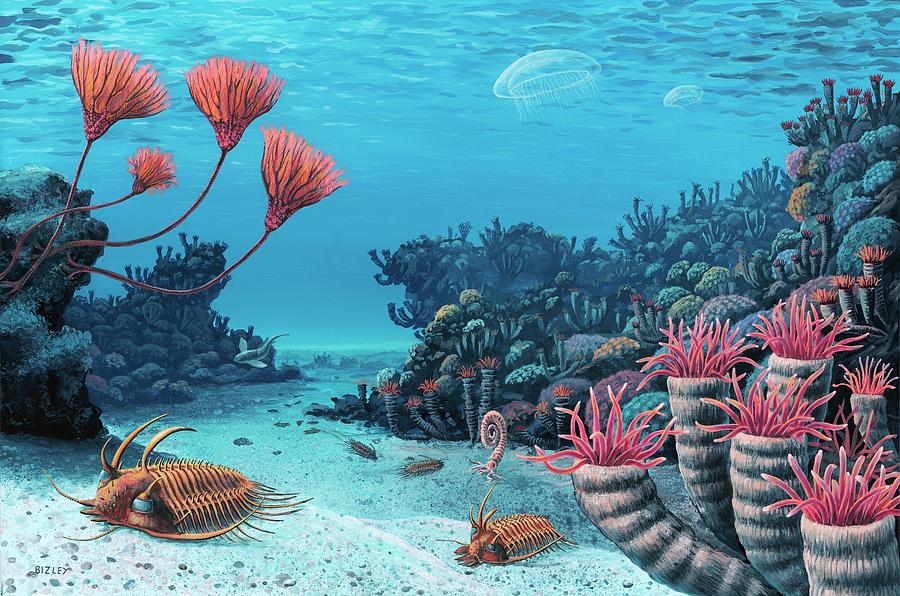
Diorama of an Early Devonian reef with tabulate and rugose corals and trilobites (Credit: Richard Bizley)

The Late Devonian is generally accepted to be one of the ‘Big Five’ mass extinction events. However, unlike the others, the event was a protracted decline in biodiversity, with several extinction peaks). In particular it marked the end of Palaeozoic reef-building corals. Some have put down the episodic faunal decline to the effects of species moving from one marine basin to another as global sea levels fluctuated: much like the effects of the ‘invasion’ of the coral-eating Crown of Thorns sea urchin that has helped devastate parts of the Great Barrier Reef during present-day global warming (see: Late Devonian: mass extinction or mass invasion? January 2012). Recently, attention has switched to evidence for ultra-violet damage to the morphology of spores found in the strata that display faunal extinction; i.e. to the possibility of the ozone layer having been lost or severely depleted. One suggestion has been sudden peaks in volcanic activity, hinted at by spikes in the abundance of mercury of marine sediments. Brian Fields of the University of Illinois, with colleagues from the USA, UK, Estonia and Switzerland, have closely examined the possibility and the testability of a supernova’s influence (Fields. B.D. et al. 2020.  Supernova triggers for end-Devonian extinctions. Proceedings of the National Academy of Sciences, v. 117, article 202013774; DOI: 10.1073/pnas.2013774117).

They propose the deployment of mass-spectrometric analysis for anomalous stable-isotope abundances in the sediments that contain faunal evidence for accelerated extinction, particularly those of 146Sm, 235U and the long-lived plutonium isotope 244Pu (80 Ma hal-life). They suggest that the separation of the extinction into several events, may be a clue to a supernova culprit. A gamma-ray burst would arrive at light speed, but dust – containing the detectable isotopes –  although likely to be travelling very quickly would arrive hundred to thousands of years later, depending on the distance to the supernova. Cosmic rays generated by the supernova, also a possible kill mechanism, given a severely depleted ozone layer, travel about half the speed of light. Three separate arrivals for the products of a single stellar explosion are indeed handy as an explanation for the Late Devonian extinctions. But someone needs to do the analyses. The long-lived  plutonium isotope is the best candidate: even detection of a few atoms in a sample would be sufficient proof. But that would require a means of ruling out contamination by anthropogenic plutonium, such as analysing the interior of fossils. But would even such an exotic discovery prove the sole influence of a galactic even?

Centenary of the Milanković Theory

A letter in the latest issue of Nature Geoscience (Cvijanovic, I. et al. 2020. One hundred years of Milanković cycles, v. Nature Geoscience , v.13p. 524–525; DOI: 10.1038/s41561-020-0621-2) reveals the background to Milutin Milanković’s celebrated work on the astronomical  driver of climate cyclicity. Although a citizen of Serbia, he had been born at Dalj, a Serbian enclave, in what was Austro-Hungary. Just before the outbreak of World War I in 2014, he returned to his native village to honeymoon with his new bride. The assassination (29 June 2014) in Sarajevo of Archduke Franz Ferdinand by Bosnian-Serb nationalist Gavrilo Princip prompted Austro-Hungarian authorities to imprison Serbian nationals. Milanković was interned in a PoW camp. Fortunately, his wife and and a former Hungarian colleague managed to negotiate his release, on condition that he served his captivity, with a right to work but under police surveillance, in Budapest. It was under these testing conditions that he wrote his seminal Mathematical Theory of Heat Phenomena Produced by Solar Radiation; finished in 1917 but remaining unpublished until 1920 because of a shortage of paper during the war.

Curiously, Milanković was a graduate in civil engineering — parallels here with Alfred Wegener of Pangaea fame, who was a meteorologist — and practised in Austria. Appointed to a professorship in Belgrade in 1909, he had to choose a field of research. To insulate himself from the rampant scientific competitiveness of that era, he chose a blend of mathematics and astronomy to address climate change. During his period as a political prisoner Milanković became the first to explain how the full set of cyclic variations in Earth’s orbit — eccentricity, obliquity and precession — caused distinct variations in incoming solar radiation at different latitudes and changed on multi-thousand-year timescales. The gist  of what might have lain behind the cyclicity of ice ages had first been proposed by Scottish scientist James Croll almost half a century earlier, but it was Milutin Milanković who, as it were, put the icing on the cake. What is properly known as the Milanković-Croll Theory triumphed in the late 1970s as the equivalent of plate tectonics in palaeoclimatology after Nicholas Shackleton and colleagues teased out the predicted astronomical signals from time series of oxygen isotope variations in marine-sediment cores.

Appropriately, while Milanković’s revoluitionary ideas lacked corroborating geological evidence, one of the first to spring to his support was that other resilient scientific ‘prophet’, Alfred Wegener. Neither of them lived to witness their vindication.

The Younger Dryas and volcanic eruptions

The issue of the Younger Dryas (YD) cold ‘hiccup’  between 12.9 to 11.7 thousand years (ka) ago during deglaciation and general warming has been the subject of at least 10 Earth-logs commentaries in the last 15 years (you can check them via the Palaeoclimatology logs). I make no apologies for what might seem to be verging on a personal obsession, because it isn’t. That 1200-year episode is bound up with major human migrations on all the northern continents: it may be more accurate to say ‘retreats’. Cooling to near-glacial climates was astonishingly rapid, on the order of a few decades at most. The YD was a shock, and without it the major human transition from foraging to agriculture might, arguably, have happened more than a millennium before it did. There is ample evidence that at 12.9 ka ocean water in the North Atlantic was freshened by a substantial input of meltwater from the decaying ice sheet on northern North America, which shut down the Gulf Stream (see: Tracking ocean circulation during the last glacial period, April 2005; The Younger Dryas and the Flood, June 2006). Such an event has many supporters. Less popular is that it was caused by some kind of extraterrestrial impact, based on various lines of evidence assembled by what amounts to a single consortium of enthusiasts. Even more ‘outlandish’ is a hypothesis that it all kicked off with radiation from a coincident supernova in the constellation Vela in the Southern sky, which is alleged to have resulted in cosmogenic 14C and 10Be anomalies at 12.9 ka. Another coincidence has been revealed by 12.9 ka-old volcanic ash in a sediment core from a circular volcanogenic lake or maar in Germany (see: Did the Younger Dryas start and end at the same times across Europe? January 2014). Being in a paper that sought to chart climate variations during the YD in a precisely calibrated and continuous core, the implications of that coincidence have not been explored fully, until now.

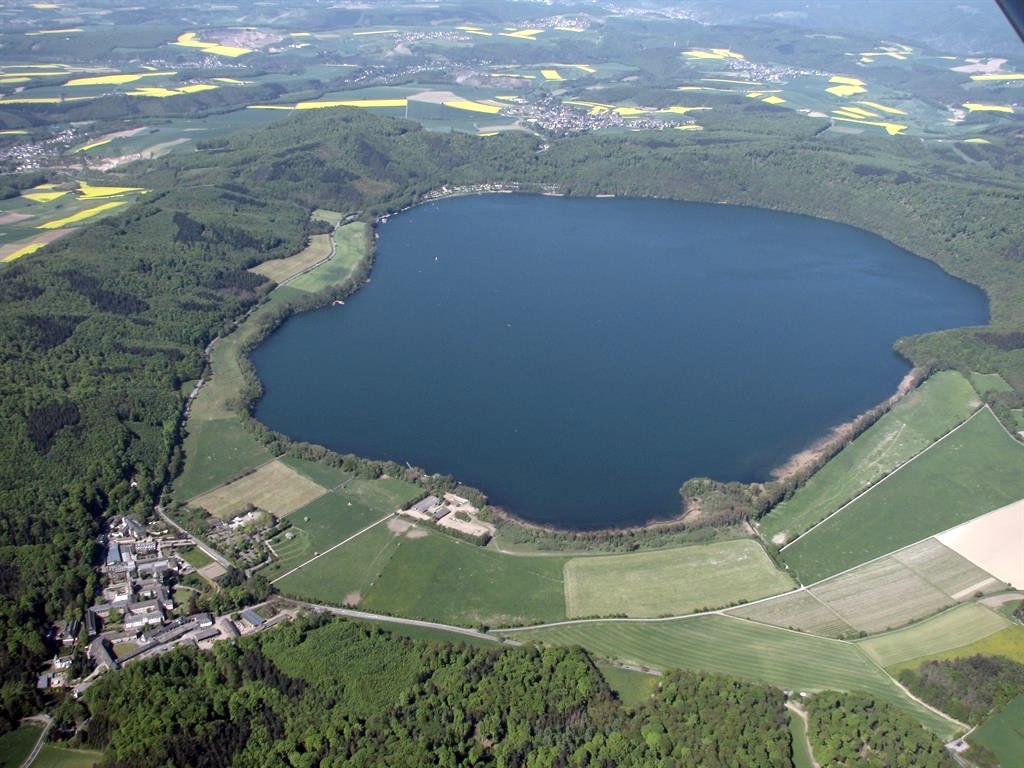
The Laacher See caldera lake in the recently active Eifel volcanic province in western Germany

A consortium of geochemists from three universities in Texas, USA has worked for some time on cave-floor sediments in Hall’s Cave, Texas as they span the YD. In particular, they sought an independent test of evidence for the highly publicised and controversial causal impact in the form of anomalous concentrations of the highly siderophile elements (HSE) osmium, iridium, platinum, palladium and rhenium (Sun, N. et al. 2020. Volcanic origin for Younger Dryas geochemical anomalies ca. 12,900 cal B.P.. Science Advances, v. 6, article eaax8587; DOI: 10.1126/sciadv.aax8587). There is a small HSE ‘spike’ at the 12.9 ka level, but there are three larger ones that precede it and one at about 11 ka. Two isotopes of the element osmium are often used to check the ultimate source of that element through the 187Os/188Os ratio, as can the relative proportions of the HSE elements compared with those in chondritic meteorites. The presence of spikes other than at the base of the YD does not disprove the extraterrestrial causal hypothesis, but the nature of those that bracket the mini-glacial time span not only casts doubt on it, they suggest a more plausible alternative. The 187Os/188Os data from each spike are ambiguous: they could either have arisen from partial melting of the mantle or from an extraterrestrial impact. But the relative HSE proportions point unerringly to the enriched layers having been inherited from volcanic gas aerosols. Two fit dated major eruptions of  the active volcanoes Mount Saint Helens (13.75 to 13.45 ka) and Glacier Peak (13.71 to 13.41 ka) in the Cascades province of western North America. Two others in the Aleutian and Kuril Arcs are also likely sources. The spike at the base of the YD exactly matches the catastrophic volcanic blast that excavated the Laacher See caldera in the Eifel region of western Germany, which ejected 6.3 km3 of sulfur-rich magma (containing 2 to 150 Mt of sulfur). Volcanic aerosols blasted into the stratosphere then may have dispersed throughout the Northern Hemisphere: a plausible mechanism for climatic cooling.

Sun et al. have not established the Laacher See explosion as the sole cause of the Younger Dryas. However, its coincidence with the shutdown of the Gulf Stream would have added a sudden cooling that may have amplified climatic effects of the disappearance of the North Atlantic’s main source of warm surface water. Effects of the Laacher See explosion may have been a tipping point, but it was one of several potential volcanic injections of highly reflective sulfate aerosols that closely precede and span the YD.

See also: Cooling of Earth caused by eruptions, not meteors (Science Daily, 31 July 2020)

Kicking-off planetary Snowball conditions

Untitled-1
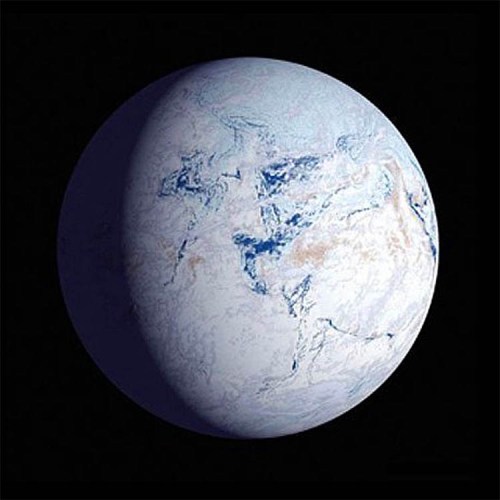
Artist’s impression of the glacial maximum of a Snowball Earth event (Source: NASA)

Twice in the Cryogenian Period of the Neoproterozoic, glacial- and sea ice extended from both poles to the Equator, giving ‘Snowball Earth’ conditions. Notable glacial climates in the Phanerozoic – Ordovician, Carboniferous-Permian and Pleistocene – were long-lived but restricted to areas around the poles, so do not qualify as Snowball Earth conditions. It is possible, but less certain, that Snowball Earth conditions also prevailed during the Palaeoproterozoic at around 2.4 to 2.1 billion years ago. This earlier episode roughly coincided with the ‘Great Oxidation Event’, and one explanation for it is that the rise of atmospheric oxygen removed methane, a more powerful greenhouse gas than carbon dioxide, by oxidizing it to CO2 and water. That may well have been a consequence of the evolution of the cyanobacteria, their photosynthesis releasing oxygen to the atmosphere. The Neoproterozoic ‘big freezes’ are associated with rapid changes in the biosphere, most importantly with the rise of metazoan life in the form of the Ediacaran fauna, the precursor to the explosion in animal diversity during the Cambrian. Indeed all major global coolings, restricted as well as global, find echoes in the course of biological evolution. Another interwoven factor is the rock cycle, particularly volcanism and the varying pace of chemical weathering. The first releases CO2 from the mantle, the second helps draw it down from the atmosphere when weak carbonic acid in rainwater rots silicate minerals (see: Can rock weathering halt global warming, July 2020). All such interplays between major and sometimes minor ‘actors’ in the Earth system influence climate and, in turn, climate inevitably affects all the rest. With such complexity it is hardly surprising that there is a plethora of theories about past climate shifts.

As well as a link with fluctuations in the greenhouse effect, climate is influenced by changes in the amount of solar heating, for which there are yet more options to consider. For instance, the increase in Earth’s albedo (reflectivity) that results from ice cover, may lead through a feedback effect to runaway cooling, particularly once ice extends beyond the poorly illuminated poles. Volcanic dust and sulfate aerosols in the stratosphere also increase albedo and the tendency to cooling, as would interplanetary dust. More complexity to befuddle would-be modellers of ancient climates. Yet it is safe to say that, within the maelstrom of contributory factors, the freeze-overs of Snowball conditions must have resulted from our planet passing through some kind of threshold in the Earth System. Two theoretical scientists from the Department of Earth, Atmospheric, and Planetary Sciences at the Massachusetts Institute of Technology have attempted to cut through the log-jam by modelling the dynamics of the interplay between the ice-albedo feedback and the carbon-silicate cycle of weathering (Arnscheidt, C.W. & Rothman, D.H. 2020. Routes to global glaciation. Proceedings of the Royal Society A, v. 476, article 0303 online; DOI: 10.1098/rspa.2020.0303). Their mathematical approach involves two relatively simple, if long-winded, equations based on parameters that express solar heating, albedo, surface temperature and pressure, and the rate of volcanic outgassing of CO2; a simplification that sets biological processes to one side.

Unlike previous models, theirs can simulate varying rates, particularly of changes in solar energy input. The key conclusion of the paper is that if solar heating decreases faster than a threshold rate the more a planet’s surface water is likely to freeze from pole to pole. The authors suggest that a Snowball Earth event would result from a 2% fall in received solar radiation over about ten thousand years: pretty quick in a geological sense. Such a trigger might stem from a volcanic ‘winter’ scenario, an increase in clouds seeded by spores of primitive marine algae or other factors. The real ‘tipping point’ would probably be the high albedo of ice. There is a warning in this for the present, when a variety of means of decreasing solar input have been proposed as a ‘solution’ to global warming.

Because the Earth orbits the Sun in the ‘Goldilocks Zone’ and is volcanically active even global glaciation would be temporary, albeit of the order of millions of years. The cold would have shut down weathering so that volcanic CO2 could slowly build up in the atmosphere: the greenhouse effect would rescue the planet. Further from the Sun, a planet would not have that escape route, regardless of its atmospheric concentration of greenhouse gases: a neat lead-in to another recent paper about the ancient climate of Mars (Grau Galofre, A. et al. 2020. Valley formation on early Mars by subglacial and fluvial erosion. Nature Geoscience, early online article; DOI: 10.1038/s41561-020-0618-x)

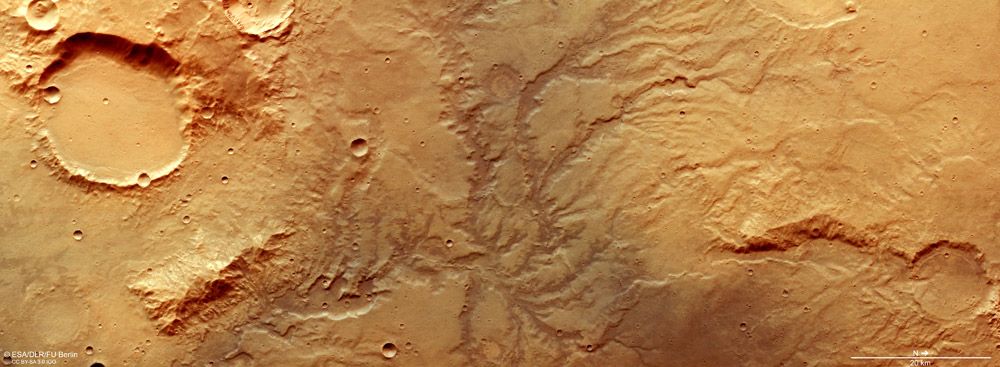
A Martian channel system: note later cratering (credit: European Space Agency)

There is a lot of evidence from both high-resolution orbital images of the Martian surface and surface ‘rovers’ that surface water was abundant over a long period in Mars’s early history. The most convincing are networks of channels, mainly in the southern hemisphere highlands. They are not the vast channelled scablands, such as those associated with Valles Marineris, which probably resulted from stupendous outburst floods connected to catastrophic melting of subsurface ice by some means. There are hundreds of channel networks, that resemble counterparts on Earth. Since rainfall and melting of ice and snow have carved most terrestrial channel networks, traditionally those on Mars have been attributed to similar processes during an early warm and wet phase. The warm-early Mars hypothesis extends even to interpreting the smooth low-lying plains of its northern hemisphere – about a third of Mars’s surface area – as the site of an ocean in those ancient times. Of course, a big question is, ‘Where did all that water go?’ Another relates to the fact that the early Sun emitted considerably less radiation 4.5 billion years ago than it does now: a warm-wet early Mars is counterintuitive.

Anna Grau Galofre of the University of British Columbia and co-authors found that many of the networks on Mars clearly differ in morphology from one another, even in small areas of its surface. Drainage networks on Earth conform to far fewer morphological types. By comparing the variability on Mars with channel-network shapes on Earth, the authors found a close match for many with those that formed beneath the ice sheet that covered high latitudes of North America during the last glaciation. Some match drainage patterns typical of surface-water erosion, but both types are present in low Martian latitudes: a suggestion of ‘Snowball Mars’ conditions? The authors reached their conclusions by analysing six mathematical measures that describe channel morphology for over ten thousand individual valley systems. Previous analyses of individual systems discovered on high-resolution images have qualitative comparisons with terrestrial geomorphology

See also: Chu, J. 2020. “Snowball Earths” May Have Been Triggered by a Plunge in Incoming Sunlight – “Be Wary of Speed” (SciTech Daily 29 July 2020); Early Mars was covered in ice sheets, not flowing rivers, researchers say (Science Daily, 3 August 2020)

2019 Annual Logs added

I have now compiled all the Earth-logs posts from 2019 into PDFs for the categories: Geohazards; Geomorphology; Human Evolution; Miscellaneous; Palaeobiology; Palaeoclimatology; Physical Resources; Planetary Science; Sediments and Stratigraphy, and Tectonics. They are available for download through the Annual logs pull-down in the main menu – just select a category, then scroll down to the 2019 list of contents and click on the link.

I hope this format is useful for reference purposes.