Asteroid Bennu: a ‘lucky dip’ for NASA and planetary science

I must have been about ten years old when I last saw a ‘lucky dip’ or ‘bran tub’ at a Christmas fair.  You paid two shillings (now £0.1) to rootle around in the bran for 30 seconds and grab the first sizeable wrapped object that came to hand:. In my case that would be a cheap toy or trinket, but you never knew your luck as regards the top prize. There is a small asteroid called 101955 Bennu, about half a kilometre across, whose orbit around the Sun crosses that of the Earth. So it’s a bit scary, being predicted to pass within 750,000 km of Earth in September 2060 and has a 1 in 1,880 chance of colliding with us between 2178 and 2290 CE. Because Earth-crossing asteroids are a cheaper target than those in the Asteroid Belt, in 2016 NASA launched a mission named OSIRIS-REx to intercept Bennu, image it in great detail, snaffle a sample and ultimately return the sample to Earth for analysis. This wasn’t a shot in the dark, as a lot of effort and funds were expended to target and then visit Bennu. But unlike me at the fair ground, NASA will be very happy with the outcome.
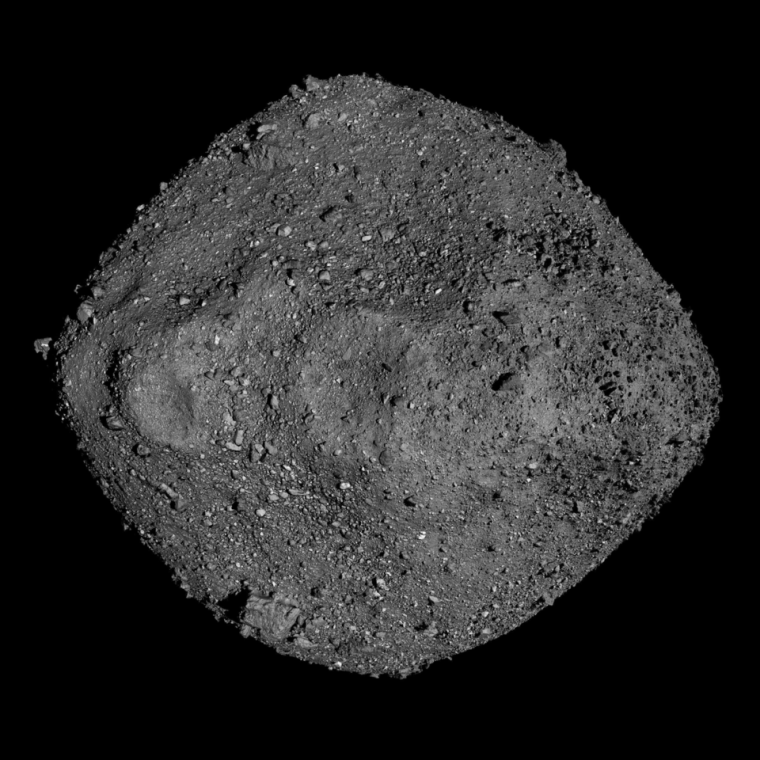
The asteroid Bennu, showing its oblate spheroidal shape, due to rotation, and its rubbly structure. Source: NASA/Goddard/University of Arizona via Wikimedia Commons

Bennu is a product of what might be regarded as ‘space sedimentation’, indeed a kind of conglomerate, being made up of boulders up to 58 m across set in gravelly and finer debris or ‘regolith’. High-resolution images revealed veins of carbonate minerals in the boulders. They suggest hydrothermal activity in a much larger parent body – one of many proto-planets accreted from interstellar gas and dust as the Solar System first began to form over 4.5 billion years ago. Its collision with another sizeable body knocked off debris to send a particulate cloud towards the Sun, subsequently to clump together as Bennu by mutual gravitational attraction. The carbonate veins can only have formed by circulation of water inside Benno’s  parent.

The ‘REx’ in the mission’s name is an acronym for ‘Regolith Explorer’. Sampling was accomplished on 20 October 2020 by a soft landing that drove a sample into a capsule, and then OSIRIS-REx ‘pogo-sticked’ off with the booty. The capsule was dropped off by parachute after the mission’s return on 24 September 2023, in the manner of an Amazon delivery by drone to a happy customer. So, you can understand my ‘lucky dip’ metaphor. And NASA certainly was ‘lucky’ as the contents turned out to be astonishing, as related two years later by the analytical team in the US, led by NASA’s Angel Mojarro (Mojarro, A. et al. 2025.Prebiotic organic compounds in samples of asteroid Bennu indicate heterogeneous aqueous alteration. Proceedings of the National Academy of Science, v. 122, article e2512461122; DOI: 10.1073/pnas.2512461122).

The rock itself is made from bits of carbonaceous chondrite, the most primitive matter orbiting the Sun. It contains fifteen amino acids, including all five nucleobases that make up RNA and DNA – adenine (A), guanine (G), cytosine (C), thymine (T) and uracil (U) – as in AUGC and AGCT. Benno’s complement of amino acids included 14 of the 20 used by life on Earth to synthesise proteins. The fifteenth, tryptophan, has never confidently been seen in extraterrestrial material before. Alkylated polycyclic aromatic hydrocarbons, also found in Bennu, are seen in abundance in interstellar gas clouds and comets by detecting their characteristic fluorescence when illuminated by mid-infrared radiation from hot stars using data from the Spitzer and James Webb Space Telescopes. These prebiotic organic compounds have been suggested to have played a role in the origin of life, but exposure to many produced by human activities are implicated in many cancers and cardiovascular issues.  A second paper by Japanese biochemists and colleagues from the US was also published in early December 2025 (Furukawa, Y. and 13 others 2025. Bio-essential sugars in samples from asteroid Bennu. Nature Geoscience, v. 12, online article; DOI: 10.1038/s41561-025-01838). The authors identified several kinds of sugars in a sample from Bennu, including ribose – essential for building RNA – and glucose. Bennu also contains formaldehyde – a precursor of sugars – perhaps originally in the same brines in which the amino acids formed.

Yet another publication coinciding with the aforementioned two focuses on products of the oldest event in the formation of Bennu: its content of pre-solar grains (Nguyen, A.N. et al. 2025. Abundant supernova dust and heterogeneous aqueous alteration revealed by stardust in two lithologies of asteroid Bennu. Nature Astronomy, v. 9, p. 1812-1820; DOI: 10.1038/s41550-025-02688-3).  In 1969 a 2 tonne carbonaceous chondrite fell near Allende in Mexico. The largest of this class ever found, it contained tiny, pale inclusions that eight years of research revealed to represent materials completely alien to the Solar System. They are characterised by proportions of isotopes of many elements that are very different from those in terrestrial materials. The anomalies could only have formed by decay of extremely short-lived isotopes that highly energetic cosmic rays produce in a manner analogous to neutron bombardment: they are products of nuclear transmutation. It is possible to estimate when the parent isotopes produced the anomalous ‘daughter’ products. One study found ages ranging from 4.6 to 7.5 Ga: up to three billion years before the Solar System began to form. It is likely that the grains are literally ‘star dust’ formed during supernovae in nearby parts of the Milky Way galaxy. Bennu samples contain six-times more presolar grains than any other chondritic meteorites. Nguyen et al. geochemically teased out grains with different nucleosynthetic origins. These ancient relics point to Bennu’s formation in a region of the presolar cloud that preceded the protoplanetary disk and was a mix of products from several stellar settings.

The results from asteroid Bennu support the key idea that that amino acid building blocks for all proteins and the nucleobases of the genetic code, together with other biologically vital compounds arose together in a primitive asteroid.  Its evolution provided the physical conditions, especially the trapping of water, for the interaction of simpler components manufactured in interstellar clouds. Such ‘fertile’ planetesimals and debris from them almost certainly accreted to form planets and endowed them with the potential for life. What astonishes me is that Bennu contains the five nucleobases used in terrestrial genetics and 70% of the amino acids from which all known proteins are assembled by terrestrial life. But, as I try to explain in my book Stepping Stones: The Making of Our Home World, life as we know it arose, survived and evolved through a hugely complex concatenation of physical and chemical events lasting more than 4.5 billion years. The major events and the sequences in which they manifested themselves may indeed have been unique. Earth is a product of luck and so are we!

See also: Tabor, A. et al. 2025. Sugars, ‘Gum,’ Stardust Found in NASA’s Asteroid Bennu Samples. NASA article 2 December 2025. Glavin, D.P. and 61 others 2025. Abundant ammonia and nitrogen-rich soluble organic matter in samples from asteroid (101955) Bennu. Nature Astronomy, v. 9, p. 199-210; DOI: 10.1038/s41550-024-02472-9

Middle Palaeolithic Neanderthals and Denisovans of East Asia

During the Middle Palaeolithic (250 to 30 ka) anatomically modern humans (AMH) and Neanderthals were engaged in new technological developments in Europe and Africa as well as in migration and social interaction. This is reflected in the tools that they left at occupation sites and the fact that most living non-Africans carry Neanderthal DNA. One of the major cultural developments was a novel means of manufacturing stone implements. It developed from the Levallois technique that involved knapping sharp-edged flakes of hard rock from larger blocks or cores. A type of tool first found at a Neanderthal site near La Quina in France is a thick flake of stone with a broad, sharp edge that shows evidence of having been resharpened many times. Most other flake tools seem to have been ‘one-offs’ that were discarded after brief usage. The Quina version was not only durable but seems to have been multipurpose. Analysis of wear patterns on the sharpened edges suggest that they were deployed in carving wood and bone, removing fat and hair from animal hides, and butchery. Such scrapers have been found over a wide area of Europe, the Middle East and NE Asia mostly at Neanderthal sites, including the famous Denisova Cave of southern Siberia that yielded the first Denisovan DNA as well as that of Neanderthals.

Making a typical Quina scraper and related tools. The toolmaker would flake pieces of stone off the core and then carefully shape the Quina scraper. (Image credit: Pei-Yuan Xiao)

Until now, the early humans of East Asia were thought not to have proceeded beyond more rudimentary tools during the Middle Palaeolithic: in fact that archaeological designation hasn’t been applied there. Recent excavations at Longtan Cave in south-west China have forced a complete revision of that view (Ruan, Q.-J., et al. 2025. Quina lithic technology indicates diverse Late Pleistocene human dynamics in East Asia. Proceedings of the National Academy of Sciences, v. 122, article e2418029122; DOI: 10.1073/pnas.2418029122). The Longtan site has yielded more than fifty scrapers and the cores from which they had been struck that clearly suggest the Quina technology had been used there. They occur in cave sediments dated at between 60 and 50 ka. As yet, no human remains have been found in the same level at Longtan, although deeper levels dated at 412 ka have yielded hominin crania, mandibular fragments, and teeth, that have been suggested to be Homo erectus.

Quina type tools in East Asia may previously have been overlooked at other hominin sites in China: re-examination of archived tool collections may show they are in fact widespread. The technology could have been brought in by migrating Neanderthals, or maybe it was invented independently by local East Asian hominins. Because most living people in China carry Denisovan DNA in the genomes so perhaps that group developed the technique before interbreeding with AMH immigrants from the west. Indeed there is no reason to discard the notion that  early AMH may have imported the Quina style. A lot of work lies ahead to understand this currently unique culture at Longtan Cave. However, interpretation of another discovery published shortly after that from Longtan has spectacularly ‘stolen the thunder’ of the Qina tools, and it was made in Taiwan …

Right (top) and downward (lower) views of the partial Penghu mandible. Credit: Yousuke Kaifu University of Tokyo, Japan and Chun-Hsiang Chang Tunghai University, Taichung, from Tsutaya et al. Fig. 1 (inset)Taiwan.

About 10 years ago, Taiwanese fishers trawling in the Penghu Channel between Taiwan and China were regularly finding bones in their nets. Between 70 to 10 ka and 190 to 130 ka ago much lower sea level due to continental ice cap formation exposed the Penghu seabed. Animals and humans were thus able to move between the East Asian mainland and what is now Taiwan. The bones brought to the surface included those of elephants, water buffaloes and tigers, but one was clearly a human lower jawbone (mandible). Its shape and large molar teeth are very different from modern human mandibles and molars. A multinational team from Japan, Denmark, Taiwan and Ireland has extracted proteins from the mandible to check its genetic affinities (Tsutaya, T. and 14 others 2025. A male Denisovan mandible from Pleistocene Taiwan. Science, v. 388, p. 176-180; DOI: 10.1126/science.ads3888). Where DNA has not been preserved in bones proteomics is a useful tool, especially if results are matched with other bones that have yielded both DNA and protein sequences. In the case of the Penghu mandible, proteins from its teeth matched those of Denisovans from the Denisova Cave in Siberia which famously yielded the genome of this elusive human group. They also matched proteins from a rib found in Tibet associated with Denisovan mitochondrial DNA in cave sediments that enclosed the bones.

The three sites (Denisova, Baishiya Cave in Tibet and Penghu Channel) that have produced plausible Denisovan specimens span a large range of latitudes and altitudes. This suggests that Denisovans were capable of successful subsistence across much of East Asia. The Penghu mandible and teeth are similar to several hominin specimens from elsewhere in China that hitherto have been attributed to H. erectus. Apart from the Denisovan type locality, most of the sites have yet to be accurately dated. Having been immersed in sea water for thousands of years isotopes used in dating have been contaminated in the Panghu specimen. It can only be guessed to have lived when the seabed from which it was recovered was dry land; i.e. between 70 to 10 ka and 190 to 130 ka. China was undoubtedly occupied by Homo erectus during the early Pleistocene, but much younger fossils have been attributed to that species by Chinese palaeoanthropologists. Could it be that they are in fact Denisovans? Maybe such people independently developed the Quina knapping technique

See also: Marwick, B. 2025.  Unknown human species in East Asia used sophisticated tools at the same time Neanderthals did in Europe. Live Science, 31 March 2025; Ashworth. J. 2025. Denisovan jawbone helps to reveal appearance of ancient human species. Natural History Museum News 11 April 2025.

A fully revised edition of Steve Drury’s book Stepping Stones: The Making of Our Home World can now be downloaded as a free eBook

Life’s origins: a new variant on Darwin’s “warm little pond”

In 1871 Charles Darwin wrote to his friend Joseph Hooker, a botanist:

“It is often said that all the conditions for the first production of a living organism are now present, which could ever have been present. But if (& oh what a big if) we could conceive in some warm little pond with all sorts of ammonia & phosphoric salts, light, heat, electricity &c present, that a protein compound was chemically formed, ready to undergo still more complex changes, at the present day such matter wd be instantly devoured, or absorbed, which would not have been the case before living creatures were formed.”

There have been several attempts over the last 150 years, starting with Miller and Urey in 1952, to create physical analogues for this famous insight (See:  The origin of life on Earth: new developments). What such a physico-chemical environment on the early Earth could have been like has also been a fertile topic for discussion: literally warm pools at the surface; hot springs; seawater around deep-ocean hydrothermal vents; even droplets in clouds in the early atmosphere. Attention has recently moved to Darwin’s original surface pools through examination of modern ones. The most important content would be dissolved phosphorus compounds, because that element helps form the ‘backbone’ of the helix structure of RNA and DNA. But almost all natural waters today have concentrations of phosphorus that are far too low for such linkages to form by chemical processes, and also to produce lipids that form cell membranes and the ATP (adenosine triphosphate) so essential in all living metabolism. Phosphorus availability has been too low for most of geological time simply because living organisms are so efficient at removing what they need in order to thrive.

Mono Lake in semi-arid eastern California – a ‘soda lake’- is so concentrated by evaporation that pillars of carbonate grow above its surface

For the first life to form, phosphorus would somehow have had to be concentrated in watery solution as phosphate ions – [PO ₄]³⁻. The element’s source, like that of all others in the surface environment, is in magmas and the volcanic rocks that they form. Perhaps early chemical weathering or reactions between lavas and hydrothermal fluids could have released phosphate ions to solution from a trace mineral present in all lavas: the complex phosphate apatite (Ca10(PO4)6(OH,F,Cl)2). But that would still require extreme concentration for it to be easily available to the life-forming process. In January 2024 scientists at the University of Washington in Seattle, USA (Haas, S. et al. 2024. Biogeochemical explanations for the world’s most phosphate-rich lake, an origin-of-life analog. Nature Communications, v. 5, article 28; DOI: 10.1038/s43247-023-01192-8) showed that the highest known concentrations of dissolved phosphorus occur in the so called “soda lakes” that are found in a variety of modern environments, from volcanically active continental rifts to swampy land. They contain dissolved sodium carbonate (washing soda) at very high concentrations so that they are extremely alkaline and often highly salty. Usually, they are shallow and have no outlet so that dry weather and high winds evaporate the water. Interestingly, the streams that flow into them are quite fresh, so soda lakes form where evaporation exceeds annual resupply of rainwater.

The high evaporation increases the dissolved content of many ions in such lakes to levels high enough for them for them to combine and precipitate calcium, sodium and magnesium as carbonates. In some, but not all soda lakes, such evaporative concentration also increases their levels of dissolved phosphate ions higher than in any other bodies of water. That is odd, since it might seem that phosphate ions should combine with dissolved calcium to form solid calcium phosphate making the water less P-rich.  Haas et al. found that lakes which precipitate calcium and magnesium together in the form of dolomite (Ca,Mg)CO3 have high dissolved phosphate. Removal of Ca and other metal ions through bonding to carbonate (CO3) deprives dissolved phosphate ions in solution of metal ions with which they can bond. But why has dissolved phosphate not been taken up by organisms growing in the lakes: after all, it is an essential nutrient. The researchers found that some soda lakes that contain algal mats have much lower dissolved phosphate – it has been removed by the algae. But such lakes are not as salty as those rich in dissolved phosphate. They in turn contain far less algae whose metabolism is suppressed by high levels of dissolved NaCl (salt). Hass et al.’s hypothesis has now been supported by more research on soda lakes.

In an early, lifeless world phosphate concentrations in alkaline, salty lakes would be controlled by purely inorganic reactions. This strongly suggests that ‘warm little soda lakes’ enriched in dissolved sodium carbonate by evaporation, and which precipitated dolomite could have enabled phosphorus compounds to accumulate to levels needed for life to start. They might have been present on any watery world in the cosmos that sustained volcanism.

See also: Service, R.F. 2025. Early life’s phosphorus problem solved? Science, v. 387, p. 917; DOI: 10.1126/science.z78227f; Soda Lakes: The Missing Link in the Origin of Life? SciTechDaily, 26 January 2024. .

A fully revised edition of Steve Drury’s book Stepping Stones: The Making of Our Home World can now be downloaded as a free eBook

The origin of life on Earth: new developments

Debates around the origin of Earth’s life and what the first organism was like resemble the mythical search for the Holy Grail. Chivalric romanticists of the late 12th and early 13th centuries were pretty clear about the Grail – some kind of receptacle connected either with the Last Supper or Christ’s crucifixion – but never found it. Two big quests that engage modern science centre on how the chemical building blocks of the earliest cells arose and the last universal common ancestor (LUCA) of all living things. Like the Grail’s location, neither is likely to be fully resolved because they can only be sought in a very roundabout way: both verge on the imaginary. The fossil record is limited to organisms that left skeletal remains, traces of their former presence, and a few degraded organic molecules. The further back in geological time the more sedimentary rock has either been removed by erosion or fundamentally changed at high temperatures and pressures. Both great conundrums can only be addressed by trying to reconstruct processes and organisms that occurred or existed more than 4 billion years ago.

Artistic impression of the early Earth dominated by oceans (Credit: Sci-news.com)

In the 1950s Harold Urey of the University of Chicago and his student Stanley Miller mixed water, methane, ammonia and hydrogen sulfide in lab glassware, heated it up and passed electrical discharges through it. They believed the simple set-up crudely mimicked Hadean conditions at the Earth surface. They were successful in generating more complex organic chemicals than their starting materials, though the early atmosphere and oceans are now considered to have been chemically quite different. Such a ‘Frankenstein’ approach has been repeated since with more success (see Earth-logs April 2024), creating 10 of the 20 amino acids plus the peptide bonds that link them up to make all known proteins, and even amphiphiles, the likely founders of cell walls. The latest attempt has been made by Spanish scientists at the Andalusian Earth Sciences Institute, the Universities of Valladolid and Cadiz, and the International Physics Centre in San Sebastian (Jenewein, C. et al 2024. Concomitant formation of protocells and prebiotic compounds under a plausible early Earth atmosphere. Proceedings of the National Academy of Sciences, v. 122, article 413816122; DOI: 10.1073/pnas.241381612).

Biomorphs formed by polymerisation of HCN (Credit: Jenewein, C. et al 2024, Figure 2)

Jenewein and colleagues claim to have created cell-like structures, or ‘biomorphs’ at nanometre- and micrometre scale – spheres and polyp-like bodies – from a more plausible atmosphere of CO2 , H2O, and N2. These ‘protocells’ seem to have formed from minutely thin (150 to 3000 nanometres) polymer films built from hydrogen cyanide that grew  on the surface of the reaction chamber as electric discharges and UV light generated HCN and more complex ‘prebiotic’ chemicals. Apparently, these films were catalysed by SiO2 (silica) molecules from the glass reactor. Note:  In the Hadean breakdown of olivine to serpentinite as sea water reacted with ultramafic lavas would have released abundant silica. Serpentinisation also generates hydrogen. Intimate release of gas formed bubbles to create the spherical and polyp-like ‘protocells’. The authors imagine the Hadean global ocean permanently teeming with such microscopic receptacles. Such a veritable ‘primordial soup’ would be able to isolate other small molecules, such as amino acids, oligopeptides, nucleobases, and fatty acids, to generate more complex organic molecules in micro-reactors en route  to the kind of complex, self-sustaining systems we know as life.

So, is it possible to make a reasonable stab at what that first kind of life may have been? It was without doubt single celled. To reproduce it must have carried a genetic code enshrined in DNA, which is unique not only to all species, but to individuals. The key to tracking down LUCA is that it represents the point at which the evolutionary trees of the fundamental domains of modern life life – eukarya (including animals, plants and fungi), bacteria, and archaea – converge to a single evolutionary stem. There is little point in using fossils to resolve this issue because only multicelled life leaves tangible traces, and the first of those was found in 2,100 Ma old sediments in Gabon (see: The earliest multicelled life; July 2010). The key is using AI to compare the genetic sequences of the hugely diverse modern biosphere. Modern molecular phylogenetics and computing power can discern from their similarities and differences the relative order in which various species and broader groups split from others. It can also trace the origins of specific genes that provides clues about earlier genetic associations. Given a rate of mutation the modern differences provide estimates of when each branching occurred. The most recent genetic delving has been achieved by a consortium based at various institutions in Britain, the Netherlands, Hungary and Japan  (Moody, E.R.R. and 18 others 2024. The nature of the last universal common ancestor and its impact on the early Earth system. Nature Ecology & Evolution, v.8, pages 1654–1666; DOI: 10.1038/s41559-024-02461-1).

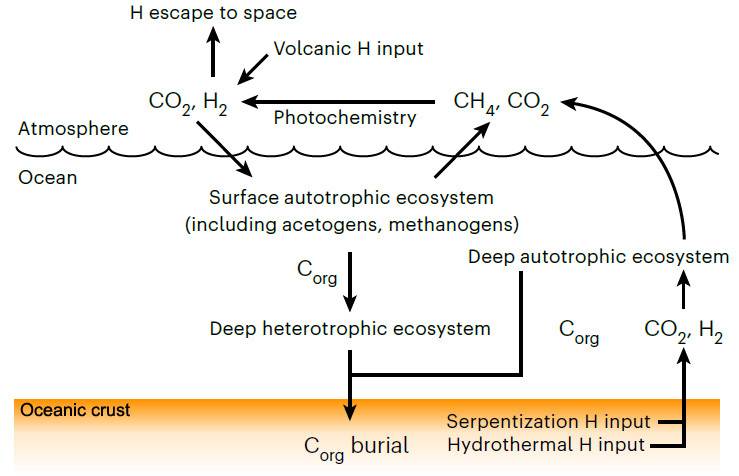
Moody et al have pushed back the estimated age of LUCA to halfway through the Hadean, between 4.09 to 4.33 billion years (Ga), well beyond the geologically known age of the earliest traces of life (3.5 Ga). That age for LUCA in itself is quite astonishing: it could have been only a couple of hundred million years after the Moon-forming interplanetary collision. Moreover, they have estimated that Darwin’s Ur-organism had a genome of around 2 million base pairs that encoded about 2600 proteins: roughly comparable to living species of bacteria and archaea, and thus probably quite advanced in evolutionary terms. The gene types probably carried by LUCA suggest that it may have been an anaerobic acetogen; i.e. an organism whose metabolism generated acetate (CH3COO) ions. Acetogens may produce their own food as autotrophs, or metabolise other organisms (heterotrophs). If LUCA was a heterotroph, then it must have subsisted in an ecosystem together with autotrophs which it consumed, possibly by fermentation. To function it also required hydrogen that can be supplied by the breakdown of ultramafic rocks to serpentinites, which tallies with the likely ocean-world with ultramafic igneous crust of the Hadean (see the earlier paragraphs about protocells). If an autotroph, LUCA would have had an abundance of CO2 and H2 to sustain it, and may have provided food for heterotrophs in the early ecosystem. The most remarkable possibility discerned by Moody et al is that LUCA may have had a kind of immune system to stave off viral infection.

The carbon cycle on the Hadean Earth (Credit: Moody et al. 2024; Figure 3e)

The Hadean environment was vastly different to that of modern times: a waterworld seething with volcanism; no continents; a target for errant asteroids and comets; more rapidly spinning with a 12 hour day; a much closer Moon and thus far bigger tides. The genetic template for the biosphere of the following four billion years was laid down then. LUCA and its companions may well have been unique to the Earth, as are their descendants. It is hard to believe that other worlds with the potential for life, even those in the solar system, could have followed a similar biogeochemical course. They may have life, but probably not as we know it  . . .

See also: Ball, P. 2025. Luca is the progenitor of all life on Earth. But its genesis has implications far beyond our planet. The Observer, 19 January 2025.

A fully revised edition of Steve Drury’s book Stepping Stones: The Making of Our Home World can now be downloaded as a free eBook

The peptide bond that holds life together may have an interstellar origin

In the 1950s Harold Urey of the University of Chicago and his student Stanley Miller used basic lab glassware containing 200 ml of water and a mix of the gases methane (CH4), ammonia (NH3) and hydrogen sulfide (H2S) to model conditions on the early Earth. Heating this crude analogue for ocean and atmosphere and continuous electrical discharge through it did, in a Frankensteinian manner, generate amino acids. Repeats of the Miller-Urey experiment have yielded 10 of the 20 amino acids from which the vast array of life’s proteins have been built. Experiments along similar lines have also produced the possible precursors of cell walls – amphiphiles. In fact, all kinds of ‘building blocks’ for life’s chemistry turn up in analyses of carbonaceous chondrite meteorites and in light spectra from interstellar gas clouds. The ‘embarrassment of riches’ of life’s precursors from what was until the 20th century regarded as the ‘void’ of outer space lacks one thing that could make it a candidate for life’s origin, or at least for precursors of proteins and the genetic code DNA and RNA. Both kinds of keystone chemicals depend on a single kind of connector in organic chemistry.

Reaction between two molecules of the amino acid glycene that links them by a peptide bond to form a dipeptide. (Credit: Wikimedia Commons)

Molecules of amino acids have acidic properties (COOH – carboxyl) at one end and their other end is basic (NH2 – amine). Two can react by their acid and basic ‘ends’ neutralising. A hydroxyl (OH) from carboxyl and a proton (H+) from amine produce water. This gives the chance for an end-to-end linkage between the nitrogen and carbon atoms of two amino acids – the peptide bond. The end-product is a dipeptide molecule, which also has carboxyl at one end and amine at the other. This enables further linkages through peptide bonds to build chains or polymers based on amino acids – proteins. Only 20 amino acids contribute to terrestrial life forms, but linked in chains they can form potentially an unimaginable diversity of proteins. Formation of even a small protein that links together 100 amino acids taken from that small number illustrates the awesome potential of the peptide bond. The number of possible permutations and combinations to build such a protein is 20100 – more than the estimated number of atoms in the observable universe! Protein-based life has almost infinite options: no wonder that ecosystems on Earth are so diverse, despite using a mere 20 building blocks. Simple amino acids can be chemically synthesised from C, H, O and N. About 500 occur naturally, including 92 found in a single carbonaceous chondrite meteorite. They vastly increase the numbers of conceivable proteins and other chain-molecules analogous to RNA and DNA: a point seemingly lost on exobiologists and science fiction writers!

Serge Kranokutski of the Max Planck Institute for Astronomy at the Friedrich Schiller University in Jena, German and colleagues from Germany, the Netherlands and France have assessed the likelihood of peptides forming in interstellar space in two publications (Kranokutski S.A. and 4 others 2022. A pathway to peptides in space through the condensation of atomic carbon. Nature Astronomy, v, 6, p. 381–386; DOI: 10.1038/s41550-021-01577-9. Kranokutski, S.A. et al. 2024. Formation of extraterrestrial peptides and their derivatives. Science Advances, v. 10, article eadj7179; DOI: 10.1126/sciadv.adj7179). In the first paper the authors show experimentally that condensation of carbon atoms on cold cosmic dust particles can combine with carbon monoxide (CO) and ammonia (NH3) form amino acids. In turn, they can polymerise to produce peptides of different lengths. The second demonstrates that water molecules, produced by peptide formation, do not prevent such reactions from happening. In other words, proteins can form inorganically anywhere in the cosmos. Delivery of these products, through comets or meteorites, to planets forming in the habitable ‘Goldilocks’ zone around stars may have been ‘an important element in the origins of life’ – anywhere in the universe. Chances are that, compared with the biochemistry of Earth, such life would be alien in an absolute sense. There are effectively infinite options for the proteins and genetic molecules that may be the basis of life elsewhere, quite possibly on Mars or the moons of Jupiter and Saturn: should it or its chemical fossils be detectable.

Darwin’s ‘warm little pond’: a new discovery

There may still be a few people around today who, like Aristotle did, reckon that frogs form from May dew and that maggots and rats spring into life spontaneously from refuse. But the idea that life emerged somehow from the non-living is, to most of us, the only viable theory. Yet the question, ‘How?’, is still being pondered on. Readers may find Chapter 13 of Stepping Stones useful. There I tried to summarise in some detail most of the modern lines of research. But the issue boils down to means of inorganically creating the basic chemical building blocks from which life’s vast and complex array of molecules might have been assembled. Living materials are dominated by five cosmically common elements: carbon, hydrogen, oxygen, nitrogen and phosphorus – CHONP for short. Organic chemists can readily synthesise countless organic compounds from CHONP. And astronomers have discovered that life is not needed to assemble the basic ingredients: amino acids, carbon-ring compounds and all kinds of simpler CHONP molecules occur in meteorites, comets and even interstellar molecular clouds. So an easy way out is to assume that such ingredients ended up on the early Earth simply because it grew through accretion of older materials from the surrounding galaxy. Somehow, perhaps, their mixing in air, water and sediments together with a kind of chaotic shuffling did the job, in the way that an infinity of caged monkeys with access to typewriters might eventually create the entire works of William Shakespeare.  But, aside from the statistical and behavioural idiocy of that notion, there is a real snag: the vaporisation of the proto-Earth’s outer parts by a Moon-forming planetary collision shortly after initial accretion.

In 1871 Charles Darwin suggested to his friend Joseph Hooker that:

          ‘… if (and Oh, what a big if) we could conceive in some warm little pond, with all sorts of ammonia and phosphoric salts, light, heat, electricity, etc., present that a protein compound was chemically formed, ready to undergo still more complex changes, at the present day such matter would be instantly devoured or absorbed, which would never have been the case before living creatures were formed’.

Followed up in the 1920s by theorists Alexander Oparin and J.B.S. Haldane, a similar hypothesis was tested practically by Harold Urey and Stanley Miller at the University of Chicago. They devised a Heath-Robinson simulation of an early atmosphere and ocean seeded with simple CHONP (plus a little sulfur) chemicals, simmered it and passed electrical discharges through it for a week. The resulting dark red ‘soup’ contained 10 of the 20 amino acids from which a vast array of proteins can be built. A repeat in 1995 also yielded two of the four nucleobases at the heart of DNA – adenine and guanine.  But simply having such chemicals around is unlikely to result in life, unless they are continually in close contact: a vessel or bag in which such chemicals can interact. The best candidates for such a containing membrane are fatty acids of a form known as amphiphiles. One end of an amphiphile chain has an affinity for water molecules, whereas the other repels them. This duality enables layers of them, when assembled in water, spontaneously to curl up to make three dimensional membranes looking like bubbles. In the last year they too have been created in vitro (Purvis, G. et al. 2024. Generation of long-chain fatty acids by hydrogen-driven bicarbonate reduction in ancient alkaline hydrothermal vents. Nature Communications (Earth & Environment), v. 5, article 30; DOI: 10.1038/s43247-023-01196-4).

Cell-like membranes formed by fatty acid amphiphiles

Graham Purvis and colleagues from Newcastle University, UK allowed three very simple ingredients – hydrogen and bicarbonate ions dissolved in water and the iron oxide magnetite (Fe3O4) – to interact. Such a simple, inorganic mixture commonly occurs in hydrothermal vents and hot springs. Bicarbonate ions (HCO3) form when CO2 dissolves in water, the hydrogen and magnetite being generated during the breakdown of iron silicates (olivines) when  ultramafic igneous rocks react with water:

3Fe2SiO4 + 2H2O → 2 Fe3O4 + 3SiO­2 +3H2

Various simulations of hydrothermal fluids had previously been tried without yielding amphiphile molecules. Purvis et al. simplified their setup to a bicarbonate solution in water that contained dissolved hydrogen – a simplification of the fluids emitted by hydrothermal vents – at 16 times atmospheric pressure and a temperature of 90°C. This was passed over magnetite. Under alkaline conditions their reaction cell yielded a range of chain-like hydrocarbon molecules. Among them was a mixture of fatty acids up to 18 carbon atoms in length. The experiment did not incorporate P, but its generation of amphiphiles that can create cell-like structures are but a step away from forming the main structural components of cell membranes, phospholipids.

When emergence of bag-forming membranes took place is, of course, hard to tell. But in the oldest geological formations ultramafic lava flows are far more common than they are today. In the Hadean and Eoarchaean, even if actual mantle rocks had not been obducted as at modern plate boundaries, at the surface there would have been abundant source materials for the vital amphiphiles to be generated through interaction with water and gases: perhaps in ‘hot little ponds’. To form living, self-replicating cells requires such frothy membranes to have captured and held amino acids and nucleobases. Such proto-cells could become organic reaction chambers where chemical building blocks continually interacted, eventually to evolve the complex forms upon which living cells depend.

Family links among the Neanderthals of Siberia

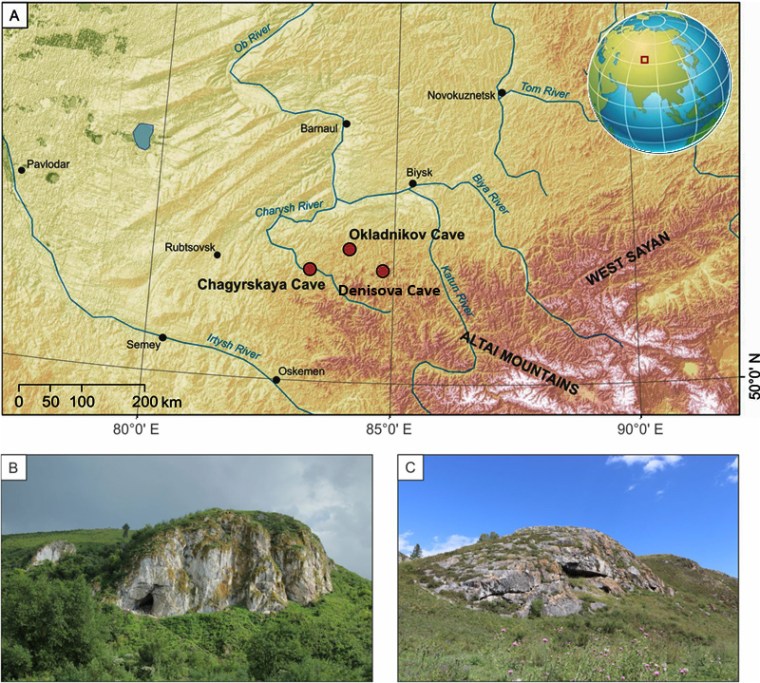
Caves used by the Neanderthals of southern Siberia: A – location map; B – Chagyrskaya Cave; C – Okladnikov Cave. (Credit: adapted from Skov et al.; Extended Data Fig. 1)

The early focus on Neanderthals was on remains found in Western Europe from the 19th century onwards. That has shifted in recent years to southern Siberia in the foothills of the Altai mountains, despite the fossils’ fragmentary nature: a few teeth and bits of mandible. The Denisova Cave became famous not just because it contained the easternmost evidence of Neanderthal occupation but through the genetic analysis of a tiny finger-tip bone. It proved not to be from a Neanderthal but a distinctly different hominin species, dubbed Denisovan (see: Other rich hominin pickings; May 2010). What Denisovans looked like remains unknown but genetic traces of them are rife among living humans of the western Pacific islands and Australia, whose ancestors interbred with Denisovans, presumably in East Asia. Modern people indigenous to Europe and the Middle East have Neanderthal genes in their genomes. Other bone fragments from Denisova Cave also yielded Neanderthal genomes, and the cave sediments yielded traces of both groups (see: Detecting the presence of hominins in ancient soil samples; April 2017). Then in 2018 DNA extracted from a limb bone from the cave clearly showed that it was from a female teenager who had had a Neanderthal mother and a Denisovan father (see: Neanderthal Mum meets Denisovan Dad; August 2018). These astonishing and unexpected finds spurred further excavations and genetic analysis in other caves within 100 km of Denisova Cave. This was largely led by current and former co-workers of Svanti Pääbo, of the Max Planck Institute for Evolutionary Anthropology, Leipzig, Germany: Pääbo was awarded the 2022 Nobel Prize in Physiology or Medicine for his coordination of research and discoveries concerning ancient human genomes. Their enormous field and laboratory efforts have paid astonishingly valuable dividends (Skov, L. and 34 others 2022. Genetic insights into the social organization of Neanderthals. Nature v. 610, p. 519–525; DOI: 10.1038/s41586-022-05283-y).

To the previously analysed 18 Neanderthal genomes from 14 archaeological sites across Eurasia (including Denisova Cave) Skov et al. have added 13 more from just two sites in Siberia (the Chagyrskaya and Okladnikov caves). Each site overlooks valleys along which game still migrates, so they may have been seasonal hunting camps rather than permanent dwellings: they are littered with bison and horse bones. Tools in the two 59-51 ka old human occupation levels are different from those at the older (130 to 91 Ka) Denisova Cave about 100 km to the east. As at the much older site, human fossils include several teeth and fragments of bones from jaws, hands, limbs and vertebrae. The detailed genomes recovered from 17 finds shows them to be from 14 individuals (12 from Chagyrskaya, 2 from Okladnikov).

Chagyrskaya yielded evidence for 5 females (3 adults and 2 children) and 7 males (3 children and 4 adults). One female estimated to have lost a premolar tooth when a teenager was the daughter of a Chagyrskaya adult male. He, in turn, was brother or father to another male, so the girl seems to have had an uncle as well. Another male and female proved to be second-degree relations (includes uncles, aunts, nephews, nieces, grandparents, grandchildren, half-siblings, and double cousins). The two people from Okladnikov were an adult female and an unrelated male child. The boy was not related to the Chagyrskaya group, but the woman was, her former presence at that cave lingering in its cave-sediment DNA. None of the newly discovered individuals were closely related to six of the seven much older Denisova Cave Neanderthals, but the Okladnikov boy had similar mtDNA to one individual from Denisova.

Further information about the Chagyrskaya group came from comparison of DNA in Y-chromosomes and mitochondria. The father of the teenage girl had two types of mtDNA – the unusual characteristic of heteroplasmy – that he shared with two other males. This suggests that three of the males shared the same maternal lineage – not necessarily a mother – and also indicates that they lived at roughly the same time. The mtDNA recovered from all Chagyrskaya individuals was much more varied than was their Y-chromosome DNA (passed only down male lineage). One way of explaining that would be females from different Neanderthal communities having migrated into the Chagyrskaya group and mated with its males, who largely remained in the group: a ‘tradition’ known as patrilocality, which is practised in traditional Hindu communities, for instance.

So, what has emerged is clear evidence for a closely related community of Neanderthals at Chagyrskaya, although it cannot be shown that all were present there at the same time, apart from the five who show first- or second-degree relatedness or mitochondrial heteroplasmy. Those represented only by individual teeth didn’t necessarily die there: adult teeth can be lost through trauma and deciduous teeth fall out naturally. There was also some individual physical connection between the two caves: The Okladnikov woman’s DNA being in the sediment at Chagyrskaya. Looking for DNA similarities more widely, it appears that all individuals at Chagyrskaya may have had some ancestral connection with Croatian Neanderthals, as did the previously mentioned mother of the Denisovan-Neanderthal hybrid girl. Four of the Chagyrskaya individuals can also be linked genetically to Neanderthals from Spain, more so than to much closer individuals found in the Caucasus Mountains. So, by around 59-51 ka the results of a wave of eastward migration of Neanderthals had reached southern Siberia. Yet the apparent matrilineal relatedness of the Okladnikov boy to the much older Neanderthals of Denisova Cave suggests that the earlier group continued to exist.

The new results are just as fascinating as the 2021 discovery that ancient DNA from Neolithic tomb burials in the Cotswolds of SW England suggests that the individual skeletons represent five continuous generations of one extended family. The difference is that they were farmers tied to the locality, whereas the Siberian Neanderthals were probably hunter gatherers with a very wide geographic range.  Laurits Skov and his colleagues have analysed less than one-quarter of the Neanderthal remains already discovered in Chagyrskaya and Okladnikov caves and only a third of the cave deposits have been excavated. Extracting and analysing ancient DNA is now far quicker, more detailed and cheaper than it was in 2010 when news of the first Neanderthal genome broke. So more Neanderthal surprises may yet come from Siberia. Progress on the genetics of their anatomically-modern contemporaries in NE Asia has not been so swift.

See also:  Callaway, E. 2022. First known Neanderthal family discovered in Siberian cave.  Nature online 19 October 2022.

Wider traces of the elusive Denisovans

We know that when anatomically modern humans (AMH) arrived in Asia they shared the landscape with ‘archaic’ humans that had a much longer pedigree. In 2010 an individual’s little-finger bone dated to around 30 to 49 ka old was found in the Denisova Cave in central Siberia (at 50°N). It yielded a full genome that was distinctly different from those of AMH and Neanderthals (see: Other rich hominin pickings; May 2010). Four other fossils found subsequently in the Denisova Cave contained similar DNA. Checking the DNA of living humans and fossil Neanderthal remains revealed that the newly discovered human group had interbred with both. In the case of AMH, segments of Denisovan DNA are found in the genomes of indigenous people living in East and South Asia, Australia, the Pacific Islands and the Americas, at levels of 0.2%, rising to 6% in Melanesian people of Papua-New Guinea. But such introgressions have not been found in Europeans (but see below), suggesting that the Denisovans were restricted to Asia.

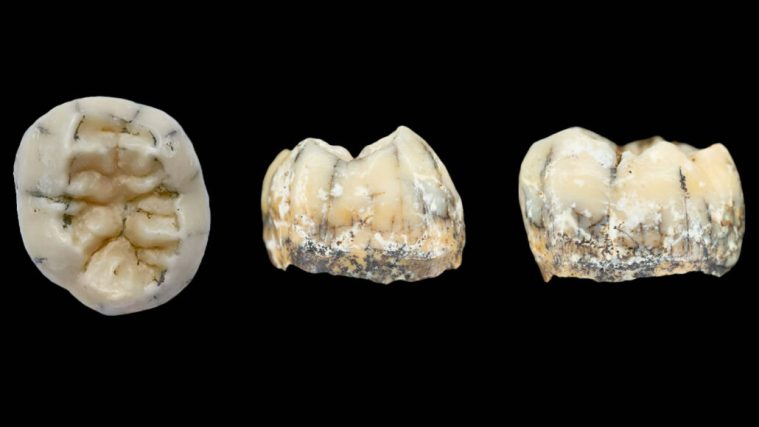
There have been suggestions that at least some of the ‘archaic’ human remains found widely and abundantly in China may have been Denisovans; although they might equally be of Homo erectus. But none of the Chinese fossils have been subjected to gene sequencing – those found in caves outside tropical and sub-tropical climates might retain DNA just as well as Neanderthal and even older remains in temperate Europe. Yet a partial lower jaw discovered in a cave on the Tibetan Plateau (at 35°N) did yield proteins that had close affinities to those recovered from Siberian Denisovans. Now similar analyses have been performed on an abnormally large molar found in a cave in Northern Laos, showing that it too is most likely to be from a young (as suggested by its being little worn), possibly female (it lacks male-specific peptides), Denisovan. The locality lies at about 20°N, far to the south of the other two Denisovan sites (Demeter, F. et al. A Middle Pleistocene Denisovan molar from the Annamite Chain of northern Laos. Nature Communications, v. 13, article 2557; DOI: 10.1038/s41467-022-29923-z). Sparse as the evidence is, Denisovans were able to tolerate climate differences across 30 degrees of latitude.

A probable Denisovan molar from 164 to 131 ka old cave sediments in northern Laos. (credit: Demeter, et al.; Fig. 2)

The Wikipedia entry for Denisovans is a mine of additional information. For instance, detailed analysis of the roughly 5% of their genome that indigenous people of New Guinea carry suggests that the two groups may have interbred there as late as 30 ka. Since Both New Guinea and Australia were until 8 thousand years ago part of the Sahul landmass when sea level was low during the last ice age, these inferences add tropical occupancy to the Denisovan range. Does this suggest that Papuans and indigenous Australians migrated with Denisovans, or had the latter crossed the sea from Timor earlier and independently, after moving from Asia by ‘hopping’ from island to island through eastern Indonesia? There is a possibility that Denisovans could even have survived in Sahul until as late as 14.5 ka. Even more odd, modern Icelandic people are unique among Europeans in having detectable traces of Denisovan DNA. However, rather than having been directly shared between Denisovans and ancestral Scandinavians – a possibility – it may have been carried by Neanderthal-Denisovan hybrids migrating westwards from Siberia with whom the Icelanders’ ancestors interbred. There are other interesting points in the Wikipedia entry. One is that the consistently lower Denisovan ancestry in living East Asians compared with people of Oceania, may indicate two separate waves of eastward migration by AMH. The latter may have arrived first, had greater contact with Denisovans and then moved on across seaways to remain isolated from the later migrants.

Finally, something that puzzles me as a non-geneticist. If both Denisovans and Neanderthals died out as genetically distinct groups tens of millennia ago how could the genetic traces of interbreeding with AMH have been retained at such high levels until the present; i.e. through thousands of generations? Each of us carries a 50% deal of genes from our parents. Then with each subsequent generation the proportion is diluted, so that we inherit 25% from grandparents, 12.5 % from great-grandparents and so on. Yet Papuans still have 5 to 6 percent of Denisovan DNA: much the same holds for Europeans’ Neanderthal heritage. Does such a high level of retention of this ancestry suggest that a large proportion of the earliest migrating AMH individuals stemmed from generation to generation interbreeding on a massive scale? Did the ‘newcomers’ and ‘locals’ band eventually together almost completely to merge genetically, or am I missing something … ? Probably

The DNA of some old mammoths

The only positive outcome of the thawing of permafrost is that it exposes remains of ancient animals in a virtually intact state, most famously those of the woolly mammoth (Mammuthus primigenius). But not so well-preserved that anyone could be induced to feast on its thawed-out meat. Tales of select groups being served mammoth at banquets are almost certainly apocryphal, but several have tasted one, and found that the meat smelled rotten and tasted awful. Mammoth bones, being so large, are regularly found and most museums in the Northern Hemisphere display their enormous teeth. DNA from three species of these extinct elephants has been sequenced – North American and European woolly mammoths and the North American Columbian mammoth that thrived on the more temperate central plains. But they lived about 12 to 100 thousand years ago. Now genetic data are available from three molar teeth found in permafrost in the Chukochya river basin in northern Siberia. (van der Valk, T. and 21 others 2021. Million-year-old DNA sheds light on the genomic history of mammoths. Nature v.591, p. 265–269; DOI: 10.1038/s41586-021-03224-9).

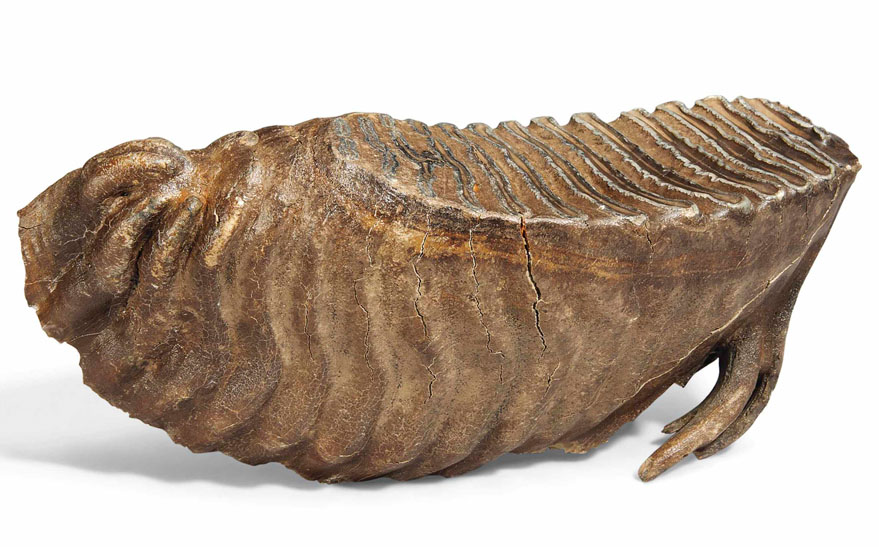
Wooly mammoth tooth offered for sale at Christie’s in 2015, which fetched £2750 (Credit: Christie’s on-line archives)

The mammoth molars have been dated at 0.68, 1.0 and 1.2 Ma (conservative estimates), far older than a horse dated between 560 and 780 ka that yielded DNA several years back. The sheer mass of the teeth and the fact that they had been preserved in frozen soil shielded genetic material from complete breakdown, but it was nonetheless heavily degraded to fragments no more than 50 base pairs long. This presented a major challenge to the team of palaeogeneticists’ reconstruction of the three mammoths’ genomes. Comparing the genomes with those of far younger woolly mammoths and their closest living relatives, Indian elephants, reveals that the ancient beasts were cold-adapted and probably had woolly coats. Two of the genomes suggest direct ancestry to both later woolly mammoths, whereas the third – the oldest – can  be linked to the enormous Columbian mammoth (M. columbi) that lived on mid-American grasslands during the Late Pleistocene. During glacial maxima when sea levels were ~100 m lower than at present Siberian faunas could easily have migrated into and colonised the Americas, using the Beringia land bridge across the Bering Strait. An early migration by the oldest Siberian mammoth could have given rise to the Columbian mammoth, later crossings to the American woollies. In fact it seems that genetic strands from the two younger Siberian mammoths also entered the DNA of M. columbi at some stage in its evolution.

Interesting as these revelations are about Arctic ice-age megafaunas, finding human remains that predate a few 10’s of ka in permafrost is unlikely. Modern humans and  Neanderthals are known to have migrated through Arctic Siberia, and perhaps Denisovans did too. Some individuals may have been unfortunate enough to have fallen into boggy ground that froze to form permafrost. However, there is no evidence for older human species having moved north of about 40°N since the first Africans entered 1.8 Ma ago. In any case, without the protection of massive bones, human DNA would probably have degraded more quickly than did that of these old mammoths.

See also: Roca, A.L. 2021. Million-year-old DNA provides a glimpse of mammoth evolution. Nature, v. 591, p. 208-209; DOI: 10.1038/d41586-021-00348-w; Black, R. 2021. Oldest DNA sequenced yet comes from million-year-old mammoths (Smithsonian Magazine, 17 February, 2021)

How like the Neanderthals are we?

An actor made-up to resemble a Neanderthal man in a business suit traveling on the London Underground. (Source: screen-grab from BBC2 Neanderthals – Meet Your Ancestors)

In the most basic, genetic sense, we were sufficiently alike for us to have interbred with them regularly and possibly wherever the two human groups met. As a result the genomes of all modern humans contain snips derived from Neanderthals (see: Everyone now has their Inner Neanderthal; February 2020). East Asian people also carry some Denisovan genes as do the original people of Australasia and the first Americans. Those very facts suggest that members of each group did not find individuals from others especially repellent as potential sexual partners! But that covers only a tiny part of what constitutes culture. There is archaeological evidence that Neanderthals and modern humans made similar tools. Both had the skills to make bi-faced ‘hand axes’ before they even met around 45 to 40 ka ago.  A cave (La Grotte des Fées) near Châtelperron to the west of the French Alps that was occupied by Neanderthals until about 40 ka yielded a selection of stone tools, including blades, known as the Châtelperronian culture, which indicates a major breakthrough in technology by their makers. It is sufficiently similar to the stone industry of anatomically modern humans (AMH) who, around that time, first migrated into Europe from the east (Aurignacian) to pose a conundrum: Did the Neanderthals copy Aurignacian techniques when they met AMH, or vice versa? Making blades by splitting large flint cores is achieved by striking the cores with just a couple of blows with a softer tool. At the very least Neanderthals had the intellectual capacity to learn this very difficult skill, but they may have invented it (see: Disputes in the cavern; June 2012). Then there is growing evidence for artistic abilities among Neanderthals, and even Homo erectus gets a look-in (see: Sophisticated Neanderthal art now established; February 2018).

Reconstructed burial of a Neanderthal individual at La Chappelle-aux-Saints (Credit: Musée de La Chapelle-aux-Saints, Corrèze, France)

For a long time, a pervasive aspect of AMH culture has been ritual. Indeed much early art may be have been bound up with ritualistic social practices, as it has been in historic times. A persuasive hint at Neanderthal ritual lies in the peculiar structures – dated at 177 ka – found far from the light of day in the Bruniquel Cave in south-western France (see: Breaking news: Cave structures made by Neanderthals; May 2016). They comprise circles fashioned from broken-off stalactites, and fires seem to have been lit in them. The most enduring rituals among anatomically modern humans have been those surrounding death: we bury our dead, thereby preserving them, in a variety of ways and ‘send them off’ with grave goods or even by burning them and putting the ashes in a pot. A Neanderthal skeleton (dated at 50 ka) found in a cave at La Chappelle-aux-Saints appears to have been buried and made safe from scavengers and erosion. There are even older Neanderthal graves (90 to 100 ka) at Quafzeh in Palestine and Shanidar in Iraq, where numerous individuals, including a mother and child, had been interred. Some are associated with possible grave goods, such as pieces of red ochre (hematite) pigment, animal body parts and even pollen that suggests flowers had been scattered on the remains. The possibility of deliberate offerings or tributes and even the notion of burial have met with scepticism among some palaeoanthropologists. One reason for the scientific caution is that many of the finds were excavated long before the rigour of modern archaeological protocols

Recently a multidisciplinary team involving scientists from France, Belgium, Italy, Germany, Spain and Denmark exhaustively analysed the context and remains of a Neanderthal child found in the La Ferrassie cave (Dordogne region of France) in the early 1970s  (Balzeau, A. and 13 others 2020. Pluridisciplinary evidence for burial for the La Ferrassie 8 Neandertal childScientific Reports, v. 10, article 21230; DOI: 10.1038/s41598-020-77611-z). Estimated to have been about 2 years old, the child is anatomically complete. Bones of other animals found in the same deposit were less-well preserved than those of the child, adding weight to the hypothesis that a body, rather than bones, had been buried soon after death. Luminescence dating of the sediments enveloping the skeleton is considerably older than the radiocarbon age of one of the child’s bones. That is difficult to explain other than by deliberate burial. It is almost certain that a pit had been dug and the child placed in it, to be covered in sediment. The skeleton was oriented E-W, with the head towards the east. Remarkably, other Neanderthal remains at the La Ferrassie site also have heads to the east of the rest of their bones, suggesting perhaps a common practice of orientation relative to sunrise and sunset.

It is slowly dawning on palaeoanthropologists that Neanderthal culture and cognitive capacity were not greatly different from those of anatomically modern humans. That similar beings to ourselves disappeared from the archaeological record within a few thousand years of the first appearance of AMH in Europe has long been attributed to what can be summarised as the Neanderthals being ‘second best’ in many ways. That may not have been the case. Since the last glaciation something similar has happened twice in Europe, which analysis of ancient DNA has documented in far more detail than the disappearance of the Neanderthals. Mesolithic hunter-gatherers were followed by early Neolithic farmers with genetic affinities to living people in Northern Anatolia in Turkey – the region where growing crops began. The DNA record from human remains with Neolithic ages shows no sign of genomes with a clear Mesolithic signature, yet some of the genetic features of these hunter-gatherers still remain in the genomes of modern Europeans. Similarly, ancient DNA recovered from Bronze Age human bones suggests almost complete replacement of the Neolithic inhabitants by people who introduced metallurgy, a horse-centred culture and a new kind of ceramic – the Bell Beaker. This genetic group is known as the Yamnaya, whose origins lie in the steppe of modern Ukraine and European Russia. In this Neolithic-Bronze Age population transition the earlier genomes disappear from the ancient DNA record. Yet Europeans still carry traces of that earlier genetic heritage. The explanation now accepted by both geneticists and archaeologists is that both events involved assimilation and merging through interbreeding. That seems just as applicable to the ‘disappearance’ of the Neanderthals

See also: Neanderthals buried their dead: New evidence (Science Daily, 9 December 2020)