Multiple invention of stone tools

Steadily, the record of stone tools has progressed further back in time as archaeological surveys have expanded, especially in East Africa (Stone tools go even further back, May 2015). The earliest known tools – now termed Lomekwian – are 3.3 million years old, from deposits in north-western Kenya, as are cut-marked bone fragments from Ethiopia’s Afar region. There is no direct link to their makers, but at least six species of Australopithecus occupied Africa during the Middle Pliocene. Similarly, there are various options for who made Oldowan tools in the period between 2.6 and 2.0 Ma, the only known direct association being with Homo habilis in 2.0 Ma old sediments from Tanzania’s Olduvai Gorge; the type locality for the Oldowan.

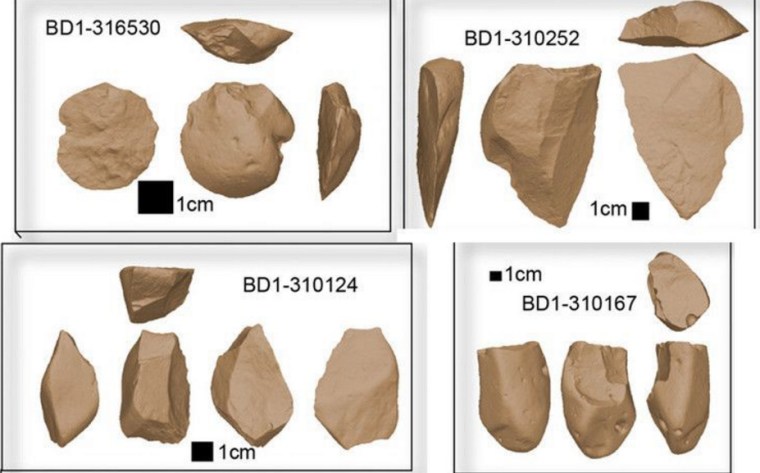
The shapes of stone tools and the manufacturing techniques required to make them and other artefacts, are among the best, if not the only, means of assessing the cognitive abilities of their makers. A new, detailed study of the shapes of 327 Oldowan tools from a 2.6 Ma old site in Afar, Ethiopia has revealed a major shift in hominin working methods (Braun, D.R. and 17 others 2019. Earliest known Oldowan artifacts at >2.58 Ma from Ledi-Geraru, Ethiopia, highlight early technological diversity. Proceedings of the National Academy, v. 116, p. 11712-11717; DOI: 10.1073/pnas.1820177116). The sharp-edged tools were made by more complex methods than the Lomekwian. Analysis suggests that they were probably made by striking two lumps of rock together, i.e. by a deliberate two-handed technique. On the other hand, Lomekwian tools derived simply by repeatedly bashing one rock against a hard surface, not much different from the way some living primates make rudimentary tools. But the morphology of the Ledi-Geraru tools also falls into several distinct types, each suggesting systematic removal of only 2 or 3 flakes to make a sharp edge. The variations in technique suggest that several different groups with different traditions used the once lake-side site.
oldowan
Various 2.6 Ma old Oldowan stone tools from Ledi-Geraru, Ethiopia (credit: Braun et al., 2019)

Ledi-Geraru lies about 5 km from another site dated about 200 ka earlier than the tools, which yielded a hominin jawbone, likely to be from the earliest known member of the genus Homo. A key feature that suggested a human affinity is the nature of the teeth that differ markedly from those of contemporary and earlier australopithecines. It appears that the tools are of early human manufacture. The ecosystem suggested by bones of other animals, such as antelope and giraffe was probably open grassland – a more difficult environment for hominin subsistence. The time of the Lomekwian tools was one of significantly denser vegetation, with more opportunities for gathering plant foods. Perhaps this environmental shift was instrumental in driving hominins to increased scavenging of meat, the selection pressure acting on culture to demand tools sharp enough to remove meat from the prey of other animals quickly, and on physiology and cognitive power to achieve that.

See also: Solly, M. 2019. Humans may have been crafting stone tools for 2.6 million years (Smithsonian Magazine)

Geochemical background to the Ediacaran explosion

The first clear and abundant signs of multicelled organisms appear in the geological record during the 635 to 541 Ma Ediacaran Period of the Neoproterozoic, named from the Ediacara Hills of South Australia where they were first discovered in the late 19th century. But it wasn’t until 1956, when schoolchildren fossicking in Charnwood Forest north of Leicester in Britain found similar body impressions in rocks that were clearly Precambrian age that it was realised the organism predated the Cambrian Explosion of life. Subsequently they have turned-up on all continents that preserve rocks of that age (see: Larging the Ediacaran, March 2011). The oldest of them, in the form of small discs, date back to about 610 Ma, while suspected embryos of multicelled eukaryotes are as old as the very start of the Edicaran (see; Precambrian bonanza for palaeoembryologists, August 2006).

Artist’s impression of the Ediacaran Fauna (credit: Science)

The Ediacaran fauna appeared soon after the Marinoan Snowball Earth glaciogenic sediments that lies at the top of the preceding Cryogenian Period (650-635 Ma), which began with far longer Sturtian glaciation (715-680 Ma). A lesser climatic event – the 580 Ma old Gaskiers glaciation – just preceded the full blooming of the Ediacaran fauna. Geologists have to go back 400 million years to find an earlier glacial epoch at the outset of the Palaeoproterozoic. Each of those Snowball Earth events was broadly associated with increased availability of molecular oxygen in seawater and the atmosphere. Of course, eukaryote life depends on oxygen. So, is there a connection between prolonged, severe climatic events and leaps in the history of life? It does look that way, but begs the question of how Snowball Earth events were themselves triggered. Continue reading “Geochemical background to the Ediacaran explosion”

Soluble iron, black smokers and climate


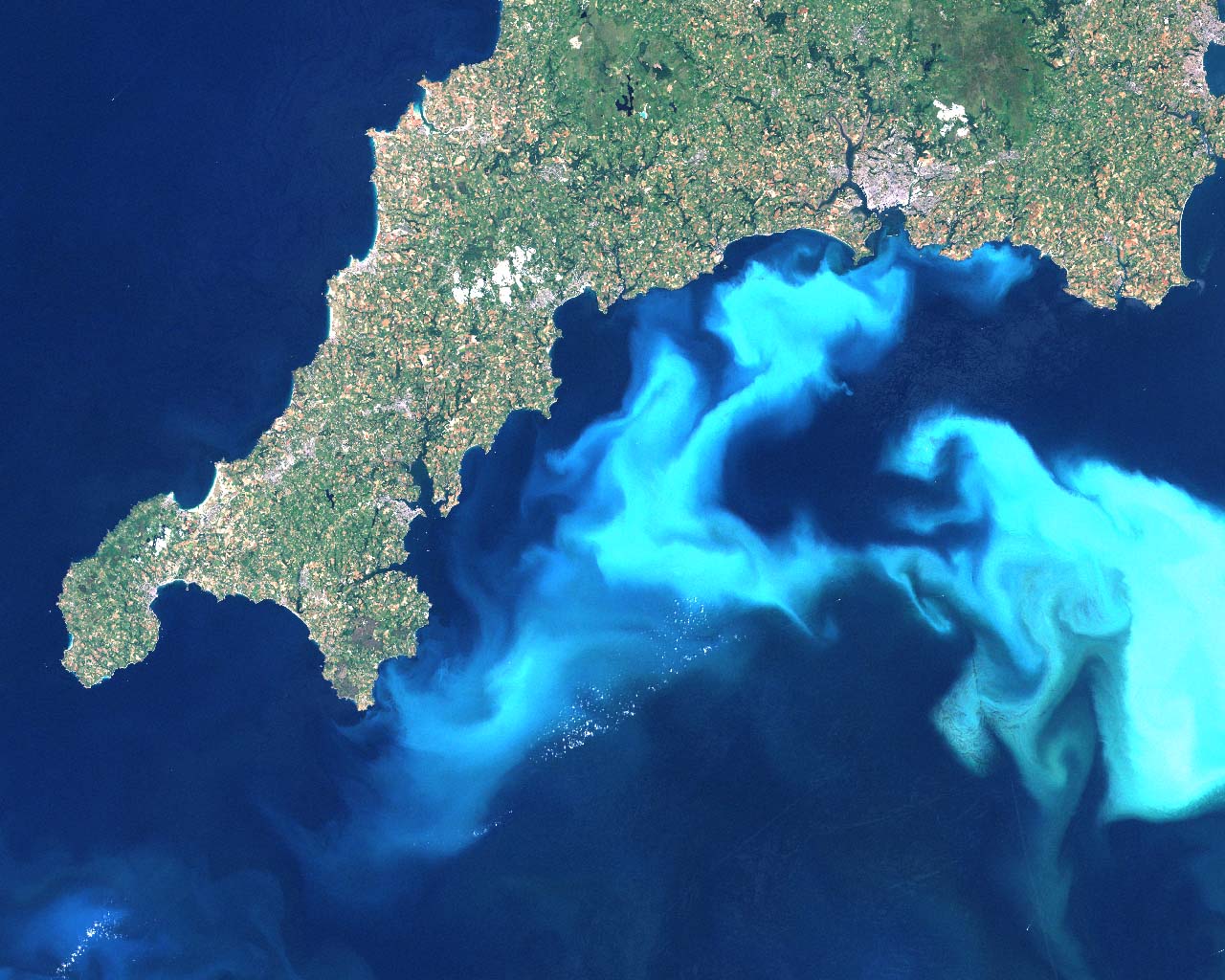
Phytoplankton bloom in the Channel off SW England (Landsat image)

At present the central areas of the oceans are wet deserts; too depleted in nutrients to support the photosynthesising base of a significant food chain. The key factor that is missing is dissolved divalent iron that acts as a minor, but vital, nutrient for phytoplankton. Much of the soluble iron that does help stimulate plankton ‘blooms’ emanates from the land surface in wind blown dust (Palaeoclimatology September 2011) or dissolved in river water. A large potential source is from hydrothermal vents on the ocean floor, which emit seawater that has circulated through the basalts of the oceanic crust. Such fluids hydrate the iron-rich mafic minerals olivine and pyroxene, which makes iron available for transport. The fluids originate from water held in the muddy, organic-rich sediments that coat the ocean floor, and have lost any oxygen present in ocean-bottom water. Their chemistry is highly reducing and thereby retains soluble iron liberated by crustal alteration to emanate from hydrothermal vents. Because cold ocean-bottom waters are oxygenated by virtue of having sunk from the surface as part of thermohaline circulation, it does seem that ferrous iron should quickly be oxidised and precipitated as trivalent ferric compounds soon after hydrothermal fluids emerge. However, if some was able to rise to the surface it could fertilise shallow ocean water and participate in phytoplankton blooms, the sinking of dead organic matter then effectively burying carbon beneath the ocean floor; a ‘biological pump’ in the carbon cycle with a direct influence on climate. Until recently this hypothesis had little observational support. Continue reading “Soluble iron, black smokers and climate”

A major Precambrian impact in Scotland

The northwest of Scotland has been a magnet to geologists for more than a century. It is easily accessed, has magnificent scenery and some of the world’s most complex geology. The oldest and structurally most tortuous rocks in Europe – the Lewisian Gneiss Complex – which span crustal depths from its top to bottom, dominate much of the coast. These are unconformably overlain by a sequence of mainly terrestrial sediments of Meso- to Neoproterozoic age – the Torridonian Supergroup – laid down by river systems at the edge of the former continent of  Laurentia. They form a series of relic hills resting on a rugged landscape carved into the much older Lewisian. In turn they are capped by a sequence of Cambrian to Lower Ordovician shallow-marine sediments. A more continuous range of hills no more than 20 km eastward of the coast hosts the famous Moine Thrust Belt in which the entire stratigraphy of the region was mangled between 450 and 430 million years ago when the elongated microcontinent of Avalonia collided with and accreted to Laurentia.  Exposures are the best in Britain and, because of the superb geology, probably every geologist who graduated in that country visited the area, along with many international geotourists. The more complex parts of this relatively small area have been mapped and repeatedly examined at scales larger than 1:10,000; its geology is probably the best described on Earth. Yet, it continues to throw up dramatic conclusions. However, the structurally and sedimentologically simple Torridonian was thought to have been done and dusted decades ago, with a few oddities that remained unresolved until recently.

NW Scotland geol
Grossly simplified geological map of NW Scotland (credit: British Geological Survey)

Continue reading “A major Precambrian impact in Scotland”

The effect of surface processes on tectonics

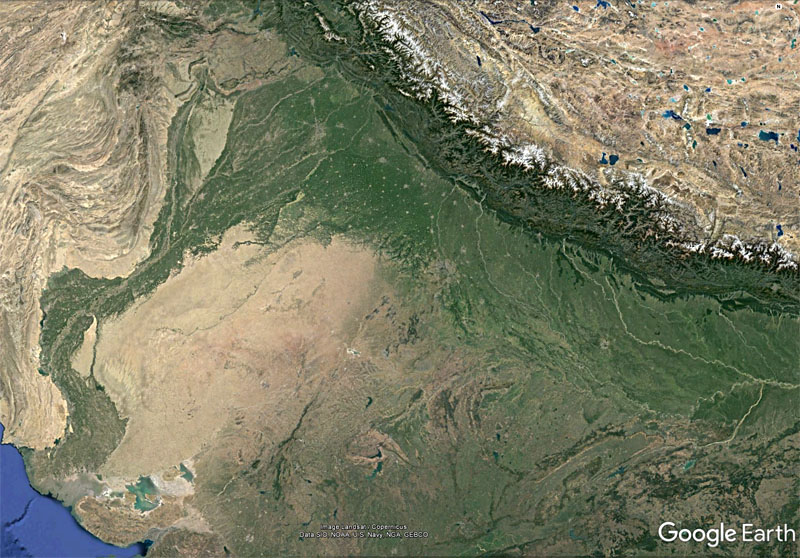
Active sedimentation in the Indus and Upper Ganges plains (green vegetated) derived from rapid erosion of the Himalaya (credit: Google Earth)

The Proterozoic Eon of the Precambrian is subdivided into the Palaeo-, Meso- and Neoproterozoic Eras that are, respectively, 900, 600 and 450 Ma long. The degree to which geoscientists are sufficiently interested in rocks within such time spans is roughly proportional to the number of publications whose title includes their name. Searching the ISI Web of Knowledge using this parameter yields 2000, 840 and 2700 hits in the last two complete decades, that is 2.2, 1.4 and 6.0 hits per million years, respectively. Clearly there is less interest in the early part of the Proterozoic. Perhaps that is due to there being smaller areas over which they are exposed, or maybe simply because what those rocks show is inherently less interesting than those of the Neoproterozoic. The Neoproterozoic is stuffed with fascinating topics: the appearance of large-bodied life forms; three Snowball Earth episodes; and a great deal of tectonic activity, including the Pan-African orogeny. The time that precedes it isn’t so gripping: it is widely known as the ‘boring billion’ – coined by the late Martin Brazier – from about 1.75 to 0.75 Ga. The Palaeoproterozoic draws attention by encompassing the ‘Great Oxygenation Event’ around 2.4 Ga, the massive deposition of banded iron formations up to 1.8 Ga, its own Snowball Earth, emergence of the eukaryotes and several orogenies. The Mesoproterozoic witnesses one orogeny, the formation of a supercontinent (Rodinia) and even has its own petroleum potential (93 billion barrels in place in Australia’s Beetaloo Basin. So it does have its high points, but not a lot. Although data are more scanty than for the Phanerozoic Eon, during the Mesoproterozoic the Earth’s magnetic field was much steadier than in later times. That suggests that motions in the core were in a ‘steady state’, and possibly in the mantle as well. The latter is borne out by the lower pace of tectonics in the Mesoproterozoic. Continue reading “The effect of surface processes on tectonics”

Neanderthal demographics and their extinction

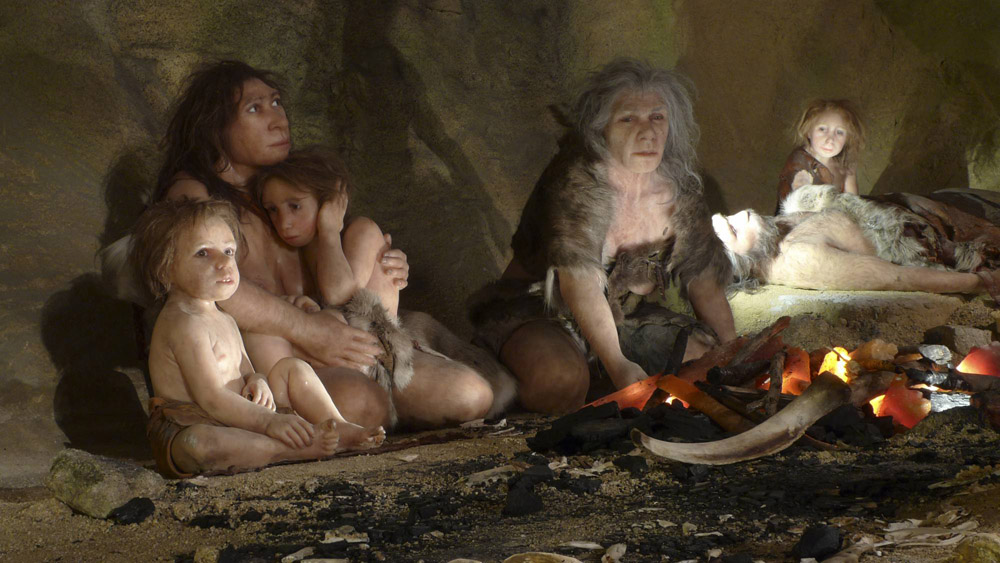
About 39 thousand years ago all sign of the presence of Neanderthal bands in their extensive range across western Eurasia disappears. Their demise occurred during a period of relative warmth (Marine-Isotope Stage-3) following a cold period at its worst around 65 ka (MIS-4). They had previously thrived since their first appearance in Eurasia at about 250 ka, surviving at least two full glacial cycles. Their demise occurred around 5 thousand years after they were joined in western Eurasia by anatomically modern humans (AMH). During their long period of habitation they had adapted well to a range of climatic zones from woodland to tundra. During their overlap both groups shared much the same food resources, dominated by large herbivores whose numbers burgeoned during the warm period, with the difference that Neanderthals seemed to have depended on ranges centred on fixed sites of habitation while AMH maintained a nomadic lifestyle. Having shared a common African ancestry about 400 thousand years ago, DNA studies  have revealed that the two populations interbred regularly, probably in the earlier period of overlap in west Asia from around 120 thousand years ago and possibly in Europe too after 44 ka. Considering their previous tenacity, how the Neanderthals met their end is something of a mystery. It may have been a result of competition for resources with AMH, which could be countered by the increase in food resources. Maybe physical conflict was involved, or perhaps disease imported with AMH from warmer climes. Genetic absorption through interbreeding of a small population with a larger one of AMH is a possibility, although DNA evidence is lacking. An inability to adapt to climate change contradicts the Neanderthals long record and their disappearance during MIS-3. Previous population estimates of changing Neanderthal populations in the Iberian Peninsula (see Fig. 2 in Roberts, M.F. & Bricher, S.E 2018. Modeling the disappearance of the Neanderthals using principles of population dynamics and ecology. Journal of Archaeological Science, v. 100, p.16-31; DOI: 10.1016/j.jas.2018.09.012) show decline from about 70,000 to 20,000 before MIS-4, then recovery to about 40,000 before the arrival of AMH at 44 ka followed by a decline to extinction thereafter. Roberts and Bricher developed a model for investigating demographics from archaeological evidence that is neutral as regards any particular hypothesis for Neanderthal extinction.

Nea family
Artistic reconstruction of Neanderthal family group (credit: Nikola Solic, Reuters)

Continue reading “Neanderthal demographics and their extinction”