K-T (K-Pg) boundary impact probed

One of the most eagerly followed ocean-floor drilling projects has just released some results. Its target is 46 km radially away from the centre of the geophysical anomaly associated with the Chixculub impact structure just to the north of Mexico’s Yucatan Peninsula. In the case of large lunar impact craters the centre is often surrounded by a ring of peaks. Modelling suggests such features are produced by the deep penetration of immense seismic shock waves. In the first minute these excavate and fling out debris to leave a cavity penetrating deep into the crust. Within three minutes the cavity walls collapse inwards creating a rebound superficially similar to the drop flung upwards after an object is dropped in liquid. This, in turn, collapses outwards to emplace smashed and partially melted deep crustal material on top of what were once surface materials, creating a crustal inversion beneath a mountainous ring of Himalayan dimensions that surrounds a by-now shallow crater. That is the story modelled from what is known about well-studied, big craters on the Moon and Mercury. Chixculub is different because the impact was into the sea and involved debris-charged tsunamis that finally plastered the actual impact scar with sediments. The drilling was funded for several reasons, some palaeontological others relating to the testing of theories of impact processes and their products. Chixculub is probably the only intact impact crater on Earth, and the first reports of findings are in the second category (Morgan, J.V. and 37 others 2016. The formation of peak rings in large impact craters. Science, v. 354, p. 878-882; doi: 10.1126/science.aah6561).

English: K/T extinction event theory. An artis...
Artist’s depiction of the Chicxulub impact 65 million years ago that many scientists say is the most direct cause of the dinosaurs’ disappearance (credit: Wikipedia)

The drill core, reaching down to about 1.3 km below the sea floor penetrates post-impact Cenozoic sediments into a 100 m thick zone of breccias containing fragments of impact melt rock, probably the infill of the central crater immediately following the first few minutes of impact. Beneath that are coarse grained granites representing the middle continental crust from original depths around 10 km. The granite is intensely fractured and riven by dykes and pods of impact melt, and contains intensely shocked grains that typify impacts that produce a transient pressure of ~60 GPa – around six hundred thousand times atmospheric pressure. From seismic reflection surveys this crustal material overlies as yet un-drilled Mesozoic sedimentary rocks. Its density is significantly less than that of unshocked granite – averaging 2.4 compared with 2.6 g cm3. So it is probably filled with microfractures and sufficiently permeable for water to have penetrated once the impact site had cooled. This poses the question, yet to be addressed in print, of whether or not this near-surface layer became colonised by microorganisms in the aftermath (Barton, P. 2016. Revealing the dynamics of a large impact. Science, v. 354, p. 836-837). That is, was the surrounding ocean sterilised at the time of the K-T (K-Pg) mass extinction?; an issue whose resolution is awaited with bated breath by the palaeobiology audience. OK; so theory about the physical process of cratering has been validated to some extent, but will later results be more interesting, outside the planetary sciences community?

Read more about impacts here and mass extinctions here .

Signs of life in some of the oldest rocks


http://www.gettyimages.com/detail/523667826
Vic McGregor (left) and Allen Nutman examine metasedimentary strata at Isua, West Greenland
For decades the record of tangible signs of life extended back to around 3.4 billion years ago, in the form of undulose, banded biofilms of calcite known as stromatolites preserved at North Pole in the Pilbara region of Western Australia. There have been attempts to use carbon-isotope data and those of other elements from older, unfossiliferous rocks to seek chemical signs of living processes that extracted carbon from the early seas. Repeatedly, claims have been made for such signatures being extracted from the 3.7 to 3.8 Ga Isua metasediments in West Greenland. But because this famous locality shows evidence of repeated metamorphism abiogenic formation of the chemical patterns cannot be ruled out. Isua has been literally crawled over since Vic McGregor of the Greenland Geological Survey became convinced in the 1960s that the metasediments could be the oldest rocks in the world, a view confirmed eventually by Stephen Moorbath and Noel Gale of Oxford University using Rb-Sr isotopic dating. There are slightly older rocks in Canada, which just break the 4 Ga barrier, but they were metamorphose at higher pressures and temperatures and are highly deformed. The Isua suprcrustals, despite deformation and metamorphism show far more diversity that geochemically can be linked to many kinds of sedimentary and volcanic rock types.


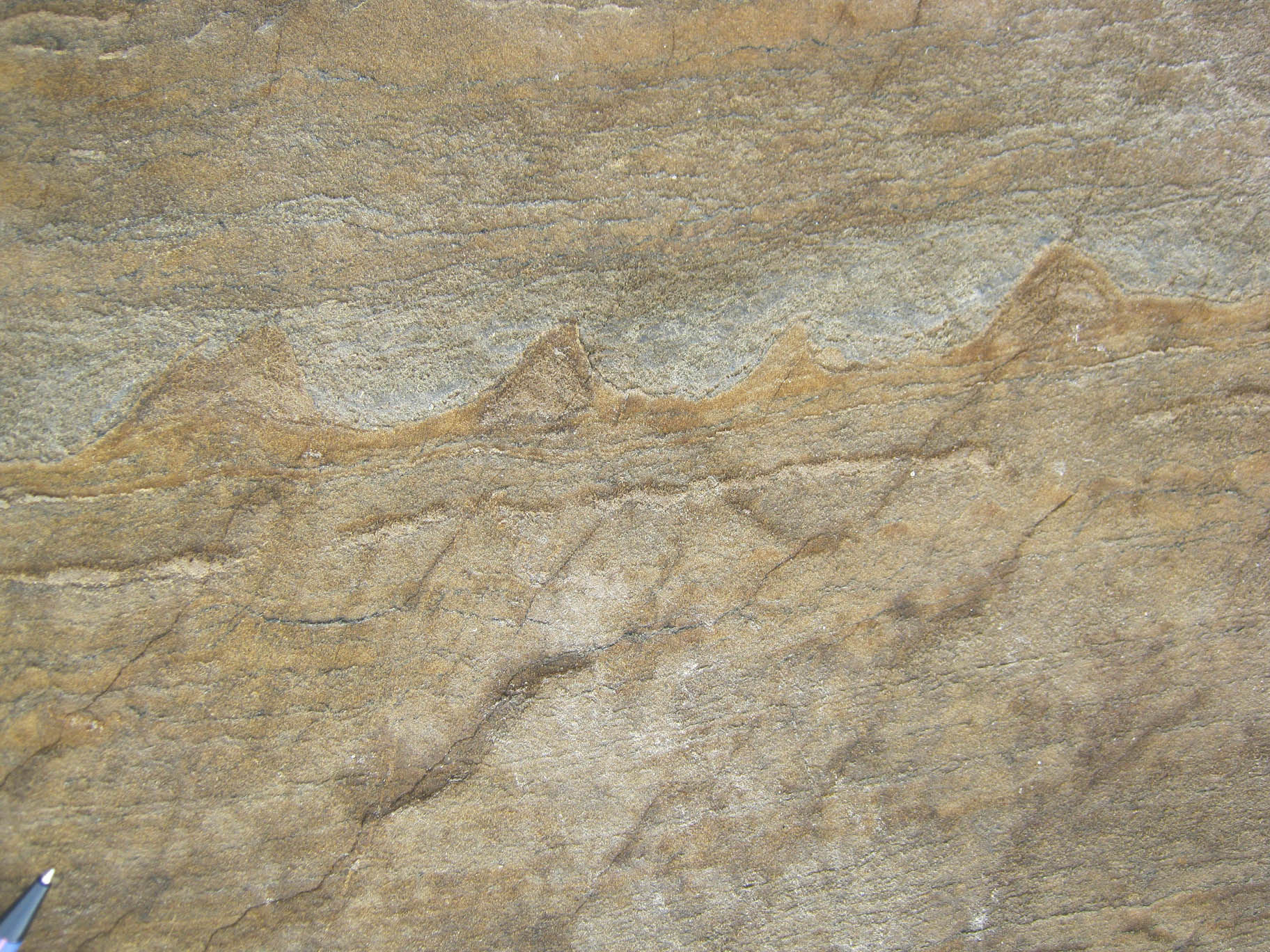
Two of the Isua addicts are Allen Nutman of the University of Wollongong, Australia and Clark Friend formerly of Oxford Brookes University, UK, who have worked together on many aspects of the Isua rocks for decades. Finally, thanks to melt-back of old snow pack, they and colleagues have found stromatolites that push the origin of life as far back as it seems possible for geoscientists to reach (Nutman, A.P. et al. 2016. Rapid emergence of life shown by discovery of 3,700-million-year-old microbial structures. Nature, v. 537, published online 31 August 2016, doi:10.1038/nature). The trace fossils occur in a marble, formerly a limestone that retains intricate sedimentary structures, which show it to have been deposited in shallow water. The carbon and oxygen isotopes have probably been disturbed by metamorphism, and no signs of cell material remain for the same reason, but the shape is sufficiently distinct from those produced by purely sedimentary processes to suspect that they resulted from biofilm build-up. The fact that they are made of carbonates suggests that they may have been produced by cyanobacteria as modern stromatolites are.

isua strom
Stromatolite-like structures from a metasediment in the Isua area of West Greenland (credit Allen Nutman, University of Wollongong, Australia)

The age of the structures, about 3.7 Ga, is close to the end of the Late Heavy Bombardment (4. 1to 3.8 Ga) of the Solar System by errant asteroids and comets. So, if the physical evidence is what it seems to be, life emerged either very quickly after such an energetic episode or conditions at the end of the Hadean were not inimical to living processes or the prebiotic chemistry that led to them.

 You can find more on early life here

Allwood, A.C. 2016. Evidence of life in Earth’s oldest rocks. Nature, v. 537, published online 31 August 2016, doi:10.1038/nature19429

Hunting down the Tully Monster

The word ‘monster’ has its origin in the Latin monere ‘to warn’ but has broadened out in its usage.  It has even reverted to its origins as a verb: a highly critical, verbal attack. But I prefer ‘something about which one needs to be warned’, and the Tully Monster encapsulates that meaning. It once lived in Illinois, specifically at just a single location, Mazon Creek, where thousands of them have been seen. But should you be especially fearful of Tullimonstrum gregarium? Well, at first sight, no; it’s only about 10 cm long and apparently has no proper bones and it’s dead. The first was spotted in a coal-mine waste heap by Francis Tully in 1958, a pipefitter with an interest in Carboniferous fossils. Two years after his death in 1987, he and his monster were honoured by a bill that the Illinois State Legislature passed to make it the official State Fossil.

Artist's impression of the Carboniferous Tully Monster (
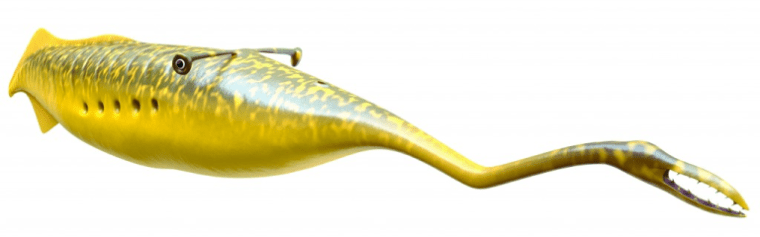
Artist’s impression of the Carboniferous Tully Monster (Tullimonstrum gregarium) (credit: Sean McMahon, Yale University)

It seems to have become a ‘monster’ by stumping all previous attempts to categorise it; so much so that it long served as a warning to eager palaeontologists not to tangle with its taxonomy. That’s not surprising, because as well as bearing a passing resemblance to Captain Nemo’s submarine in Jules Verne’s 20 000 leagues Under the Sea, it has some truly astonishing features.  Portholes down its sides are not the weirdest – actually they are gill openings. It has a biting apparatus at the end of an absurdly lengthy forward protuberance, that would not be unexpected if it were one of those fish from the Amazon that, you know, men really ought to be warned about. Most of us would not share a bath with it if we had been. And then, there are the eyes on the ends of a dorsal bar which would give Tullimonstrum gregarium superb stereoscopic vision to guide it unerringly to its target, lashing its efficient-looking caudal fin. The fact that it has only a single nostril is merely puzzling by comparison.

Six decades on, Victoria McCoy of Yale University (now at Leicester University, UK) and 15 undeterred colleagues have pored over more than 1200 Tully Monster fossils and seem to have cracked its affinities (McCoy, V.E. et al. 2016. The ‘Tully monster’ is a vertebrate. Nature, v. 532, p. 496-499). In fact, it’s surprising that it has remained an enigma for so long, because McCoy and colleagues have documented almost every aspect of its anatomy, available from a huge number of superbly preserved specimens – teeth, fin, muscle traces, gills, nostril, notochord, gut and so on. As well as being a vertebrate, its dreadful proboscis is very like that of the Cambrian oddity Opabinia from the Burgess Shale. A  separate study by four British palaeontologists and a Texan concentrated on the eyes using electron microscopy and found ‘ultrastructural details’, including pigment cells (Clements, T. et al. 2016. The eyes of Tullimonstrum reveal a vertebrate affinity. Nature, v. 532, p. 500-503) which unequivocally confirm that it is a vertebrate. It has all the hallmarks of being related to lampreys and hagfishs. They devour rotting, drowned corpses.

Further pounding for ideas on the Ediacaran fauna

About 635 Ma ago fossils of large-bodied organisms first appeared in the geological record: some quilt like, others with a crude bilateral symmetry, more looking like ‘mud-filled bags’ and ribbed discs but none that can easily be distinguished as animals, plants or colonial microorganisms. First found abundantly in the Ediacara Hills of South Australia, hence their sack-name the Ediacaran biota, it now seems that they were distributed globally in the late Neoproterozoic Era. Interpreting their metabolism is risky enough – some are reckoned to be animals that absorbed nutrients through their skin, others said to be dependent on photosynthesis – but a controversy has raged for many years over the kind of environment in which they thrived. In a detailed 2012 study of sedimentary structures petrography in the South Australian sandstones from which they were first described, Gregory Retallack of the University of Oregon inferred that some lived on land and are now found in palaeosols: they include Spriggina, Dickinsonia and Charnia that are among the most favoured candidates for being animals or some kind. Others inhabited shallow water. Anticipating fiery disputes a Nature editorial appeared in same issue in which Retallack published his paper .

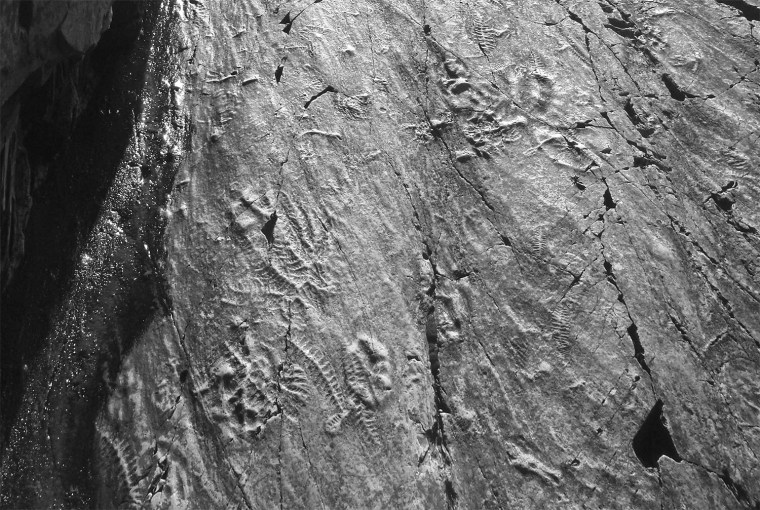
Rich fossil assemblage of the Ediacaran Mistaken Point Formation, Newfoundland. (Credit: Alex Liu, Earth Sciences, University of Bristol)

Retallack has now moved on to the even more fossil-rich Ediacaran sediments of Newfoundland (Retallack, G.J 2016. Ediacaran sedimentology and paleoecology of Newfoundland reconsidered. Sedimentary Geology, v. 333, p. 15-31). Eye-wateringly detailed sequence stratigraphy of the now famous Mistaken Point locality and others suggests that the ecosystem there was an intertidal salt marsh. In detail it contains evidence for shallow-water graded bedding, signs of regular storms and perhaps tsunamis together with interbedded palaeosols and subaerial volcanic crystal tuffs whose feldspars survive intact. The palaeosols can be subdivided into several pedogenic types akin to those used to classify modern soils. Unlike the arid setting of the South Australian Ediacaran sediments, whose palaeosols show signs of freezing, the Newfoundland package indicates humid, cool-temperature climes

As in Australia, the palaeosols are rich in Ediacaran fossils, including the best known; the leaf-like Charnia and its discoidal support structure that appears in Retallack’s reconstruction of the environment in an analogous way to salt-tolerant shrubs in modern tidal flats. They occur together with encrusting fossils that bear some resemblance to modern foliose fungi or lichens. Further chuntering in the palaeontological community seems inevitable, but the sedimentological observations alone knock one hypothesis on the head: it has been said that the graded bedding common to both major Ediacaran assemblages constitutes evidence for deep marine origins from turbidity currents. But there is further compost in which controversy may thrive, in that Retallack ascribes the repeated palaeosols to glacially controlled sea-level fluctuations: the Newfoundland sequence contains two diamictites interpreted as tillite, one dated at ~583 Ma the other undated but at the top of the sequence.

More on early life

A rational view of the start of human influences on Life and Geology

Regular readers will know that I have strong views on attempts to burden stratigraphy with a new Epoch: the Anthropocene. The central one is that the lead-in to a putsch has as much to do with the creation of a bandwagon, to whose wheels all future geologists will be shackled, as it does to any scientific need for such a novelty. Bound up as it is with the fear that Earth may be experiencing its sixth mass extinction, the mooted Anthropocene will likely become a mere boundary marked by future stratigraphers as a Global Boundary Stratotype Section and Point or GSSP between the existing Holocene Epoch and that sequence of sedimentary strata and their fossil record that will be laid down on top of it. Or not, if humanity becomes extinct should the economically induced, dangerous modifications of our homeworld of the last few decades or centuries not be halted. Either way, it defies the stratigraphic ‘rule book’.

No one can deny that humanity’s activities are now immensely disruptive to surface geological processes. Nor is it possible to rule out such disruptive change to the biosphere in the near-future that a latter-day equivalent of the K/Pg or end-Permian events is on the cards: such confidence does not spring from the interminable succession of grand words and global inaction reiterated in December 2015 by the UN Paris Agreement on economically-induced climate change. Still, it was a bit of a relief to find that palaeontological evidence, or rather statistics derived from the fossil record in North American sedimentary rocks since the Carboniferous, emphasises that there is no need for the adoption of Anthropocene as an acceptable geological adjective.

To ecologists, extinctions are not the be all and end all of disruption of the biosphere. Major shifts in life’s richness are also recorded by the way entire ecosystems become disrupted. A classic, if small-scale, example is that way in which the ecosystem of the US Yellowstone National Park changed since the eradication by 1926 of the few hundred grey wolves that formerly preyed mainly on elk. In the 20 years since wolf reintroduction to the Park in 1995 the hugely complex but fragile Yellowstone ecosystem has showed clear signs of recovery of its pre-extirpation structure and diversity.

A consortium of mainly US ecologists, led by Kathleen Lyons of the National Museum of Natural History at the Smithsonian Institution in Washington DC, has assessed linkages between species of fossil animal and plants since the Carboniferous (S.K. Lyons and 28 others, 2015. Holocene shifts in the assembly of plant and animal communities implicate human impacts. Nature, published on-line 16 December 2015 doi:10.1038/nature16447). They found that of the 350 thousand pairs of species that occurred together at different times throughout the late Palaeozoic to the last Epoch of the Cenozoic, the Holocene, some pairs appeared or clustered together more often than might be expected from random chance. Such non-random association suggests to ecologists that the two members of such a pair somehow shared ecological resources persistently, hinting at relationships that helped stabilise their shared ecosystem. For most of post-300 Ma time an average of 64% of non-random pairs prevailed, but after 11.7 ka ago – the start of the Holocene – that dropped to 37%, suggesting a general destabilisation of many of the ecosystems being considered. This closely correlates with the first human colonisation of the Americas, the last of the habitable continents to which humans migrated. This matches the empirical evidence of early Holocene extinctions of large mammals in the Americas, which itself is analogous to the decimation of large fauna in Australasia during the late Pleistocene following human arrival from about 50 to 60 ka ago. Significant human-induced ecological impact seems to have accompanied their initial appearance everywhere. The ecological effects of animal domestication and agriculture in Eurasia and the Americas mark the Holocene particularly. In fact, in Europe the presence of Mesolithic hunter gatherers is generally inferred, in the face of very rare finds of artefacts and dwellings, from changes in pollen records from Holocene lake and wetland sediments, which show periods of tree clearance that can not be accounted for by climate change.

There is no need for Anthropocene, other than as a political device.

Deccan Trap sprung by bolide?

English: Alvarez and K-T Boundary
Luis and Walter Alvarez at the end-Mesozoic Boundary (credit: Wikipedia)

It was 35 years back that father and son team Luis and Walter Alvarez upset a great many geoscientists by suggesting that a very thin layer of iridium-rich mud that contained glass spherules and shocked mineral grains was evidence for a large meteorite having struck Earth. They especially annoyed palaeontologists because of their claim that it occurred at the very top of the youngest Cretaceous and that the mud was spread far and wide in deep- and shallow-marine stratigraphic sequences and also in those of continental rocks. It marked the boundary between the Mesozoic and Cenozoic Eras and, of course, the demise of the dinosaurs and a great many more, less ‘sexy’ beasts. Luis was a physicist, his son a proper geologist and their co-researchers were chemists. It can hardly be said that they stole anyone’s thunder since the issue of mass extinctions was quiescent, yet their discovery ranks with that of Alfred Wegener; another interloper into the closed-shop geoscientific community. They got the same cold-shoulder treatment, but massive popular acclaim as well, even from a minority of geologists who welcomed their having shaken up their colleagues, 15 years after the last ‘big thing’: plate tectonics. And then the actual site of the impact was found by geophysicists in a sedimentary basin in the Gulf of Mexico off the small town of Chicxulub on the Yucatan peninsula.

Chicxulub impact - artist impression
Chicxulub impact – artist impression (credit: Wikipedia)

As they say, ‘the rest is history’ and a great many geoscientists didn’t just jump but pounced on this potential bandwagon. Central to this activity was the fact that, within error, the ages of the impact, the mass extinction and a vast pile of continental lavas in western India, the Deccan Traps, were more or less the same (around 66 Ma). Flood basalt events are just about as dramatic as mega-impacts because of their sheer scale, of the order of a million cubic kilometres; that they were exuded in a mere million years or so, but in only a few tens of stupendous lava flows; and they are far beyond the direct experience of humans, blurting out only every 30 Ma or so. This periodicity roughly tallies with mass extinctions, great and small, through the Mesozoic. There have been two large bands of enthusiasts engaged in the causality of the end-Mesozoic die-off – the extraterrestrials and the parochialists who favoured a more mundane, albeit cataclysmic snuffing-out. Mass extinctions in general have been repeatedly examined, and in recent years it has become clear that most of those since 250 Ma ago seem to be associated with basalt-flood events and are purely terrestrial in origin. As regards the event that ended the Mesozoic, it has proved difficult to resolve whether to point the finger at the Deccan Traps or the Chicxulub impact. Both might have severely damaged the biosphere in perhaps different ways, so a ‘double whammy’ has become a compromise solution.

The Western Ghat hills at Matheran in Maharash...
Deccan flood basalts forming the Western Ghats in Maharashtra, India (credit: Wikipedia)

Unsurprisingly, a lot of effort from different quarters has gone into charting the progress of the Deccan volcanism. Some dating seemed at one stage to place the bulk of the volcanism significantly before the mass extinction and impact, others had them spot on and there were even signs of an hiatus in eruptions at the critical juncture. The problem was geochronological precision of the argon-argon method of radiometric dating that is most used for rocks of basaltic composition: many labs cannot do better than an uncertainty of 1%, which is ±0.7 Ma for ages around the end of the Mesozoic, not far short of the entire duration of these huge events. Some Deccan samples have now been dated to a standard of ±0.1 Ma by the Ar-Ar lab at the Department of Earth and Planetary Sciences, University of California-Berkeley (Renne, P.R. et al. 2010. State shift in Deccan volcanism at the Cretaceous-Paleogene boundary, possibly induced by impact. Science, v. 350, p. 76-78). The results, between 65.5 to 66.5 Ma, nicely bracket the K/T (now K/Pg) boundary age of 66.04±0.04 Ma. It looks like the double whammy compromise is the hypothesis of choice. But there is more to mere dating.

Renne and colleagues plot the ages against their position in the volcanic stratigraphy of the Deccan Traps in two ways: against the estimated height from base in the pile and against the estimated volume of the erupted materials as it built up – the extent and thickness of successive flows varies quite a lot. The second plot provided a surprise. After the K/Pg event the mean rate of effusion – the limited number of individual flows capped by well-developed soils shows that the build-up was episodic – doubled from 0.4±0.2 to 0.9±0.3 km3 yr-1. Despite the much larger uncertainty in the extent and volume of individual lava Formations than that of their ages, this is clearly significant. Does it imply that the Chicxulub impact somehow affected the magma production from, the mantle plume beneath the Deccan? It had been suggested early in the debate that the antipodean position of the lava field relative to that of Chicxulub may indicate that the huge seismicity from the impact triggered the Deccan magma production. Few accepted that possibility when it first appeared. However, Renne and co. do think it deserves another look, at least at the possibility of some linked effect on the magmatism. Perhaps the magma chamber was somehow enlarged by increased global seismicity; other chambers could have been added; magma might have been ‘pumped’ out more efficiently, or a combination of such effects. The ‘plumbing’ of flood basalt piles is generally hidden, but huge dyke swarms in Precambrian times have been suggested as feeders to long-eroded flood basalts. Seismicity of the scale produced by asteroid impacts can do a lot of damage. The Chicxulub impactor at around 10 km diameter would have carried energy a million times greater than that of the largest thermonuclear bomb, equivalent to an earthquake of Magnitude 12.4 that would have been a thousand times more powerful than the largest recorded earthquake with tectonic causes. Extensional faulting sourced in this fashion in the Deccan area may have increased the pathways along which magma might blurt out.

Duncan, R. 2015. Deadly combination. Nature, v. 527, p. 172-173.

Pleistocene megafaunal extinctions – were humans to blame?

Australia and the Americas had an extremely diverse fauna of large beasts (giant wombats and kangeroos in Australia; elephants, bears, big cats, camelids, ground sloths etc in the Americas) until the last glaciation and the warming period that led into the Holocene interglacial. The majority of these megafauna species vanished suddenly during that recent period. To a lesser extent something similar happened in Eurasia, but nothing significant in Africa. Because the last glacial cycle also saw migration of efficient human hunter-gatherers to every other continent except Antarctica, many ecologists, palaeontologists and anthropologists saw a direct link between human predation and the mass extinction (see Earth-Pages of April 2012. Earlier humans had indeed spread far and wide in Eurasia before, and the crude hypothesis that the last arrivals in Australasia and the Americas devoured all the meatiest prey in three continents had some traction as a result: predation in Eurasia and Africa by earlier hominids would have made surviving prey congenitally wary of bipeds with spears. In Australia and the Americas the megafauna species would have been naive and confident in their sheer bulk, numbers, speed and, in some cases, ferocity. Other possibilities emerged, such as the introduction of viruses to which faunas had no immunity or as a result of climate change, but none of the three possibilities has gained incontrovertible proof. But the most popular, human connection has had severe knocks in the last couple of years. A fourth, that the extinctions stemmed from a comet impact proved to have little traction.

English: s were driven to extinction by and hu...
Megafauna in a late-Pleistocene landscape including woolly mammoths and rhinoceroses, horses, and cave lions with a carcass. (credit: Wikipedia)

Since the amazing success of analysing the bulk DNA debris in sea water – environmental DNA or eDNA – to look at the local diversity of marine animals, the analytical and computing techniques that made it possible have been turned to ancient terrestrial materials: soils, permafrost and glacial ice. One of the first attempts revealed mammoth and pre-Columbian horse DNA surviving in Alaskan permafrost, thanks to the herds’ copious urination and dung spreading. Several articles in the 24 July 2015 issue of Science review ancient DNA advances, including eDNA from soils that chart changes in both fauna and flora over the last glacial cycle (Pennisi, E. 2015. Lost worlds found. Science, v. 349, p. 367-369). Combined with a variety of means of dating the material that yield the ancient eDNA, an interesting picture is emerging. The soil and permafrost samples potentially express ancient ecosystems in far more detail than would fossil animals or pollens, many of which are too similar to look at the species level and in any case are dominated by the most abundant plants rather than showing those critical in the food chain.

Nunavut tundra
Plants of the Arctic tundra in Nunavut, Canada (Photo credit: Wikipedia)

The first major success in palaeoecology of this kind came with a 50-author paper using eDNA ‘bar-coding’ of permafrost from 242 sites in Siberia and Alaska IWillerslev, E. and 49 others 2014. Fifty thousand years of Arctic vegetation and megafaunal diet. Nature, v. 506, p. 47-51. doi:10.1038/nature12921). Dividing the samples into 3 time spans – 50-25, 25-15 (last glacial maximum) and younger than 15 ka – the team found these major stages in the last glacial cycle mapped an ecological change from a dry tundra dominated by abundant herbaceous plants (forbs including abundant anemones and forget-me-not), to a markedly depleted Arctic steppe ecosystem then moist tundra with woody plants and grasses dominating. They also analysed the eDNA of dung and gut contents from ice-age megafauna, such as mammoths, bison and woolly rhinos, where these were found, which showed that forbs were the mainstay of their diet. Using bones of large mammals 6 member of the team also established the timing of extinctions in the last 56 ka (Cooper, A. et al. 2015. Abrupt warming events drove Late Pleistocene Holarctic megafaunal turnover. Science, DOI: 10.1126/science.aac4315), showing 31 regional extinction pulses linked to the rapid ups and downs of climate during Dansgaard-Oeschger cycles in the run-up to the last glacial maximum. By the end of the last glacial maximum, the megafauna were highly stressed by purely climatic and ecological factors. Human predation probably finished them off.

Hallucigenia gets a head

The Middle Cambrian Burgess Shale of the Canadian Rockies is one of those celebrated sediments that show extraordinary preservation of soft-bodied and easily disarticulated organisms and rich assemblages of fossils. Being one of the earliest known of such lagerstätten, many of the denizens of the ecosystem in which the shale originated were at first regarded as members of hitherto undiscovered and now vanished phyla, the basal branches of the ‘tree of life’. Some certainly looked pretty odd, such as Opabina with a feeding apparatus looking similar to the extension nozzle of a vacuum cleaner; but that is clearly some kind of arthropod. Others turned out to be astonishingly large, once it was realised that parts of their broken bodies had previously been taken to be different organisms, an example being Anomalocaris. But perhaps the oddest, certainly to palaeontologists, was Hallucigenia. However, there are plenty of even more weird and wonderful living creatures, such as the sea pig, although modern creatures are more easily pigeonholed, taxonomically speaking.

Halucigenia as originally reconstruicted (i.e....
Hallucigenia as originally reconstructed; i.e. upside-down. (credit: Wikipedia)

The trouble with Hallucigenia was not so much its complexity – it was a fairly simple-looking beast – but that there were two choices as to which way up it lived; a feature that surprisingly led to a great deal of pondering that ended with the scientist who formally described it in 1977 making the wrong choice. That was eventually resolved fourteen years later, but the creature might also have inspired the Pushmi Pullyu in Hugh Lofting’s Dr Doolittle stories for children. Not that it resembled a unicorn-gazelle cross: far from it, for no-one could decide which its front was and which its backside, and even if it may have lain on its side. But Hallucigenia does demonstrate bilateral symmetry beautifully – it must have a front and back, and a top and bottom, even though which was which remained veiled in mystery – and so belongs to the dominant group of animals, imaginatively known as bilaterians.

The Burgess Shale lagerstätte seemingly was heaving with Hallucigenia so would-be taxonomists have had no shortage of specimens to ponder over in the 38 years since Simon Conway Morris made his dreadful mistake: of course, that was not of such enormity as Einstein’s ‘biggest blunder’ in the form of his cosmological constant, and Conway Morris quickly accepted his error when the beast was turned right-way-up in 1991. The problem is, exquisite as they are, Burgess Shale fossils are flattened and all that remains of mainly soft-bodied animals are delicate carbonaceous films, which need electron microscopy to unravel.

The latest reconstruction of Hallucigenia, by palaeontological illustrator Danielle Dufault (http://www.ddufault.com)
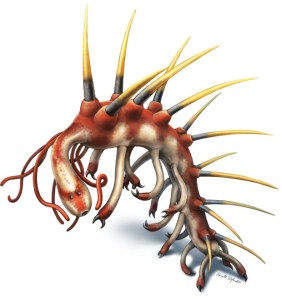
The latest reconstruction of Hallucigenia, by palaeontological illustrator Danielle Dufault

In 2015, Hallucigenia’s front end was definitely found and a great deal more besides by Canadian palaeontologists Martin Smith and Jean-Bernard Caron of the Royal Ontario Museum and the University of Toronto (Smith, M.R. & Caron J.-B. 2015. Hallucigenia’s head and the pharyngeal armature of early ecdysozoans. Nature, v. 523, p. 75-78). It has eyes, albeit rudimentary, and a throat, deep within which it has pointy teeth. Hallucigenia was a lobopod, whose living relatives lie within that large and diverse group the Ecdysozoa, which all have throat teeth and include the wondrous water bear (tardigrade) and the velvet- and penis worms (onychophores and priapulids, respectively) as well as lobsters, flies and woodlice. It may indeed have been close to the last common ancestor of all animals who moult their carapaces.

Flourishing life during a Snowball Earth period

That glacial conditions were able to spread into tropical latitudes during the late Neoproterozoic, Cryogenian Period is now well established, as are the time spans of two such events. http://earth-pages.co.uk/2015/05/21/snowball-earth-events-pinned-down/ But what were the consequences for life that was evolving at the time? That something dramatic was occurring is signalled by a series of perturbations in the carbon-isotope composition of seawater. Its relative proportion of 13C to 12C (δ13C) fell sharply during the two main Snowball events and at other times between 850 to 550 Ma. Since 12C is taken up preferentially by living organisms, falls in δ13C are sometimes attributed to periods when life was unusually suppressed. It is certain that the ‘excursions’ indicate that some process(es) must have strongly affected the way that carbon was cycled in the natural world.

English: Earth, covered in ice.
Artist’s impression of a Snowball Earth as it would appear with today’s continental configuration adjacent to the East Pacific Ocean. (Photo credit: Wikipedia)

The further sea ice extended beyond landmasses during Snowball events the more it would reduce the amount of sunlight reaching the liquid ocean and so photosynthesis would be severely challenged. Indeed, if ice covered the entire ocean surface – the extreme version of the hypothesis – each event must have come close to extinguishing life. An increasing amount of evidence, from climate- and oceanographic modelling and geological observation, suggests that a completely icebound Earth was unlikely. Nevertheless, such dramatic climate shifts would have distressed living processes to the extent that extinction rates were high and so was adaptive radiation of survivors to occupy whatever ecological niches remained or came into being: evolution was thereby speeded up. The roughly half-billion years of the Neoproterozoic hosted the emergence and development of multicellular organisms (metazoan eukaryotes) whose cells contained a nucleus and other bodies such as mitochondria and the chloroplasts of photosynthesisers. This hugely important stage of evolution burst forth shortly after – in a geological sense – the last Snowball event, during the Ediacaran and the Cambrian Explosion. But recent investigations by palaeontologists in glaciogenic rocks from China unearthed a rich diversity of fossil organisms that thrived during a Snowball event (Ye, Q. et al. 2015. The survival of benthic macroscopic phototrophs on a Neoproterozoic snowball Earth. Geology, v. 43, p. 507-510).

The Nantuo Formation in southern China contains glaciogenic sedimentary rocks ascribed to the later Marinoan glaciation (640 to 635 Ma). Unusually, the pebbly Nantuo glaciogenic rocks contain thin layers of siltstones and black shales. The fact that these layers are free of coarse fragments that floating ice may have dropped supports the idea that open water did exist close to glaciated landmasses in what is now southern China. Palaeomagnetic measurements show that the area was at mid-latitudes during the Marinoan event. The really surprising feature is that they contain abundant, easily visible fossils in the form of carbonaceous ribbons , disks, branching masses and some that dramatically resemble complex multi-limbed animals, though they are more likely to be part of an assemblage of algal remains. Whatever their biological affinities, the fossils clearly signify that life happily flourished beneath open water where photosynthesis provided a potential base to a food chain, though no incontrovertible animals occur among them.

See also: Corsetti, F.A. 2015. Live during Neoproterozoic Snowball Earth. Geology, v. 43, p. 559-560.

The dinosaur they could not kill: Brontosaurus is back

It would be pretty safe to say that everyone has heard of Brontosaurus, but in the 1970s the genus vanished from the palaeobiology lexicon. The ‘Bone Wars’ of post-Civil War US palaeontology stemmed from the astonishing prices that dinosaur skeletons fetched. The frenzy of competition to fill museums unearthed hundreds of specimens, but the financial enthusiasm did not extend to painstaking anatomy. Finding a new genus meant further profit so a slapdash approach to taxonomy might pay well. So it did with the dinosaur family Diplodocidae for Othniel Marsh, one of the fossil marauders. He along with his main competitor, Edward Cope, was a wizard fossicker, but lacked incentive to properly describe what he unearthed. In 1877 Marsh published a brief note about a new genus that he called Apatosaurus, then hurried off to for more booty. Two years later he returned from the field with another monster reptile, and casually made a brief case for the ‘Thunder Lizard’, Brontosaurus. Unlike his usage of ‘Deceptive Lizard’ for Apatosaurus, the English translation of Brontosaurus caught the public imagination and lingers to this day as the archetype for a mighty yet gentle, extinct beast. Yet, professional palaeontologists were soon onto the lax ways of Marsh and Cope, and by 1903 deemed Brontosaurus to be taxonomically indistinguishable from Apatosaurus, and as far as science was concerned the ‘Thunder Lizard’ was no more.

Illustration of a Brontosaurus (nowadays calle...
Artist’s impression of a Brontosaurus . The idea that it was wholly or mostly aquatic is now considered outdated. (credit: Wikipedia)

But, the legacy of frenzied fossil collecting of a century or more ago is huge collections that never made it to display, which form rich pickings for latter-day palaeontologists with all kinds of anatomical tools now at their disposal: the stuff of almost endless graduate studies. Emanuel Tschopp of the New University of Lisbon with colleagues took up the challenge of the Diplodocidae by examining 49 named specimens and 32 from closely related specimens as controls, measuring up to 477 skeletal features (Tschopp, E. et al. 2015. A specimen-level phylogenetic analysis and taxonomic revision of Diplodocidae (Dinosauria, Sauropoda). PeerJ, v. 3, doi10.771/peerj.857). An unintended consequence was their discovery that 6 specimens of what had become Apatosaurus excelsus (formerly Marsh’s Brontosaurus) differed from all other members of its genus in 12 or more key characteristics. It seems to taxonomists a little unfair that Brontosaurus should not be resurrected, and that looks likely.

Had this been about almost any other group of fossils, with the exception perhaps of the ever-popular tyrannosaurs, the lengthy paper would have passed unnoticed except by specialist palaeontologists. In a little over a week the open-access publication had more than 17 thousand views and 3300 copies were downloaded.

See also: Balter, M. 2015. Bully for Brontosaurus. Science, v. 348, p. 168