Earliest hominin occupation of Sulawesi and crossing of an ocean barrier

Regular readers of Earth-logs will recall that the islands of Indonesia were reached by the archaic humans Homo erectus and H. floresiensis at least a million years ago. Anatomical comparison of their remains suggest that the diminutive H. floresiensis probably evolved from H. erectus under the stress of being stranded on the small, resource-poor island of Flores: a human example of island dwarfism. In fact there are anatomically modern humans (AMH) living on Flores that seem to have evolved dwarfism in the same way since AMH first arrived there between 50 and 5 ka. Incidentally, H. erectus fossils and artefacts were found by Eugene Dubois in the late 19th century at a famous site near Trinil in Java. In 2014, turned out that H. erectus had produced the earliest known art – zig-zag patterns on freshwater clam shells – between 540 and 430 ka ago. The episodic falls in global sea level due to massive accumulations of ice on land during successive Pleistocene glacial episodes aided migration by producing connections between the islands of SE Asia. They created a huge area of low-lying dryland known as ‘Sundaland’. The islands’ colonisation by H. erectus was made easy, perhaps inevitable.

The interconnection of SE Asian islands to form Sundaland (yellow) when sea level was 120 m lower than today. Even at that extreme the island of Sulawesi remained isolated by deep ocean water. Credit: based on Hakim et al Fig 1.

However, Flores and islands further east are separated from those to the west by a narrow but very deep strait. It channels powerful currents that are hazardous to small-boat crossings even today. Most palaeoanthropologists consider the colonisation of Flores by H. erectus most likely to have resulted by accident, reckoning that they were incapable of planning a crossing and building suitable craft. For AMH to have reached New Guinea and Australia around 60 ka ago, they must have developed sturdy craft and sea-faring skills. This paradigm suggests that the evolution of AMH, and thus their eventual occupation of all continents except Antarctica, must have involved a revolutionary ‘leap’ in their cognitive ability just before they left Africa. That view has been popularised by the presenter (Ella Al-Shamahi) of the 2025 BBC Television series Human – now on BBC iPlayer (requires viewers to create a free account) – in its second episode Into the Unknown. [The idea of a cognitive leap that ushered in the almost worldwide migration of anatomically modern humans was launched in 1995 by controversial anthropologist Chris Knight of University College London].
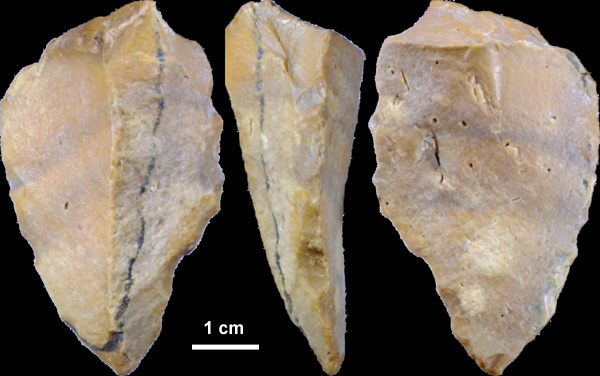
Flaked artefact, about the length of a human thumb, made of chert from excavations at Calio on Sulawesi, dated at 1.02 Ma. Credit: based on Hakim et al Fig 2

The large and peculiarly-shaped island of Sulawesi, also part of Indonesia, is notable for being the location of the earliest known figurative art; a cave painting of a Sulawesi warty pig, dated to at least 45.5 ka ago. Indonesian and Australian archaeologists working at a site near Calio in northern Sulawesi unearthed stone artefacts deep in river-terrace gravels that contain fossils of extinct pigs and dwarf elephants (Hakim, B. and 26 others 2025. Hominins on Sulawesi during the Early Pleistocene. Nature, v. 644;DOI: 10.1038/s41586-025-09348-6). The tools were struck from pebbles of hard fine-grained rocks by flaking to produce sharp edges. A combination of dating techniques – palaeomagnetism, uranium-series and electron-spin resonance – on the terrace sediments and fossils in them yielded ages ranging from 1.04 to 1.48 Ma; far older than the earliest known presence of AMH on the island (73–63 ka). The dates for an early human presence on Sulawesi tally with those from Flores. The tool makers were probably H. erectus. To reach the island from Sundaland at a time when global sea level was 120 m lower than at present would have required crossing more than 50 km of open water. It seems unlikely that such a journey could have been accidental. The migrants would have needed seaworthy craft; possibly rafts. Clearly the AMH crossings to New Guinea around 60 thousand years ago would have been far more daunting. Both land masses would have been below the horizon of any point of departure from the Indonesian archipelago, even with island ‘hopping’. Yet the Sulawesi discovery, combined with the plethora of islands both large and small, suggests that the earlier non-AMH inhabitants of Indonesia potentially could have spread further at times of very low sea level.

See also: Brumm, A. t al. 2025. This stone tool is over 1 million years old. How did its maker get to Sulawesi without a boat? The Conversation, 6 August 2025

Chinese skull confirmed as Denisovan

For over a century Chinese scientists have been puzzling over ancient human skulls that show pronounced brow ridges. Some assigned them to Homo, others to species that they believe were unique to China. A widely held view in China was that people now living there evolved directly from them, adhering to the ‘Multiregional Evolution’ hypothesis as opposed to that of ‘Out of Africa’. However, the issue might now have been resolved. In the last few years palaeoanthropologists have begun to suspect that these fossilised crania may have been Denisovans, but none had been subject to genetic and proteomic analysis. The few from Siberia and Tibet that initially proved the existence of Denisovans were very small: just a finger bone and teeth.  Out of the blue, teeth in a robust hominin mandible dredged from the Penghu Channel between Taiwan and China yielded protein sequences that matched proteomic data from Denisovan fossils in Denisova Cave and Baishiya Cave in Tibet, suggesting that Denisovans were big and roamed  widely in East Asia. In 2021 a near-complete robust cranium came to light that had been found in the 1930s near Harbin in China and hidden – at the time the area was under Japanese military occupation. It emerged only when its finder revealed its location in 2018, shortly before his death. It was provisionally called Homo longi or ‘Dragon Man’. Qiaomei Fu of the Institute of Vertebrate Paleontology and Paleoanthropology in Beijing and her colleagues have made a comprehensive study of the fossil.

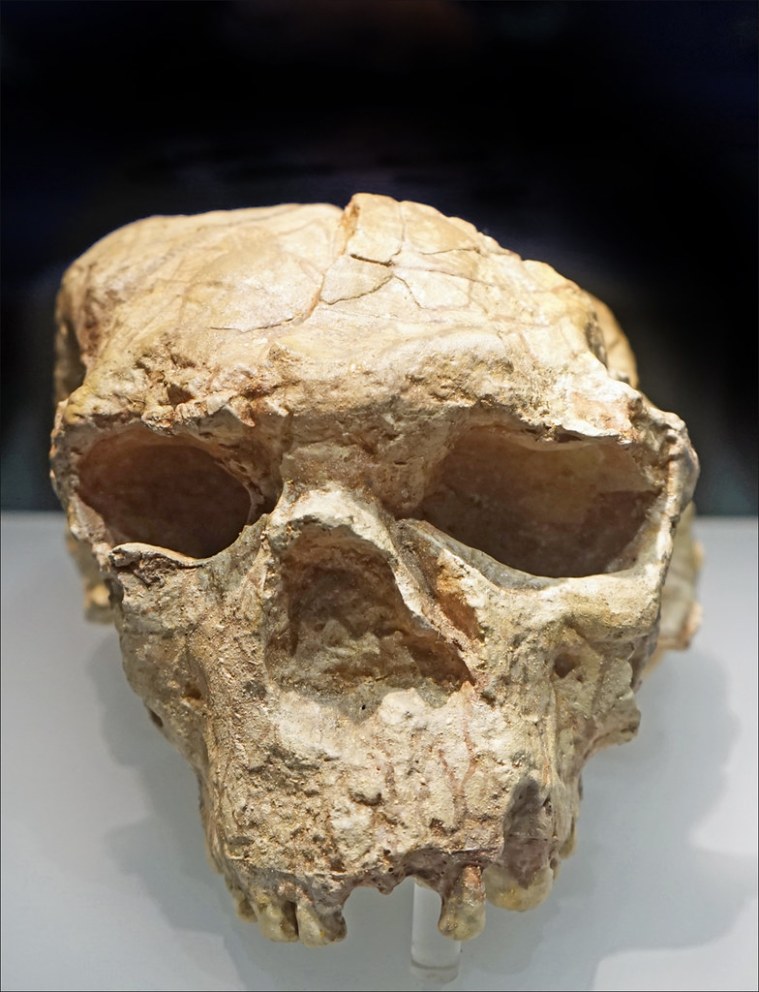
The cranium found near Harbin, China belonged to a Denisovan. Credit: Hebei Geo University

It is at least 146 ka old, probably too young to have been H. erectus, but predates the earliest anatomically modern humans to have reached East Asia from Africa (~60 ka ago). The Chinese scientists have developed protein- and DNA extraction techniques akin to those pioneered at the Max Planck Institute for Evolutionary Anthropology in Leipzig. It proved impossible to extract sufficient ancient nuclear DNA from the cranium bone for definitive genomic data to be extracted, but dental plaque (calculus) adhering around the only surviving molar in the upper jaw did yield mitochondrial DNA. The mtDNA matched that found in Siberian Denisovan remains (Qiaomei Fu et al. 2025. Denisovan mitochondrial DNA from dental calculus of the >146,000-year-old Harbin cranium. Cell, v. 188, p. 1–8; DOI: 10.1016/j.cell.2025.05.040). The bone did yield 92 proteins and 122 single amino acid polymorphisms, as well as more than 20 thousand peptides (Qiaomei Fu and 8 others 2025. The proteome of the late Middle Pleistocene Harbin individual. Science, v. 388: DOI: 10.1126/science.adu9677). Again, these established a molecular link with the already known Denisovans, specifically with one of the Denisova Cave specimens. Without the painstaking research of the Chinese team, Denisovans would have been merely a genome and a proteome without much sign of a body! From the massive skull it is clear that they were indeed big people with brains much the same size as those of living people. Estimates based on the Harbin cranium suggest an individual weighing around 100 kg (220 lb or ~15 stone): a real heavyweight or rugby prop!

The work of Qiaomei Fu and her colleagues, plus the earlier, more limited studies by Tsutaya et al., opens a new phase in palaeoanthropology. Denisovans now have a genome and well-preserved parts of an entire head, which may allow the plethora of ancient skulls from China to be anatomically assigned to the species. Moreover, by extracting DNA from dental plaque for the first time they have opened a new route to obtaining genomic material: dental calculus is very much tougher and less porous than bone.

See also: Curry, A. ‘Dragon Man’ skull belongs to mysterious human relative. 2025. Science, v. 388; DOI: 10.1126/science.z8sb68w. Smith K. 2025. We’ve had a Denisovan skull since the 1930s – only nobody knew. Ars Technica, 18 June 2025. Marshall, M. 2025. We finally know what the face of a Denisovan looked like. New Scientist 18 June 2025.

Middle Palaeolithic Neanderthals and Denisovans of East Asia

During the Middle Palaeolithic (250 to 30 ka) anatomically modern humans (AMH) and Neanderthals were engaged in new technological developments in Europe and Africa as well as in migration and social interaction. This is reflected in the tools that they left at occupation sites and the fact that most living non-Africans carry Neanderthal DNA. One of the major cultural developments was a novel means of manufacturing stone implements. It developed from the Levallois technique that involved knapping sharp-edged flakes of hard rock from larger blocks or cores. A type of tool first found at a Neanderthal site near La Quina in France is a thick flake of stone with a broad, sharp edge that shows evidence of having been resharpened many times. Most other flake tools seem to have been ‘one-offs’ that were discarded after brief usage. The Quina version was not only durable but seems to have been multipurpose. Analysis of wear patterns on the sharpened edges suggest that they were deployed in carving wood and bone, removing fat and hair from animal hides, and butchery. Such scrapers have been found over a wide area of Europe, the Middle East and NE Asia mostly at Neanderthal sites, including the famous Denisova Cave of southern Siberia that yielded the first Denisovan DNA as well as that of Neanderthals.

Making a typical Quina scraper and related tools. The toolmaker would flake pieces of stone off the core and then carefully shape the Quina scraper. (Image credit: Pei-Yuan Xiao)

Until now, the early humans of East Asia were thought not to have proceeded beyond more rudimentary tools during the Middle Palaeolithic: in fact that archaeological designation hasn’t been applied there. Recent excavations at Longtan Cave in south-west China have forced a complete revision of that view (Ruan, Q.-J., et al. 2025. Quina lithic technology indicates diverse Late Pleistocene human dynamics in East Asia. Proceedings of the National Academy of Sciences, v. 122, article e2418029122; DOI: 10.1073/pnas.2418029122). The Longtan site has yielded more than fifty scrapers and the cores from which they had been struck that clearly suggest the Quina technology had been used there. They occur in cave sediments dated at between 60 and 50 ka. As yet, no human remains have been found in the same level at Longtan, although deeper levels dated at 412 ka have yielded hominin crania, mandibular fragments, and teeth, that have been suggested to be Homo erectus.

Quina type tools in East Asia may previously have been overlooked at other hominin sites in China: re-examination of archived tool collections may show they are in fact widespread. The technology could have been brought in by migrating Neanderthals, or maybe it was invented independently by local East Asian hominins. Because most living people in China carry Denisovan DNA in the genomes so perhaps that group developed the technique before interbreeding with AMH immigrants from the west. Indeed there is no reason to discard the notion that  early AMH may have imported the Quina style. A lot of work lies ahead to understand this currently unique culture at Longtan Cave. However, interpretation of another discovery published shortly after that from Longtan has spectacularly ‘stolen the thunder’ of the Qina tools, and it was made in Taiwan …

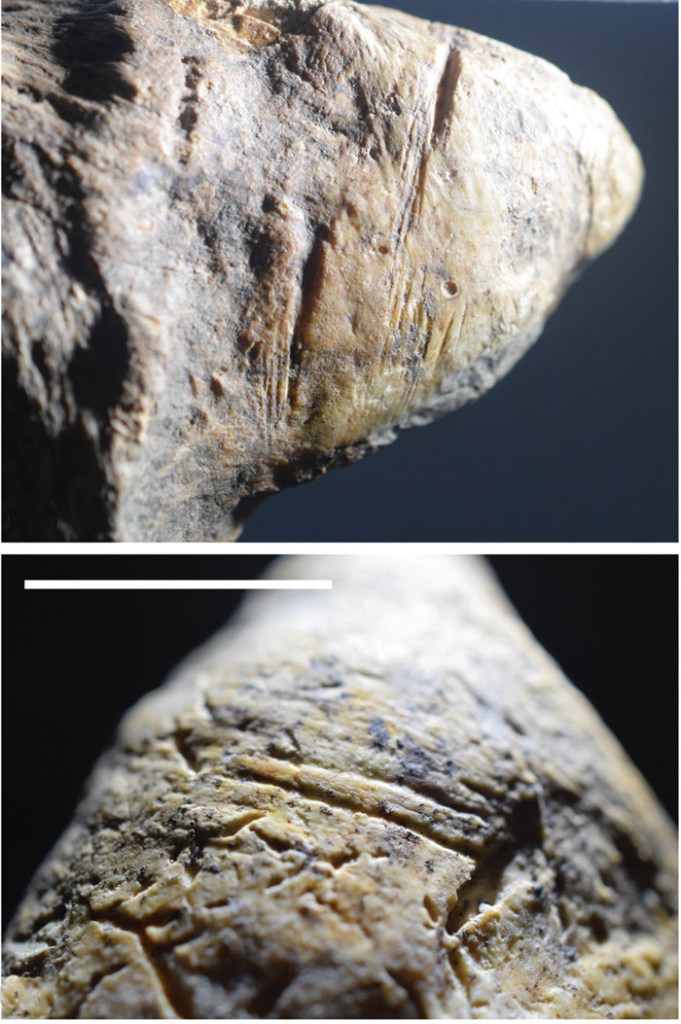
Right (top) and downward (lower) views of the partial Penghu mandible. Credit: Yousuke Kaifu University of Tokyo, Japan and Chun-Hsiang Chang Tunghai University, Taichung, from Tsutaya et al. Fig. 1 (inset)Taiwan.

About 10 years ago, Taiwanese fishers trawling in the Penghu Channel between Taiwan and China were regularly finding bones in their nets. Between 70 to 10 ka and 190 to 130 ka ago much lower sea level due to continental ice cap formation exposed the Penghu seabed. Animals and humans were thus able to move between the East Asian mainland and what is now Taiwan. The bones brought to the surface included those of elephants, water buffaloes and tigers, but one was clearly a human lower jawbone (mandible). Its shape and large molar teeth are very different from modern human mandibles and molars. A multinational team from Japan, Denmark, Taiwan and Ireland has extracted proteins from the mandible to check its genetic affinities (Tsutaya, T. and 14 others 2025. A male Denisovan mandible from Pleistocene Taiwan. Science, v. 388, p. 176-180; DOI: 10.1126/science.ads3888). Where DNA has not been preserved in bones proteomics is a useful tool, especially if results are matched with other bones that have yielded both DNA and protein sequences. In the case of the Penghu mandible, proteins from its teeth matched those of Denisovans from the Denisova Cave in Siberia which famously yielded the genome of this elusive human group. They also matched proteins from a rib found in Tibet associated with Denisovan mitochondrial DNA in cave sediments that enclosed the bones.

The three sites (Denisova, Baishiya Cave in Tibet and Penghu Channel) that have produced plausible Denisovan specimens span a large range of latitudes and altitudes. This suggests that Denisovans were capable of successful subsistence across much of East Asia. The Penghu mandible and teeth are similar to several hominin specimens from elsewhere in China that hitherto have been attributed to H. erectus. Apart from the Denisovan type locality, most of the sites have yet to be accurately dated. Having been immersed in sea water for thousands of years isotopes used in dating have been contaminated in the Panghu specimen. It can only be guessed to have lived when the seabed from which it was recovered was dry land; i.e. between 70 to 10 ka and 190 to 130 ka. China was undoubtedly occupied by Homo erectus during the early Pleistocene, but much younger fossils have been attributed to that species by Chinese palaeoanthropologists. Could it be that they are in fact Denisovans? Maybe such people independently developed the Quina knapping technique

See also: Marwick, B. 2025.  Unknown human species in East Asia used sophisticated tools at the same time Neanderthals did in Europe. Live Science, 31 March 2025; Ashworth. J. 2025. Denisovan jawbone helps to reveal appearance of ancient human species. Natural History Museum News 11 April 2025.

A fully revised edition of Steve Drury’s book Stepping Stones: The Making of Our Home World can now be downloaded as a free eBook

Early hominin dispersal in Eurasia

Evidence from Dmanisi in Georgia that Homo erectus may have been the first advanced hominin to leave Africa about 1.8 Ma ago was a big surprise (see: First out of Africa? November 2003). Remains of five individuals included one skull of an aged person who face was so deformed that he or she must have been cared for by others for many years. So, a second surprise from Dmanisi was that human empathy arose far earlier than most people believed. Since 2002 there has been only a single further find of hominin bones of such antiquity, at Longgudong in central China. For the period between 1.0 and 2.0 Ma eight other sites in Eurasia have yielded hominin remains. If finds of stone tools and evidence of deliberate butchery – cut marks on prey animals’ bones – are accepted as tell-tale signs, the Eurasian hominin record is considerably larger, and longer,. There are 11 Eurasian sites that have yielded such evidence – but no hominin remains – that are older than Longgudong: in Russia, China, the Middle East, North Africa and northern India. The oldest, at Masol in northern India is 2.6 Ma old. In January 2025 the earliest European evidence for hominin activity was reported from Grăunceanu in Romania (Curran, S.C. and 15 others 2025. Hominin presence in Eurasia by at least 1.95 million years ago. Nature Communications, v. 16, article 836; DOI: 10.1038/s41467-025-56154-9) in the form of animal bones showing clear signs of butchery, as well as stone tools, but no hominin fossils.

Animal bones showing cut marks from the 1.95 Ma old Grăunceanu site in Romania. (Credit: Curran et al. 2025, Figs 2A and C)

There were stone-tool makers who butchered prey in Africa as early as 3.4 Ma ago (see: Stone tools go even further back; May 2015), but without direct evidence of which hominin was involved. Several possible candidates have been suggested: Australopithecus; Kenyanthropus; Paranthropus. The earliest known African remains of H. erectus have been dated at around 2.0 Ma. So, all that can be said with some certainty about the pre-2 Ma migrants to Eurasia, until fossils of that antiquity are found, is that they were hominins of some kind: maybe advanced australopithecines, paranthropoids or early humans. Those from Longgudong and Dmanisi probably are early Homo erectus, and 2 others (1.7 and 1.6 Ma) from China have been designated similarly. Younger, pre-1.0 Ma Eurasian hominins from Israel, Indonesia, Spain and Turkey are currently un-named at the species level, but are allegedly members of the genus Homo.

So, what can be teased from the early Eurasian hominin finds? Some certainly travelled thousands of kilometres from their assumed origins in Africa, but none penetrated further north than about 50°N. Perhaps they could not cope with winters at higher latitudes, especially during ice ages. To reach as far as eastern and western Eurasia suggests that dispersal following exit from Africa would have taken many generations. There is no reason to suppose continual travel; rather the reverse, staying put in areas with abundant resources while they remained available, and then moving on when they became scarce. Climate cycles, first paced at around 40 ka (early Pleistocene) then at around 100 ka (mid Pleistocene and later), would have been the main drivers for hominin population movements, as it would have been for game and vegetation.

After about 3 Ma the 40 ka climate cyclicity evolved to greater differences in global temperature between glacial and interglacial episodes, and even more so after the mid Pleistocene transition to 100 ka cycles (see Wikipedia entry for the mid-Pleistocene Transition). Thus, it seems likely that chances of survival of dispersed bands of hominins decreased over hundreds of millennia. Could populations have survived in particularly favourable areas; i.e. those at low latitudes? If so did both culture and the hominins themselves evolve? Alternatively, was migration in a series of pulses out of Africa and then dispersal in all directions, most ending in regional extinction? Almost certainly, pressures to leave Africa would have been driven by climate, for instance by increased aridity as global temperatures waned and sea-level falls made travel to Eurasia easier. There may also have been secondary, shorter migrations within Eurasia, again driven by environmental changes. Without more data from newly discovered sites we can go little further. Within the 35 known, pre-1 Ma hominin sites there are two clusters: southern and central China, and the Levant, Turkey and Georgia. Could they yield more developments? A 2016 article in Scientific American about Chinese H. erectus finds makes particularly interesting reading in this regard.

Neanderthals and the elusive Denisovans began to establish permanent Eurasian ranges, after roughly 600 ka ago. Both groups survived until after first contact with waves of anatomically modern humans in the last 100 ka, with whom some interbred before vanishing from the record. However, evidence from the DNA of both groups suggests an interesting possibility. Before the two groups split genetically, their common ancestors (H. heidelbergensis or H. antecessor?) apparently interbred with genetically more ancient Eurasian hominins (see Wikipedia entry for Neanderthal evolution). This intriguing hint suggests that more may be discovered when substantial remains of Denisovans – i.e. more than a few teeth and small bones – are discovered and yield more DNA. My guess is such a future development will stem from analysis of early hominin remains in China, currently regarded as H. erectus. See China discovers landmark human evolution fossils. Xinhua News Agency 9 December 2024)

A fully revised edition of Steve Drury’s book Stepping Stones: The Making of Our Home World can now be downloaded as a free eBook

News about ‘hobbits’ (Homo floresiensis)

The roof lifted for palaeoanthropologists in October 2004 when news emerged of a fossil from Liang Bua cave on Flores in the Indonesian archipelago. It was an adult female human skull about a third the size of those of anatomically modern humans (see: The little people of Flores, Indonesia; October 2004). Immediately it was dubbed ‘Hobbit’, and from the start controversy raged around this diminutive human. The cave layer contained evidence of fire and sophisticated tools as well as bones of giant rats and minute elephants, presumed to be staple prey for these little people. Despite having brains about the size of a grapefruit – as did australopithecines – the little people challenged our assumptions about intelligence. Preliminary dating from 95 to 17 ka suggested they may have cohabited Indonesia with both H. erectus and AMH. Indeed, modern people of Flores tell legends of the little people they call Ebo Go Go. Like both their ancestors must have crossed treacherous straits between the Indonesian islands, which existed even when global sea level was drawn down by polar icecaps. Once an early suggestion that the original find was the skull of a deformed, microcephalic individual had been refuted by further finds in Flores, scientists turned to natural selection of small stature through living on a small island with limited resources – similar to the tiny elephant Stegodon and other island faunas elsewhere. By 2007, it had become clear from other, similar fossils that they were definitely a distinct species Homo floresiensis (see: Now we can celebrate the ‘Hobbits’! November 2007) with several anatomical similarities to H. erectus. Then more sophisticated dating revealed that the Flores cave sediments containing their fossils and tools spanned 100 to 60 ka, well before AMH reached Indonesia. By 2018 their arrival on Flores, marked by a mandible fragment and 6 teeth in sediments from sediment excavation at Mata Menge 70 km east of Luing Bua, had been pushed back to 773 ka.  At the new site stone tools were found in even earlier sediments (1.02 Ma). In 2019 evidence emerged that isolated island evolution in the Philippines had produced similar small descendants (H. luzonensis) by around 67 ka.

Artist’s impression of Homo floresiensis with giant rat. (Credit: Box of Oddities podcast)

The latest development is the finding of a fragment of an adult humerus (an arm bone) in the Mata Menge excavations that had yielded the oldest dates for Homo floresiensis fossils (Kaifu, Y. and 12 others 2024. Early evolution of small body size in Homo floresiensis. Nature Communications, v. 15, article number 6381; DOI: 10.1038/s41467-024-50649-7). Comparing the teeth and arm-bone fragment with an intact adult from Liang Bua suggests that the earliest known ancestors of Homo floresiensis were even smaller. The teeth, albeit much smaller, resemble those of Indonesian specimens of H. erectus. That observation helps to rule out earlier speculation that the tiny people of Flores descended from the earliest humans from Africa (H. habilis) that were about the same size, but more than twice as old (2.3 to 1.7 Ma). The evidence points more plausibly towards their evolution from Asian H. erectus, who arrived in Java around 1.1 million years ago. Having solved the issue of ‘island hopping’ to reach Java a group of Asian H. erectus could have found their way to Flores. That island’s biological resources may not have met the survival requirements of a much larger human ancestor but evolution in isolation kept the arrivals alive. Within 300 ka, and perhaps much less for a small population, survival of smaller offspring allowed them a very long and apparently quite comfortable stay on the island. Though diminished in stature, they demonstrated the survival strategies conferred by being smart.

The first Europeans at the Ukraine-Hungary border

Until this year, the earliest date recorded for the presence of humans in Europe came from the Sierra de Atapuerca in the Province of Burgos, northern Spain. The Sima del Elefante cave yielded a fossil mandible of a human dubbed Homo antecessor from which an age between 1.2 to 1.1 Ma was estimated from a combination of palaeomagnetism, cosmogenic nuclides and stratigraphy. Stone tools from the Vallonet Cave in southern France are around the same age. There is a time gap of about 200 ka before the next sign of human ventures into Europe, probably coinciding with an extreme ice age. They reappear in the form of stone tools and even footprints that they left between 1.0 to 0.78 Ma in ancient river sediments beneath the crumbling sea cliffs of Happisburgh in Norfolk, England. Although no human fossils were preserved, they too have been assigned to H. antecessor.

Topographic map of Europe (click to see full resolution in a new window). The Carpathian Mountains form an arc surrounding the Pannonian Basin (Hungarian Plains) just below centr. Korolevo and other Homo erectus and H. antecessor sites are marked by red spots (Credit: Wikipedia Commons)

In 1974 Soviet archaeologists discovered a site bearing stone tools by the River Tisza at Korolevo in the Carpathian Mountains close to the borders between Ukraine, Romania and Hungary. Korolevo lies at the northeastern edge of the Pannonian Basin that dominates modern Hungary. Whoever left the tools was on the westward route to a huge, fertile area whose game might support them and their descendants. The route along the Tisza leads to the River Danube and then to its headwaters far to the west. Going eastwards leads to the plains north of the Black Sea and eventually via Georgia to the Levant. On that route lies Dmanisi in Georgia, famous for the site where remains of the first hominins (H. erectus, dated at ~1.8 Ma) to leave Africa were found (see: Consider Homo erectus for what early humans achived). The tools from Korolevo are primitive, but have remained undated since 1974. 50 years on, Roman Garba of the Czech Academy of Sciences with colleagues from Czechia, Ukraine, Germany, Australia, South Africa and Denmark have finally resolved their antiquity (Garba, R. and 12 others 2024. East-to-west human dispersal into Europe 1.4 million years ago. Nature v. 627, p. 805–810; DOI: 10.1038/s41586-024-07151-3). Without fossils it is not possible to decide if the tool makers were H. erectus or H. antecessor.

The method used to date the site is based on radioactive 10Be and 26Al formed from oxygen and silicon in quartz grains by cosmic ray bombardment while the grains are at the surface. Since the half life of 26Al (0.7 Ma) is less than that of 10Be (1.4 Ma), after burial the 26Al/10Be ratio decreases and is a guide to the age of the sediment layer that contains the quartz grains. In this case the ag is quite precise (1.42 ± 0.28 Ma). The decreasing age of H. erectus or H. antecessor sites from the 1.8 Ma of Dmanisi in Georgia in the east, through 1.4 Ma (Korolevo) to 1.2 in Spain and France could mark the slow westward migration of the earliest Europeans. It is tempting to suggest possible routes as Garba et al. have. But such sparse and widely separated sites can yield very little certainty. Indeed, it is equally likely that each known site marks the destination of separate migrations at different times that ended in population collapse. The authors make an interesting point regarding the Korolevo population. They were there at a time when three successive interglacials were significantly warmer than the majority during the Early Pleistocene. Also glacial cycles then had ~41 ka time spans before the transition to 100 ka about 1 Ma ago. Unfortunately, no information about the ecosystem that the migrants exploited is available

See also: Prostak, S. 2024. 1.4-Million-Year-Old Stone Tools Found in Ukraine Document Earliest Hominin Occupation of Europe. Sci News, 7 March 2024. (includes map showing possible routes of early human dispersal)

Consider Homo erectus …

Championed as the earliest commonly found human species and, apart from anatomically modern humans (AMH), the most widespread through Africa and Eurasia. It also endured longer (~1.75 Ma) than any other hominin species, appearing first in East Africa around 2 Ma ago, the youngest widely accepted fossil – found in China – being around 250 ka old. The ‘erects’ arguably cooked their food and discovered the use of fire 1.7 to 2 Ma ago. The first fossils discovered in Java by Eugene Dubois are now known to be associated with the oldest-known art (430 to 540 ka) The biggest issue surrounding H. erectus has been its great diversity, succinctly indicated by a braincase capacity ranging from 550 to 1250 cm3: from slightly greater than the best endowed living apes to within the range of AMH. Even the shape of their skulls defies the constraints placed on those of other hominin species. For instance, some have sagittal crests to anchor powerful jaw muscles, whereas others do not. What they all have in common are jutting brow ridges and the absence of chins along with all more recently evolved human species, except for AMH.

This diversity is summed up in 9 subspecies having been attributed to H. erectus, the majority by Chinese palaeoanthropologists. Chinese fossils from over a dozen sites account for most of the anatomical variability, which perhaps even includes Denisovans, though their existence stems only through the DNA extracted from a few tiny bone fragments. So far none of the many ‘erect’ bones from China have been submitted to genetic analysis, so that connection remains to be tested. Several finds of diminutive humans from the Indonesian and Philippine archipelagos have been suggested to have evolved from H. erectus in isolation. All in all, the differences among the remains of H. erectus are greater than those used to separate later human species, i.e. archaic AMH, Neanderthals, Denisovans, H. antecessor etc. So it seems strange that H. erectus has not been split into several species instead of being lumped together, in the manner of the recently proposed Homo bodoensis. Another fossil cranium has turned up in central China’s Hubei province, to great excitement even though it has not yet been fully excavated (Lewis, D. 2022. Ancient skull uncovered in China could be million-year-old Homo erectus. Nature News 29 November 2022; DOI: 10.1038/d41586-022-04142-00; see also a video). Chances are that it too will be different from other examples. It also presents a good excuse to consider H. erectus.

Cranium of a Chinese Homo erectus, somewhat distorted by burial, from a site close to the latest find. (Credit: Hubei Museum, Wuhan, China)

The complications began in Africa with H. ergaster, the originator of the bifacial or Acheulean multi-purpose stone tool at around 1.6 Ma (see: Flirting with hand axes; May 2009), the inventor of cooking and discoverer of the controlled use of fire. ‘Action Men’ were obviously smarter than any preceding hominin, possibly because of an increase of cooked protein and plant resources that are more easily digested than in the raw state and so more available for brain growth. The dispute over nomenclature arose from a close cranial similarity of H. ergaster to the H. erectus discovered in Java in the 19th century: H. erectus ergaster is now its widely accepted name. In 1991-5 the earliest recorded hominins outside Africa were found at Dmanisi, Georgia, in sediments dated at around 1.8 Ma (see: First out of Africa; November 2003) Among a large number of bones were five well-preserved skulls, with brain volumes less than 800 cm3 (see: An iconic early human skull; October 2013). These earliest known migrants from Africa were first thought to resemble the oldest humans (H.habilis) because of their short stature, but now are classified as H. erectus georgicus. They encapsulate the issue of anatomical variability among supposed H. erectus fossils, each being very different in appearance, one even showing ape-like features. Another had lost all teeth from the left side of the face, yet had survived long after their loss, presumably because others had cared for the individual.

The great variety of cranial forms of the Asian specimens of H. erectus may reflect a number of factors. The simplest is that continuous presence of a population there for as long as 1.5 Ma inevitably would have resulted in at least as much evolution as stemmed from the erects left behind in Africa, up to and including the emergence of AMH in North Africa about 300 ka ago. If contact with the African human population was lost after 1.8 Ma, the course of human evolution in Africa and Asia would clearly have been different. But that leaves out the possibility of several waves of migrants into Asia that carried novel physiological traits evolved in Africa to mix with those of earlier Asian populations. From about 1 Ma ago a succession of migrations from Africa populated Europe – H. antecessor, H. heidelbergensis, and Neanderthals and then AMH. So a similar succession of migrants could just as well have gone east instead of west on leaving Africa. Asia is so vast that migration may have led different groups to widely separated locations, partially cut-off by mountain ranges and deserts so that it became very difficult for them to maintain genetic contact. Geographic isolation of small groups could lead to accelerated evolution, similar to that which may have led to the tiny H. floresiensis and H. luzonensisdiscovered on Indonesian and Philippine islands.

 Another aspect of the Asian continent is its unsurpassed range of altitude, latitude and climate zones. Its ecologically diversity offers a multitude of food resources, and both climate and elevation differences pose a range of potential stresses to which humans would have had to adapt. The major climate cycles of the Pleistocene would have driven migration across latitudes within the continent, thereby mixing groups with different physical tolerances and diets to which they had adapted. Equally, westward migration was possible using the Indo-Gangetic plains and the shore of the Arabian Sea: yet more opportunities for mixing between established Asians and newly arrived African emigrants.

The early signs of counting and arithmetic?

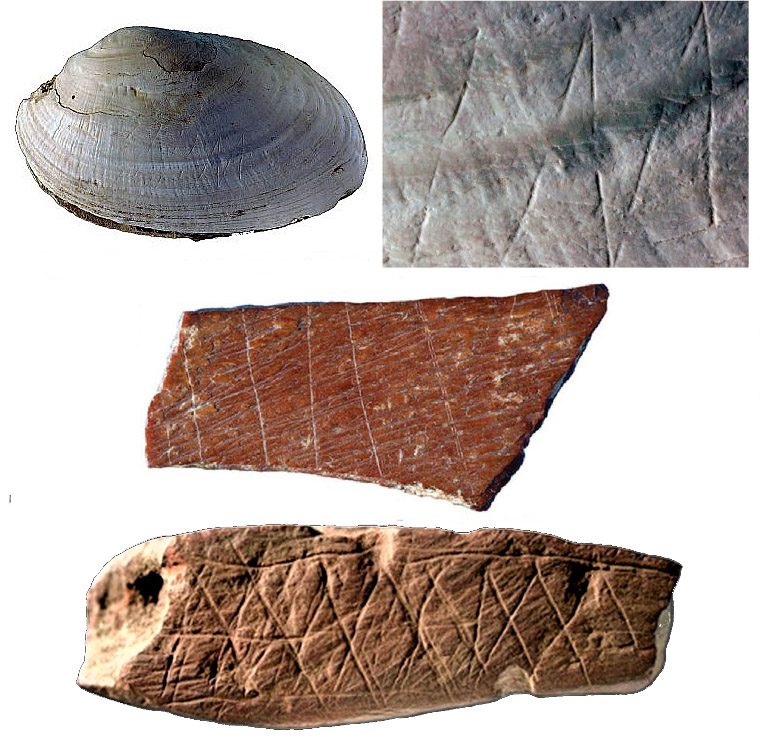
Three earlier articles in Earth-logs originally focussed on what I supposed to be ‘ancient abstract art’.  One highlighted a clam shell that bears carefully etched V-shapes found at the type locality for Asian Homo erectus at Trinil on the Solo River, Java, dated between 430 and 540 ka. Another is about parallel lines etched on a piece of defleshed bone from China dated at 78 to 123 ka, which may be a Denisovan artefact. The most complex is a piece of ochre found in the coastal Blombos Cave 300 km east of Cape Town, South Africa in association with tools ascribed to early modern humans who lived there about 73 ka ago. Fascinating as they seemed at the time, they may hold much greater significance about early-human cognitive powers than about mere decoration. That is thanks to recent evaluation of other simple artefacts made of lines and notches by anthropologists, cognitive scientists and psychologists. Their work is summarised in a recent Nature Feature by Colin Barras (Barras, C. 2021. How did Neanderthals and other ancient humans learn to count? Nature, v. 594, p. 22-25; DOI: 10.1038/d41586-021-01429-6). The European Research Council recently allocated a €10 million grant to foster research into ‘when, why and how number systems appeared and spread’.

Examples of ancient ‘abstract’ art. Top – V-shaped features inscribed on 430-540 ka freshwater clam from Java; Middle – parallel lines etched through red ochre to show white bone, from a possible Denisovan site in China; Bottom – complex inscription on a tablet of iron-rich silcrete from South Africa

Straight lines and patterns made from them are definitely deliberate, whatever their antiquity. In recent times, such devices have been used by artists to render mental images, moods and thoughts as simplified abstractions: hence ‘abstract’ art, such as that of Piet Mondrian and Kazimir Malevich. The term also applies to the dribbles and drabbles of Jackson Pollock and many more styles. But these works are a very recent evolutionary development out of earlier schools of art. So deliberate geometric shapes and arrangements of lines that are many millennia old cannot simply be termed ‘abstract art’. It is certainly not easy to see how they evolved into the magnificence of Palaeolithic figurative cave art that started at least 40 thousand years ago; Yet they are not ‘doodles’. Being so deliberate suggests that they represented something to their makers. The question is, ‘What?’

The research summarised by Barras is mainly that of Francisco d’Errico of The University of Bordeaux, France and colleagues from Canada and Italy (d’Errico, F. et al. 2018. From number sense to number symbols. An archaeological perspective. Philosophical Transactions of the Royal Society B, v. 373, article 2160518; DOI: 10.1098/rstb.2016.0518). They focused their work on two remarkable artefacts. The oldest (72 to 60 ka), from a cave near Angoulême in France, is a fragment of a hyena’s thigh bone that carries nine notches. It is associated with stone tools almost certainly made by Neandethals. The other, from the Border Cave rock shelter in KwaZulu-Natal in South Africa, is a 44 to 42 ka old baboon’s shin bone, which carries a row of 29 prominent notches, and a number of less distinct, roughly parallel scratches. The rock shelter contains remains of anatomically modern humans and a very diverse set of other artefacts that closely resemble some used by modern San people.

Top: notched hyena femur bone fragment associated with Neanderthal tools from SW France. Bottom: notched baboon shin bone from Border Cave, South Africa. Scale bars(Credit: F. d’Errica and L. Backwell)

Microscopic examination of the notches made by a Neanderthal suggest that all 9 notches were cut at the same time, using the same stone blade. Those on the Border Cave shin bone suggest that they were made using four distinctly different tools on four separate occasions. Are both objects analogous to tally sticks; i.e. to count or keep a record of things as an extension to memory? There are other known examples, such as a 30 ka-old  wolf’s radial bone from the Czech Republic having notches in groups of five, suggesting a record of counting on fingers. Yet very similar devices, made in recent times by the original people of Australia, were not used for keeping count, but to help travellers commit a verbal message to memory enabling them to recount it later.

Do read Barras’s summary and the original paper by d’Errico et al. to get an expanded notion of the arguments being debated. They emerge from the truly novel idea that just because the makers of such objects lived tens or even hundreds of thousands of years ago that doesn’t make them intellectually lacking. Imagining in the manner of Victorian scientists that ancient beings such as Neanderthals and H. erectus must have been pretty dim is akin to the prejudice of European colonialists that people of colour or with non-European cultures were somehow inferior, even non-human. To me it is admirable that the European Research Council has generously funded further research in this field at a time when research funding in the UK, especially for the disciplines involved, has been decimated by those who demanded an exit from the EU.

The older Trinil and Blombos patterns appear yet more sophisticated. The pattern on the latter looks very like the kind of thing that someone in a prison cell might draw to keep track of time. It also incorporates the zig-zag element engraved on the Trinil clam shell. Remember that the word ‘Exchequer’ is derived from a tax audit during the reign of Henry I of England that was conducted on a counting board whose surface had a checked pattern

The last known Homo erectus

There are a lot of assumptions made about Homo erectus and, indeed, there is much confusion surrounding the species (see: various items in Human evolution and migrations logs for 2001, 2002, 2003 and several other years). For a start, the name derives from Eugene Dubois’s 1891 discovery of several hominin cranial fragments in sediments deposited by the Solo River in Java. Dubois was the first to recognise in ‘Java Man’ the human-ape ‘missing link’ about which Charles Darwin speculated in his The Descent of Man, and Selection in Relation to Sex (1871). Dubois named the beings Pithecanthropus (now Homo) erectus. Once the “multiregional” versus “out-of-Africa” debate about the origin of anatomically modern humans (AMH) emerged after a variety of H. erectus-like fossils had also turned up in Africa and Europe, as well as in East and SE Asia, ‘Java Man’ was adopted by the multiregionalists as ‘evidence’ for separate evolution of AMH in Asia. Such a view remains adhered to by a tenacious number of Chinese palaeoanthropologists, but by virtually no-one else.

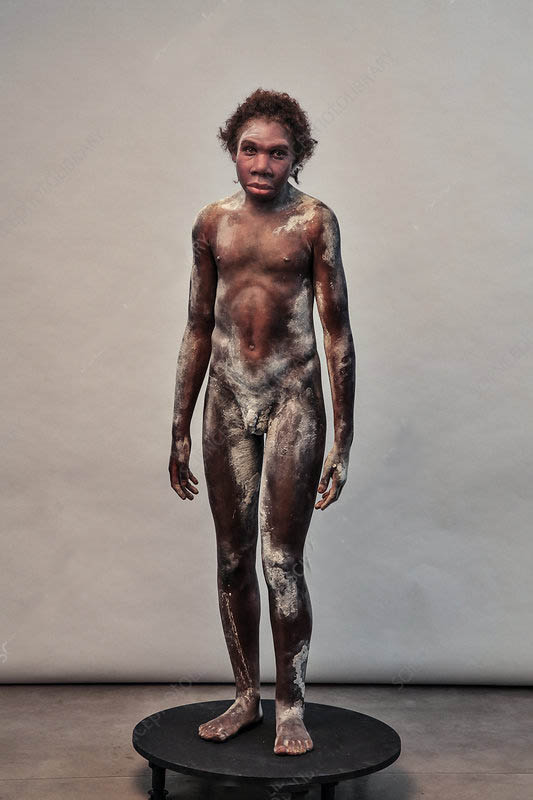
Reconstruction of the Nariokotome Boy from the skeleton found in the Turkana Basin of Kenya (credit: Atelier Daynes/Science Photo Library)

The earliest of the African ‘erects’ were distinguished as H. ergaster, represented by the 1.6 Ma old, almost intact skeleton of Nariokotome Boy from the Turkana area of Kenya. In Africa the specific names ergaster and erectus often seem to be used as synonyms, whereas similar-looking fossils from Asia are almost always referred to as ‘Asian ­H. erectus’. Matters became even more confusing when the earliest human migrants from Africa to Eurasia were discovered at Dmanisi in Georgia (see; Human evolution and migrations logs for 2002, 2003, 2007, 2013). Anatomically they deviate substantially from both H. ergaster and Asian erectus – and from each other! – and at 1.8 Ma they are very old indeed. Perhaps as a palliative in the academic rows that broke out following their discovery, for the moment they are called Homo erectus georgicus; a sub-species. But, then, how can Asian H. erectus be regarded as their descendants. Yet anatomically erectus-like fossils are known in East and SE Asia from 1.5 Ma onwards.

There is another mystery. Homo ergaster/erectus in Africa made distinctive tools, typified by the bifacial Acheulian hand axe. Their tool kit remained substantially the same for more than a million years, and was inherited by all the descendants of H. erectus in Africa and Europe: by H. antecessor, heidelbergensis, Neanderthals and early AMH. Yet in Asia, such a technology has not been discovered at sites older than around 250 thousand years. Either no earlier human migrants into Asia made and carried such artefacts or stone tools were largely abandoned by early Asian humans in favour of those more easily made from woods, for instance bamboo.

In 1996 the youngest Solo River sediments that had yielded H. erectus remains in the 1930s were dated using electron-spin resonance and uranium-series methods. The results suggested occupation by ‘erects’ between 53 and 27 ka, triggering yet more astonishment, because fully modern humans had by then also arrived in Indonesia. Could anatomically modern humans have co-existed with a species whose origin went back to almost two million years beforehand? It has taken another two decades for this perplexing issue to be clarified – to some extent. The previous dates were checked using more precise versions of the original geochronological methods covering a wider range of sediment strata (Rizal, Y. et al. 2019. Last appearance of Homo erectus at Ngandong, Java, 117,000–108,000 years ago. Nature, published online; DOI:10.1038/s41586-019-1863-2). No AMH presence in Asia is known before about 80 ka, so can the astonishment be set aside? Possibly, but what is known for sure from modern and ancient DNA comparisons is that early modern human migrants interbred with a more ancient Asian group, the Denisovans. At present that group is only known from a site in Siberia and another in Tibet through a finger bone and a few molar teeth that yielded DNA significantly different from both living humans and ancient Neanderthals. So we have no tangible evidence of what the Denisovans looked like, unlike Asian H. erectus of whom there are many substantial fossils. Yet DNA has not been extracted from any of them. That is hardly surprising for the Indonesian specimens because hot and humid conditions cause DNA to break down quickly and completely. There is a much better chance of extracting genomes from the youngest H. erectus fossils from higher latitudes in China. Once that is achieved, we will know whether they are indeed erects or can be matched genetically with Denisovans.

See also:  Price, M. 2019. Ancient human species made ‘last stand’ 100,000 years ago on Indonesian island (Science)

Pre-sapiens hominins reached North America?

In 1991-2 palaeontologists excavated a site near San Diego, California where broken bones had been found. These turned out to be the disarticulated remains of an extinct mastodon. One feature of the site was the association of several large cobbles with bones of large limbs that seemed to have been smashed either to extract marrow or as source of tool-making material. The cobbles showed clear signs or pounding, such as loss of flakes – one flake could be fitted exactly to a scar in a cobble – pitted surfaces and small radiating fractures. The damage to one cobble suggested that it had been used as an anvil, the others being hammer stones.  Broken pieces of rock identical to the hammer stones were found among the heap of bones. No other artefacts were found, and the bones show no sign of marks left by cutting meat from them with stone tools. The breakage patterns of the bones included spiral fractures that experimental hammering of large elephant and cow bones suggest form when bone is fresh. Other clear signs of deliberate breakage are impact notches and small bone flakes. Two detached, almost spherical heads of mastodon femora suggest that marrow was the target for the hammering and confirmed the breakage was deliberate.

Mastodon.
Artist’s impression of American mastodon. (credit: Wikipedia)

Since the sediment stratum in which the remains occurred consists of fine sands and silt, typical of a low-energy river system, the chances that the cobbles had been washed into association with the mastodon are very small. The interpretation of the site is that it was the result of opportunistic exploitation of a partial carcase of a young adult mastodon by humans. In the early 1990s attempts were made to date the bones using the radiocarbon method, but failed due to insufficient preserved collagen. That the site may have been much older than the period of known occupation of North America by ancestors of native people (post 14.5 ka) emerged from attempts at optically stimulated luminescence dating of sand grains that can suggest the age of burial. These suggested burial by at least 60 to 70 ka ago. It was only when the uranium-series disequilibrium method was used on bone fragments that full significance of the site emerged. The results indicated that they had been buried at 130.7±9.4 ka (Holen, S.R. and 10 others 2017. A 130,000-year-old archaeological site in southern California, USA. Nature, v.  544, p. 479—493; doi:10.1038/nature22065 – full paper and supplements available free)

Not only is the date almost ten times that of the earliest widely accepted signs of Homo sapiens in the Americas, the earliest anatomically modern humans known to have left Africa are around the same age, but restricted to the Levant. The earliest evidence that modern humans had reached East Asia and Australasia through their eastward migration out of Africa is no more than 60 ka. The date from southern California is around the start of the interglacial (Eemian) before the one in which we live now. It may well have been possible then, as ~14 ka ago, to walk across the Bering Straits due to low sea level, or even by using coast-hugging boats – hominins had reached islands in the Mediterranean and the Indonesian peninsula certainly by 100 ka, and probably earlier. But whoever exploited the Californian mastodon marrow must have been cold-adapted to achieve such a migration. While the authors speculate about ‘archaic’ H. sapiens the best candidates would have been hominins known to have been present in East Asia: H. erectus, Neaderthals and the elusive Denisovans.

Surely there will be reluctance to accept such a suggestion without further evidence, such as tools and, of course, hominin skeletal remains. But these long-delayed findings seem destined to open up a new horizon for American palaeoanthropology, at least in California.

You can find more information on hominin migration here.

https://www.newscientist.com/article/2129042-first-americans-may-have-been-neanderthals-130000-years-ago/