The first generally recognised piece of artwork is abstract in the extreme: a worked piece of hematite with a complex linear pattern etched into it. It comes from Blombos Cave in South Africa, together with similarly engraved bone, shell ornaments and advances in stone tool kits.
Artifacts from Blombos Cave, South Africa (credit: Wikipedia; copyright held by Chris Henshilwood)
Dated at 100 ka, the Blombos culture is regarded by many palaeoanthropologists as the start of the ‘First Human Revolution’. Yet most believe that such a massive cultural shift only properly manifested itself around 40 ka in Europe shortly after its colonisation by anatomically modern humans. It was then that lifelike pictures of animals began to appear on the walls of caves, such as those discovered in Chauvet Cave in France and radiocarbon dated to between 35.5 to 38.8 ka.
Drawing of horses in the Chauvet cave. (credit: Wikipedia)
Such a Eurocentric view is based on the lack of evidence for precedent art of this kind from elsewhere. The adage that 'absence of evidence is not evidence of absence' - attributed to Carl Sagan - recently popped up with sophisticated dating of cave art in the Indonesian island of Sulawesi. The cave-riddled limestones of southern Sulawesi have long been known for artwork on the roofs of caves and in some of their darker recesses, including sketches of local animals, humans and a great many stencils made by blowing a spray of pigment over a hand placed on a rock face. The pictures were thought to be relatively recent. Painting of a dwarf water buffalo and stencils of human hands from a cave in SW Sulawesi (credit: Maxim Aubert, Griffith University, Australia)
A joint Australian-Indonesian group of Archaeologists used a specialist technique to date them (Aubert, M. and 9 others 2014. Pleistocene cave art from Sulawesi, Indonesia. Nature, v. 514, p. 223-227. See also Roebroeks, W. 2014. Art on the move. Nature (News & Views), v. 514, p. 170-171). Like many paintings in limestone caves, with time they become coated with calcite film deposited from water flowing over the rock surface, known as flowstone or speleothem. It is possible to date the film layers using the uranium-series method to derive a maximum age for the encased pigment from speleothem beneath it and a minimum age from the layer immediately overlaying it. One of the hand stencils proved to be the oldest found anywhere, with a minimum age of 39.9 ka, while sketches of animals ranged from 35.4 to 35.7 ka. To see more images and view an interactive video about the Sulawesi finds click here.
The discovery by Maxime Auberts and his colleagues has set the cat among the pigeons as regards the origin of visual art. The paintings’ roughly coincident age with the earliest in Europe raises three possibilities: the artistic muse struck simultaneously with people widely separated since their ancestors’ emergence from Africa; somehow the skills were quickly carried a third of the way around the world from one place to the other; the original migrants from Africa took artistic ability of this kind with them to Eurasia, perhaps as early as 125 ka ago.
Three points need to be considered: whether in Europe or eastern Indonesia, cave art is preserved either on the roofs or in the deep recesses of caves, where it is more likely to survive then in more exposed sites; preservation by speleothem enhances longevity and the oldest works are in limestone caves; many more archaeologists have researched caves in Europe than in the far larger areas of Asia and Africa. A view worth considering is that art may have begun outdoors, in a well-lit site on whatever ‘canvas’ presented itself. The artists’ choice of cave walls in Europe and Indonesia may have resulted from the need for shelter from rain and/or cold, whereas much of Africa and Australia poses little need for ‘interior design’. Besides, what if art began on the most easily available canvas of all – human skin! My guess is that the record will widen in space and deepen in time.
The Arabian Peninsula from the SeaWIFS satellite (credit: Wikipedia)
From time to time between 130 and 75 ka fully modern humans entered the Levant from Africa, which is backed up by actual fossils. But up to about 2010 most palaeoanthropologists believed that they moved no further, because of the growth of surrounding deserts, and probably did not return to the Middle East until around 45 ka. The consensus for the decisive move out of Africa to Eurasia centred on crossings of the Straits of Bab el Mandab at the entrance to the Red Sea, when sea level fell to a level that would have allowed a crossing by rafting over narrow seaways. The most likely time for such n excursion was during a brief cool/dry episode around 67 ka that coincided with an 80 m fall in global sea level: the largest since the previous glacial maximum (see Evidence for early journeys from Africa to Asia).
In 2011 finds reported from the United Arab Emirates of ‘East African-looking’ Middle Palaeolithic tools in sediment layers dated at 125, 95 and 40 ka led some to speculate that there must have been an eastward move from the Levant by anatomically modern humans (see Human migration – latest news). That view stemmed from the fact that the earliest date was during the last interglacial when sea level would have been as high as it is today, and around 95 ka it would have been little different. That report coincided with others about freshwater springs having emanated from uplifted reefs around the edges of the Arabian Peninsula during the last interglacial, and the existence of substantial lakes deep within the subcontinent around that time (see Water sources and early migration from Africa). Substantial funding followed such exciting news and results of new research are just beginning to emerge (Lawler, A. 2014. In search of Green Arabia. Science, v. 345, p. 994-999).
Al Ain, a rare spring-fed oasis in the eastern Rub al Khali near the UAE-Oman border (credit: Wikipedia)
A team led by Michael Petraglia of the University of Oxford has used field surveys and remote sensing to reveal a great many, now-vanished lakes across the Arabian Peninsula, including many in the fearsome Rub al Khali or Empty Quarter. They are linked by an extensive, partly sand-hidden network of palaeochannels, which include several of the major wadis; a system that once drained towards the Persian Gulf. As well as abundant freshwater molluscs and other invertebrates, former lakeshore sediments are littered with huge numbers of stone tools, also with East African affinities (Scerri, E.M.L. et al. 2014. Unexpected technological heterogeneity in northern Arabia indicates complex Late Pleistocene demography at the gateway to Asia. Journal of Human Evolution, In Press http://dx.doi.org/10.1016/j.jhevol.2014.07.002). Using optically stimulated luminescence dating, which shows how long stone objects have been buried, the British team has found tools dating back as long as 211 ka, with a cluster of dates between 90 to 74 ka. Modern humans, Neanderthals and even Denisovans may have made these tools; only associated fossil remains will tell. Yet it is already clear that for lengthy periods – perhaps of a few hundred or thousand years – the hyper-arid interior of Arabia was decidedly habitable. It may have been a thriving outpost of emigrants from Africa, whose abandonment as climate shifted to extreme dryness as the last interglacial gave way to Ice Age conditions, could well have been the source of the great migration that colonised the rest of the habitable world. Petraglia’s team has already courted controversy with their claim for anatomically modern humans’ tools in South Indian volcanic ash beds that date to the Toba eruption around 74 ka: considerably earlier than the more widely accepted post-65 ka dates of human eastward migration.
As Earth Pages reported in December 2011 a refined method of radiocarbon dating that removes contamination by younger carbon has pushed back the oldest accessible 14C dates. Indeed, materials previously dated using less sophisticated methods are found to be significantly older. This has led archaeologists to rethink several hypotheses , none more so than those concerned with the relationship in Europe between anatomically modern humans (AMH) and Neanderthals, especially the extinction of the latter.
The team of geochronologists at Oxford University who pioneered accelerator mass spectrometry (AMS) of carbon isotopes, together with the many European archaeologists whose research has benefitted from it, have now published results from 40 sites across Europe that have yielded either Neanderthal remains or the tools they are thought to have fashioned (Higham, T. and 47 others. The timing and spatiotemporal patterning of Neanderthal disappearance. Nature, v. 512, p. 306-309) . One such site is Gorham’s Cave in the Rock of Gibraltar where earlier dating suggested that Neanderthals clung on in southern Iberia until about 25 ka. Another hypothesis concerns the so called Châtelperronian tool industry which previous dating at the upper age limit of earlier radiocarbon methodology could not resolve whether or not it preceded AMH colonisation of Europe; i.e. it could either have been a Neanderthal invention or copied from the new entrants. Most important is establishing when AMH first did set foot in previously Neanderthal’s exclusive territory and for how long the two kinds of human cohabited Europe before the elder group met its end.
Reconstruction of Neanderthal life from the Neandertahl Museum(credit: Wikipedia)
The new data do not quash the idea of Neanderthals eking out survival almost until the last glacial maximum in the southernmost Iberian Peninsula, since material from Gorham’s Cave could not be dated. However, occupation levels at another site in southern Spain in which Neanderthal fossils occur and that had been dated at 33 ka turned out to be much older (46 ka). So it is now less likely that Neanderthals survived here any longer than they did elsewhere.
Neanderthal remains are generally associated with a tool kit known as the Mousterian that is not as sophisticated as that carried by AMH at the same time. Of the Mousterian sites that yielded AMS ages, the oldest (the Hyaena Cave in Devon, Britain) dates to almost 50 ka. The youngest has a 95% probability of being about 41 ka old. Of course, Neanderthals may have survived until later, but there is no age data to support that conjecture. The earliest known AMH remains in Europe are those associated with the so-called Uluzzian tool industry of the Italian peninsula. In southern Italy Mousterian tools are replaced by Uluzzian between about 44.8 and 44.0 ka, while Mousterian culture was sustained in northern Italy until between 41.7 to 40.5 ka.
Châtelperronian stone tools (credit: Wikipedia)Mousterian blade tool from France (credit: Wikipedia)
Châtelperronian tools associated with Neanderthal remains occur in south-western France and the Pyrenees. The new AMS dating shows that the culture arose at about the same time (~45 ka) as the Uluzzian tool industry began in Italy and ended in those areas where it was used at about the same time (~41 ka) as did the more widespread Mousterian culture. So the question of whether Neanderthals copied stone shaping techniques from the earliest Uluzzian-making AMH more than 500 km to the east, or invented the methods themselves remains an open question. But does it matter as regards the cognitive abilities of Neanderthals? Copying methodology is part and parcel of the success and survival of succeeding AMH, but o too is the capacity to invent useful novelties from scratch. So, yes it does matter, for Neanderthals had sustained the Mousterian culture for tens to hundreds of thousand years with little change.
The upshot of these better data on timing is that AMH and Neanderthals co-existed in Europe for between 2.6 to 5.4 ka; as long as the time back from now to the Neolithic and early Bronze Age. Even allowing for low population density to make contacts only occasional, this is surely too long for systematic slaughter of Neanderthals by AMH. Yet it gives plenty of time for two-way transmission of cultural and symbolic activities, and even for genetic exchanges: assimilation as well as out-competition.
Incidentally, Scientific American’s September 2014 issue is partly devoted to broader issues of human evolution (Wong, K. (editor) The Human Saga. Scientific American, v. 311(No 3), p. 20-75) with a focus on new developments. These cover: a revised time line; the emerging complexity of hominin evolution by veteran palaeoanthropologist Bernard Wood.; the influence of climate change; by Peter de Menocal; cultural evolution in the broad hominin context by Ian Tattersall; a discussion of hominin mating arrangements by Blake Edgar; two contributions on cooperation versus competition among hominins by Frans de Wall and GGry Stix; two articles on recent biological and future cultural evolution by John Hawks and Sherry Turkle (interview).
It is widely thought that anatomically modern humans (AMH) began to diffuse out of Africa during the climatic cooling that followed the last interglacial episode. Periods of build-up of ice sheets, or stadials, also saw falls in sea level, which would have left shallow seas dry and easily crossed. The weight of evidence seems to point towards the narrowing of the Red Sea at the Straits of Bab el Mandab between modern Eritrea and the Yemen. Because the Red Sea spreading axis goes onshore through the Afar region of Ethiopia further north, the Straits today are shallow. Between about 70 and 60 ka, during a major stadial, much of the Bab el Mandab would have been dry. Dating of the earliest AMH remains in Asia and Australasia seems to suggest that the move out of Africa probably began around that time. But, of course, that presupposes the AMH fossils being the oldest in existence, although some would claim that genetic evidence also supports a 70-60 ka migration. Yet, AMH human remains dated at around 100 ka have been found in the Middle East on a route that would also lead out of Africa, but for the major problem of crossing deserts of modern Syria and Iraq. The supposed desert barrier has led many to suggest that the earlier venture into the Levant met a dead end. Should AMH fossils older than 70 ka turn up in Eurasia or Australasia then a single migration becomes open to doubt.
Chart of large human migrations based on variations in mitochondrial DNA in living humans(Numbers are millennia before present.) (credit: Wikipedia)
It appears that challenge to what has become palaeoanthropological orthodoxy has emerged (Bae, C.J. et al. 2014. Modern human teeth from Late Pleistocene Luna Cave (Guangxi, China). Quaternary International, In Press). Scientists from the US, China and Australia found two molar teeth within calcite flowstone in Lunadong (‘dong’ means ‘cave’). That speleothem is amenable to uranium-series dating, and has yielded ages between 70 and 127 ka. That antiquity does open up the possibility of earlier migration, perhaps during the interglacial that ended at about 115 ka when sea levels would have stood about as high as it does nowadays (in fact it was only after about 80 ka that it stood low enough to make a move across the Bab el Mandab plausible). If that were the case, the migration route would have more likely been through the Middle East, perhaps along the Jordan valley and thence to the east. Had there been greater rainfall over what is now desert then there would have been no insurmountable barrier to colonisation of Asia.
These teeth are not the only evidence for earlier entry of AMH into east Asia; a date of 66 ka for a modern human toe bone was recently reported from the Philippines. Yet many experts remain unconvinced by teeth alone, especially from east Asia where earlier humans had evolved since first colonisation as early as 1.8 Ma ago. There are other pre-70 ka east Asian bones with more convincing AMH provenance, however.
There is another approach to the issue of earlier Out of Africa migration; one resting on theoretical modelling of the observed genetic and morphological variation among living Eurasians, especially the decreasing diversity proceeding eastwards (Reyes-Centeno, H. et al. 2014. Genomic and cranial phenotype data support multiple modern human dispersals from Africa and a southern route into Asia. Proceedings of the National Academy of Sciences, v. 111, p. 7248-7253. doi: 10.1073/pnas.1323666111). The authors, from Germany, Italy and France, challenge the single-exit hypothesis based on genetic data, suggesting that those data are also commensurate with several Out of Africa dispersals beginning as early as 130 ka. They favour the Bab el Mandab exit point and migration around Eurasia at that time when sea-level was extremely low during a glacial maximum. They hint at the ancestors of living native Australians and Melanesians being among those first to leave Africa, other Asian and European populations having dispersed from a later wave.
Perhaps the most evocative traces of our ancestors are their footprints preserved in once soft muds or silts, none more so than the 3.6 Ma old hominin trackway at Laetoli in Tanzania, discovered by Mary Leakey and colleagues in 1978. Such records of living beings’ activities are by no means vanishingly rare. In 2003 footprints of Neanderthal children emerged in volcanic ash that had formed on the slopes of an Italian volcano. The fact that the tracks zig-zagged and included handprints seemed to suggest that the children were playing on a tempting slope of soft sediment, much as they do today (see The first volcanologists? and Walking with the ancestors). The muddy sediments of the Severn and Mersey estuaries in England yield younger footprints of anatomically modern humans of all sizes every time tidal flows rip up the sedimentary layers. Now similar examples have been unearthed from 1.0 to 0.78 Ma old Pleistocene interglacial sediments at a coastal site in Norfolk, England, in which stone tools had been found in 2010 .
Coastal exposure of Pleistocene laminated sediments at Happisburgh; the top surface exposes the hominin trackway (credit: Ashton et al. 2014 PLOS1)
A team funded by the Pathways to Ancient Britain Project, involving scientists from a consortium of British museums and universities, rapidly conserved a 12 m2 surface of laminated sediments fortuitously exposed on the foreshore at Happisburgh (pronounced ‘Haze-burra’) by winter storms. It was covered in footprints (Ashton, N. and 11 others 2014. Hominin Footprints from Early Pleistocene Deposits at Happisburgh, UK. PLoS ONE v. 9: e88329. doi:10.1371/journal.pone.0088329). Analysis of the prints suggested a band of individuals who had tramped southwards across mudflats at the edge of an estuary. They were possibly members of an early human species, known as Homo antecessor, skeletal remains of whom are known from northern Spain. The Happisburgh individuals were of mixed size, probably including adults and juveniles: three footprint sets suggested 1.6 to 1.73 m stature; nine less than 1.4 m.
View from above of the well-trodden trackway at Happisburgh, with an enlarged example of one of the foot prints (credit: Ashton et al. 2014 PLoS1)
From pollen samples, East Anglia during the interglacial had a cool climate with pine, spruce, birch and alder tree cover with patches of heath and grassland. That it had attracted early humans to travel so far north from the Mediterranean climate where skeletal remains are found, suggests that food resources were at least adequate. It is hard to imagine the band having been seasonal visitors from warmer climes further south. They must have been hardy, and from the stone tools we know they were well equipped and capable of killing sizeable prey animals, bones of which marked by clear cut marks being good evidence for their hunting skills.
Analysis of DNA from ancient humans has revealed its power decisively in the last few years, and especially at the beginning of 2014 with publication of the sixth full genome of an individual who was not an anatomically modern human (Prüfer, K. and 44 others 2014. The complete genome sequence of a Neanderthal from the Altai Mountains. Nature, v. 505, p. 43-49). The newly sequenced material came from a toe bone found in the Denisova Cave in the Altai Mountains of southern Siberia; the same location made famous in 2010 by genetic evidence for unknown late hominins, the Denisovans . The bone occurred in the same layer of cave sediment, dated at 50.3 ka, which yielded the Denisovan finger bone, but from a lower sublayer. So there is no firm evidence that both groups cohabited the cave.
The genome reveals that the individual was female and related to the three Neanderthals from Croatia and another infant Neanderthal from the Caucasus, also analysed previously by Svante Pääbo’s team at the Max Planck Institute for Evolutionary Anthropology in Leipzig, Germany (Note that the toe-bone team also includes co-workers from US, Chinese, Austrian, French and Russian institutions). The closest statistical link is to the Caucasian infant Neanderthal’s DNA. Interestingly, it proved possible to demonstrate that the Siberian Neanderthal woman was from a population that was clearly inbred, her parents having been related at the level of half siblings. Her mtDNA shows that she shared a common ancestor with all 6 Neanderthals from whom mtDNA has been analysed.
Comparing genomes from the single Denisovan, the 5 Neanderthals and living humans from sub-Saharan Africans gives an estimated 550 to 765 ka time of divergence of a population leading to anatomically modern humans from the progenitors of Neanderthals and the Denisovan. The Neanderthal-Denisovan split was roughly 380 ka ago. It was already known that non-African living humans contain genetic evidence for past interbreeding with Neanderthals and that some people in Asia, Australia, Melanesia and the Philippines had acquired genes from Denisovans. More refined comparisons now show Oceanians to have 3 to 6% Denisovan make-up with Asians in general sharing 0.2%. Neanderthal to modern non-African gene flow is now estimated at between 1.5 and 2.1%, with Asians and Native Americans being at the high end. Neanderthals and Denisovans also interbred, but only at the level of about 0.5% inheritance. However, that genetic sharing involved DNA regions known to confer aspects of immunity and sperm function, that also made their way into living non-African humans.
Since the common ancestor of Neanderthals and Denisovans left Africa long before modern humans appeared on the scene it would be expected that living Africans’ genomes would show the same level of similarity with both the now extinct groups, if all three originally shared a common ancestor. A surprising outcome from comparison of Neanderthal and Denisovan genomes with those of living sub-Saharan Africans is that there is a significant bias towards Neanderthal rather than Denisovan comparability. There are three possibilities for this bias. After the Neanderthal-Denisovan split the former group may have continued to interbreed with the group leading to modern Africans (and indeed to modern non-Africans): that would require Neanderthal genetics to have originated in Africa before they migrated to Eurasia. Secondly, the gene flow could have been from the ancestors of modern humans to Neanderthal progenitors, making descendant Neanderthals more like modern humans. Prüfer et al. suggest that the evidence is less supportive of both and weighs towards a third possibility; that the Denisovans interbred with an unknown contemporary hominin, whose genetic make-up was yet more different from that of all three known groups of the late Pleistocene and therefore their common ancestor . This may have been Homo antecessor or possibly H. erectus who survived until as late as 20 ka in SE Asia.
Family tree of the four groups of early humans living in Eurasia 50,000 years ago and the gene flow between the groups due to interbreeding. Image credit: Kay Prüfer et al.
As other commentators on the paper (Birney, E. & Pritchard J.K. 20113. Four makes a party. Nature, v. 505, p. 32-34) have observed, ‘…Eurasia during the late Pleistocene was an interesting place to be a hominin, with individuals of at least four quite diverged groups living, meeting and occasionally having sex.’ All this arises quite convincingly from the genetics of only 7 ancient individuals, to show that it may no longer be appropriate to consider human evolution as a tree or a bush linking permanently separated species. Either it is the history of a single, polymorphic species – remains of 1.7 Ma old Homo georgicus show clear evidence of such polymorphism – or a better metaphor for human development is an interwoven basket or twine. Rumour has it that attempts are being made to sequence an H. antecessor dated at 900 ka from Gran Dolina Cave in the Atapuerca Mountains in Northern Spain: as they say, ‘Watch this space’!
The Sima de los Huesos (‘pit of bones’) site in the cave complex of Atapuerca in northern Spain has yielded one of the greatest assemblages of hominin bones. Well-preserved remains of at least 28 individuals date to the Middle Pleistocene (>300 ka). Anatomically the individuals have many Neanderthal-like features but also show affinities with earlier Homo heidelbergensis, who is widely considered to be the common ancestor for anatomically modern humans and Neanderthals, and perhaps also for the mysterious Denisovans. Most palaeoanthropologists have previously considered this Atapuerca group to be early Neanderthals, divergent from African lineages because they migrated to and became isolated in Europe.
Human cranium from the Sima de los Huesos, Atapuerca mountains (Spain). (credit: Wikipedia)
The riches of the Sima de los Huesos ossuary made it inevitable that attempts would be made to extract DNA that survived in the bones, especially as bear bones from the area had shown that mtDNA can survive more than 4300 ka. There has been an air of expectancy in hominin-evolution circles, and indeed among the wider public, since rumours emerged that the famous Max Planck Institute for Evolutionary Anthropology in Leipzig, Germany had initiated genetic sequencing under the direction of Svante Pääbo: perhaps another ‘scoop’ to add to their reconstructing the first Neanderthal and Denisovan genomes. The news came out in the 5 December 2013 issue of Nature, albeit published on-line (Meyer, M. and 10 others 2013. A mitochondrial genome sequence of a hominin from Sima de los Huesos, Nature, v. 504; doi:10.1038/nature12788) with a discussion by Ewan Callaway (Callaway, E. 2013. Hominin DNA baffles experts Nature, v. 504, p. 16-17).
The bafflement is because the mtDNA from a femur of a 400 ka individual does not match existing Neanderthal data as well as it does that of the Denisovan from Siberia by such a degree that the individual is an early Denisovan not a Neanderthal. Northern Spain being thousands of kilometres further west than the Denisova cave heightens the surprise. Indeed, it may be on a lineage from an earlier hominin that did not give rise to Neanderthals. The full Neanderthal and Denisovan genomes suggest that they shared a common ancestor up to 700 ka ago. So the Sima de los Huesos individual presents several possibilities. It could be a member of an original population of migrants from Africa that occupied wide tracts of Eurasia, eventually to give rise to both Neanderthals and Denisovans. That genetic split may have arisen by the female line carrying it not surviving into populations that became Neanderthals – mtDNA is only present in the eggs of mothers. Mind you, that begs the question of who the Neanderthal females were. Another view is that the Sima de los Huesos individual may be descended from even earlier H. antecessor, whose 800 ka remains occur in a nearby cave. Pääbo’s team have even suggested that Denisovans interbred with a mysterious group: perhaps relics of the earlier H. antecessor colonists.
Established ideas of how humans emerged, based on bones alone and very few individuals to boot, are set to totter and collapse like a house of cards. Interbreeding has been cited three times from DNA data: modern human-Neanderthal; modern human-Denisovan and Denisovan with an unknown population. Will opinion converge on what seems to be obvious, that one repeatedly errant species, albeit with distinct variants, has been involved from far back in the human evolutionary journey? There seems only one avenue to follow for an answer, which is to look for well preserved H. heidelbergensis. H. antecessor and H. erectus remains and apply ever improving techniques of genetic retrieval. Yet there is a chance that stretches of ancient DNA can be teased out of younger fossils.
Whatever controversies still linger about when they arrived in the Americas, there can be little doubt that humans crossed what are now the Bering Straits from NE Asia using the landmass of Beringia exposed by sea-level fall during the last ice age. Of course, there have been controversies too about who they were; probably of East Asian origin but the waters muddied by the celebrated case of 9300 year-old Kennewick Man whose skull bears close resemblance to those of modern Europeans but also to those of the Ainu of northern Japan. Genetic studies of Y-chromosome DNA suggested that all early Americans stemmed from 4 separate colonising populations who may have entered via Beringia by different routes (coastal and across the interior of North America) and at different times. Now, perhaps unsurprisingly, a new kind of data seems set to stir things up immeasurably.
Famous Lacotans of the Dakotas (credit: Wikipedia)
After the triumphs of reconstruction of the Neanderthal and Denisovan genomes and the corollary that both interbred with anatomically modern humans, it was only a matter of time before the palaeogenetics of humans would be pushed back in time. The oldest remains to yield DNA are those of a boy from near Lake Baikal in Siberia excavated by Soviet archaeologists along with a rich trove of cultural remains, including female effigies. Such figurines are rare in Siberia, most being known from western Eurasia. Radiocarbon dating of the bones gave an age of around 24 ka, just before the last glacial maximum. The genetic information, specifically mtDNA and Y-chromosome DNA are potentially revolutionary (Raghavaan and 30 others 2013. Upper Palaeolithic Siberian genome reveals dual ancestry of Native Americans. Nature online doi:10.1038/nature12736).
The mtDNA (passed down the female line) places the individual in haplogroup U, but with little relation to living members with that ‘signature’. Modern haplogroup U is mainly confined to people now living in North Africa, the Middle East, south and central Asia, Europe and western Siberia up to the area where the skeleton was found but rare further to the northeast. The male-specific Y-chromosome DNA is related to haplogroup R widely spread today among men living in western Eurasia, south Asian and in the vicinity of the find. When the data were subject to statistical tests routinely used in distinguishing existing p[populations and lineages within them (principal component analysis) a surprise emerged. The boy plots separately from all living populations but halfway between modern Europeans and the genetic trend of native Americans: i.e. descendants from the population to which he belonged could have evolved towards both extant groups but certainly not to East Asians. Plotted on a map, the degree of shared genetic history of the ice-age south Siberian boy to modern humans shows links westward to Europeans and eastwards to northeastern Siberians and hence to native Americans. Up to 38% of native American ancestry may have originated by gene flow from the population to which the boy belonged, similarly for Europeans as a whole.
The research helps explain traces of European genetic ‘signatures’ in native Americans rather than the commonly held view that this resulted from post-Columbian admixture with European invaders. It also links with the European-looking skulls of a number of early Americans which do not resemble those of East Asians once thought to be their forebears.
The earliest known human fossils outside of Africa were found at a site near Dmanisi in Georgia, between 1991 and 2005, following the discovery there in 1984 of primitive stone tools together with early Pleistocene animal bones. The Dmanisi finds occur with those of sabre-toothed cats and giant cheetahs, and so are probably not interments or in some kind of dwelling but were probably dragged into an underground carnivore den.
The five Dmanisi skulls of Homo erectus georgicus (credits; M.S. Ponce de Leon & P.E. Zollkofer, University of Zurich)
Initially the remains were assigned to a new species – Homogeorgicus – but are now believed to be a subspecies of H. erectus. The finds are anatomically rich, with fossils of at least 5 individuals, both male and female, including 5 well-preserved skulls. Analysing them has been a long process. Details of the best preserved, indeed the most complete early Homo skull ever found, have taken 8 years since its discovery in 2005 to reach publication (Lordkipanidze, D. et al. 2013. A complete skull from Dmanisi, Georgia, and the evolutionary biology of early Homo. Science, v. 342, p. 326-331, DOI: 10.1126/science.1238484).
To the surprise of palaeoanthropologists, this specimen of Homoerectus georgicus has some ape-like features, including a protruding upper jaw in a relatively large face that most resembles the oldest African H. habilis, from Ethiopia, dated at 2.3 Ma. With a braincase of 546 cm3, the skull is on the small side of H. habilis and in the range of late australopithecines. Yet, like the much younger Homo floresiensis – dubbed ‘the Hobbit’ – the association with tools, of the most basic Oldowan type, places it a cut above non-human hominins. The rest of the skeletal fossils show individuals with modern human proportions, albeit somewhat diminutive.
Surprises multiplied when comparative studies of all 5 skulls were complete. They are so different that, if found in widely separated specimens, would be placed in different species by most anatomists. Ruling out the chance association of several human species far from their Africa origins – few would suggest that up to 5 species left Africa at the same time and stuck together – a suggested explanation is that they represent a population of a human lineage in the process of evolving to a new species. The strength of this hypothesis contradicts the other recent view that several human species may have cohabited environments at different times. It also seems to throw into question the adoption of the name H. erectus for later human populations in both Africa and Eurasia: unless, as the authors tentatively suggest, there was genetic continuity and connectivity over large distances between both evolving populations
One of the oddities of using human genetic material passed down the male (from Y chromosomes) and female lines (from mitochondria) to assess when fully modern humans originated is that they have hitherto given widely different dates: 50 to 115 ka and 150 to 240 ka respectively. Twice to three-times the age for a putative ancestral ‘mother’ compared with such a ‘father’ for humanity raised all kinds of problematic issues for palaeoanthropology, such as a possibly greater ‘turnover’ of lines of descent among males perhaps due to riskier lifestyles. Y-chromosome data limited speculation on the timing of human colonisation outside of Africa to a maximum of 60 ka, even though there is fossil and archaeological evidence for a much earlier presence in the Levant and India. The difference also questions the validity of molecular-clock approaches to evolutionary matters. Two new studies have lessened the phylogenetic strains.
One examines Y chromosomes in 69 males from nine diverse populations from Africa, Eurasia and Central America (Poznik, G.D. and 10 others 2013. Sequencing Y chromosomes resolves discrepancy in time to common ancestors of males versus females. Science, v. 341, p. 562-565). The US-French team applied sophisticated statistics as well as the elements of a molecular clock approach to both Y-chromosome and mitochondrial DNA, discovering in the process a hitherto unresolved feature in the African part of the male ‘tree’. The outcome is a significant revision of both male and female paths of descent: 120 to 156 ka and 99 to 148 ka to the last common ancestor in both lines. The upper limit is somewhat lower than the age of fossil evidence for the earliest anatomically modern humans.
The second study zeros-in on the European story, by examining the Y-chromosome data of 1200 men from Sardinia (Francalacci, P. and 38 others. Low-pass DNA sequencing of 1200 Sardinians reconstructs European Y-chromosome phylogeny. Science, v. 341, p. 565-569) calibrated to some extent by the date when Sardinia was first colonised (7.7 ka). It too revealed new detail that enabled the Italian-US-Spanish team to refine the time when features of Sardinian Y-chromosome DNA would coalesce with those from the rest of the world. In this case the date for a last common paternal ancestor goes back to between 180 to 200 ka, more similar to the old dates for ‘African Eve’ and the earliest modern human fossils than to either that for male or female lines arrived at by Posnik et al. (2013), which are significantly younger.
Map of early migrations of modern humans based on Y chromsome data (credit: Wikipedia)
Equally interesting are the comments on both papers in the Perspectives section of the issue of science in which they appear (Cann, R.L. 2013. Y weigh in again on modern humans. Science, v. 341, p. 465-7).Rebecca Cann of the University of Hawaii Manoa considers the two sets of results from Y-chromosomes potentially capable of refining models for the migration times of modern humans out of Africa and their interactions with the archaic populations that they eventually displaced from Europe and central and southern Asia (Neanderthals, Denisovans and Homo erectusrespectively). She believes that will include signs of earlier excursions that the generally accepted diaspora between roughly 60 and 50 ka seemingly constrained by the previous 50 to 115 ka estimate for the last common paternal ancestor. That would help explain the presence of modern humans in India at the time of the Toba eruption (71 ka).
Sediments built up on lake beds are a fruitful source of proxy data for all kinds of time series – mainly climatic and ecological. Pollen, other organic remains, various stable isotopes, and a range of organic geochemical data calibrated to time using magnetostratigraphy, C-14 dating and astronomical ‘pacemakers’. Suddenly there is another proxy: cannabinol, the metabolite of tetrahydrocannibinol the principal psychoactive component of marijuana (Lavrieux, M. et al. 2013. Sedimentary cannabinol tracks the history of hemp retting. Geology, v. 41, p. 751-754). The compound is detectable at the parts per billion level thanks to advances in monitoring the use of drugs, particularly in sports persons – it ends up in the urine of users. So the paper by a team of French Earth scientists has a somewhat irresistible draw, the more so from the opening sentence of its abstract, ‘Hemp (Cannabis sp.) has been a fundamental plant for the development of human societies’. Indeed it has, for the earliest records date back to the Neolithic in China, perhaps back to 12 ka ago.
Cultivation of hemp for fibre and grain in France. (credit: Wikipedia)
But then all becomes clear: they speak of hemp fibres used in rope and some textiles, and the climatic adaptability of the plant that has ensured its spread from Equator to north of the Arctic Circle and lesser southern latitudes. But there is an element of tongue-in-cheek, or at least so it seemed to me, as the objective of their research is to chart to emergence and rise of rope making in Central France. Freeing the useful fibres from Cannabis stems requires the plant to be soaked and subject to microbial action that breaks down soft tissue, know as retting that is also used in flax and coir production. The resin breaks down to cannabinol, which is therefore a perfect proxy for Hemp retting.
Lac d’Aydat is geologically famous as it formed when a lava flow from one of the puys of the Massif Central blocked a valley and became a dam. It figured in the pioneering volcanological research of English geologist George Julius Poulett Scrope. Its new place in science rests on Lavrieux et al.’s chronologically calibrated time series for retting from the lake’s muds. Hemp pollen in the section betrays the start of Cannabis cultivation in the Auvergne between 500-650 AD, but hemp retting in the lake is marked by a cannabinol spike in the 13th century and increases in pollen. It fell-off sharply in the late 19th century, probably as a result of being outcompeted by more easily processed cotton.
Almost 7 centuries of Cannabis processing in central France actually took a toll as cannabinol is toxic to fish and cattle. Despite a 1669 Royal Ordinance against hemp retting in French rivers it continued unchecked in Lac d’Aydat, but more likely than secret retting tucked away in a remote corner of France it stemmed from the ordinance being widely flouted. That it ended with the rise of cotton is not so convincing as hemp is still a staple in rope manufacture, and when the US entered World War II large tracts of land were placed under Cannabis to produce naval cordage; the reason why it still grows wild in abundance across many States. There is plenty of evidence, including this, that use of Cannabis for cordage came rather late, and plenty in support of its cultivation and wide spread before the Iron Age for ‘relaxation’.
It is always refreshing when physical anthropologists perform experiments as well as pondering on bones. It turns out that examining the bio-mechanics of college baseball players can provide useful clues about where in fossil anatomy to look for signs of potential big-game hunters. Anyone who can hurl a baseball, or one of the smaller but much harder red ones preferred by non-Americans, at speeds exceeding 100 kph could in all likelihood bring down a substantial prey animal with a rock and even more so with a spear. At the heart of an important examination of what our forebears might have done to get a meaty meal (Roach, N.T. et al. 2013. Elastic energy storage in the shoulder and the evolution of high-speed throwing in Homo. Nature, v. 498, p. 483-486) is a US-Indian team’s sophisticated study of college baseball players’ throwing action using high-speed video, radar and precise timing techniques.
Matt Kata throwing for the Houston Astros (Photo credit: Wikipedia)
It seems that there are several physiological phases in demon ball throwing: rotation of the torso; rotation flexion and extension of the shoulder; flexion and extension of the elbow; and wrist extension. All of these contribute to acceleration of the ball before release. While the thrower steps forward the arm is cocked so that ligaments, tendons and muscles crossing the shoulder become stretched, thereby storing energy. During the acceleration phase the bend in the elbow is snapped straight adding yet more power. Readers should note the difference between this action and that of a bowler in cricket, where the elbow snap is banned on pain of severe penalty and public humiliation of the bowler who ‘chucks’. Since a fast bowler also adds energy by running into the crease, this is a humanitarian aspect of the Rules of cricket, although several legal West Indian bowlers of the past 40 years are still remembered with terror by their batsmen contemporaries. No such stricture is placed on the baseball pitcher who has no run-up.
These observations focus attention on the structure of shoulder and elbow, yielding a robust means of predicting how fast throwers with different configurations may have thrown objects. Chimpanzees make poor players of ball games, although they will throw the odd stick, but just for aggressive show. The same goes for the earliest hominins for which we have suitable fossil material: australopithecines may occasionally have eaten carrion but they couldn’t throw rocks or spears with enough force to bring down anything and their throwing range would have been pathetic. Not so Homo erectus! They were well equipped in the hurling department and could, were they so inclined, have hunted equally as well as modern humans. Interestingly, earlier hominins had some of the physiological necessities of decent throwing, but not all of them. So it seems that the full combination emerged in the evolution of our own genus around 2 Ma ago,
This is in contrast to a view held by some anthropologists, such as Christopher Boehm of the University of Southern California, that big game hunting using projectile weapons emerged only with anatomically modern humans after 250 ka, and most likely only reached its acme 45 ka ago. That assumption, at least by Boehm, is central to notions of how social activities centred on meat sharing may have helped evolve morals, such as altruism and shame (see Boehm, C. 2012. Moral Origins: The Evolution of Virtue, Altruism and Shame. Basic Books, New York). That H.erectus would have been able to harness sufficient energy to kill at a distance casts doubt on such assertions. Mere foraging does not require throwing-capable physiology, so how it evolved in early humans with neither the inclination nor bodies to at least begin throwing projectiles at potential prey is something that school might consider.
Around 73 thousand years ago a supervolcano in Sumatra erupted on a scale unprecedented in the last 2 million years. It left a 100 by 30 km elliptical caldera now occupied by Lake Toba, and explosively ejected 2800 of magma, about 800 km3 falling as ash as far afield as the Greenland ice cap. Although ice-core records show little if any sign of associated climate change in polar regions, the vast amount of ash and sulfate aerosols blasted into the stratosphere must have had some ‘global winter’ effect. Large areas of South Asia were blanketed by thick beds of ash. Human migration from Africa into Eurasia was probably underway at the time, indeed stone tools are found directly beneath and above the Toba ash in southern India and Malaysia. Some palaeoanthropologists have seen the stresses imposed by the Toba eruption as possible means of reducing the entire human population to a mere few thousand: a genetic ‘bottleneck’ that could have led to rapid evolution among surviving generations that may have shaped changes in human behaviour and culture.
Landsat image of Lake Toba, the largest volcanic crater lake in the world. (credit: Wikipedia)
There is a widening range of views on the climate changes that may have followed Toba. It has even been suggested that global mean surface temperature fell by as much as 10°C (Robock, A. et al. 2009. Did the Toba volcanic eruption of ∼74 ka B.P. produce widespread glaciation?Journal of Geophysical Research: Atmospheres, v. 114, DOI: 10.1029/2008JD011652), although not so far as to produce a worldwide glacial surge but sufficient to devastate vegetation. This bleak look back to a critical point in human affairs resulted from modeling of the effects of a global reflective cloud of ash and sulfate. A later modeling study factored in particle and aerosol sizes (Timmreck, C. et al. 2010. Aerosol size confines climate response to volcanic super-eruptions. Geophysical Research Letters, v. 37, doi:10.1029/2010GL045464) to give a less dramatic, but still severe maximum global cooling due to Toba of ~3.5°C.
The focus has now shifted from modelling to a more direct look at the environmental effects of the Toba super-eruption, preserved in sediments beneath Lake Malawi in southern Africa (Lane, C.S. et al. 2013. Ash from the Toba supereruption in Lake Malawi shows no volcanic winter in East Africa at 75 ka. Proceedings of the National Academy of Science, v. 110, doi/10.1073/pnas.1301474110). The sediments contain a thin ash layer that is very different from those produced by East African Rift volcanism but chemically and texturally similar to the Toba ash from the Indian Ocean and India. The sediments, diatom fossils and chemical biomarkers immediately above the ash show little sign of a significant temperature fall. At most it records a 1.5°C fall, and the authors conclude little chance of a human genetic bottleneck among Africans living at the time.
There is clearly a conflict between results of modeling and real-world climatic data, which is interesting in its own right. But the Malawi findings do not rule out ‘bottlenecks’ resulting from severe stress in South Asia where the ash itself would have severely affected game and vegetation for long enough to face migrating human bands with the prospect of starvation. Obviously, some survived to move on and to leave their tools behind on top of the Toba Ash.
Australopithecus sediba 1 (MH1) left, Au. afarensis( AL 288-Lucy) centre and Au. sediba 2 (MH2) right. (credit: L. R. Berger, University of the Witwatersrand, via Wikipedia)
The remarkable find of two well-preserved skeletons of a 2 Ma hominin in a South African cave in 2008 and publication of their preliminary analysis in 2011 seemed set to shake up human origins research. There was a more or less complete hand – indeed an entire arm and shoulder – a lower leg with ankle bones, a near-complete head and lots more besides. Most was from one female individual, but significant bits from two others that allowed a well-supported reconstruction of the new species Au. sediba. The discoverer, Lee Berger of The University of the Witwatersrand, South Africa (well he initiated the dig, but his young son found the first critical material) is so excited 5 years on that he uses hip-hop phraseology, she ‘got swag’, presumably assuming that means pretty cool (Gibbons, A. 2013. A human smile and funny walk for Australopithecus sediba. Science, v. 340, p. 132-133), but on the street there are other meanings and attitudes towards the phrase and unwary use is not advised.
More details now have emerged in a special issue of Science introduced by Berger in less fulsome language (Berger, L.R. 2013. The mosaic nature of Australopithecus sediba. Science, v. 340, p. 163). As the title suggests, the surprise lies in almost every critical part of the species. Although the spine shows curvature (lordosis) needed for an animal evolved from a quadruped to bipedality in order to balance when upright, the ankle bone is unlike the flat-based human one, being pointed as is that of chimpanzees. As a result walking would have involved an unusual and perhaps unsteady gait; the individuals did fall over into a death pit and one commentator thought the gait might have seemed ‘provocative’. An unusual knee bone is thought to be an evolved countermeasure to such exaggerated mincing. Despite the very human-like hand, extremely long arms and shoulders remarkably like those of the favoured jacket of a star of the BBC series The Dragons’Den point to habitual clambering in trees. Authors of a report on dentition suggest a close similarity to that of the Au. africanus, living at the same time and also found in the same system of fossil-rich caves north-west of Johannesburg, South Africa. Controversially, the tooth team suggests a closer similarity of both to early Homo species than to earlier australopithecines in East Africa, which would shift the focus of human origins to southern Africa. Counter to that view is a find of 400 ka-older, putative human remains in Ethiopia. Yet they take the form of a lower jaw that resembles that of Au. sediba.
The emerging, more detailed picture is not tidy, as suspected from early examination of the Malapa hominins. One thing is for sure, the South African caves are being swarmed over, which paid dividends in 2011 just 15 km from the Malapa cave with another embarrassment of riches at Sterkfonein in the form of abundant foot bones of a currently un-named species of roughly the same age. Things are beginning to take on an element of national pride, with ‘The Birthplace’ at stake: Kenya, Tanzania, Ethiopia or South Africa?
A press release from the Max Planck Institute for Evolutionary Anthropology in Leipzig, Germany, announces the completion of the most precise genome from a third Neanderthal individual. For the first time it is possible to distinguish copies of the genes inherited by the individual from both parents. The data release coincided with a review of genetic evidence for interbreeding between early Homo sapiens and other species.
Modern human migration out of and within Africa relative to the domains of coeval archaic humans 1 = modern humans 2 = Neanderthals 3 = other archaic humans (credit: Wikipedia)
Liang Bua cave on Flores, Indonesia where fossils of Homo floresiensis were discovered in 2003 (credit: Wikipedia)
When they were first discovered in Liang Bua cave on the Indonesian island of Flores diminutive hominin remains sparked off a heated debate. Part of the reason for dispute was the age of the deposit in which they were found (18 to 850 ka), so young that it indicated possible cohabitation on the island with anatomically modern humans. On the one hand, the finders claimed that they represented a previously unknown hominin species. Other specialists considered that the tiny size (adults no taller than about a metre with brain capacity around that of australopithecines) indicated some congenital dwarfism.
Homo floresiensis skull (credit: Wikipedia)
In the 9 years since the remains came to light, several anatomically features have been cited to support the view of a distinct hominin species: their lack of a chin and different arm and shoulder anatomy, which H. floresiensis shares with H. erectus and H. georgicus. The fossils are associated with simple stone tools and bones of a variety of prey animals that show cut marks and charring, suggesting that cooking was part of these hominins’ lifestyle; despite having small brains they were not unintelligent.
Substantial remains of nine or more individuals have been unearthed so that anatomical detail is almost complete. In 2007 details were published of three well-preserved wrist bones from the original find. They too were sufficiently different from modern and Neanderthal humans to warrant confirmation that H. floresiensis is indeed a distinct hominin species. Further work on wrist bones from other individuals has now more or less put the seal on this identity (Orr, C.M. et al. 2013. New wrist bones of Homo floresiensis from Liang Bua (Flores, Indonesia). Journal of Human Evolution, v. 64, p. 109-129), the authors concluding that ‘The pattern of morphology … supports H. floresiensis as a valid taxon and refutes the hypothesis that these specimens represent modern humans with some kind of pathology or growth disturbance’. They take matters further by suggesting that their lineage was established before divergence of modern humans and Neanderthals. As with the shoulder morphology that of their wrists would have somewhat hindered tool-making dexterity, but nonetheless they did make tools.
Scientific American is renowned for its eminently readable reviews of both emerging and perennial topics. Its February 2013 issue takes on one that is guaranteed to run and run; the evolutionary course that produced us (Harman, K. 2013. Shattered ancestry. Scientific American, v. 308 (February 2013), p. 36-43). Since its launch Earth Pages has covered much of the new science in the field but did not anticipate the depth of the stir towards which it has led.
For a decade it has become increasingly clear that anatomically modern humans are unique in one respect: they are the first species in perhaps 4 million years to be the sole extant member of the cladistic tribe Hominini. As recently as 30 ka Homo sapiens shared the planet with Neanderthals, Denisovans, H. erectus and H. floresiensis. At the time the genus Homo emerged around 2.0-2.5 Ma ago there were at least four other fossil groups that shared the major characteristic of upright gait, all australopithecines in ‘robust’ and ‘gracile’ guises.
As time goes by there will likely be more fossil discoveries that show important anatomical signs of other novel evolutionary divergence, which therefore warrant new species. Pliocene-Pleistocene time is becoming crowded, and the more diversity in its fossil record the less likely it is that some clear evolutionary pathways can be devised to explain just what was going on. Katherine Harmon of Scientific American’s editorial team touches on the thorny issues of upright walking and gait, tree climbing, precise use of the fingers and thumb, and brain size that are raised by 22 species; 2 living and 20 extinct.
Genetics clearly indicates that our nearest living relatives belong to two species in the genus Pan(chimpanzees and bonobos). It has been generally assumed that the common ancestor of this extant kinship some 8 Ma back was chimp-like, and that evolutionary divergence from its habits and anatomy produced the growing ‘bramble patch’ of hominin evolution. That assumption is based on the principle of parsimony, i.e. the simplest view of the evidence – what there is now and fragments from the past eight million years. The trouble is there is a dearth of fossils that can be said to be en route to chimps in some way.
In fact today’s chimps and bonobos are more or less restricted to clambering in tropical forest habitats, for which they are well-adapted. Maybe they are the survivors of evolutionary vagaries just as complex as those leading to us. For one thing, almost embarrassingly, their brain size is substantially larger than those of quite a few fossil hominins; and why not? How they behave socially may possibly have arisen as part of their specialisation too, of which more shortly. Our big difference from them is being supreme generalists, as well as consciousness.
All the fossils classed as hominins show some signs of being able to walk upright, classically the forward position of the foramen magnum at the base of the skull where it joins to the backbone, but in some cases merely the geometry of the hip joint to the pelvis for that is all that has been found. Yet that anatomical likelihood glosses over the vital detail of the actual gait – heel-to-toe like us (Australopithecus afarensis), on the outside edge of the foot akin to chimps (Ardepithecus ramidus) or differently again but possible as efficient as us (Au. sediba). Then there is the matter of arboreal abilities: chimps are masters despite their bulk, but every hominin whose foot bones have been found shows some evidence of grasping with the big toe. Indeed humans are pretty nimble climbers but do not brachiate from branch to branch.
As regards the hands, an interesting point is that while chimpish knuckle walking is not seen in fossils, Ardipithecus probably could walk on all fours with hands flat on the ground but had fingers quite capable of precise manipulation, an ability shown spectacularly well by 2 Ma old Au. sediba. Upright walking may have evolved more than once, and it is even possible that chimps evolved specifically for climbing in forestlands, their highly adapted grasping hands only capable of knuckle walking on the ground.
Oreopithecus bambolii from the Upper Miocene of northern Italy(credit: Wikipedia)
The late-Miocene of Africa – the likely time range for the Pan-Homo common ancestor – is a fossil desert as regards primates. Yet its Italian equivalent has yielded a fascinating and well-preserved creature; Oreopithecus bambolii has skeletal features compatible with an upright posture and bipedal locomotion. Until the African Miocene yields something more appropriate, Oreopithecus is a candidate for a common ancestor, and interesting in another respect. Its dentition does not include prominent canine teeth that in the predominantly vegetarian, though occasionally carnivorous, Pan species serve well in their aggression-based, hierarchical social systems, as they do in the even more spectacular baboons.
Christopher Boehm, primate behaviouralist cum anthropologist, in his recent book Moral Origins (2012 Basic Books, ISBN-13: 978-0465020485) uses the principle of parsimony to reconstruct the social system of the Miocene Pan-Homo common ancestor from those of chimps and surviving human hunter-gatherers. His thesis is that it was centred on the hierarchical dominance of ‘alpha’ males, as is that of chimps. Prolonged social selection in hominin evolution largely tempered such a ‘Big Man’ tendency through a variety of strategies directed by majorities. Social punishments, including capital punishment, evolved to combat free-loading, theft and individual dominance in favour of cooperative egalitarianism. Such measures developed increasingly conscious self-suppression of such traits that eventually manifested themselves as what we now regard as human morals. Boehm considers that this psychological trend in evolution accelerated once Homo sapiens began hunting of large prey animals that added substantially to diet.
There is a major problem for this view: like Oreopithecus every well-preserved hominin species, even the earliest Sahelanthropus tchadensis, do not have prominent canines irrespective of whether they show evidence of at least partial meat-eating or pure vegetarianism. For some species with many fossil members, such as Au. afarensis, there are signs ofsexual dimorphism – larger males than females – but that does not necessarily signify hierarchical social behaviour. With the appearance of H. erectus that difference wanes to the present slight differences between modern male and female humans.
Agressive male humans, note gumshields (credit: John_Scone via Flickr)
If it is valid – and who knows? – for morphology to give clues to social behaviour, then it is equally likely that the beginnings of the hominin evolutionary thicket may well have involved a trend in social behaviour towards cooperative action; 8 million years ago. For generally small, gracile creatures with habits no more threatening to the big predators of the African savannahs that that of the porcupine, there would have been a powerful selection pressure towards a united front. Of course, in the last ten thousand years since the shift to economic strategies based on storable surpluses and their expropriation, hierarchical social systems with violence at their heart emerged among modern humans. Judging by the body shapes and dentition of extant ‘alphas’, as in capital’s boardrooms and among the frontbenchers at Westminster, anthropology clearly is in need of some refinement…
A means of assessing the cognitive abilities of hominins is through the objects that they created, whether tools or artefacts with apparent symbolic significance. The latter include pigments, coloured shells, beads, artwork or even deliberately parallel and crossing lines gouged on otherwise innocuous rock. Undoubtedly valuable to their creators, possibly treasured and passed on until lost or broken – most are fragile – symbolic artefacts are rare. So although they shout ‘thoughtful’, their age tells us little about when such a capacity first arose. Many archaeologists and palaeoanthropologists assert that creating and/or manipulating symbols may signify a link with being able to speak. Tools are a lot easier to find, probably as discards and lost items, and a well-described and understood sequence of forms and sometimes uses has been established, which extends as far back as perhaps 3 Ma – before the genus Homo appeared.
In terms of their meaning in terms of the consciousness of their makers and users, there are possibly four major recognisable steps. Chimpanzees and some birds can learn to pick up natural objects, such as stones and twigs, and use them: some bands of chimps even retain the knowledge. A step beyond that is preparing a natural object for use, as with breaking a pebble to create a cutting edge: something not exclusively human because it is possible that pre-human hominins created the earliest such Oldowan tools. Being able to visualise hidden potential inside something natural is altogether more advanced, and is represented by the iconic bi-face or Acheulean ‘hand-axe’. Its earliest makers, H. ergaster and erectus, literally brought such objects to light by skilfully knapping away the outer parts of substantial lumps of suitable rock. The knowledge endured for more than a million years but was eventually added to and superseded by a range of more delicate and specific stone tools, but more sophisticated tools represented the same ‘liberation’ of a simple idea held in rock. The fourth general cognitive leap was to add several resources together as composite tools, and arguably we have not long emerged from that phase with the creation of composite tools that help us design and make other tools: a machine-tool culture.
Example of a microlith (credit: Wikipedia)
It is that penultimate step-up in consciousness that has been engaging archaeologists since they first realised that some small, sharp chips of stone were not waste but deliberately crafted for combination with wood or bone. Such ‘microliths’ have been found in intact arrows and sickles of the Meso- and Neolithic, but their range steadily goes back in time with more research. Unmistakeable microliths have now been discovered at the South African coastal site at Pinnacle Point, in an occupation layer that is 71 ka old (Brown, K.S. and 8 others 2012. An early and enduring advanced technology originating 71, 000 years ago in South Africa. Nature, v. 491, p. 590-593).
The Pinnacle Point technology was indeed sophisticated, microlith manufacture requiring fire treatment as well as choice of rock and careful shaping and sharpening. As well as extending the microlith culture back so far the team of South African, US, Australian and Greek archaeologists compared them with 28 later African tool kits. The designs have barely changed from 71 ka to those of the last few hundred years. Kyle Brown and colleagues show that the industrial method endured, thereby laying to rest the somewhat reactionary notion that the methods were lost again and again in Africa after separate inventions and were only taken up decisively by the supposed ‘advanced’ anatomically modern humans who colonised Europe…
It is difficult to see how the Pinnacle Point microliths could have been useful, unless hafted in arrows or throwing sticks – maybe even saws and sickles? Crucially, they predate larger blade-tools that could have been hafted to form spears. The focus must now shift to the Zambian scene where possible microliths are reported at two 250 ka sites. If confirmed, they would link the decisive fourth cognitive step towards humanity with the very origin of fully modern humans, rather than a much later, non-African dawning of ‘smarts’ along with language, advanced art and much else in the chilly caves of southern Europe.
Of all human-colonised continents Africa lags far behind the rest as regards spread and density of archaeological digs. Only the ‘famous’ sites attract resources for investigation. Imagine what might emerge once there are more local people with research skills, equipment and transport; and, dare I say it, more independence of action and the attendant confidence in their ability.
Related articles
McBrearty, S. 2012. Sharpening the mind. Nature, v. 491, p. 531-532.
Male human head louse, Pediculus humanus capitis (credit: Wikipedia)
Until recently humans and lice were inseparable and the same goes for all primates, and nearly all mammals. However, unlike fleas, which happily will suck any blood that is going provided it is easily tapped, lice are tailored to their hosts. Should a baboon louse, for instance, get into your short and curlies it will almost certainly die. In any case, again unlike fleas, the louse cannot leap: they spread through intimate contact. The human head louse spreads especially well among nursery- and infant-school children, as any parent knows, because lessons often involve them literally getting their heads together. Less well known is that Pediculus humanuseschew soiled or greasy hair and it is the well-scrubbed kids who suffer and spread ‘beasts on the head’. Conversely, the clothes louse that carries typhus and other infections is deterred by regular laundry and ironing. And then there is the Continue reading “Hominin round-up”→
The Malapa valley South Africa, where Australopithecus sediba was found. (Credit: Lee R. Berger via Wikipedia)
The first stone tools and bones that had been cut by them, found in rocks dated at 2.5-2.6 Ma in the Bouri area of Ethiopia’s Afar Depression, have generally been taken as a sign that their invention was connected with more easily accessing meat for food. A corollary of this idea is that it was the introduction of meat into the hominin diet that helped ‘fuel’ the growth of their brains: meat-tools-brain interrelated in an evolutionary sense. There is a spatial link between such tools and fossils of Australopithecus, but direct attribution of the tools to these australopithecines has not been widely accepted. It is more generally accepted that a link to tools can be made with Homo habilis, but they lived, at the earliest, 200 to 300 ka later. The wear patterns on their teeth and association with animal bones bearing cut marks has been taken to indicate that at least part of their diet was meat.
Another approach to diet is to analyse the proportions of stable carbon isotopes (13C and 12C) in tooth enamel, which can discriminate between the ultimate plant source in their diet, i.e. between grasses that use the C4 photosynthetic pathway and the C3 version used by woody and herbaceous plants. The isotopic ‘signature’ of plants is also passed on to animals, depending on what vegetation they eat, and so up the food chain to predators and the scavengers that depend on their leavings. South African Au. africanus of around 2.5 Ma ago show a definite C4 preference as do local paranthropoids (‘robust’ australopithecine-like creatures) from around 1.8 Ma. The early humans H. habilis and H. ergaster also show the C4 isotopic proportions, which in both cases may be from a meaty diet or from a vegetarian component. The main point from these similar results, whatever the plant-meat proportions being consumed, is that these hominins were very different from chimpanzees in their eating habits, and probably as regards their habitats: savannah rather than woodlands respectively.
There are no reports of C-isotope research on Au. garhi teeth, but results from 2 Ma old Au. sediba found in South Africa have just been published (Henry, A.G and 8 others 2012. The diet of Australopithecus sediba, Nature, v. 487, p. 90-93) along with plant materials from dental plaque and tooth wear patterns. Au. sediba is notable for its very modern-looking hands and other ‘advanced’ features. Some believe it to have been closer to the direct line of human descent than a number of other hominin species, including the poor quality remains of H. habilis. So, did sediba eat meat? The forensic evidence suggests something unexpected. The C-isotope data points towards food dominated by C3 plants – less grasses and sedges, and more shrubbery. Tooth wear suggests bark was eaten, while plant remains from plaque indicate fruit leaves and wood. This is a feeding pattern more like that of chimpanzees than Homo species, Au. africanus and the paranthropoids that are roughly contemporary with Au. sediba. Ecological analysis of the sediments which buried the hominin specimens suggest a seasonal climate and savannah biome with abundant C4 plants that supported grazing herds, mixed with possibly some denser woodland along drainages. This is a pattern familiar from living savannah chimpanzee bands.
The hand and forearm of Australopithecus sediba (Credit: Peter Schmid, courtesy Lee R. Berger via Wikipedia)
So, despite being an ‘advanced’ hominin, by carrying clear signs of foods that were not consumed by meaty potential prey animals Au. sediba probably was not a meat eater. Yet species with strong C4 ‘signatures’ cannot be assigned to carnivory on C-isotope evidence alone. One has to decide from other data, such as tooth-wear and plaque, whether this or that hominin ate grasses, those that clearly did not becoming candidates for dominantly meat-eating. How to detect a tool-using species with a mixed diet, akin to more modern humans, is a tough nut to crack.
If Ignatius Loyola been a child of the late 20th century, it is quite likely that he would have chosen palaeoanthropology as a career rather than theology, seeing as he was so predisposed to casuistry. When I innocently asked a vertebrate palaeontologist who specialized in the Pliocene and Pleistocene Epochs why it was that students of hominins were so prone to controversy, his answer was revealing: ‘They don’t have many fossils’. One place where there are lots of hominin fossils, in fact the largest known sample of them, is the Atapuerca cavern in northern Spain. At the deepest level of the cave system there is a veritable charnel house containing the remains of at least 28 individuals. Because there are bones from all parts of the human anatomy, some have suggested that the cache is one of deliberate burial, but there is a disturbing dearth of the smaller bones of feet and hands. Consequently, other voices claim that the bodies were washed in by floods, losing extremities en route – though that view would be easily tested using other signs of trauma on large bones. Yet that is a minor quibble compared with one that is developing around the age of the boneyard and the taxonomy of the cadavers in it (http://www.guardian.co.uk/science/2012/jun/10/fossil-dating-row-sima-huesos-spain).
Head of Homo heidelbergensis , Senckenberg Museum, Frankfurt am Main, Germany (Photo credit: Wikipedia)
The Spanish team responsible for the evolutionary wealth in the entire Atapuerca cave complex, which ranges from almost a million years ago to recent times, assigned the Sima de los Huesos (Pit of Bones) fossils to Homo heidelbergensis. In fact about 90% of all H. heidelbergensis remains are from Atapuerca, so any anatomical dispute over these specimens is a threat to the status of the species itself. One leading authority who does dispute this assignment is Chris Stringer of the UK Natural History Museum, who claims that many of the heads have teeth and jaws with shapes that fall within the range of Neanderthals – supposedly descended from H. heidelbergensis. The age of the deposit is the focus of debate. Were it to be around 400 ka or younger, as early attempts at dating suggested, then the fossils might well be those of Neanderthals for that is early in the range of that species as determined by ‘molecular-clock’ studies of Neanderthal DNA. However, the material most likely to yield a good radiometric age is carbonate speleothem, the stuff of stalactites and stalagmites though more commonly a matrix that binds together old cave detritus. The fossils are undoubtedly far older than the maximum age that can be achieved using the well known radiocarbon method (<60 ka), but speleothem lends itself to a precise dating technique based on the decay series of uranium isotopes. In the case of Sima de los Huesos, the fossils lie in a clay breccia overlain by a layer of speleothem, which has yielded a U-series age of around 600 Ma (Bischoff, J.L. et al. 2007. High-resolution U-series dates from the Sima de los Huesos hominids yields 600 kyrs: implications for the evolution of the early Neanderthal lineage. Journal of Archaeological Science, v. 34, p. 763-770).
The ‘bone breccia’ in Sima de los Huesos, Atapuerca caverns Spain (from Bischoff, J.L. et al. 2007)Neanderthal head from Israel (Wikipedia)
Stringer argues that the hominins’ anatomy is so like that of Neanderthals that, somehow, the radiometric age must be wrong – i.e. “too old” – perhaps because the speleothem is in fact from a 600 ka block that fell onto the fossils after they had accumulated. His view is that they are Neanderthals descended from H. heidelbergensis living in the earlier Pleistocene and which was the common ancestor of both Neanderthals and anatomically modern humans. Bischoff et al. consider the Sima de los Huesos hominids to be ‘at the very beginnings of the Neanderthal evolutionary lineage’, which seems to me to be a reasonable deduction from both stratigraphic and anatomical data. To demand that they must be at least 200 ka younger, apparently on the basis of an estimate of Neanderthal origination from DNA data seems less reasonable. The appearance of Stringer’s detailed arguments in Evolutionary Anthropology (v. 21(3)) is eagerly awaited, following the Observer’s take on his position.
Another area in which controversy is brewing – and has been for decades – is that of the origin of human artistic culture. One of the gem-boxes of early art is the Geissenclösterle (monastery of the goats) cavern in southern Germany, in which have been found various figurines made of bird bone and ivory, including a celebrated lion-man theriomorph, highly exaggerated female figures, flutes and beads. They belong to the Aurignacian culture brought by the earliest anatomically modern Europeans who diffused westwards along the Danube from the near-East as early as 45 ka ago. The layer containing the artifacts was originally dated at about 35 ka, but new radiocarbon techniques have been tried on bone with cut marks, among other materials (Higham, T. et al. 2012. Testing models for the beginnings of the Aurignacian and the advent of art and music: the radiocarbon chronology of Geissenclösterle. Journal of Human Evolution, v. 62, p. 664-676 doi:10.1016/j.jhevol.2012.03.003) and found to yield a much older age of 42.5 ka, close to the oldest European date for modern human occupation 43-45 ka for the stratigraphically older Uluzzian tool industry.
Lion-man sculpture from Geissenclösterle ( J. Duckek Wikipedia)
The date is also considerably earlier than the demise of the Neanderthals and raises the issue of modern-Neanderthal contacts. Indeed the layer below that assigned to Aurignacian contains tools made by Neanderthals, whose age is statistically indistinguishable from the later occupation level. The Chatelperronian tool industry, which closely resembles the Aurignacian but is ascribed to Neanderthals, is supposed to be around 40 ka old, but the advanced radiocarbon technique that yielded much older ages for Geissenclösterle apparently has not yet been deployed on this culture. On the basis of limited age data, it does seem likely that Neanderthals adopted the new technology after they encountered it. The Aurignacian artistic products are vastly more advanced than any found at older sites in Africa.
Aurignacian female figurine from near Geissenclösterle..(Silosarg: Wikipedia)
In the context of the debate about modern human and Neanderthal cognitive abilities, which suggests the former were altogether smarter and more creative, there is an unvoiced or at least unheeded argument. Whether or not Neanderthals originated artifacts that were ‘modern’ for their time or copied them is not as important as the fact that this group, previously isolated for up to 400 millennia, were able to appreciate and learn these novelties. That is much the same as people living today, in Australia for instance, a couple of generations from hunter-gatherer origins, working on production lines, piloting aircraft, social networking and creating world-class abstract art. What did they, and the Aurignacians, produce from other materials that have not survived decay; ditto for any pre-45 ka humans? Another point rarely raised, but surely valid, is that previous people may not have felt any need to produce art in forms that survive for tens or hundreds of millennia. Forty-odd thousand years ago, climate was undergoing rapid ups and downs of temperature and humidity in the run-up to the last glacial maximum. Conditions at mid-latitudes would have been much more changeable than those of the tropics. Both anatomically modern humans and Neanderthals faced the same attendant ecological changes, and as co-occupants of southern Europe they faced each other as rivals for available resources. Finally, Aurignacians hailed from the east, also Neanderthal territory and severely affected by rapid climate change from around 80 ka; so did they bring with them a culture formed elsewhere? Europe concentrates palaeoanthropologists and their endeavours, while much of the planet to which humans diffused from Africa – and Africa itself – are grossly under-investigated by comparison: ideas will undoubtedly change drastically as these areas get the attention they deserve.
Controversy is not a problem. Indeed, with imperfect, inadequate or ambiguous data it is unavoidable, and heated disputes spur the search for more information that can help resolve ideas or change them. What cannot be sidestepped is the potential for havoc that may arise with new and improved methods. In both cases outlined here radiometric dates have thrown the proverbial spanner into the works. The method used in the Geissenclösterle cavern was designed to remove younger contaminating material from samples for radiocarbon dating and inevitably tends to push 14C dates further back in time. By removing a source of inaccuracy it highlights the inadequacies of dates obtained by earlier approaches on which a great deal of current archaeological thinking relies. Just how much younger contamination is present in a sample only emerges after the improved dating: it may be absent but an be substantial. So, until materials dated by earlier radiocarbon methods are re-run using the new approach neither their absolute ages nor their relative sequence in time can be considered reliable.
Art on the walls of Altamira Cave, northern Spoain, including both older abstract works and younger figurative depictions of prey animals (Photo credit: Wikipedia)
Results from just such an advance in radiometric dating of cave deposits in northern Spain will really cause a stir, when they sink in (Pike, A.W.G. and 10 others 2012. U-series dating of Paleolithic art in 11 caves in Spain. Science, v. 336, p. 1409-1413). The U-series method used at the University of Bristol by the joint British-Spanish collaborators dates calcite deposits on painted cave walls, including those at the famous Altamira site. This ‘flowstone’ may underlie artwork or may have grown over it after its completion, giving maximum or minimum ages for the painting, respectively. If a work has flowstone underneath and as a coating, dating potentially ‘brackets’ a possible age range. The superb figurative depictions of various prey animals, such as bison in Altamira cave, turn out to have been painted at around 18 ka, during the last glacial maximum. However a lot of the art there is abstract, such as hands picked out by red pigment presumably sprayed onto the wall from the artist’s mouth, various stippled discs and dots. Many of the abstracts are beneath flowstone that is around twice as old as the more familiar objects and range in age from 34 to 41 ka, thereby being close in time with the Geissenclösterle materials. Like them, their ages may coincide with the arrival of the earliest anatomically modern Europeans, but they are also towards the end of the period when Neanderthals were still present in much of Europe, including northern Spain. It cannot be ruled out therefore that the earliest paintings were Neanderthal symbolic art.
Related articles
The 3 May 2012 issue of Nature contained a broad review of human migration (Peopling the Planet p. 23-35) including a summary of unpublished precision dating (Callaway, E. Date with history. p. 27-29)
Balter, M. 2012. New light on revolutions that weren’t. Science, v. 336. p. 530-531
When and how humans acquired fire on demand and began to cook has long engaged story tellers and historians. Entertaining tales are those of the titan Prometheus, who stole fire from Zeus and then had his liver eaten by an eagle (http://en.wikipedia.org/wiki/Prometheus ), and of Bo-bo, who accidentally discovered the barbecue approach to the meat of pigs (http://www.amazingribs.com/BBQ_articles/dissertation_on_roast_pork.html). Despite the secretive pleasures of some French and Ethiopian gourmets, raw flesh is not widely appreciated, although a rare steak comes pretty close. There is nothing wrong with it apart from its usually being tough and prone to deliver spectacular evacuations. Cooking unfolds the proteins in meat making them easier to digest and therefore portions of cooked meat deliver higher nutrition than they would direct from the carcase. Likewise, cooking some vegetables, especially various tubers, breaks down their chemistry to more easily digested and more palatable materials: think ‘potato’ in this context. In fact many potentially nutritious tubers are positively toxic if not processed and cooked, classic examples being cassava and wild yams.
While some anthropologists consider a change in hominin habits to eating meat per se, probably originally as carrion, as the necessary step to a leap in nutrition from which an enlarged brain developed, others favour the harnessing of fire and the invention of cooking that released greater proportions of proteins and carbohydrates from available foodstuffs. Since hominins evolved in distinctly seasonal savannas and open woodland, the shortage of game and directly edible above-ground plant parts in the dry season suggests indirectly that our early ancestors had two possible survival paths open to them: powerful jaws and complex digestive tracts to survive on woody stems or digging up tubers. Respectively, the anatomy and tooth-wear patterns of paranthropoids and early Homo to some extent support such a dichotomy that arose from the australopithecines after about 2 Ma ago. Both succeeded and cohabited roughly the same ranges in eastern Africa for as long as a million years.
So pinning down the origin of controlled use of fire is a major goal of Pleistocene archaeology to settle the issue of nutrition and brain growth. Also, it would help explain how hominins were able to diffuse far beyond their home ranges to northern latitudes sufficiently high to place fire as an essential source of warmth at night and in winters. Yet, evidence for habitual use of fire is younger than 400 thousand years among H. heidelbergensis, H. neanderthalensis and H. sapiens, literally leaving the wide roaming H. erectus to shiver as far as scientific proof of hearth and home is concerned. There have been claims of early charring, burnt bones and ashes but until recently such evidence has been ambiguous, largely because fire can start easily and naturally in tinder-rich conditions. There are now, however, advanced microscopic, chemical and physical techniques for estimating temperatures to which bones have been subjected and detecting changes in materials caused by fire, which can be applied to minute samples from sites once occupied by earlier people. One test site for the methods has been the Wonderwerk Cave in South Africa that is known from Acheulean tools and cut bone to have been occupied as long ago as 1.1 Ma. They gave a positive result for the use of fire by the earliest cave occupants (Berna, F, et al. 2012. Microstratigraphic evidence of in situ fire in the Acheulean strata of Wonderwerk Cave, Northern Cape province, South Africa. Proceedings of the National Academy of Science USA, www.pnas.org/cgi/doi/10.1073/pnas.1117620109 – open access). The same methods had previously been used to establish controlled human use of fire around 400 ka in once occupied caves in Israel, but at Wonderwerk almost triple the age of earliest known use. But they have refuted similar claims from the famous Zhoukoudian site of ‘Peking Man’ (Asian H. erectus) (http://www.unesco.org/ext/field/beijing/whc/pkm-site.htm).
A useful adage is that ‘the absence of evidence is not evidence of absence’, and it is early days for the routine archaological use of micromorphology, Fourier transform infrared (FTIR) spectroscopy in the search for human embers. In drylands naturally started fires, either as a result of lightning or spontaneous combustion, are so common that hominins would have been well aware of them, their dangers and perhaps their advantages as regards a free barbecue. Possibly Bo-bo’s salivating at the aroma of roast pig from the wreckage of his father house that he had razed to the ground though sheer stupidity would have struck some early hominins as a useful connection between a lucky feast and the still glowing embers of a bush fire. With care, embers can survive for long enough to be carried and used to start controlled fire; a fact not lost on many surviving fully human foragers, and also kids on a South Yorkshire council estate eager for the delights of roasting some ‘borrowed’ potatoes.
Artist's impression of a giant Australian wombat (Diprotodon) (credit: Wikipedia)
In North America, between 13 and 11.5 ka, around 30 species of large herbivorous mammals became extinct. Much the same occurred in Australia around 45 ka. Both cases roughly coincided with the entry of anatomically modern humans, where neither they nor earlier hominids had lived earlier. Such extinctions are not apparent in the Pleistocene records of Africa or Eurasia. An obvious implication is that initial human colonisation and a collapse of local megafaunas are somehow connected, perhaps even that highly efficient early hunting bands slaughtered and ate their way through both continents. But other possibilities can not be ruled out, including coincidences between colonisation and climate or ecosystem change. As many as thirteen different hypotheses await resolution, one that inevitably makes headline news repeatedly: that both the early Clovis culture and North American megafaunas met their end around the same time as the start of the Younger Dryas millennial cold snap because a meteorite exploded above North America (http://earth-pages.co.uk/2009/03/01/comet-slew-large-mammals-of-the-americas/). One problem in assessing the various ideas is accurately dating the actual extinctions, partly because terrestrial environments rarely undergo the continual sedimentation that builds up easily interpreted stratigraphic sequences. Another is that it is not easy to prove, say, that all giant kangaroos died in a short period of time because of the poor record of preservation of skeletons on land. A cautionary take concerns the demise of the woolly mammoth that roamed the frigid deserts of northern Eurasia and definitely was hunted by both modern humans and Neanderthals. It was eventually discovered that herds still survived on Wrangell Island until the second millennium BC. There is a need for a proxy that charts indirectly the fate of megafaunas plus accurate estimates of the timing of human colonisation. In North America there is a candidate for the first criterion: traces of a fungus (Sporormiella – see Fungal clue to fate of North American megafauna in EPN of January 2010) that exclusively lives in the dung of large herbivores. Fungal spores get everywhere, being wind-dispersed, and in NE US lake cores they fell abruptly at about 13.7 ka. Sporormiella needs to pass through the gut of herbivores to complete its life cycle.
Aboriginal Rock Art, Kakadu National Park, Australia (Photo credit: Wikipedia)
The same genus of fungus breaks down dung in Australia. Measuring spore content in sediment on the floor of a Queensland lake shows the same abrupt decline in abundance at between 43 to 39 ka before present (Rule, S. et al. 2012. The aftermath of a megafaunal extinction: ecosystem transformation in Pleistocene Australia. Science, v. 335, p. 1483-1486). Moreover, the fungal collapse is accompanied by a marked increase in fine-grained charcoal – a sign of widespread fires – and is followed by a steady increase in pollen of scrub vegetation at the expense of that of tropical rain forest trees. The shifts do not correlate with any Southern Hemisphere climatic proxy for cooling and drying that might have caused ecosystem collapse. That still does not mark out newly arrived humans as the culprits, as the early archaeological record of Australia, as in North America, is sparse and only estimated to have started at around 45 ka. Yet this is quite strong circumstantial evidence. The 20 or more animals – marsupials, birds and reptiles – with a mass more than 40 kg that formerly inhabited the continent would probably have been ‘naive’ as regards newly arrived, organised, well-armed and clever new predators, as would those of North America and much later in New Zealand, and would have been ‘easy prey’. Incidentally, faunas of both Africa and Eurasia are extremely wary of humans, possibly as a result of a far longer period of encounters with human hunter-gatherers. In Australia’s case, the use of deliberate fire clearing to improve visibility of game may have had a major role, although it is equally likely that the demise of large herbivores would have left large amounts of leaf litter and dry grasses to combust naturally. Yet the Earth as a whole around 40 ka was slowly cooling and drying towards the last glacial maximum around 20 ka, so human influence may merely have pushed the megafauna towards extinction, such is the fragility of Australia’s ecosystems.
Cast of footprints, probably of Au. afrensis, from the famous trackway of Laetoli in Tanzania (Photo credit: GIRLintheCAFE)
Much of what palaeoanthropologists have surmised about the evolution of humans and their hominin forebears has come from fossils of their heads. Crania, jaws and teeth can reveal a lot about human ancestors and related species, and inevitably smart modern humans would dearly like to know how brainy and clever they were and when possible intellectual changes, such as the acquisition of language, might have taken place. But only the rest of the body gives us clues about what they did and potentially might have done. If, like Darwin, and following his lead Frederick Engels (http://www.marxists.org/archive/marx/works/1876/part-played-labour/index.htm), we believe that the single most important development was adopting an upright gait and thereby freeing the hands to manipulate the world, then fossil hands and feet are of very high importance. Yet they are among the most fragile appendages consisting of a great many separate bones, each being small enough to be transported by flowing water once soft tissues decay and a corpse falls apart. And they are easily bitten off by scavengers. Heads are a lot bigger, heavier and robust, and being round and smooth, quite difficult for, say, a hyena or porcupine to gnaw. Moreover, disaggregated hominin foot and hand bones are not easy to recognise in fossiliferous sediments, especially if they have been scattered far and wide: the big prize being heads jaws and teeth, professional hominin hunters become expert at spotting them, but not necessarily the other 80% of skeletons.
Artists reconstruction of female Ardipithecus ramidus (Photo credit: Mike Licht, NotionsCapital.com)
So, the discovery of hominin hands or feet is a rare cause for celebration. A new partial foot has turned up in the hominin ‘bran-tub’ that is the Afar depression of NE Ethiopia (Haile-Selassie, Y. et al. 2012. A new hominin foot from Ethiopia shows multiple Pliocene bipedal adaptations. Nature, v. 483, p. 565-569) and has caused quite a stir. It is significantly different from the few other feet known from the hominin record. Moreover, it adds a sixth design to those already know, leaving out those of chimps, taken as likely to be similar to those of our shared common ancestor, Homo sapien, Neanderthals and H. erectus whose feet are much the same. While being easily distinguished from the feet of Homo species, those of australopithecines are sufficiently like them in basic morphology to suggest that Au. africanusand sediba both walked the savannas as upright as we do. But one of the earlier hominins, Ardipithecus ramidus, also from Afar but dated at more than 4 Ma, has provided an almost complete foot whose geometry , including a spayed-out, short big toe capable of grasping, almost certainly indicates that the creature was equally at home in trees as it was on the ground. Ardipithecus walked upright, but probably could not run as its gait placed the side of the foot on the ground, much like a chimpanzee, instead of proceeding heel-to-toe as we do (Lieberman, D.E. 2012. Those feet in ancient times. Nature, v. 483, p. 550-551). The new find seems similar, although better adapted for upright walking. Yet no other body parts have been found so it has not been assigned to a species, though it almost certainly represents a new one. The excitement concerns its age, which at 3.4 Ma is within the time range of Australopithecus afarensis, a family of which left the famous trackway at Laetoli in Tanzania whose foot prints strongly suggest full adaptation to human-like gait: walking, running and abandonment of partially habitual life in the trees.
It seems therefore that the multiplicity of co-existing hominins from 2 million years ago to very recently existed much further back in their evolutionary history. That raises several possibilities, among which is the possibility of repeated evolution of bipedality, hinted at by some similarities to the feet of modern gorillas in that of the newly found foot. Another implication is that simply being able to walk upright did not lead quickly to a tool-making ability because the earliest stone tools capable of cutting through meat, skin and sinew did not arise until 2.6 Ma. Like fossils of feet, those of hominin hands are extremely rare. The first crucial evidence of a hand with potential to manipulate objects delicately and with purpose is around 2 Ma, with the astonishingly well preserved hand of a young Au. sediba unearthed in South Africa (http://earth-pages.co.uk/2011/10/12/another-candidate-for-earliest-direct-human-ancestor/). Frustratingly, the 2.6 Ma tools are not associated with fossil hominins, and the Au. sediba skeletons had no tools.
In late 2010 it emerged from genomic studies of a finger bone from Denisova Cave in eastern Siberia that a probably archaic human group had shared genes with ancestors of some modern humans who colonised West Pacific islands around 45 Ka ago, well before the last glacial maximum. Melanesians, including tpeople living in Papua-New Guinea have DNA that contains on average around 6% contributed from fertile interbreeding with Denisovans. This ancient groups are suggested by comparative studies of their and Neanderthal mitochondrial DNA to have split from them as lond as a million years ago. Now it seems possible that much more complete fossils of Denisovans may have been discovered in China (Curnoe, D. And 16 others 2012. Human Remains from the Pleistocene-Holocene Transition of Southwest China Suggest a Complex Evolutionary History for East Asians. PLoS ONE, http://www.plosone.org/article/info:doi/10.1371/journal.pone.0031918).
Skull from Red Deer Cave in Guanxi Province, southern China. Darren Curnoe
A block of sediment from Longlin Cave in Guanxi Province in southern China that was collected more than 30 years ago, has yielded skull fragments whose reconstruction reveals a most unusual individual, very different from anatomically modern humans, Neanderthals and from H. erectus. It had a wide flat face with highly prominent cheek bones, strong brow ridges and a diminutive chin. Remains of three other individuals found by recent excavations in Maludong (Red Deer) Cave 300 km to the south of Longlin share similar characteristics. Yet there are similarities to moderns, for instance CT-scans show that the brain likely had a height and frontal lobes similar to ours, but different from Neanderthals.
These are not truly ancient fossils; radiocarbon and uranium-series dating give an age range from 14.3 to 11.5 ka, around the time of the Younger Dryas cold episode that preceded the Holocene. These two individuals lived when East Asia had long been home to fully modern humans.
The finds perhaps open a major new focus for human evolution, directed towards less-well studied older fossils from elsewhere in the East including those referred to by Jonathan Kingdon as ‘Mapas’ from both southern and northern China. Certainly it will boost palaeoanthropological research within China


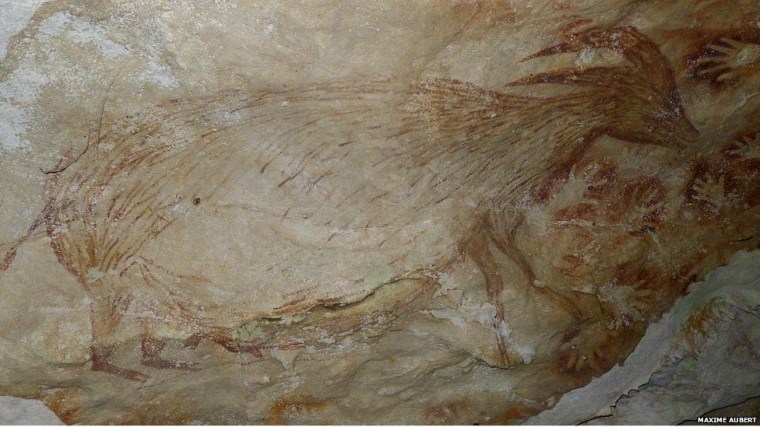


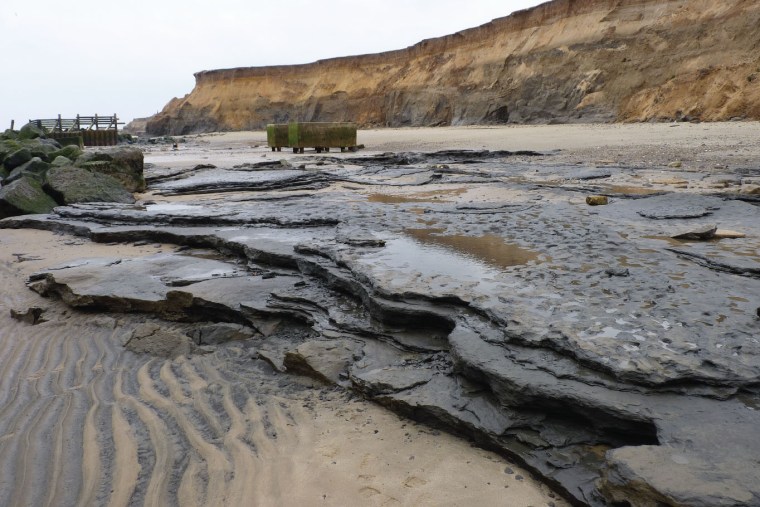


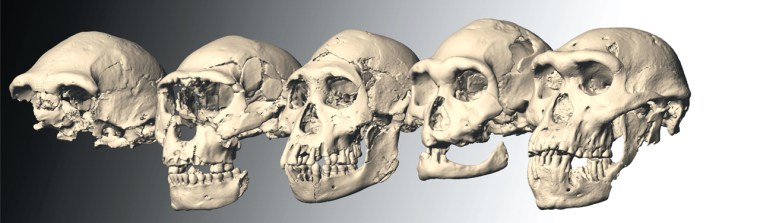


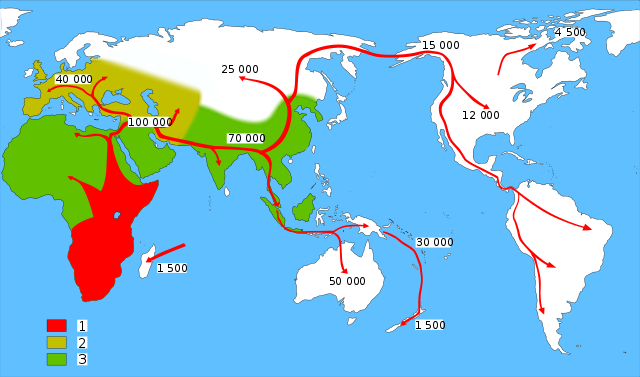


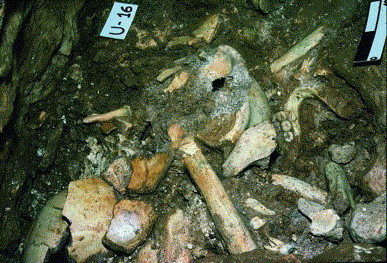


 Earth-logs