Using lasers to map landslide risk

As radar stands for radio detection and ranging, so lidar signifies light detection and ranging. In one respect the two are related: they are both active means of remote sensing and illuminate the surface, rather than passively monitoring solar radiation reflected from the surface or thermal radiation emitted by it. The theory and practice of imaging radar that beams microwaves at a surface and analyses the returning radiation are fiendishly complex. For a start microwave beams are directed at an angle towards the surface. Lidar is far simpler being based on an aircraft -mounted laser that sends pulses vertically downwards and records the time taken for them to be reflected from the surface back to the aircraft. The method measures the distance from aircraft to the ground surface and thus its topographic elevation. Lidar transmits about 100 thousand pulses per, so the resulting digital elevation model has remarkably good spatial resolution (down to 25 cm) and can measure surface elevation to the nearest centimetre. The technique is becoming popular: the whole of England and much of the nations of Scotland, Wales and Northern Ireland now have lidar coverage with 1 metre resolution.

The first thing the laser pulses encounter is the vegetation canopy, from which some are reflected back to the instrument. Others penetrate gaps in the canopy, to be reflected by the ground surface, so they take slightly longer to return. If the penetrating pulses are digitally separated from those reflected by vegetation, they directly map the elevation of the solid ground surface or the terrain. These data produce a  digital terrain model (DTM) whereas the more quickly returning pulses map the height and structure of the ground cover, if there is any. Both products are useful, the first to map topographic and geological features, the details of which are hidden to conventional remote sensing, the second to assess vegetation. The great advantage of a DTM is that image processing software can simulate illumination and shading of the terrain from different directions and angles to improve interpretation. Aerial photography has but a single direction and angle of solar illumination, depending on the time of day, the season and the area’s latitude. Stereoscopic viewing of overlapping photographic images does yield topographic elevation, and photogrammetric analysis produces a digital elevation model, but its usefulness is often compromised  by ground cover in vegetated terrain and by shadows. Also its vertical resolution is rarely better than 1 m. Another factor that limits terrain analysis using aerial photographs and digital images from satellites is the ‘patchwork-quilt’ appearance of farmed land that results from sharp boundaries between fields that contain different crops, bare ploughed soil and grassland. Together with spatial variation of natural vegetation, both ‘camouflage’ physical features of the landscape.

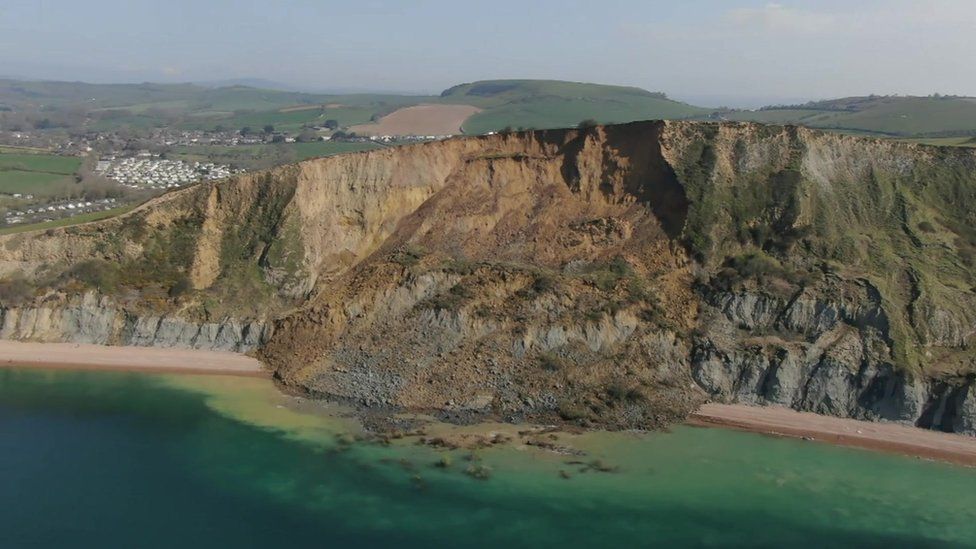
A cliff collapse in July 2023 at Seatown, Dorset England

In the field, areas of what is known as ‘mass wasting’, such as landslides, landslips, rockfalls, debris flows and solifluction, show topographic features that are characteristic of the processes involved.  They can be mapped by careful geological surveys. But are overlooked, being masked by vegetation cover such as woodland or because slower downslope movement of soil has smoothed out their original landforms. Potentially devastating mass wasting is encouraged by increased moisture content of soils and rocks that lie beneath steep slopes. Moisture provides lubrication that gravitational forces can exploit to result in sudden disruption of slopes and the movement of huge masses of Earth materials. Large areas of upland Britain show evidence of having experienced such mass wasting in the past. Some continue to move, such as that in the Derbyshire Peak District on the slopes of Mam Tor, as do cases on rugged parts of Britain’s coast where underlying rocks are weak and coastal erosion is intense (see image above).

It is thought that many of the mass-wasting features in Britain were initiated at the start of the Holocene. Prior to that, during the Younger Dryas cooling event, near-surface Earth materials were gripped solid by permafrost. Sudden warming at about 11.7 ka ago melted deeply frozen ground to create ideal conditions for mass wasting. In the last eleven thousand years the surface has come to a more or less stable gravitational balance. Yet heavy, sustained rainfall may reactivate some of the structures or trigger new ones. The likelihood of increased annual rainfall as the climate warms will undoubtedly increase the risk of more and larger instances of mass wasting. Indeed such an acceleration is happening now.

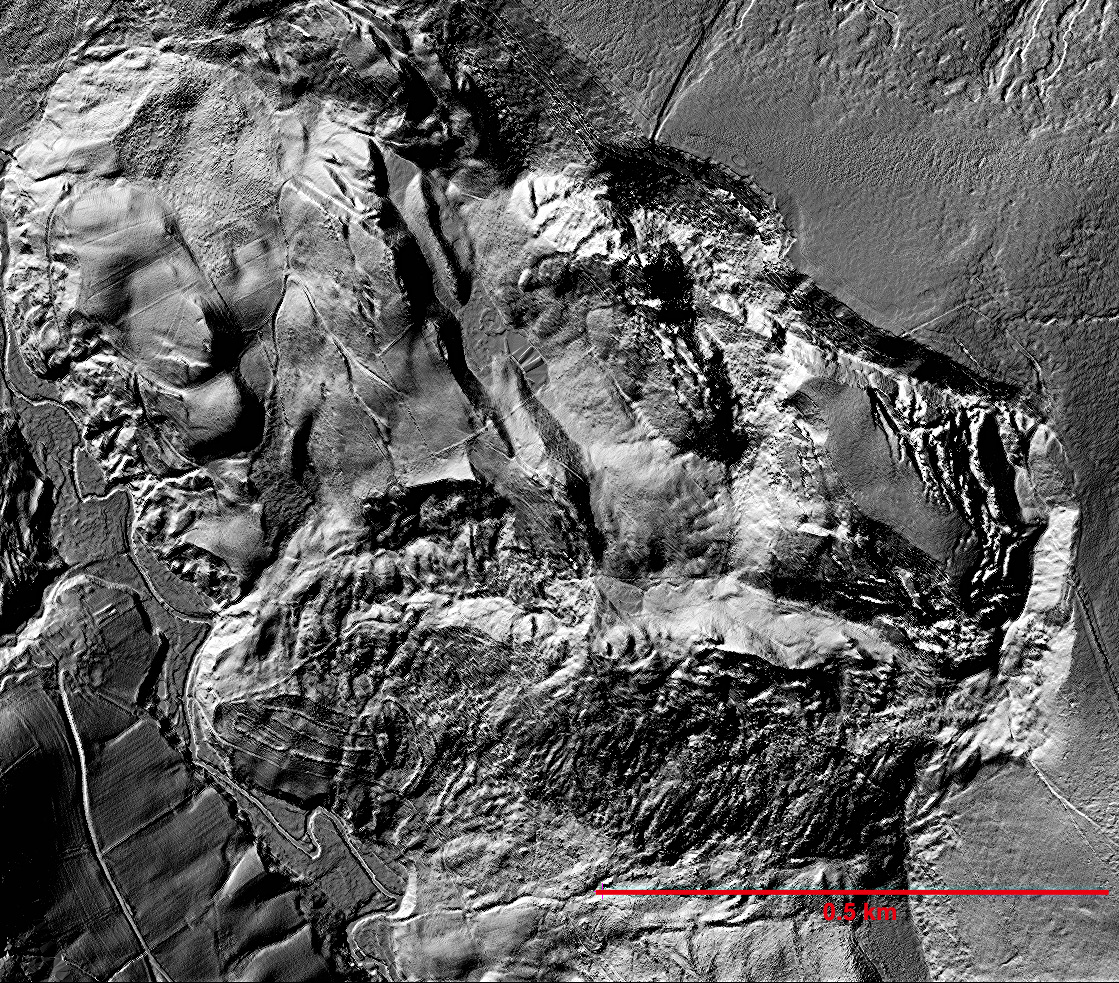
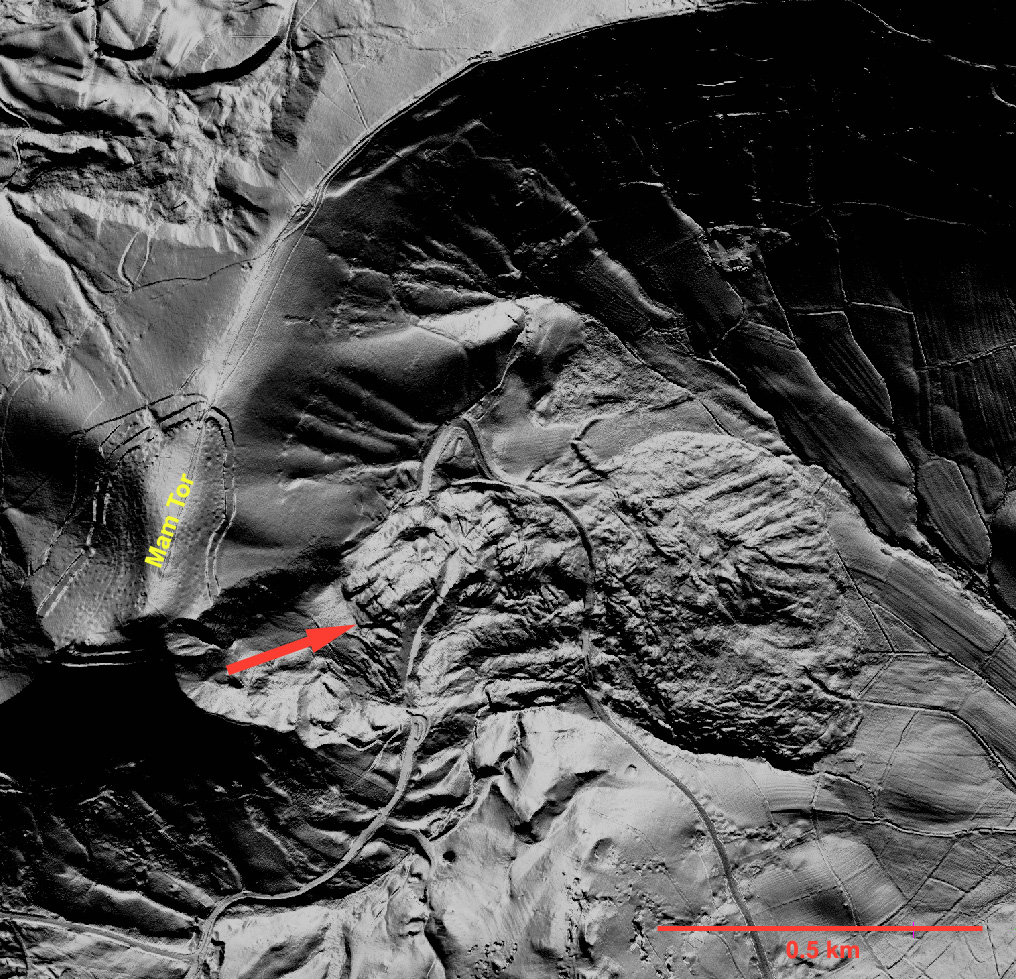
The most risky places are those with a history of landslides etc. So detailed mapping of such risk-prone ground is clearly needed. The UK has a large number of sites where mass wasting has been recorded, and below are lidar images of three of the most spectacular. Undoubtedly, there are other areas where no recent movements have been recorded, but which may ‘go off’ under changed climatic conditions. One of the best documented risky areas is in the English West Midlands within the new city of Telford. It follows the flanks of the River Severn as it passes through the Ironbridge Gorge that was cut by subglacial meltwater after the last glacial maximum. This area is also recognised as having been the birthplace of the Industrial Revolution. In 1714 Abraham Darby pioneered the use of coke in iron smelting and mass production of cast iron at Coalbrookdale a few kilometres to the east. The Severn also powered numerous forges and other heavy industries in the 18th and 19th centuries.  Industrial activity and townships in the Gorge have been plagued by large-scale mass wasting throughout subsequent history and no doubt long before. An excellent illustrated guide to the area has been produced by the Shropshire Geological Society (Rayner, C. et al. 2007. A Geological Trail through the landslides of Ironbridge Gorge, Proceedings of the Shropshire Geological Society, v. 12, p. 39-52; ISSN 1750-8568)

Lidar DTM illuminated from the west for the Severn Gorge near Ironbridge, Telford, Shropshire, UK. Lips of four major landslides shown by ‘No Entry’ signs. Initiated at the beginning of the Holocene, they continue to be active to this day, the southernmost slide having obliterated a tile factory and workers’ dwellings at Jackfield in 1952
Lidar DTM illuminated from the NW for the Alport Valley in the Peak District of North Derbyshire, UK. This includes the largest landslide complex in England, known as Alport Castles from the huge displaced sandstone blocks in the area of mass wasting.
An active landslide near Castleton, Derbyshire, UK. Note the defences of an Iron Age hillfort on Mam Tor that have been cut as the head of the landslide retreated westwards, as have medieval field walls. The relics of a major road that has been repeatedly disrupted and then destroyed following decades of maintenance can also be seen in the debris flow: it was abandoned in the 1970s.

Water in unexpected places. 1: Atmosphere

As a liquid, solid or in gaseous form water is everywhere in the human environment: even in the driest deserts it rains at some time and they may become tangibly humid. Water vapour moves most quickly in the atmosphere because of continual circulation. But 99% of all the Earth’s gaseous water resides in the lowest part, the troposphere. In that layer temperature decreases upwards to around -70°C, reflected by the lapse rate, so that water vapour condenses out as liquid or ice at low altitudes in the tangible form of clouds. So as altitude increases the air becomes increasingly cold and dry until it reaches what is termed the tropopause, the boundary between the troposphere and the stratosphere. This lies at altitudes between 6 km at the poles and 18 km in the tropics. Higher still, counter intuitively, the stratospheric air temperature rises. This is due to the production of ozone (O3) as oxygen (O2) interacts with UV radiation. Ozone absorbs UV thereby heating the thin stratospheric air. The tropopause is therefore an efficient ‘cold trap’ for water vapour, thereby preventing Earth from losing its surface water. Any that does pass through rises to the outer stratosphere where solar radiation dissociates it into oxygen and hydrogen, the latter escaping to space. So for most of the time the stratosphere is effectively free of water.

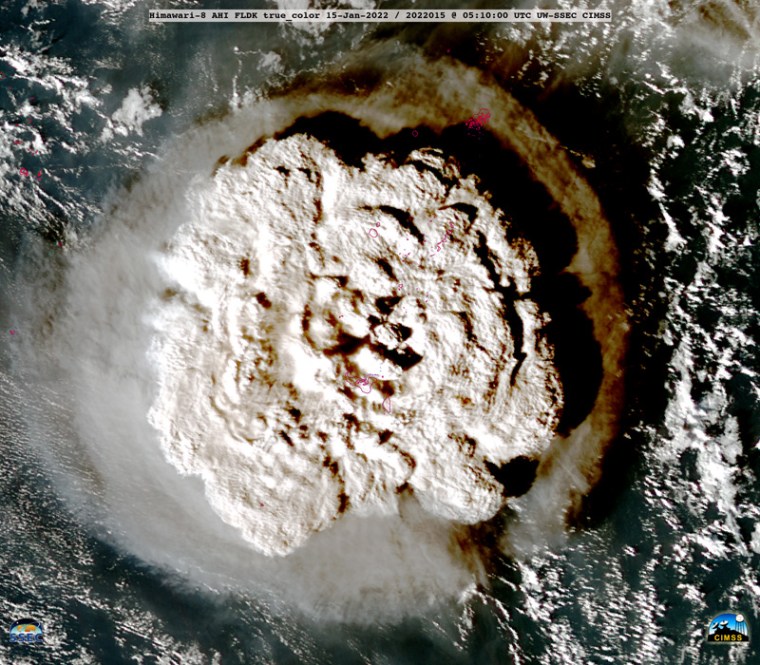
57 km high eruption plume and surrounding shock wave of Hunga Tonga-Hunga Ha’apai volcano one hour after explosion began on 15 January 2022: from the Himawari-8 satellite. The image is about 350 km across. Islands in red, the main island of Tonga being slightly to the south of the centre.

On 14 to 15 January 2022 the formerly shallow submarine Hunga Tonga-Hunga Ha’apai volcano in the Tonga archipelago of the South Pacific underwent an enormous explosive eruption (see an animation of the event captured by the Japanese weather satellite Himawari-8). The explosion was the largest in the atmosphere ever recorded by modern instruments, dwarfing even nuclear bomb tests, and the most powerful witnessed since that of Krakatoa in 1883. But, as regards global media coverage, it was a one-trick pony, trending for only a few days. It did launch tsunami waves that spanned the whole of the Pacific Ocean, but resulted in only 6 fatalities and 19 people injured. However, Hunga Tonga-Hunga Ha’apai managed to punch through the tropopause and in doing so, it changed the chemistry and dynamics of the stratosphere during the following year. A group of researchers from Harvard University and the University of Maryland used data from NASA’s Aura satellite to investigate changes in stratigraphic chemistry after the eruption (Wilmouth, D.M. et al. 2023. Impact of the Hunga Tonga volcanic eruption on stratospheric composition. Proceedings of the National Academy of Sciences, v. 120, article e23019941; DOI: 10.1073/pnas.2301994120). The Microwave Limb Sounder (MLS) carried by Aura measures thermal radiation emitted in the microwave region from the edge of the atmosphere, as revealed by Earth’s limb – seen at the horizon from a satellite. Microwave spectra from 0.12 to 2.5 mm in wavelength enable the concentrations of a variety of gases present in the atmosphere to be estimated along with temperature and pressure over a range of altitudes.

The team used MLS data for the months of February, April, September and December following the eruption to investigate its effects on the stratosphere n from 30°N to the South Pole. These data were compared with the averages over the previous 17 years. What emerged was a highly anomalous increase in the amount of water vapour between 0 and 30°S (the latitude band that includes the volcano) beginning in February 2022 and persisting until December 2023, the last dates of measurements. By April the peak showed up and persisted north of the Equator and at mid latitudes of the Southern Hemisphere and by December over Antarctica. It may well be present still. The estimated mass of water vapour that the eruption jetted into the stratosphere was of the order of 145 million tons along with about 0.4 million tons of SO2, the excess water helping accelerate the formation of highly reflective sulfate aerosols. Associated chemical changes were decreases in ozone (~ -14%) and HCl (~ -22%) and increases in ClO (>100%) and HNO3 (43%). Hunga Tonga-Hunga Ha’apai therefore changed the stratosphere’s chemistry and a variety of chemical reactions. As regards the resulting physical changes, extra water vapour together with additional sulfate aerosols should have had a cooling effect, leading to changes in its circulation with associated decrease in ozone in the Southern Hemisphere and increased ozone in the tropics. Up to now, the research has not attempted to match the chemical changes with climatic variations. The smaller 15 June 1991 eruption of Mount Pinatubo on the Philippine island of Luzon predated the possibility of detailed analysis of its chemical effects on the stratosphere. Nevertheless the material that is injected above the tropopause resulted in a global ‘volcanic winter’, and a ‘summer that wasn’t’ in the following year. The amount of sunlight reaching the surface fell by up to 10%, giving a 0.4 decrease in global mean temperature. Yet there seem to have been no media stories about such climate disruption in the aftermath of Hunga Tonga-Hunga Ha’apai. That is possibly because the most likely effect is a pulse of global warming in the midst of general alarm about greenhouse emissions, the climatically disruptive effect of the 2023 El Niño and record Northern Hemisphere temperature highs in the summer of 2023. Volcanic effects may be hidden in the welter of worrying data about anthropogenic global climate change.   David Wilmouth and colleagues hope to follow through with data from 2023 and beyond to track the movement of the anomalies, which are expected to persist for several more years. Their research is the first of its kind, so quite what its significance will be is hard to judge.

Aftershocks of ancient earthquakes

Any major earthquake is likely to be followed by aftershocks. Survivors of seismic devastation live in dread of them for weeks, even months. In reality the fault responsible for the initial event continues to move for longer than that. Commonly, aftershock activity dies down in magnitude and frequency over time, sometimes after a few weeks and in other cases much later to reach ‘normal background seismicity’ for the associated tectonic setting. Near a major plate boundary, such as the San Andreas Fault system in coastal California or the mid-Atlantic Ridge in Iceland, there is a continual risk of damaging seismic events, but the area around each major event becomes less risky a few tens of years afterwards. For instance, the Loma Prieta area on the San Andreas became quiescent sixteen years after the October 1989 Magnitude 6.9 earthquake that wrought havoc in San Francisco – and interrupted a Major League baseball match in the city. The December 1954, Magnitude 7.3 Dixie Valley earthquake in the active extensional zone of Nevada had a longer period of instability: 48 years. There is no fixed period for the aftermath, seismicity ‘stops when it stops’.

Earthquakes of greater than Magnitude 2.5 in eastern North America (see key to magnitudes at lower right). Those shown in blue date from 1568 to 1979, those in red between 1980 and 2016. (Credit: Chen & Liu, Fig 1)

Sometimes devastating earthquakes take place in what seem to be the least likely places: in tectonically ‘stable’ continental plate interiors. A Magnitude 7.9 earthquake in Sichuan Province, central China on 12 May 2008 left 86 thousand dead or missing, 374 thousand injured and 4.2 million homeless. It occurred in a region whose ancient fault systems had had little if any historic activity. One of the best studied records of seismic events in the middle of a continent is in the Mississippi River valley at the Missouri-Kentucky border, USA, near the town of New Madrid. This experienced three major earthquakes in 1811 and 1812 at Magnitudes estimated from 7.0 to 7.4. Seismicity there has continued ever since. Others that occurred long ago in the ‘stable’  North American continental crust were in South Carolina (1886) and southern Quebec, Canada (1663). They and the subsequent, lesser earthquakes that define clusters up to 250 km around them have been studied using spatial statistics (Chen, Y. & Liu, M. 2023. Long-Lived Aftershocks in the New Madrid seismic Zone and the Rest of Stable North America. Journal of Geophysics Research: Solid Earth, v. 128; DOI: 10.1029/2023JB026482). Yuxuan Chen and Mian Lui of Wuhan University, China and the University of Missouri, USA considered the dates of historic events, their estimated magnitudes and their proximity to other events in each cluster. The closer two events are the greater the chance that the later one is an aftershock of the first, although the relationship may also indicate a long-lived deformation process responsible for both. The authors suggest that this ‘nearest-neighbour’ approach may reveal that up to 65% of earthquakes in the New Madrid zone between 1980 and 2016 are aftershocks of the 1811-1812 major earthquake cluster, and a significant number of modern events in South Carolina could similarly relate to the 1886 Charleston earthquake. On the other hand, small modern earthquakes in Quebec are more likely to be part of the regional seismic background than to have any relationship to the large 17th century event.

Earthquakes are manifestations of deep-seated processes, most usually the build-up and release of strain in the lithosphere. If such processes persist they can result in long-lived earthquake swarms. So both delayed aftershocks and a high background of seismicity can contribute to the mapped clusters of historic events: a blend of relics of the past and modern deformation. They are yet to be detected in earthquake records associated with tectonic plate boundaries. A long history of movements within continents suggests that it is possible that long-delayed aftershocks may masquerade as foreshocks that presage greater events that are pending. Chen and Liu’s nearest-neighbour approach may therefore distinguish false alarms from real risk of major seismic motions.

See also: Some of today’s earthquakes may be aftershocks from quakes in the 1800s. Eureka|Alert, 13 November 2023

Flash: Huge rockslide imminent in Swiss village of Brienz

The rockslide above Brienz in eastern Switzerland marked by a white surface bare of vegetation. Credit CHRISTOPH NÄNNI, TIEFBAUAMT GR, SWITZERLAND via the BBC

On 9 May 2023 the authorities of the Albula/Alvra municipality in the Swiss canton of Graubünden informed people living in the small village of Brienz that they must evacuate the area by 18 May as the threat of rock falls from the mountain beneath which they live had triggered a red alert. By 13 May all 130 dwellings had been abandoned.

The danger is posed by an estimated 5 million tons of rock associated with a developing landslide that is now estimated to be moving at around 32 m per year. The village itself had long been creeping down slope at a few centimetres each year, but recently its church spire had begun to tilt and buildings became riven by cracks. Seemingly, engineering attempts to mitigate the hazards have been unsuccessful, and large boulders have already tumbled into the vicinity of Brienz.

Being situated beneath a crumbling scree slope devoid of vegetation that had been developing since the last glaciation, the geological risk to the village comes as no surprise to its population and local authority. The local geology has a thick limestone resting on the thinly bedded Flysch – a metamorphosed sequence of fine-grained turbidites – from which groundwater escapes very slowly, thereby becoming lubricated. A curved (listric) failure zone has developed beneath the exposed mountainside, hence the danger. Acceleration on the listric surface began about 20 years ago.

At least the people of Brienz have been moved to safety, unlike 144 school children and adults in the mining village of Aberfan in South Wales. On 21 October 1966 they were crushed to death by coal-mining waste that suddenly flowed from waste tips on the steep valley side above the village. In that case no warning was given by the National Coal Board authorities who allowed  the tipping witout a thought for its geological consequences.

See also: Petley, D. 2023. The very large incipient rockslide at Brienz in Switzerland. The Landslide Blog (10 May 2023)

British government fracking fan fracked

In November 2019 the Conservative government of Boris Johnson declared a moratorium on development of shale gas by hydraulic fracturing (‘fracking’) in England. This followed determined public protests at a number of potential fracking sites, the most intransigent being residents of Lancashire’s Fylde peninsula. They had been repeatedly disturbed since mid 2017 by low-magnitude earthquakes following drilling and hydraulic-fluid injection tests by Cuadrilla Resources near Little Plumpton village. Their views were confirmed in a scientific study by the British Geological Survey for the Oil and Gas Authority that warned of the impossibility of predicting the magnitude of future earthquakes that future fracking might trigger. The shale-gas industry of North America, largely in areas of low population and simple geology, confirmed the substantial seismic hazard of this technology by regular occurrences of earthquakes up to destructive magnitudes greater than 5.0. The Little Plumpton site was abandoned and sealed in February 2022.

Cuadrilla’s exploratory fracking site near Little Plumpton in Fylde, Lancashire. (Credit: BBC)

On 22 September 2022 the moratorium was rescinded by Jacob Rees-Mogg, Secretary of State for Business, Energy and Industrial Strategy in the new government of Liz Truss, two weeks after his appointment. This was despite the 2019 Conservative manifesto pledging not to lift the moratorium unless fracking was scientifically proven to be safe. His decision involved suggesting that the seismicity threshold for pausing fracking operations be lifted from magnitude 0.5 to 2.5, which Rees-Mogg claimed without any scientific justification to be ‘a perfectly routine natural phenomenon’.  He further asserted that opposition to fracking was based around ‘hysteria’ and public ignorance of seismological science, and that some protestors had been funded by Vladimir Putin. In reality the Secretary of State’s decision was fuelled by the Russian Federation’s reducing gas supplies to Europe following its invasion of Ukraine, the soaring world price of natural gas and an attendant financial crisis. There was also a political need to be seen to be ‘doing something’, for which he has a meagre track record in the House of Commons. Rees Mogg claimed that lifting the moratorium would bolster British energy security. That view ignored the probable lead time of around 10 years before shale gas can become an established physical resource in England. Furthermore, an August 2018 assessment of the potential of UK shale-gas, by a team of geoscientists, including one from the British Geological Survey, suggested that shale-gas potential would amount to less than 10 years supply of UK needs: contrary to Rees-Mogg’s claim that England has ‘huge reserves of shale’. Indeed it does, but the vast bulk of these shales have no commercial gas potential.

Ironically, the former founder of Cuadrilla Resources, exploration geologist Chris Cornelius, and its former public affairs director, Mark Linder, questioned the move to unleash fracking in England, despite supporting shale-gas operations where geologically and economically appropriate. Their view is largely based on Britain’s highly complex geology that poses major technical and economic challenges to hydraulic fracturing. Globally, fracking has mainly been in vast areas of simple, ‘layer-cake’ geology. A glance at large-scale geological maps of British areas claimed to host shale-gas reserves reveals the dominance of hundreds of faults, large and small, formed since the hydrocarbon-rich shales were laid down. Despite being ancient, such faults are capable of being reactivated, especially when lubricated by introduction of fluids. Exactly where they go beneath the surface is unpredictable on the scales needed for precision drilling.  Many of the problems encountered by Cuadrilla’s Fylde programme stemmed from such complexity. Over their 7 years of operation, hundreds of millions of pounds were expended without any commercial gas production. Each prospective site in Britain is similarly compartmentalised by faulting so that much the same problems would be encountered during attempts to develop them. By contrast the shales fracked profitably in the USA occur as horizontal sheets deep beneath entire states: entirely predictable for the drillers. In Britain, tens of thousands of wells would need to be drilled on a ‘compartment-by-compartment’ basis at a rate of hundreds each year to yield useful gas supplies. Fracking in England would therefore present unacceptable economic risks to potential investors. Cornelius and Linder have moved on to more achievable ventures in renewables such as geothermal heating in areas of simple British geology.

Jacob Rees-Mogg’s second-class degree in history from Oxford and his long connection with hedge-fund management seem not to be appropriate qualifications for making complex geoscientific decisions. Such a view is apparently held by several fellow Conservative MPs, one of whom suggested that Rees-Mogg should lead by example and make his North East Somerset constituency the ‘first to be fracked’, because it is underlain by potentially gas-yielding shales. The adjoining constituency, Wells, has several sites with shale-gas licences but none have been sought within North East Somerset. Interestingly, successive Conservative governments since 2015, mindful of a ‘not-in-my-backyard’ attitude in the party’s many rural constituencies, have placed a de-facto ban on development of onshore wind power.

Sun, sand and sangria on the Mediterranean Costas – and tsunamis?

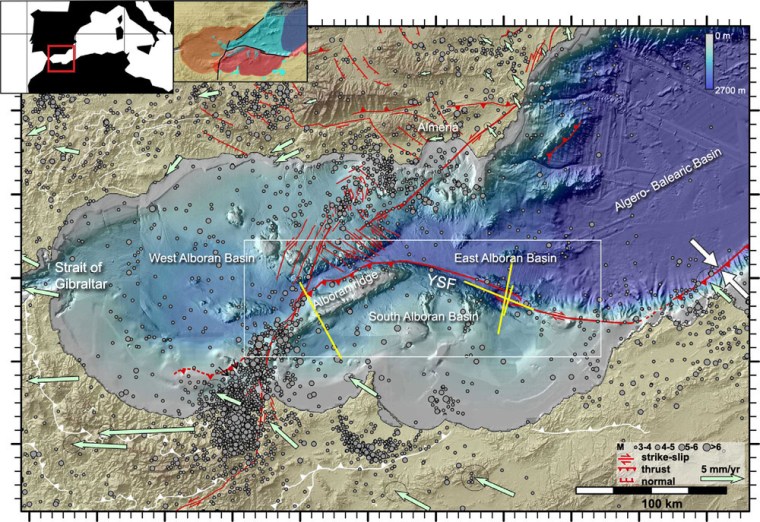
You can easily spot a tourist returning from a few summer weeks on the coast of the western Mediterranean, especially during 2022’s record-breaking heat wave and wildfires: sunburnt and with a smoky aroma that expensive après-sun lotion can’t mask. Judging from the seismic records, they may have felt the odd minor earthquake too, perhaps putting it down to drink, lack of sleep and an overdose of trance music. Data from the last 100 years show that southern Spain and north-west Africa have a generally uniform distribution of seismic events, mostly less than Magnitude 5. Yet there is a distinct submarine zone running NNE to SSW from Almeria to the coast of western Algeria. It crosses the Alboran Basin, and reveals significantly more events greater than M 5. Most earthquakes in the region occurred at depths less than 30 km mainly in the crust. Five geophysicists from Spain and another two from Algeria and Italy have analysed the known seismicity of the region in the light of its tectonics and lithospheric structure (Gómez de la Peña, L., et al. 2022. Evidence for a developing plate boundary in the western Mediterranean. Nature Communications, v. 13, article 4786; DOI: 10.1038/s41467-022-31895-z).

Topography of the Alboran Basin beneath the western Mediterranean. The colours grey through blue to purple indicate increasing depth of seawater. Grey circles indicate historic earthquakes, the smallest being M 3 to 4, the largest greater than M 6. Green arrows show plate motions in the area measured using GPS. Active faults are marked in red (see key for types of motion). (Credit: based on Fig 1 of Gómez de la Peña et al.)

The West Alboran Basin is underlain by thinner continental crust (orange on the inset to the map) than beneath southern Spain and western Algeria. Normal crust underpins the Southern Alboran Basin. To the east are the deeper East Alboran and Algero-Balearic Basins, the floor of the latter being true oceanic crust and that of the former created in a now extinct island arc. Running ENE to WSW across the Alboran Basin are two ridges on the sea floor. Tectonic motions determined using the Global Positioning System reveal that the African plate is moving slowly westwards at up to 1 cm yr-1, about 2 to 3 times faster than the European plate. This reflected by the dextral strike-slip along the active ~E-W Yusuf Fault (YSF). This bends southwards to roughly parallel the Alboran Ridge, and becomes a large thrust fault that shows up on ship borne seismic reflection sections. The reflection seismic survey also shows that the shallow crust beneath the Alboran Ridge is being buckled under compression above the thrust. The thrust extends to the base of the African continental crust, which is beginning to override the arc crust of the East Alboran basin. Effectively, this system of major faults seems to have become a plate boundary between Africa and Europe in the last 5 million years and has taken up about 25 km of convergence between the two plates. An estimated 16 km of this has taken place across the Alboran Ridge Thrust which has detached the overriding African crust from the mantle beneath.

The authors estimate an 8.5 to 10 km depth beneath the Alboran fault system at which the overriding crust changes from ductile to brittle deformation – the threshold for strains being taken up by earthquakes. By comparison with other areas of seismic activity, they reckon that there is a distinct chance of much larger earthquakes (up to M 8) in the geologically near future. A great earthquake in this region, where the Mediterranean narrows towards the Strait of Gibraltar, may generate a devastating tsunami. An extension of the Africa-Europe plate boundary into the Atlantic is believed to have generated a major earthquake that launched a tsunami to destroy Lisbon and batter the Atlantic coasts of Portugal, Spain and NW Africa on 1st November 1755. The situation of the active plate boundary in the Alboran Basin may well present a similar, if not worse, risk of devastation.

The dangers of rolling boulders

Field work in lonely and spectacular places is a privilege. Though it can be great, boredom sometimes sets in, which is hard for the lone geologist. Today, I guess a cell phone would help, especially in high places where the signal is good. That means of communication and entertainment only emerged in the 1980s and did not reach wild places until well into the 90s. Pre-cellnet boredom could be relieved by what remains a dark secret: lone geologists once rolled large boulders down mountains and valley sides, shouting ‘Below!’ as a warning to others. Their excuse to themselves for this unique thrill (bounding boulders reach speeds of up to 40 m s-1) was vaguely scientific: sooner or later a precarious rock would fall anyway. This week it emerged that Andrin Caviezel of the Institute for Snow and Avalanche Research in Davos, Switzerland, an Alpine geoscientist, rolls boulders for a living (Caviezel, A. 2022. The gravity of rockfalls. Where I work, Nature, v. 607, p. 838; DOI: 10.1038/d41586-022-02044-9). He finds that ‘…flinging giant objects down a mountain is still super fun’. The serious part of his job attempts to model how rockfalls actually move downslope, as an aid to risk assessment (Caviezel, A. and 23 others 2021. The relevance of rock shape over mass – implications for rockfall hazard assessments. Nature Communications, v. 12, article 5546; DOI: 10.1038/s41467-021-25794-y)

Caviezel’s team (@teamcaviezel) don’t use actual rocks but garishly painted, symmetrical blocks of reinforced concrete weighing up to 3 tonnes, which are more durable than most outcropping rock and can be re-used. A Super Puma helicopter shifts a block to the top of a slope, from which it is levered over the edge (watch video). The team deploys two types of block, one equant and resembling a giant garnet crystal, the other wheel-shaped with facets. The first represents boulders of rock types with uniform properties throughout, such as granite. The wheel type mimics boulders formed from rocks that are bedded or foliated, which are usually plate-like or spindly.

Vertical aerial photograph of a uniform, south-facing slope in the Swiss Alps used to roll concrete ‘boulders’. The red X marks the release point; the blue symbols show the points of rest of equant ‘boulders, the sizes of which are shown in the inset, the wheel-shaped ones are magenta. Coloured circles with crosses show the mean rest position of each category (the lighter the colour the smaller the set of ‘boulders’). The coloured ellipses indicate the standard deviation for each category. (Credit: Caviezel et al., Fig 2)

Unlike other gravity-driven hazards, such as avalanches and mudflows, the directions that rockfalls may follow by are impossible to predict. Rather than hugging the surface, boulders interact with it, bouncing and being deflected, and they spin rapidly. To follow each experiment’s trajectory a block contains a motion sensor, measuring speed and acceleration, and a gyroscope that shows rotation, wobbling and motion direction, while filming records jump heights – up to 11 m in the experiments. Despite the similarity of the blocks, the same release point for each roll and a uniform mountainside slope, with one cliff line, the final resting places are widely spread. That hazard zone of rockfalls is distinctly wider than that of snow avalanches; observing a boulder once it starts to move gives a potential victim little means of knowing a safe place to shelter.

The most important conclusion from the experiments is that the widest spread of tumbling ‘boulders’ is shown by the wheel-shaped ones. So, slopes made from bedded or foliated sedimentary and metamorphic rocks may pose wider hazards from rockfalls than do those underpinned by uniform rocks. However, plate-like or spindly boulders are more stable at rest than are equant ones. Yet boulders rarely fall as a result of being pushed (except in avalanches). On moderate slopes they are undermined by erosion, and on steep slopes or cliffs winter ice wedges open joints allowing blocks to fall during a thaw.

A Bronze Age catastrophe: the destruction of Sodom and Gomorrah?

“…The sun was risen upon the earth when Lot entered into Zoar. Then the Lord rained upon Sodom and Gomorrah brimstone and fire from the Lord out of heaven. And overthrew those cities, and all the plain, and all the inhabitants of the cities, and that which grew upon the ground. But his wife looked back from behind him, and she became a pillar of salt …”

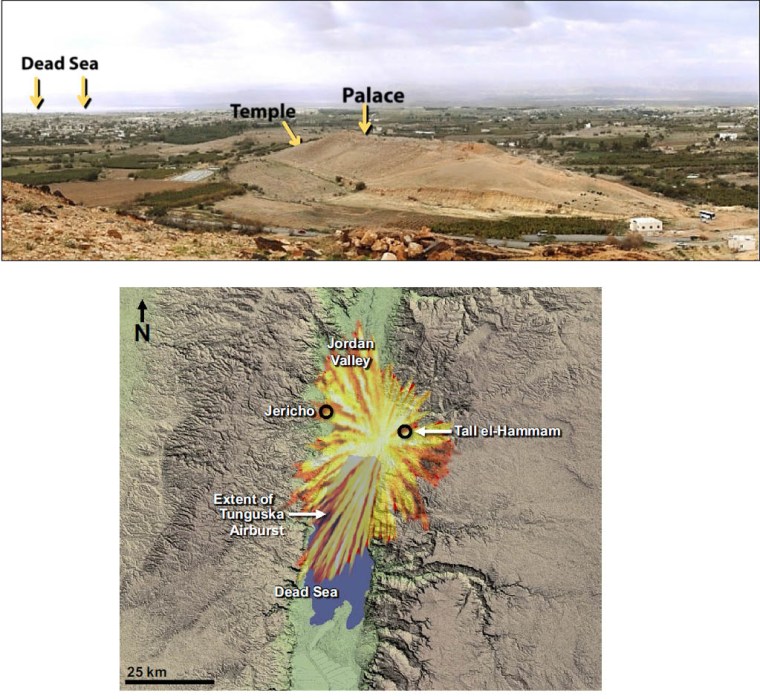
This is the second catastrophe recorded in the Old Testament of the King James Bible (Genesis 19:23-26), after the Noachian Flood (Genesis 7 and 8). The Flood is now regarded by many geoscientists to be a passed-down and mythologised account of the rapid filling of the Black Sea when the Bosporus was breached around 7600 years ago, as global see level rose in the early Neolithic. Eleven Chapters and a great many begotten people later comes the dramatic punishment of the ‘sinners’ of Sodom and Gomorrah. The two legendary settlements are now considered to have been in the Lower Jordan Valley near the Dead Sea. Being on the major strike-slip fault that defines the Jordan Rift, related to the long-active spreading of the Red Sea, the most obvious rationalisation of the myth is a major earthquake. The sedimentary sequence contains sulfide-rich clays and silts, as well as thick salt beds. Major seismicity would have liquidised saturated sediments full of supersaturated salt water and the release of large volumes of hydrogen sulfide gas. There are also remains of early settlements in the form of large mounds known locally as ‘talls’. The largest  and archaeologically  most productive of these is Tall el Hammam in Jordan, whose excavation has proceeded since 2005. It lies just to the north of the Dead Sea on the eastern flank of the Jordan valley, 15 km from Jericho on the occupied West Bank.

The Tall el Hammam mound is formed from layers of debris, mainly of mud bricks, dwellings being built again and again on the remains of earlier ones. It seems to have been continuously occupied for three millennia after 6650 ka ago (4700 BCE) at the core of a presumably grain-based city state with upwards of 10 thousand inhabitants. The site was destroyed around 3600 Ka (1650 BCE). The catastrophic earthquake hypothesis can be neither confirmed nor refuted, but the destruction toppled structures with walls up to 4 m thick.. Whatever the event, 15 years of excavation have revealed that it was one of extremely high energy. There is evidence for pulverisation of mud bricks and at some dwellings they were apparently blown off-site: a possibility in a large magnitude earthquake. Unusually, however, mud bricks and clay used in pottery and roofing had been partially melted during the final destruction. Various analyses suggest temperatures were as high as 2000 °C.

Top – oblique aerial view of the mound at Tal el Hammam looking to the south-west; Bottom – the Lower Jordan Valley and Bronze age talls superimposed by the extent of the area devastated by the 1908 Tunguska air-burst. (credit: Bunch et al. 2021, Figs 1b and 52)

A detailed summary of results from the Tall el Hammam site has just appeared (Bunch T.E., and 20 others 2021. A Tunguska sized airburst destroyed Tall el-Hammam a Middle Bronze Age city in the Jordan Valley near the Dead SeaNature Scientific Reports, v. 11, article 18632; DOI: 10.1038/s41598-021-97778-3). As the title indicates, it comes to an astonishing conclusion, which rests on a large range of archaeological and geochemical data that go well beyond the earlier discovery of the tall’s destruction at very high temperatures. Radiocarbon dates of 26 samples from the destruction layer reveal that it happened in 1661±21 BCE – the mid- to late Bronze Age, as also suggested by the styles of a variety of artefacts. The most revealing data have emerged from the debris that caps the archaeological section, particularly fine-grained materials in it. There are mineral grains indicating that sand-sized grains were melted, some to form spherules or droplets of glass. Even highly refractory minerals such as zircon and chromite were melted. Mixed in with the resulting glasses are tiny nuggets of metals, including platinum-group metals. As well as high temperatures the event involved intense mechanical shock that produced tell-tale lamellae in quartz grains, familiar from sites of known extraterrestrial impacts. One specimen shows a micro-crater produced by a grain of carbonaceous material, which is now made up of ~ 1 μm diamond-like carbon (diamondoids) crystals. There is abundant evidence of directionality in the form of linear distributions of ceramic shards and carbonised cereal grains that seem to have been consistently transported in a SW to NE direction: a kind of high-speed ‘blow-over’. In the debris are also fragments of pulverised bone, most too small to assign to species. But among them are two highly damaged human skulls and isolated and charred human limb- and pelvic bones. Forensic analysis suggests at least two individuals were decapitated, dismembered and incinerated during the catastrophe. Isolated scatters of recognisable human bones indicate at least 10 people who suffered a similar death. Finally the destruction layer is marked by an unusually high concentration of salt, some of which has been melted.

Such a range of evidence is difficult to reconcile by hypotheses citing warfare, accidental burning, tornadoes or earthquakes. However, the diversity of phenomena associated with the destruction of Tall el Hammam has been compared with data from nuclear explosion sites, suggesting the huge power of the event. The authors turned to evidence linked to the air-burst detonation of a cosmic body over Tunguska, Siberia in 1908 which had a power estimated at between 12- to 23 megatonnes of TNT equivalent. Such an event seems to fit the fate of Tall el Hammam. The Tunguska event devastated an area of 2200 km2. The tall and another at Jericho lies within such an area. Perhaps not coincidentally, the destruction of Jericho was also in the mid- to late Bronze Age sometime between 1686 and 1626 BCE: i.e. statistically coeval with that of Tall el Hammam.

Archaeologists working in the Lower Jordan Valley have examined 15 other talls and more than a hundred lesser inhabited sites and have concluded that all of them were abandoned at the end of the Middle Bronze Age. The whole area is devoid of evidence for agricultural settlements for the following three to six centuries, although there are traces of pastoralist activity. The high amount of salt in the Tall el Hammam debris, if spread over the whole area would have rendered its soils infertile until it was eventually flushed out by rainfall and runoff. If, indeed, the event matches the biblical account of Sodom and Gomorrah, then Lot and his remmaing companions would have found it difficult to survive without invading the lands of other people who had escaped, much as recorded later in Genesis. Of more concern is what will become of Ted Bunch and his 20 US colleagues? Will they be charged with blasphemy?

See also: Tunguska-Sized Impact Destroyed Jordan Valley City 3,670 Years Ago, SciNews, 29 September 2021; Did an impact affect hunter gatherers at the start of the Younger Dryas? Earth-logs, 3 July 2020.

Anthropocene more an Event than an Epoch.

The Vattenfall lignite mine in Germany; the Anthropocene personified

The issue of whether or not to assign the time span during which human activities have been significantly affecting the planet and its interwoven Earth Systems has been dragging on since the term ‘Anthropocene’ was first proposed more than two decades ago. A suggestion that may resolve matters, both amicably and with a degree of scientific sense, has emerged in a short letter to the major scientific journal Nature, written by six eminent scientists (Bauer, A.M. et al. 2021. Anthropocene: event or epoch? Nature, v. 597, p. 332; DOI: 10.1038/d41586-021-02448-z). The full text is below

The concept of the Anthropocene has inspired more than two decades of constructive scholarship and public discussion. Yet much of this work seems to us incompatible with the proposal to define the Anthropocene as an epoch or series in the geological timescale, with a precise start date and stratigraphic boundary in the mid-twentieth century. As geologists, archaeologists, environmental scientists and geographers, we have another approach to suggest: recognize the Anthropocene as an ongoing geological event.

The problems with demarcating the Anthropocene as a globally synchronous change in human–environment relations, occurring in 1950 or otherwise, have long been evident (P. J. Crutzen and E. F. Stoermer IGBP Newsletter 41, 17–18; 2000). As an ongoing geological event, it would be analogous to other major transformative events, such as the Great Oxidation Event (starting around 2.4 billion years ago) or the Great Ordovician Biodiversification Event (around 500 million years ago).

Unlike formally defined epochs or series, geological events can encompass spatial and temporal heterogeneity and the diverse processes — environmental and now social — that interact to produce global environmental changes. Defining the Anthropocene in this way would, in our view, better engage with how the term has been used and criticized across the scholarly world.”

AUTHORS: Andrew M. Bauer, Stanford University, Stanford, California, USA; Matthew Edgeworth, University of Leicester, Leicester, UK;  Lucy E. Edwards, Florence Bascom Geoscience Center, Reston, Virginia, USAErle C. Ellis, University of Maryland, Baltimore County, Maryland, USA ; Philip Gibbard, Scott Polar Research Institute, University of Cambridge, Cambridge, UK;  Dorothy J. Merritts, Franklin and Marshall College, Lancaster, Pennsylvania, USA.

I have been grousing about the attempt to assign Epoch/Series status to the Anthropocene for quite a while (you can follow the development of my personal opinions by entering ‘Anthropocene’ in the Search Earth-logs box). In general I believe that the proposal being debated is scientifically absurd, and a mere justification for getting a political banner to wave. What the six authors of this letter propose seems eminently sensible. I hope it is accepted by International Commission on Stratigraphy as a solution to the increasingly sterile discussions that continue to wash to and fro in our community. Then perhaps the focus can be on action rather than propaganda.

As things have stood since 21 May 2019, a proposal to accept the Anthropocene as a formal chrono-stratigraphic unit defined by a GSSP at its base around the middle of the 20th century is before the ICS and the International Union of Geological Sciences (IUGS) for ratification. It was accepted by 88% of the 34-strong Anthropocene Working Group of the ICS Subcommission on Quaternary Stratigraphy. But that proposal has yet to be ratified by either the ICS or IUGS. Interestingly, one of the main Anthropocene proponents was recently replaced as chair of the Working Group.

How flowering plants may have regulated atmospheric oxygen

Ultimately, the source of free oxygen in the Earth System is photosynthesis, but that is the result of a chemical balance in the biosphere and hydrosphere that operates at the surface and just beneath it in sediments. Burial of dead organic carbon in sedimentary rocks allows free oxygen to accumulate whereas weathering and oxidation of that carbon, largely to CO2, tends to counteract oxygen build-up. The balance is reflected in the current proportion of 21% oxygen in the atmosphere. Yet in the past oxygen levels have been much higher. During the Carboniferous and Permian periods it rose dramatically to an all-time high of 35% in the late Permian (about 250 Ma ago). This is famously reflected in fossils of giant dragonflies and other insects from the later part of the Palaeozoic Era.  Insects breathe passively by tiny tubes (trachea) through whose walls oxygen diffuses, unlike active-breathing quadrupeds that drive air into lung alveoli to dissolve O2 directly in blood. Insect size is thus limited by the oxygen content of air; to grow wing spans of up to 2 metres a modern dragon fly’s body would consist only of trachea with no room for gut; it would starve.

Woman holding a reconstructed Late Carboniferous dragonfly (Namurotypus sippeli)

During the early Mesozoic oxygen fell rapidly to around 15% during the Triassic then rose through the Jurassic and Cretaceous Periods to about 30%, only to fall again to present levels during the Cenozoic Era. Incidentally, the mass extinction at the end of the Cretaceous (the K-Pg boundary event) was marked in the marine sedimentary record by unusually high amounts of charcoal. That is evidence for the Chixculub impact being accompanied by global wild fires that a high-oxygen atmosphere would have encouraged. The high oxygen levels of the Cretaceous marked the emergence of modern flowering plants – the angiosperms. Six British geoscientists have analysed the possible influence on the Earth System of this new and eventually dominant component of the terrestrial biosphere. (Belcher, C.M. et al. The rise of angiosperms strengthened fire feedbacks and improved the regulation of atmospheric oxygenNature Communications, v. 12, article 503; DOI 10.1038/s41467-020-20772-2)

The episodic occurrence of charcoal in sedimentary rocks bears witness to wildfires having affected terrestrial ecosystems since the decisive colonisation of the land by plants at the start of the Devonian 420 Ma ago. Fire and vegetation have since gone hand in hand, and the evolution of land plants has partly been through adaptations to burning. For instance the cones of some conifer species open only during wildfires to shed seeds following burning. Some angiosperm seeds, such as those of eucalyptus, germinate only after being subject to fire . The nature of wildfires varies according to particular ecosystems: needle-like foliage burns differently from angiosperm leaves; grassland fires differ from those in forests and so on. Massive fires on the Earth’s surface are not inevitable, however. Evidence for wildfires is absent during those times when the atmosphere’s oxygen content has dipped below an estimated 16%. The current oxygen level encourages fires in dry forest during drought, as those of Victoria in Australia and California in the US during 2020 amply demonstrated. It is possible that with oxygen above 25% dry forest would not regenerate without burning in the next dry season. Wet forest, as in Brazil and Indonesia, can burn under present conditions but only if set alight deliberately. Evidence of a global firestorm after the K-Pg extinction implies that tropical rain forest burns easily when oxygen is above 30%. So, how come the dominant flora of Earth’s huge tropical forests – the flowering angiosperms – evolved and hung on when conditions were ripe for them to burn on a massive scale?

Early angiosperms had small leaves suggesting small stature and growth in stands of open woodland [perhaps shrubberies] that favoured the fire protection of wetlands. ‘Weedy’ plants regenerate and reach maturity more quickly than do those species that are destined to produce tall trees. With endemic wildfires, tree-sized plants – e.g. the gymnosperms of the Mesozoic – cannot attain maturity by growing above the height of flames. Diminutive early angiosperms in a forest understory would probably outcompete their more ancient companions.  Yet to become the mighty trees of later rain forests angiosperms must somehow have regulated atmospheric oxygen so that it declined well below the level where wet forest is ravaged by natural wild fires. The oldest evidence for angiosperm rain forest dates to 59 Ma, when perhaps more primitive tropical trees had been almost wiped-out by wildfires. Did angiosperms also encourage wildfires, that consumed oxygen on a massive scale, as well as evolving to resist their affects on plant growth? Claire Belcher et al. suggest that they did, through series of evolutionary steps. Key to their stabilising oxygen levels at around 21%, the authors allege, was angiosperms’ suppression of weathering of phosphorus from rocks and/or transfer of that major nutrient from the land to the oceans. On land nitrogen is the most important nutrient for biomass, whereas phosphorus is the limiting factor in the ocean. Its reduction by angiosperm dominance on land thereby reduces carbon burial in ocean sediments. In a very roundabout way, therefore, angiosperms control the key factor in allowing atmospheric build-up of oxygen; by encouraging mass burning and suppressing carbon burial.  Today, about 84 percent of wildfires are started by anthropogenic activities. As yet we have little, if any, idea of how such disruption of the natural flora-fire system is going to affect future ecosystems. The ‘Pyrocene’ may be an outcome of the ‘Anthropocene’ …