The earliest known impact structure

Earth has been through a great many catastrophes, but the vast majority of those of which we know were slow-burning in a geological sense. They resulted in unusually high numbers of extinctions at the species- to family levels over a few million years and the true mass extinctions seem to have been dominated by build ups of greenhouse gases emitted by large igneous provinces. Even the most famous at the end of the Cretaceous Period, which did for the dinosaurs and considerably more organisms that the media hasn’t puffed, was partly connected to the eruption of the Deccan flood basalts of western India. Yet the event that did the real damage was a catastrophe that appeared in a matter of seconds: the time taken for the asteroid that gouged the Chicxulub crater to pass through the atmosphere. Its energy was huge and because it was delivered in such a short time its sheer power was unimaginable. Gradually geologists have recognised signs of an increasing number of tangible structures produced by Earth’s colliding with extraterrestrial objects, which now stands at 190 that have been confirmed.

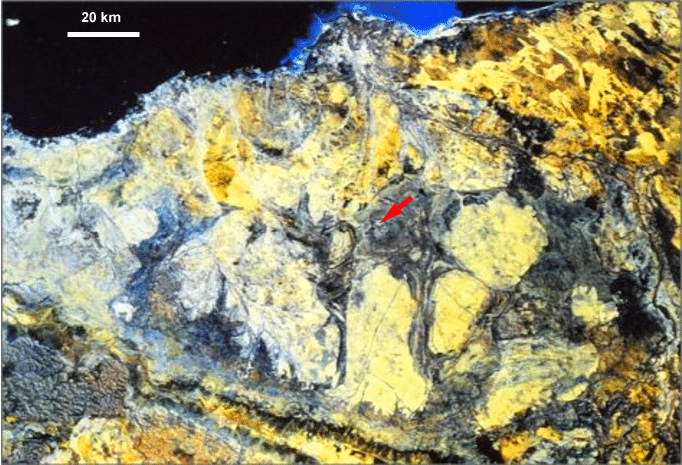
Landsat image mosaic of the Palaeoarchaean granite-greenstone terrain of the Pilbara Craton, Western Australia. Granite bodies show as pale blobs, the volcanic and sedimentary greenstone belts in shades of grey. The site of Kirkland et al.’s study site is at the tip of the red arrow

The frequency of impact craters falls off with age, most having formed in the last ~550 million years (Ma) during the Phanerozoic Eon, only 25 being known from the Precambrian, which spanned around 88 percent of geological time. That is largely a consequence of the dynamic processes of tectonics, erosion and sedimentation that may have obliterated or hidden a larger number. Earth is unique in that respect, the surfaces of other rocky bodies in the Solar System showing vastly more. The Moon is a fine example, especially as it has been Earth’s companion since it formed 4.5 billion years ago (Ga) after the proto-Earth collided with a now vanished planet about the size of Mars. The relative ages of lunar impact structures combined with radiometric ages of the surfaces that they hit has allowed the frequency of collisions to be assessed through time. Applied to the sizes of the craters such data can show how the amount of kinetic energy inflicted on the lunar surface has changed with time. During what geologists refer to as the Hadean Eon (before 4 Ga), the moon underwent continuous bombardment that reached a crescendo between 4.1 and about 3.8 Ga. Thereafter impacts tailed off. Always having been close to the Moon, the Earth cannot have escaped the flux of objects experienced by the lunar surface. Because of Earth’s much greater gravitation pull it was probably hit by more objects per unit area. Apart from some geochemical evidence from Archaean rocks (see: Tungsten and Archaean heavy bombardment; July 2002) and several beds of 3.3 Ga old sediment in South Africa that contain what may have been glassy spherules there are no signs of actual impact structures earlier than a small crater dated at around 2.4 Ga in NE Russia.

Shatter cones in siltstone near Marble Bar in the Pilbara Province: finger for scale. Credit: Kirkland et al.; Fig 2a

Now a group of geologists from Curtin University, Perth Western Australia, and the Geological Survey of Western Australia have published their findings of indisputable signs of an impact site in the northern part of Western Australia (Kirkland, C.L. et al. 2025. A Paleoarchaean impact crater in the Pilbara Craton, Western Australia. Nature Communications, v. 16, article 2224; DOI: 10.1038/s41467-025-57558-3). In fact there is no discernible crater at the locality, but sedimentary strata show abundant evidence of a powerful impact in the form of impact-melt droplets in the form of spherules together with shatter cones. These structures form as a result of sudden increase in pressure to 2 to 30 GPa: an extreme that can only be generated in underground nuclear explosions, and thus likely to bear witness to large asteroid impacts. The shocked rocks are immediately overlain by pillow lavas dated at 3.47 Ga, making the impact the earliest known. It has been speculated that impacts during the Archaean and Hadean Eons helped create conditions for the complex organic chemistry that eventually to the first living cells. Considering that entry of hypervelocity asteroids into the early Earth’s atmosphere probably caused such compression that temperatures were raised by adiabatic heating to about ten times that of the Sun’s surface, their ‘entry flashes’ would have sterilised the surface below; the opposite of such notions. Impacts may, however, have delivered both water and simple, inorganic hydrocarbons. Together with pulverisation of rock to make ‘fertiliser’ elements (e.g. K and P) more easily dissolved, they may have had some influence. Their input of thermal energy seems to me to be of little consequence, for decay of unstable isotopes of U, Th and K in the mantle would have heated the planet quite nicely and continuously from Year Zero onwards.

A fully revised edition of Steve Drury’s book Stepping Stones: The Making of Our Home World can now be downloaded as a free eBook

Life’s origins: a new variant on Darwin’s “warm little pond”

In 1871 Charles Darwin wrote to his friend Joseph Hooker, a botanist:

“It is often said that all the conditions for the first production of a living organism are now present, which could ever have been present. But if (& oh what a big if) we could conceive in some warm little pond with all sorts of ammonia & phosphoric salts, light, heat, electricity &c present, that a protein compound was chemically formed, ready to undergo still more complex changes, at the present day such matter wd be instantly devoured, or absorbed, which would not have been the case before living creatures were formed.”

There have been several attempts over the last 150 years, starting with Miller and Urey in 1952, to create physical analogues for this famous insight (See:  The origin of life on Earth: new developments). What such a physico-chemical environment on the early Earth could have been like has also been a fertile topic for discussion: literally warm pools at the surface; hot springs; seawater around deep-ocean hydrothermal vents; even droplets in clouds in the early atmosphere. Attention has recently moved to Darwin’s original surface pools through examination of modern ones. The most important content would be dissolved phosphorus compounds, because that element helps form the ‘backbone’ of the helix structure of RNA and DNA. But almost all natural waters today have concentrations of phosphorus that are far too low for such linkages to form by chemical processes, and also to produce lipids that form cell membranes and the ATP (adenosine triphosphate) so essential in all living metabolism. Phosphorus availability has been too low for most of geological time simply because living organisms are so efficient at removing what they need in order to thrive.

Mono Lake in semi-arid eastern California – a ‘soda lake’- is so concentrated by evaporation that pillars of carbonate grow above its surface

For the first life to form, phosphorus would somehow have had to be concentrated in watery solution as phosphate ions – [PO ₄]³⁻. The element’s source, like that of all others in the surface environment, is in magmas and the volcanic rocks that they form. Perhaps early chemical weathering or reactions between lavas and hydrothermal fluids could have released phosphate ions to solution from a trace mineral present in all lavas: the complex phosphate apatite (Ca10(PO4)6(OH,F,Cl)2). But that would still require extreme concentration for it to be easily available to the life-forming process. In January 2024 scientists at the University of Washington in Seattle, USA (Haas, S. et al. 2024. Biogeochemical explanations for the world’s most phosphate-rich lake, an origin-of-life analog. Nature Communications, v. 5, article 28; DOI: 10.1038/s43247-023-01192-8) showed that the highest known concentrations of dissolved phosphorus occur in the so called “soda lakes” that are found in a variety of modern environments, from volcanically active continental rifts to swampy land. They contain dissolved sodium carbonate (washing soda) at very high concentrations so that they are extremely alkaline and often highly salty. Usually, they are shallow and have no outlet so that dry weather and high winds evaporate the water. Interestingly, the streams that flow into them are quite fresh, so soda lakes form where evaporation exceeds annual resupply of rainwater.

The high evaporation increases the dissolved content of many ions in such lakes to levels high enough for them for them to combine and precipitate calcium, sodium and magnesium as carbonates. In some, but not all soda lakes, such evaporative concentration also increases their levels of dissolved phosphate ions higher than in any other bodies of water. That is odd, since it might seem that phosphate ions should combine with dissolved calcium to form solid calcium phosphate making the water less P-rich.  Haas et al. found that lakes which precipitate calcium and magnesium together in the form of dolomite (Ca,Mg)CO3 have high dissolved phosphate. Removal of Ca and other metal ions through bonding to carbonate (CO3) deprives dissolved phosphate ions in solution of metal ions with which they can bond. But why has dissolved phosphate not been taken up by organisms growing in the lakes: after all, it is an essential nutrient. The researchers found that some soda lakes that contain algal mats have much lower dissolved phosphate – it has been removed by the algae. But such lakes are not as salty as those rich in dissolved phosphate. They in turn contain far less algae whose metabolism is suppressed by high levels of dissolved NaCl (salt). Hass et al.’s hypothesis has now been supported by more research on soda lakes.

In an early, lifeless world phosphate concentrations in alkaline, salty lakes would be controlled by purely inorganic reactions. This strongly suggests that ‘warm little soda lakes’ enriched in dissolved sodium carbonate by evaporation, and which precipitated dolomite could have enabled phosphorus compounds to accumulate to levels needed for life to start. They might have been present on any watery world in the cosmos that sustained volcanism.

See also: Service, R.F. 2025. Early life’s phosphorus problem solved? Science, v. 387, p. 917; DOI: 10.1126/science.z78227f; Soda Lakes: The Missing Link in the Origin of Life? SciTechDaily, 26 January 2024. .

A fully revised edition of Steve Drury’s book Stepping Stones: The Making of Our Home World can now be downloaded as a free eBook

The origin of life on Earth: new developments

Debates around the origin of Earth’s life and what the first organism was like resemble the mythical search for the Holy Grail. Chivalric romanticists of the late 12th and early 13th centuries were pretty clear about the Grail – some kind of receptacle connected either with the Last Supper or Christ’s crucifixion – but never found it. Two big quests that engage modern science centre on how the chemical building blocks of the earliest cells arose and the last universal common ancestor (LUCA) of all living things. Like the Grail’s location, neither is likely to be fully resolved because they can only be sought in a very roundabout way: both verge on the imaginary. The fossil record is limited to organisms that left skeletal remains, traces of their former presence, and a few degraded organic molecules. The further back in geological time the more sedimentary rock has either been removed by erosion or fundamentally changed at high temperatures and pressures. Both great conundrums can only be addressed by trying to reconstruct processes and organisms that occurred or existed more than 4 billion years ago.

Artistic impression of the early Earth dominated by oceans (Credit: Sci-news.com)

In the 1950s Harold Urey of the University of Chicago and his student Stanley Miller mixed water, methane, ammonia and hydrogen sulfide in lab glassware, heated it up and passed electrical discharges through it. They believed the simple set-up crudely mimicked Hadean conditions at the Earth surface. They were successful in generating more complex organic chemicals than their starting materials, though the early atmosphere and oceans are now considered to have been chemically quite different. Such a ‘Frankenstein’ approach has been repeated since with more success (see Earth-logs April 2024), creating 10 of the 20 amino acids plus the peptide bonds that link them up to make all known proteins, and even amphiphiles, the likely founders of cell walls. The latest attempt has been made by Spanish scientists at the Andalusian Earth Sciences Institute, the Universities of Valladolid and Cadiz, and the International Physics Centre in San Sebastian (Jenewein, C. et al 2024. Concomitant formation of protocells and prebiotic compounds under a plausible early Earth atmosphere. Proceedings of the National Academy of Sciences, v. 122, article 413816122; DOI: 10.1073/pnas.241381612).

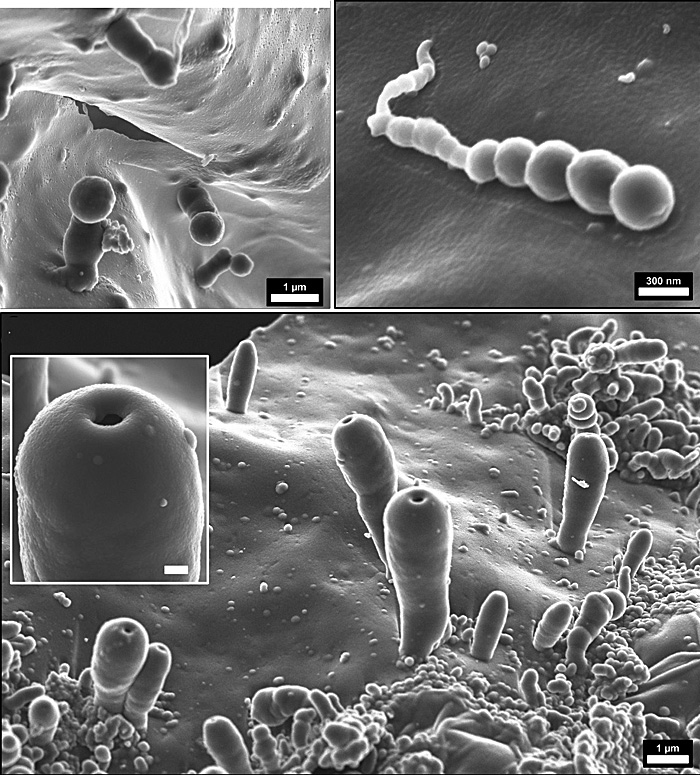
Biomorphs formed by polymerisation of HCN (Credit: Jenewein, C. et al 2024, Figure 2)

Jenewein and colleagues claim to have created cell-like structures, or ‘biomorphs’ at nanometre- and micrometre scale – spheres and polyp-like bodies – from a more plausible atmosphere of CO2 , H2O, and N2. These ‘protocells’ seem to have formed from minutely thin (150 to 3000 nanometres) polymer films built from hydrogen cyanide that grew  on the surface of the reaction chamber as electric discharges and UV light generated HCN and more complex ‘prebiotic’ chemicals. Apparently, these films were catalysed by SiO2 (silica) molecules from the glass reactor. Note:  In the Hadean breakdown of olivine to serpentinite as sea water reacted with ultramafic lavas would have released abundant silica. Serpentinisation also generates hydrogen. Intimate release of gas formed bubbles to create the spherical and polyp-like ‘protocells’. The authors imagine the Hadean global ocean permanently teeming with such microscopic receptacles. Such a veritable ‘primordial soup’ would be able to isolate other small molecules, such as amino acids, oligopeptides, nucleobases, and fatty acids, to generate more complex organic molecules in micro-reactors en route  to the kind of complex, self-sustaining systems we know as life.

So, is it possible to make a reasonable stab at what that first kind of life may have been? It was without doubt single celled. To reproduce it must have carried a genetic code enshrined in DNA, which is unique not only to all species, but to individuals. The key to tracking down LUCA is that it represents the point at which the evolutionary trees of the fundamental domains of modern life life – eukarya (including animals, plants and fungi), bacteria, and archaea – converge to a single evolutionary stem. There is little point in using fossils to resolve this issue because only multicelled life leaves tangible traces, and the first of those was found in 2,100 Ma old sediments in Gabon (see: The earliest multicelled life; July 2010). The key is using AI to compare the genetic sequences of the hugely diverse modern biosphere. Modern molecular phylogenetics and computing power can discern from their similarities and differences the relative order in which various species and broader groups split from others. It can also trace the origins of specific genes that provides clues about earlier genetic associations. Given a rate of mutation the modern differences provide estimates of when each branching occurred. The most recent genetic delving has been achieved by a consortium based at various institutions in Britain, the Netherlands, Hungary and Japan  (Moody, E.R.R. and 18 others 2024. The nature of the last universal common ancestor and its impact on the early Earth system. Nature Ecology & Evolution, v.8, pages 1654–1666; DOI: 10.1038/s41559-024-02461-1).

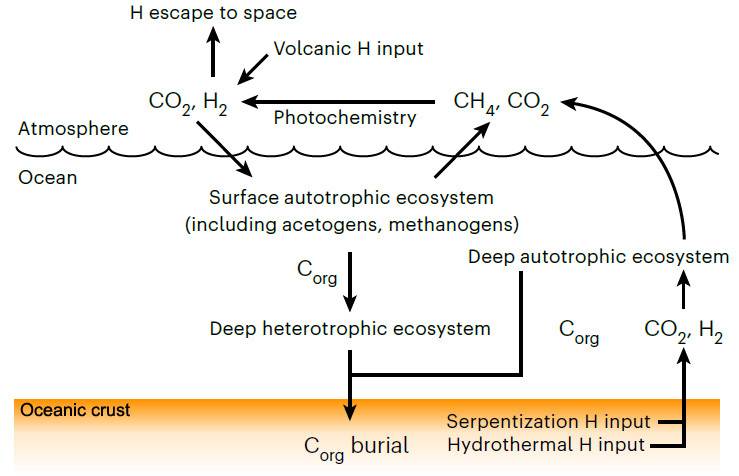
Moody et al have pushed back the estimated age of LUCA to halfway through the Hadean, between 4.09 to 4.33 billion years (Ga), well beyond the geologically known age of the earliest traces of life (3.5 Ga). That age for LUCA in itself is quite astonishing: it could have been only a couple of hundred million years after the Moon-forming interplanetary collision. Moreover, they have estimated that Darwin’s Ur-organism had a genome of around 2 million base pairs that encoded about 2600 proteins: roughly comparable to living species of bacteria and archaea, and thus probably quite advanced in evolutionary terms. The gene types probably carried by LUCA suggest that it may have been an anaerobic acetogen; i.e. an organism whose metabolism generated acetate (CH3COO) ions. Acetogens may produce their own food as autotrophs, or metabolise other organisms (heterotrophs). If LUCA was a heterotroph, then it must have subsisted in an ecosystem together with autotrophs which it consumed, possibly by fermentation. To function it also required hydrogen that can be supplied by the breakdown of ultramafic rocks to serpentinites, which tallies with the likely ocean-world with ultramafic igneous crust of the Hadean (see the earlier paragraphs about protocells). If an autotroph, LUCA would have had an abundance of CO2 and H2 to sustain it, and may have provided food for heterotrophs in the early ecosystem. The most remarkable possibility discerned by Moody et al is that LUCA may have had a kind of immune system to stave off viral infection.

The carbon cycle on the Hadean Earth (Credit: Moody et al. 2024; Figure 3e)

The Hadean environment was vastly different to that of modern times: a waterworld seething with volcanism; no continents; a target for errant asteroids and comets; more rapidly spinning with a 12 hour day; a much closer Moon and thus far bigger tides. The genetic template for the biosphere of the following four billion years was laid down then. LUCA and its companions may well have been unique to the Earth, as are their descendants. It is hard to believe that other worlds with the potential for life, even those in the solar system, could have followed a similar biogeochemical course. They may have life, but probably not as we know it  . . .

See also: Ball, P. 2025. Luca is the progenitor of all life on Earth. But its genesis has implications far beyond our planet. The Observer, 19 January 2025.

A fully revised edition of Steve Drury’s book Stepping Stones: The Making of Our Home World can now be downloaded as a free eBook

Evidence for Earth’s magnetic field 3.7 billion years ago

If ever there was one geological locality that  ‘kept giving’ it would have to be the Isua supracrustal belt in West Greenland. Since 1971 it has been known to be the repository of the oldest known metasedimentary rocks, dated at around 3.7 Ga. Repeatedly, geochemists have sought evidence for life of that antiquity, but the Isua metasediments have yielded only ambiguous chemical signs. A more convincing hint emerged from iron-rich silica layers (jasper) in similarly aged metabasalts on Nuvvuagittuk Island in Quebec on the east side of Hudson Bay, Canada, which may be products of Eoarchaean sea-floor hydrothermal vents. X-ray micro-tomography and electron microscopy of the jaspers revealed twisted filaments, tubes, knob-like and branching structures up to a centimetre long that contain minute grains of carbon, phosphates and metal sufides, but the structures are made from hematite (Fe2O3­) so an inorganic formation is just as likely as the earliest biology. Isua’s most intriguing contribution to the search for the earliest life has been what look like stromatolites in a marble layer (see: Signs of life in some of the oldest rocks; September 2016). Such structures formed in later times on shallow sea floors through the secretion of biofilms by photosynthesising blue-green bacteria.

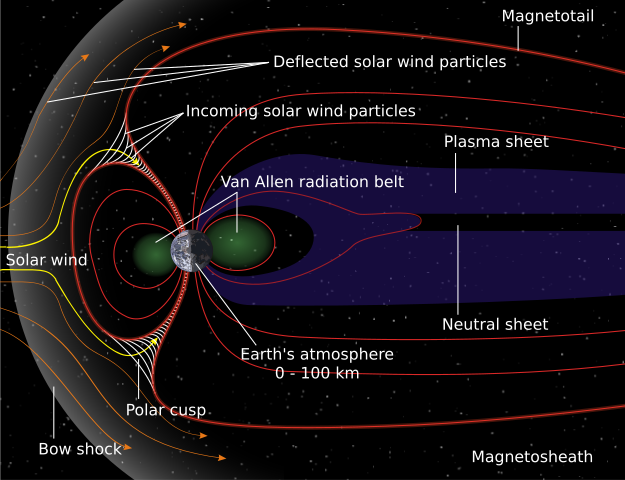
Structure of the Earth’s magnetosphere that deflects charged particles which form the solar wind. (Credit: Wikipedia Commons)

For life to form and survive depends on its complex molecules being protected from high-energy charged particles in the solar wind. In turn that depends on a strong geomagnetic field deflecting the solar wind as it does today, except for a small proportion that descend towards the poles and form aurora during solar mass ejections. In  visits to Isua in 2018 and 2019, geophysicists from the Massachusetts Institute of Technology, USA and Oxford University, UK drilled over 300 rock cores from metasedimentary ironstones (Nichols, C.I.O. and 9 others 2024. Possible Eoarchean records of the geomagnetic field preserved in the Isua Supracrustal Belt, southern West Greenland. Journal of Geophysics Research (Solid Earth), v. 129, article e2023JB027706; DOI: 10.1029/2023JB027706 Magnetisation preserved in the samples (remanent magnetism) suggest that it was formed by a geomagnetic field strength of at least 15 microtesla, similar to that which prevails today. The minerals magnetite (Fe3O4) and apatite (a complex phosphate) in the ironstones have been dated using U-Pb geochronometry and record a metamorphic event only slightly younger that the age of the Isua belt (3.69 and 3.63 Ga respectively). There is no sign of any younger heating above the temperatures that would reset the ironstones’ magnetisation. The Isua remanent magnetisation is at least 200 Ma older than that found in igneous rocks from north-eastern South Africa dated at between 3.2 to 3.45 Ga. So even in the Eoarchaean it seems likely that life, had it formed, would have avoided the hazard of exposure to the high energy solar wind. In all likelihood, however, in a shallow marine environment it would have had to protect itself somehow from intense ultraviolet radiation. That is now vastly reduced by stratospheric ozone (O3) which could only form once the atmosphere had appreciable oxygen (O2) content, i.e. after the Great Oxygenation Event beginning about 2.4 Ga ago. Undoubted stromatolites as old as 3.5 Ga suggest that early photosynthesising bacteria clearly had cracked the problem of UV protection somehow.

Darwin’s ‘warm little pond’: a new discovery

There may still be a few people around today who, like Aristotle did, reckon that frogs form from May dew and that maggots and rats spring into life spontaneously from refuse. But the idea that life emerged somehow from the non-living is, to most of us, the only viable theory. Yet the question, ‘How?’, is still being pondered on. Readers may find Chapter 13 of Stepping Stones useful. There I tried to summarise in some detail most of the modern lines of research. But the issue boils down to means of inorganically creating the basic chemical building blocks from which life’s vast and complex array of molecules might have been assembled. Living materials are dominated by five cosmically common elements: carbon, hydrogen, oxygen, nitrogen and phosphorus – CHONP for short. Organic chemists can readily synthesise countless organic compounds from CHONP. And astronomers have discovered that life is not needed to assemble the basic ingredients: amino acids, carbon-ring compounds and all kinds of simpler CHONP molecules occur in meteorites, comets and even interstellar molecular clouds. So an easy way out is to assume that such ingredients ended up on the early Earth simply because it grew through accretion of older materials from the surrounding galaxy. Somehow, perhaps, their mixing in air, water and sediments together with a kind of chaotic shuffling did the job, in the way that an infinity of caged monkeys with access to typewriters might eventually create the entire works of William Shakespeare.  But, aside from the statistical and behavioural idiocy of that notion, there is a real snag: the vaporisation of the proto-Earth’s outer parts by a Moon-forming planetary collision shortly after initial accretion.

In 1871 Charles Darwin suggested to his friend Joseph Hooker that:

          ‘… if (and Oh, what a big if) we could conceive in some warm little pond, with all sorts of ammonia and phosphoric salts, light, heat, electricity, etc., present that a protein compound was chemically formed, ready to undergo still more complex changes, at the present day such matter would be instantly devoured or absorbed, which would never have been the case before living creatures were formed’.

Followed up in the 1920s by theorists Alexander Oparin and J.B.S. Haldane, a similar hypothesis was tested practically by Harold Urey and Stanley Miller at the University of Chicago. They devised a Heath-Robinson simulation of an early atmosphere and ocean seeded with simple CHONP (plus a little sulfur) chemicals, simmered it and passed electrical discharges through it for a week. The resulting dark red ‘soup’ contained 10 of the 20 amino acids from which a vast array of proteins can be built. A repeat in 1995 also yielded two of the four nucleobases at the heart of DNA – adenine and guanine.  But simply having such chemicals around is unlikely to result in life, unless they are continually in close contact: a vessel or bag in which such chemicals can interact. The best candidates for such a containing membrane are fatty acids of a form known as amphiphiles. One end of an amphiphile chain has an affinity for water molecules, whereas the other repels them. This duality enables layers of them, when assembled in water, spontaneously to curl up to make three dimensional membranes looking like bubbles. In the last year they too have been created in vitro (Purvis, G. et al. 2024. Generation of long-chain fatty acids by hydrogen-driven bicarbonate reduction in ancient alkaline hydrothermal vents. Nature Communications (Earth & Environment), v. 5, article 30; DOI: 10.1038/s43247-023-01196-4).

Cell-like membranes formed by fatty acid amphiphiles

Graham Purvis and colleagues from Newcastle University, UK allowed three very simple ingredients – hydrogen and bicarbonate ions dissolved in water and the iron oxide magnetite (Fe3O4) – to interact. Such a simple, inorganic mixture commonly occurs in hydrothermal vents and hot springs. Bicarbonate ions (HCO3) form when CO2 dissolves in water, the hydrogen and magnetite being generated during the breakdown of iron silicates (olivines) when  ultramafic igneous rocks react with water:

3Fe2SiO4 + 2H2O → 2 Fe3O4 + 3SiO­2 +3H2

Various simulations of hydrothermal fluids had previously been tried without yielding amphiphile molecules. Purvis et al. simplified their setup to a bicarbonate solution in water that contained dissolved hydrogen – a simplification of the fluids emitted by hydrothermal vents – at 16 times atmospheric pressure and a temperature of 90°C. This was passed over magnetite. Under alkaline conditions their reaction cell yielded a range of chain-like hydrocarbon molecules. Among them was a mixture of fatty acids up to 18 carbon atoms in length. The experiment did not incorporate P, but its generation of amphiphiles that can create cell-like structures are but a step away from forming the main structural components of cell membranes, phospholipids.

When emergence of bag-forming membranes took place is, of course, hard to tell. But in the oldest geological formations ultramafic lava flows are far more common than they are today. In the Hadean and Eoarchaean, even if actual mantle rocks had not been obducted as at modern plate boundaries, at the surface there would have been abundant source materials for the vital amphiphiles to be generated through interaction with water and gases: perhaps in ‘hot little ponds’. To form living, self-replicating cells requires such frothy membranes to have captured and held amino acids and nucleobases. Such proto-cells could become organic reaction chambers where chemical building blocks continually interacted, eventually to evolve the complex forms upon which living cells depend.

Origin of life: some news

For self-replicating cells to form there are two essential precursors: water and simple compounds based on the elements carbon, hydrogen, oxygen and nitrogen (CHON). Hydrogen is not a problem, being by far the most abundant element in the universe. Carbon, oxygen and nitrogen form in the cores of stars through nuclear fusion of hydrogen and helium. These elemental building blocks need to be delivered through supernova explosions, ultimately to where water can exist in liquid form to undergo reactions that culminate in living cells. That is only possible on solid bodies that lie at just the right distance from a star to support average surface temperatures that are between the freezing and boiling points of water. Most important is that such a planet in the ‘Goldilocks Zone’ has sufficient mass for its gravity to retain water. Surface water evaporates to some extent to contribute vapour to the atmosphere. Exposed to ultraviolet radiation H2O vapour dissociates into molecular hydrogen and water, which can be lost to space if a planet’s escape velocity is less than the thermal vibration of such gas molecules. Such photo-dissociation and diffusion into outer space may have caused Mars to lose more hydrogen in this way than oxygen, to leave its surface dry but rich in reddish iron oxides.

Despite liquid water being essential for the origin of planetary life it is a mixed blessing for key molecules that support biology. This ‘water paradox’ stems from water molecules attacking and breaking the chemical connections that string together the complex chains of proteins and nucleic acids (RNA and DNA). Living cells resolve the paradox by limiting the circulation of liquid water within them by being largely filled with a gel that holds the key molecules together, rather than being bags of water as has been commonly imagined. That notion stemmed from the idea of a ‘primordial soup’, popularised by Darwin and his early followers, which is now preserved in cells’ cytoplasm. That is now known to be wrong and, in any case, the chemistry simply would not work, either in a ‘warm, little pond’ or close to a deep sea hydrothermal vent, because the molecular chains would be broken as soon as they formed. Modern evolutionary biochemists suggest that much of the chemistry leading to living cells must have taken place in environments that were sometimes dry and sometimes wet; ephemeral puddles on land. Science journalist Michael Marshall has just published an easily read, open-source essay on this vexing yet vital issue in Nature (Marshall, M. 2020. The Water Paradox and the Origins of Life. Nature, v. 588, p. 210-213; DOI: 10.1038/d41586-020-03461-4). If you are interested, click on the link to read Marshall’s account of current origins-of-life research into the role of endlessly repeated wet-dry cycles on the early Earth’s surface. Fascinating reading as the experiments take the matter far beyond the spontaneous formation of the amino acid glycine found by Stanley Miller when he passed sparks through methane, ammonia and hydrogen in his famous 1953 experiment at the University of Chicago. Marshall was spurred to write in advance of NASA’s Perseverance Mission landing on Mars in February 2021. The Perseverance rover aims to test the new hypotheses in a series of lake sediments that appear to have been deposited by wet-dry cycles  in a small Martian impact crater (Jezero Crater) early in the planet’s history when surface water was present.

Crystals of hexamethylenetetramine (Credit: r/chemistry, Reddit)

That CHON and simple compounds made from them are aplenty in interstellar gas and dust clouds has been known since the development of means of analysing the light spectra from them. The organic chemistry of carbonaceous meteorites is also well known; they even smell of hydrocarbons. Accretion of these primitive materials during planet formation is fine as far as providing feedstock for life-forming processes on physically suitable planets. But how did CHON get from giant molecular clouds into such planetesimals. An odd-sounding organic compound – hexamethylenetetramine ((CH2)6N4), or HMT – formed industrially by combining formaldehyde (CH2O) and ammonia (NH3) – was initially synthesised in the late 19th century as an antiseptic to tackle UTIs and is now used as a solid fuel for lightweight camping stoves, as well as much else besides. HMT has a potentially interesting role to play in the origin of life.  Experiments aimed at investigating what happens when starlight and thermal radiation pervade interstellar gas clouds to interact with simple CHON molecules, such as ammonia, formaldehyde, methanol and water, yielded up to 60% by mass of HMT.

The structure of HMT is a sort of cage, so that crystals form large fluffy aggregates, instead of the gases from which it can be formed in deep space. Together with interstellar silicate dusts, such sail-like structures could accrete into planetesimals in nebular star nurseries under the influence of  gravity and light pressure. Geochemists from several Japanese institutions and NASA have, for the first time, found HMT in three carbonaceous chondrites, albeit at very low concentrations – parts per billion (Y. Oba et al. 2020. Extraterrestrial hexamethylenetetramine in meteorites — a precursor of prebiotic chemistry in the inner Solar SystemNature Communications, v. 11, article 6243; DOI: 10.1038/s41467-020-20038-x). Once concentrated in planetesimals – the parents of meteorites when they are smashed by collisions – HMT can perform the useful chemical ‘trick’ of breaking down once again to very simple CHON compounds when warmed. At close quarters such organic precursors can engage in polymerising reactions whose end products could be the far more complex sugars and amino acid chains that are the characteristic CHON compounds of carbonaceous chondrites. Yasuhiro Oba and colleagues may have found the missing link between interstellar space, planet formation and the synthesis of life through the mechanisms that resolve the ‘water paradox’ outlined by Michael Marshall.

See also: Scientists Find Precursor of Prebiotic Chemistry in Three Meteorites (Sci-news, 8 December 2020.)


Earth’s water and the Moon

Where did all our water come from? The Earth’s large complement of H2O, at the surface, in its crust and even in the mantle, is what sets it apart in many ways from the rest of the rocky Inner Planets. They are largely dry, tectonically torpid and devoid of signs of life. For a long while the standard answer has been that it was delivered by wave after wave of comet impacts during the Hadean, based on the fact that most volatiles were driven to the outermost Solar System, eventually to accrete as the giant planets and the icy worlds and comets of the Kuiper Belt and Oort Cloud, once the Sun sparked its fusion reactions That left its immediate surroundings depleted in them and enriched in more refractory elements and compounds from which the Inner Planets accreted. But that begs another question: how come an early comet ‘storm’ failed to ‘irrigate’ Mercury, Venus and Mars? New geochemical data offer a different scenario, albeit with a link to the early comet-storms paradigm.

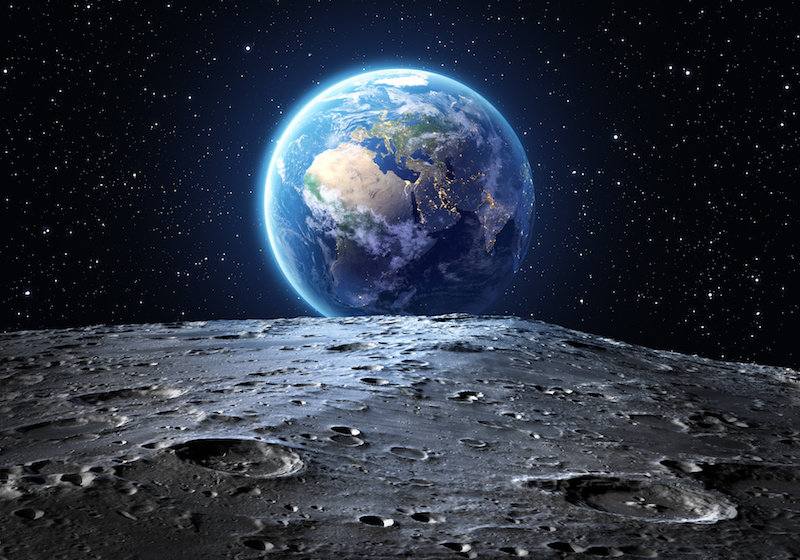
Simulated view of the Earth from lunar orbit: the ‘wet’ and the ‘dry’. (credit: Adobe Stock)

Three geochemists from the Institut für Planetologie, University of Münster, Germany, led by Gerrit Budde have been studying the isotopes of the element molybdenum (Mo) in terrestrial rocks and meteorite collections. Molybdenum is a strongly siderophile (‘iron loving’) metal that, along with other transition-group metals, easily dissolves in molten iron. Consequently, when the Earth’s core began to form very early in Earth’s history, available molybdenum was mostly incorporated into it. Yet Mo is not that uncommon in younger rocks that formed by partial melting of the mantle, which implies that there is still plenty of it mantle peridotites. That surprising abundance may be explained by its addition along with other interplanetary material after the core had formed. Using Mo isotopes to investigate pre- and post-core formation events is similar to the use of isotopes of other transition metals, such as tungsten (see Planetary science, May 2016). Continue reading “Earth’s water and the Moon”

A role for iron in the origin of life

Experiments aimed at suggesting how RNA and DNA – prerequisites for life, reproduction and evolution – might have formed from a ‘primordial soup’ have made slow progress. Another approach to the origin of life is investigation of the most basic chemical reactions that it engages in. Whatever the life form, prokaryote or eukaryote, its core processes involve reducing carbon dioxide, or other simple carbon-bearing compounds, and water to synthesise organic molecules that make up cell matter. Organisms also engage in metabolising biological compounds to generate energy. At their root, these two processes mirror each other; a creative network of reactions and another that breaks compounds down, known as the Krebs- and the reverse-Krebs cycles. In living organisms both are facilitated by other organic compounds that, of course, are themselves produced by cells. How such networks arose under inorganic conditions remains unknown, but three biochemists at the University of Strasbourg in France (Muchowska, K.B. et al. 2019. Synthesis and breakdown of universal metabolic precursors promoted by iron. Nature, v. 569, p. 104-107;  DOI: 10.1038/s41586-019-1151-1) have designed an inorganic experiment. They aimed to investigate how two simple organic compounds, which conceivably could have formed in a lifeless early environment, might have been encouraged to kick-start basic living processes. These are glyoxylate (HCOCO2) and pyruvate (CH3COCO2).

The most difficult chemical step in building complex organic compounds is inducing carbon atoms to bond together through C-C bonds; a process that thermodynamics tends to thwart but is accomplished in living cells by adenosine tri-phosphate (ATP). Previous workers focussed on interactions between reactive compounds, such as cyanide and formaldehyde, as candidates for the precursors of life, but such chemistry is totally different from what actually goes on in organisms. Joseph Moran, one of the co-authors of the paper, and his research group recently settled on five fundamental linkages of C, H and O as ‘universal hubs’ at the core of the Krebs cycle and its reverse. Kamila Muchowska and co-workers found that glyoxylate and pyruvate introduced into a simulated hydrothermal fluid that contains ions of ferrous iron (reduced Fe2+) were able to combine in producing all five ‘universal hubs. Ferrous iron clearly acted as a catalyst, through being a powerful reducing agent or electron donor, to get around the stringencies of classic thermodynamics. Moran’s team had previously shown that pyruvate itself can form inorganically from CO2 in water laced with iron, cobalt and nickel ions. Formation of glyoxylate in such a manner has yet to be demonstrated. Nevertheless, the two together in a watery soup of transition metal ions seem destined to produce an abundance of exactly the compounds at the root of living processes. In fact the experiment showed that all but two of the eleven components of the Krebs cycle can be synthesised inorganically.

407458aa.2
Metal-rich ‘black smoker’ at a hydrothermal vent on the mid-Atlantic ridge(credit: MARUM, Germany)

Until the rise of free oxygen in the Earth system some 2400 Ma ago, the oceans would have been awash with soluble ferrous iron. This would have been especially the case around hydrothermal vents that result from the interaction between water and hot mafic lavas of the oceanic crust, together with less abundant transition-metal ions, such as those of nickel and cobalt. The ocean-vent hypothesis for the origin of life seems set for a surge forward.

See also: Katsnelson, A. 2019. Iron can catalyse metabolic reactions without enzymes.

Read more on Palaeobiology

A unifying idea for the origin of life

The nickel in stainless steel, the platinum in catalytic converters and the gold in jewellery, electronic circuits and Fort Knox should all be much harder to find in the Earth’s crust. Had the early Earth formed only by accretion and then the massive chemical resetting mechanism of the collision that produced the Moon all three would lie far beyond reach. Both formation events would have led to an extremely hot young Earth; indeed the second is believed to have left the outer Earth and Moon completely molten. All three are siderophile metals and have such a strong affinity for metallic iron that they would mostly have been dragged down to each body’s core as it formed in the early few hundred million years of the Earth-Moon system, leaving very much less in the mantle than rock analyses show. This emerged as a central theme at the Origin of Life Conference held in Atlanta GA, USA in October 2018. The idea stemmed from two papers published in 2015 that reported excessive amounts in basaltic material from both Earth and Moon of a tungsten isotope (182W) that forms when a radioactive isotope of hafnium (182Hf), another strongly siderophile metal, decays. Hafnium too must have been strongly depleted in the outer parts of both bodies when their cores formed. The excesses are explained by substantial accretion of material rich in metallic iron to their outer layers shortly after Moon-formation, some being in large metallic asteroids able to penetrate to hundreds of kilometres. Hot iron is capable of removing oxygen from water vapour and other gases containing oxygen, thereby being oxidised. The counterpart would have been the release of massive amounts of hydrogen, carbon and other elements that form gases when combined with oxygen. The Earth’s atmosphere would have become highly reducing.

Had the atmosphere started out as an oxidising environment, as thought for many decades, it would have posed considerable difficulties for the generation at the surface of hydrocarbon compounds that are the sine qua non for the origin of life. That is why theories about abiogenesis (life formed from inorganic matter) hitherto have focussed on highly reducing environments such as deep-sea hydrothermal vents where hydrogen is produced by alteration of mantle minerals. The new idea revitalises Darwin’s original idea of life having originated in ‘a warm little pond’. How it has changed the game as regards the first step in life, the so-called ‘RNA World’ can be found in a detailed summary of the seemingly almost frenzied Origin of Life Conference (Service, R.F. 2019. Seeing the dawn. Science, v. 363, p. 116-119; DOI: 10.1126/science.363.6423.116).

Isotope geochemistry has also entered the mix in other regards, particularly that gleaned from tiny grains of the mineral zircon that survived intact from as little as 70 Ma after the Moon-forming and late-accretion events to end up (3 billion years ago) in the now famous Mount Narryer Quartzite of Western Australia. The oldest of these zircons (4.4 Ga) suggest that granitic rocks had formed the earliest vestiges of continental crust far back in the Hadean Eon: Only silica-rich magmas contain enough zirconium for zircon (ZrSiO4) to crystallise. Oxygen isotope studies of them suggest that at that very early date they had come into contact with liquid water, presumably at the Earth’s surface. That suggests that perhaps there were isolated islands of early continental materials; now vanished from the geological record. A 4.1 Ga zircon population revealed something more surprising: graphite flakes with carbon isotopes enriched in 12C that suggests the zircons may have incorporated carbon from living organisms.

407458aa.2
A possible timeline for the origin of life during the Hadean Eon (Credit: Service, R.F. 2019, Science)

Such a suite of evidence has given organic chemists more environmental leeway to suggest a wealth of complex reactions at the Hadean surface that may have generated the early organic compounds needed as building blocks for RNA, such as aldehydes and sugars (specifically ribose that is part of both RNA and DNA), and the amino acids forming the A-C-G-U ‘letters’ of RNA, some catalysed by the now abundant siderophile metal nickel. One author seems gleefully to have resurrected Darwin’s ‘warm little pond’ by suggesting periodic exposure above sea level of abiogenic precursors to volcanic sulfur dioxide that could hasten some key reactions and create large masses of such precursors which rain would have channelled into ‘puddles and lakes’. The upshot is that the RNA World precursor to the self-replication conferred on subsequent life by DNA is speculated to have been around 4.35 Ga, 50 Ma after the Earth had cooled sufficiently to have surface water dotted with specks of continental material.

There are caveats in Robert Services summary, but the Atlanta conferences seems set to form a turning point in experimental palaeobiology studies.

Read more on Palaeobiology and Planetary science

Oceanic hydrothermal vents and the origin of life

A range of indirect evidence has been used to suggest that life originated deep in the oceans around hydrothermal vents, such as signs of early organic matter in association with Archaean pillow lavas. One particularly persuasive observation is that a number of proteins and other cell chemicals are constructed around metal sulfide groups. Such sulfides are common around hydrothermal ‘smokers’ associated with oceanic rift systems. Moreover, Fischer-Tropsch reactions between carbon monoxide and hydrogen produce quite complex hydrocarbon molecules under laboratory conditions. Such hydrogenation of a carbon-bearing gas requires a catalyst, a commonly used one being chromium oxide (see Abiotic formation of hydrocarbons by oceanic hydrothermal circulation May 2004). It also turns out that fluids emitted by sea-floor hydrothermal systems are sometimes rich in free hydrogen, formed by the breakdown of olivine in ultramafic rocks to form hydroxylated minerals such as serpentine and talc. The fact that chromium is abundant in ultramafic rocks, in the form of its oxide chromite, elevates the possibility that Fischer-Tropsch reactions may have been a crucial part of the life-forming process on the early Earth. What is needed is evidence that such reactions do occur in natural settings.

407458aa.2
A white carbonate mound forming at the Lost City hydrothermal vent field on the Mid-Atlantic Ridge (Credit: Baross 2018)

One site on the mid-Atlantic ridge spreading centre, the Lost City vent field, operates because of serpentinisation of peridotites exposed on the ocean floor, to form carbonate-rich plumes and rocky towers; ‘white smokers’. So that is an obvious place to test the abiotic theory for the origin of life. Past analyses of the vents have yielded a whole range of organic molecules, including alkanes, formates, acetates and pyruvates, that are possible precursors for such a natural process. Revisiting Lost City with advanced analytical techniques has taken the quest a major step forward (Ménez, B. et al. 2018. Abiotic synthesis of amino acids in the recesses of the oceanic lithosphere. Nature, advance online publication; DOI: 10.1038/s41586-018-0684-z). The researchers from France and Kazakhstan focused on rock drilled from 170 m below the vent system, probably beyond the influence of surface contamination from living organisms. Using several methods they detected the nitrogen-containing amino acid tryptophan, and that alone. Had they detected other amino acids their exciting result would have been severely tempered by the possibility of surface organic contamination. The formation of tryptophan implies that its abiotic formation had to involve the reduction of elemental nitrogen (N2) to ammonia (NH3). Bénédicte Ménez and colleagues suggest that the iron-rich clay saponite, which is a common product of serpentine alteration at low temperatures, may have catalysed such reduction and amino-acid synthesis through Friedel–Crafts reactions. Fascinating as this discovery may be, it is just a step towards confirming life’s abiogenesis. It also permits speculation that similar evidence may be found elsewhere in the Solar System on rocky bodies, such as the moons Enceladus and Europa that orbit Saturn and Jupiter respectively. That is, if the rock base of hydrothermal systems thought to occur there can be reached.

Related article: Baross, J.A. 2018. The rocky road to biomolecules. Nature, v. 564, p. 42-43; DOI: 10.1038/d41586-018-07262-8.