Severe COVID-19 associated with Neanderthal inheritance?

News broke in 2010 about evidence from modern and ancient DNA samples that showed some anatomically modern humans who left Africa before 40 thousand years ago to have interbred with the Neanderthal occupants of Eurasia (see: Yes, it seems that they did …; May 2010). In 2011 it turned out that the same had happened when AMH migrants in Asia met with Denisovans (see: Snippets on human evolution; November 2011). The resulting human hybrids went on to spread their new genes as they populated East Asia, Australasia and the Americas. Genomes of thousands of living people from these continents all show varying proportions – but generally less than about 5% – of genetic contributions from one or the other and in some cases both. Some of the modern humans who remained in Africa also had a similar opportunity. A few Neanderthals did set foot in Africa sharing their genes with its original inhabitants, but those venturing far from their normal range had already interbred with early ‘out-of-Africa’ AMH migrants about 150 to 100 thousand years ago, as had  AMH returning from Eurasia around 20 ka ago. Five widespread groups of modern Africans (but not all) carry up to 0.3% of the Neanderthal genome. Moreover, the ancestors of some living Africans had also exchanged genes with as-yet unknown archaic humans (see also: Everyone now has their Inner Neanderthal; February 2020).

Personally, I reacted to the news with a sense of pride. Neanderthals were tough, survivors of several hundred thousand years of climatic extremes hunting fearsome prey, and they probably had an intellect as advanced as that of the AMH with whom they mingled. My little bit of Neanderthal has conferred several advantages including resistance to Eurasian pathogens, but also has its downside, such as a tendency to depression and excessive blood clotting. But an unedited paper released in advance of publication by the journal Nature suggests that my pride turns out to include an unwelcome element of hubris.

Early in the COVID-19 pandemic, genetic research on over 3000 individuals, whose symptoms were severe enough for them to be hospitalised – a high proportion of whom sadly died – revealed that there was more to their being prone to severe symptoms than age, co-morbidities, gender and ethnicity. A short segment (around 50,000 base pairs long) on the DNA of their chromosome-3 is significantly associated with severe COVID-19 outcomes. Svante Pääbo, the leader of the team than reconstructed the Neanderthal and Denisovan genomes and discovered their presence in living people, and his co-author, Hugo Zeberg, have linked this segment to a stretch in the Neanderthal genome (Zeberg, H. & Pääbo, S. 2020. The major genetic risk factor for severe COVID-19 is inherited from Neanderthals. Nature, accelerated preview; DOI: 10.1038/s41586-020-2818-3). One gene included in the segment plays a role in the human immune response and another is linked to the way the coronavirus invades human cells, but how they influence health outcomes in COVID-19 victims is yet to be established. Sixteen percent of Europeans and 30% of South Asians carry the segment. If infected, they are at higher risk of severe outcomes than the rest of the population. That the relatively small segment still persists 40 ka after Neanderthals became extinct suggests that it has not always conferred high risk: probably because it once conferred significant advantages, perhaps by protecting against other, now extinct pathogens. A fitness benefit is passed on through natural selection

The pandemic has yet to run its course and genetic research, such as that by Zeberg and Pääbo, takes second place to that aiming at lessening the effects of the disease and developing vaccines that, hopefully, will wipe it out. The country-by-country statistics of COVID-19 morbidity and mortality are shaky, but an interesting feature may be emerging. Although there have been many cases in Africa, where health services are under developed, it seems that deaths as a proportion of infections are significantly lower there than in the more advanced countries. Hopefully that will continue, perhaps as a result of lower Neanderthal inheritance.

See also: Sample, I. 2020. Neanderthal genes increase risk of serious Covid-19, study claims. (The Guardian, 30 September 2020)

Did early humans learn to cook in Olduvai Gorge?

Olduvai Gorge in northern Tanzania was for many years the stamping ground of the famous Leakey family and many other anthropologists because of it richness in the skeletal remains and the tools of the earliest members of our genus Homo. The first of these, H. habilis, appears in the Olduvai stratigraphic sequence at around 2 Ma: older examples are now known from localities in Kenya and South Africa taking the species back to about 2.4 Ma. ‘Handy Man’ got the Latinised nickname from its association with abundant stone tools, albeit of a very primitive kind. Oldowan tools are of the ‘let’s bash a couple of pebbles together to get a cutting edge’ kind, dating back to 3.4 Ma (but without evidence of who made them then) and as easily-made disposable tools they linger in the archaeological record until the Neolithic and even modern times. Homo habilis had a brain size little larger than that of australopithecines and some authorities deem them to be such.

Olduvai also yielded the earliest of a more ‘brainy’ species H. ergaster (‘Action Man’), which coexisted with habilis for a few hundred thousand years from around 2 Ma. Initially they also left Oldowan tools. Then, around 1.7 Ma at Olduvai, ergaster began making another stone artefact, the symmetrical bifacial ‘axe’ – probably a multipurpose tool and possibly an object of ritual significance, according to some researchers. Whichever, to make one required visualising the finished item within a shapeless lump of hard rock, and making them required great dexterity: and still does for stone knappers. The biface or ‘Acheulean’ tool originates with one of humanity’s greatest cognitive leaps and lay at the centre of the human toolkit for well over a million years. After being made first in Olduvai by African H. ergaster biface artefacts then spread throughout the continent with H. erectus (probably a direct descendent) and beyond its shores with succeeding humans, up to and including the earliest H. sapiens. How did what seems to be a ‘golden spike’ in human culture first take material form in Olduvai? The possibility of an answer stems from pure serendipity and the development of new research tools.

A flint bifacial stone artefact from the Palaeolithic of Norfolk, UK, which incorporates a bivalve fossil

That the Olduvai Gorge has drawn in several generations of researchers lies in its geology. As well as the sediments deposited by rivers and in ephemeral lakes that characterised a broadly speaking savannah environment, from 2 to 1 Ma there were at least 31 major volcanic eruptions that deposited lavas and a wide range of volcanic ash beds. These have enabled precise dating to calibrate in minute detail the evolution of a highly productive environment and the flora and fauna that it supported during the early Pleistocene. A recently developed technique involves identification of a variety of fatty acids or lipids – natural oils, waxes and steroids – using gas chromatography. Lipids are the remaining ‘biomarkers’ of plants and microorganisms that once lived in an ecosystem. Ainara Sistiaga of the Massachusetts Institute of Technology and the University of Copenhagen, with colleagues from Denmark, Spain, the US and Tanzania, set out to document ecological variation at Olduvai over a million-year interval using this approach. Among the microbial biomarkers they stumbled on something of possibly great importance (Sistiaga, A. and 10 others 2020. Microbial biomarkers reveal a hydrothermally active landscape at Olduvai Gorge at the dawn of the Acheulean, 1.7 Ma. Proceedings of the National Academy of Sciences, v. 117, published online; DOI: 10.1073/pnas.2004532117).

The palaeo-landscape of Olduvai, as revealed by lipid analysis, was highly diverse and rich in grasses, palms shrubs, aquatic flora and edible plants, watered by spring-fed rivers. It supported a diverse fauna including large herbivores (supported by fecal biomarkers): ideal for hominin subsistence. Sistiaga et al. focus in their paper on samples from the 1.7 Ma sedimentary and volcanic sequence (the Lower Augitic Sandstones – augite is an igneous pyroxene) that contains remains of H. ergaster, the oldest bifacial artefacts, and dismembered carcases of hominin prey animals. The surprise that emerged from the volcanoclastic sandstones included lipids produced by a range of bacterial species that only thrive in modern hot springs, such as those at Yellowstone and on the North Island of New Zealand. At three sample sites biomarkers for one particular hyperthermophile were found (Thermocrinis ruber), which can only live in water between 80 to 95°C. This and the other heat-loving bacteria also require water chemistry that, if cool, is drinkable.

Artist’s impression of Homo ergaster cooking an antelope in a 1.7 Ma hot spring at Olduvai Gorge, Tanzania (credit: Tom Björklund, MIT)

The implication is obvious: the ancient Olduvai hot springs were capable of thoroughly cooking meat and vegetables. The importance for humans is that cooking both tenderises meat and tough tubers and roots and breaks down carbohydrates and proteins to make them more easily and efficiently digestible. The brain capacity of H. ergaster was significantly greater than that of H. habilis, and at the average 800 cm3 about 2/3 that of anatomically modern humans. An increase in the input of easily digested protein, fats and carbohydrates may have fuelled that growth and, in turn, the cognitive capacity of H. ergaster. Not only the Western Rift Valley of Tanzania but the whole of the East African Rift System is liberally dotted with hydrothermal vents and also with hominin-rich sites.

See also: Chu, J. 2020. Did our early ancestors boil their food in hot springs? (MIT News, 15 September 2020)

Isotopic clues to diet of early hominins

‘We are what we eat’ is certainly a truism, but it is neither a trope nor a cliché. The phrase is especially appropriate when scientists examine isotopes of a variety of elements in bones or teeth. For instance the relative proportions of two stable isotopes of the metal strontium – 87Sr and 86Sr – differ from place to place in soil because 87Sr is the daughter isotope of radioactive 87Rb. The older the rock from which a soil has formed the more of the radioactive rubidium isotope will have decayed. Not only does this increase the 87Sr/ 86Sr ratio in the rock and the soil derived from it, but vegetation inherits it too. So it gets into an animal’s diet and ultimately its teeth. A human who has migrated will carry the ratio of the geology of her early home geology in her adult teeth – fully developed by about 13 years-old – to wherever she dies. Likewise, the different oxygen isotopes in rainwater, which result from climate variation, end up in teeth thanks to what a person ate before adulthood. The two ‘signatures’ together allowed archaeologists to backtrack the famous ‘Amesbury Archer’, who may have brought Bronze Age culture to Britain, back to the Alps of Central Europe. Just what a human diet comprised can be roughly assessed from the carbon and nitrogen isotopes in collagen that fossil bone sometimes preserves: the proportion of seafood relative to the meat of land herbivores and the amount of terrestrial grains, nuts and fruits. The trouble is, collagen degrades with the age of human remains and another approach is needed to assess the diets of our distant forebears.

Calcium isotope data from early hominins and some modern primates. Increasingly negative values of δ44/42Ca signify lower values of the ratio compared with a standard. (Credit: Martin et al. 2020; Fig. 1)

It turns out that calcium isotopes in teeth, which do not degrade over extremely long time spans, offer clues to diet. In particular the dental 44Ca/42Ca ratio decreases as its hosts rise in the food chain; effectively as the meat content in their diet increases. This approach has been applied to the hominin and non-human primate fauna of the Turkana Basin in Kenya (Martin, J.E. et al. 2020. Calcium isotopic ecology of Turkana Basin hominins. Nature Communications, v. 11, article 3587; DOI: 10.1038/s41467-020-17427-7). The shores of a large lake in the vicinity of modern Lake Turkana were occupied from 3.5 to about 2 Ma ago by early Homo, australopithecines, paranthropoids and baboons. Using dental Ca isotopes fails to distinguish Australopithecus anamensis and Kenyanthropus platyops, whereas carbon isotopes suggest that the first had a purely C3 plant diet – fruiting plants that thrive under cool, wet conditions, as beneath woodland canopies – whereas Kenyanthropus foraged on both these and the C4 plants – many grasses and sedges – that favour open, well-lit grassland. The 44Ca/42Ca ratios in Homo teeth span a wide range of values that point to omnivory and even a high dietary meat content: a similar isotopic pattern to those of fossil baboons and geladas. Paranthropus boisei is definitely the odd-one-out, among both ancient and modern primates, and even among paranthropoids as a whole. It most likely had a specialised diet. Its teeth show wear patterns that suggest soft plant material, which seems to rule out grasses which are abrasive. Perhaps it fed on succulent semi-aquatic plants of the lake shore. When Mary Leakey first discovered P. boisei in 1959, she and husband Louis considered that its huge molars with thick enamel indicated that it ate hard vegetable matter, hence its original nickname ‘Nutcracker Man’. It also had hands capable of precise manipulation, indeed the association of the first specimen with Oldowan-type stone tools led to speculation that it had made them. Some specimens are associated with long bones with worn ends, suggesting that they may have used them for digging.

Earliest Americans, and plenty of them

Who the first Americans were is barely known outside of the tools that they left in the archaeological record. For most of the late 20th century US researchers claimed that the first people to migrate into the Americas produced stone tools of the Clovis culture that first appear just before the Younger Dryas cold period, around 13.2 to 12.9 thousand years (ka) ago. The hallmark of Clovis culture is the finely-worked stone spear point, and its association with butchered large mammals: the Clovis people were apparently big-game hunters  Despite other, albeit less convincing, signs of earlier human habitation, this notion ossified for a seemingly irrefutable reason. To reach the Americas from NE Asia on foot, these people would have had to cross the Bering Straits via the Beringia land bridge exposed as sea level fell during the Last Glacial Maximum (LGM). That would have taken them to Alaska, but an exit to the south remained blocked by the huge Laurentian ice sheet until around 13 ka. Once an ice-free route had opened, the Clovis people migrated quickly to reach the site from which they take their name in New Mexico. But other archaeological sites discovered in the last couple of decades, extending as far south as Chile, have yielded ages that clearly predate the Clovis culture (see: Clovis First hypothesis dumped, May 2008). Beneath a Clovis-bearing layer at a site in Texas excavators unearthed thousands of totally different tools reliably dated to as far back as 15.5 ka (see: Clovis first hypothesis refuted, May 2011). This opened the realistic possibility that the earliest migrants had not necessarily walked from Asia, but may have followed a marine route along the Pacific coast and spread eastwards as opportunities presented themselves.

Now Mesoamerica has convincingly verified migration more than twice as long ago as that which littered North America with Clovis tools. It emerged from the Chiquihuite Cave 2.7 km high in the Astillero Mountains of northern Mexico. Almost 2000 stone artefacts were found throughout a 3 m thick layer of sediment beneath the cave floor that spans 27 to 13  ka, (Ardelean, C.F. and 27 others 2020. Evidence of human occupation in Mexico around the Last Glacial Maximum. Nature, v. 584 p. 87–92; DOI: 10.1038/s41586-020-2509-0). The technology revealed by the tools is more primitive than that of the Clovis culture. Artefacts occur throughout the layer, which extends back in time from the Younger Dryas, through the preceding period of warming and the LGM itself. Although colder than the present equitable climate of the high mountain valleys of Northern Mexico environmental data obtained from the layer show that it was viable for occupation through the LGM. Of the 42 highly precise and accurate radiocarbon dates those from some of the stratigraphically deepest part of the layer exceed 33 ka, which the authors suggest may establish the initial human occupation of the cave. Incidentally, although the paper was published online in July 2020 it was submitted to Nature in October 2018. That is a very long time in the editorial and review process. There is no indication as to why there was such a delay: maybe an indication of some continuing defence of the Clovis First hypothesis among the reviewers …

Dated pre-Clovis sites in Mexico and North America and possible expanding distribution of people from 31.3 to 14.2 ka (Credit; Becerra-Valdivia and Higham; Extended Data Fig. 4)

The radiocarbon dating in the paper was carried out at the state-of-the-art accelerator mass spectrometer unit at the University of Oxford, UK, by two of the co-authors (Lorena Becerra-Valdivia and Thomas Higham). They too published a Nature paper in late July 2020, which discusses their new dating of 42 archaeological sites in North America and Siberia (Becerra-Valdivia, L. & Higham, T. 2020. The timing and effect of the earliest human arrivals in North America. Nature, v. 584, p. 93-97; DOI: 10.1038/s41586-020-2491-6). In Mesoamerica and North America (the Clovis heartland) their results suggest that, as in Chiquihuite Cave, ‘people were present in different settings before, during and immediately following the LGM’, their ranges increasing over time. These people would likely not have followed the same route suggested for the later Clovis people, i.e. across Beringia and then parallel to the topographic grain in the Western Cordillera, ice-cap melting permitting. An interesting suggestion by Becerra-Valdivia and Higham is that post-LGM expansion in numbers and range of these early American contributed to the famous extinction of the North American Pleistocene megafauna. Dating the extinctions of different genera suggests that disappearance of the megafauna may not have been a single event during the Younger Dryas, but seems to have been during at least two other episodes peaking at about 40 and 24 ka. Both the ecological devastation supposedly associated with the Clovis people and the impact theory for its cause depend on a single event.

See also:  Gruhn, R. 2020. Evidence grows for early peopling of the Americas. Nature, v. 584, p. 47-48; DOI: 10.1038/d41586-020-02137-3; Rincon, P. 2020. Earliest evidence for humans in the Americas (BBC News, 22 July 2020); Keys, D. 2020. Humans reached the Americas 11,000 years earlier than previously thought, archaeologists discover (Independent, 22 July 2020)

A protein clue to H. antecessor’s role in human evolution

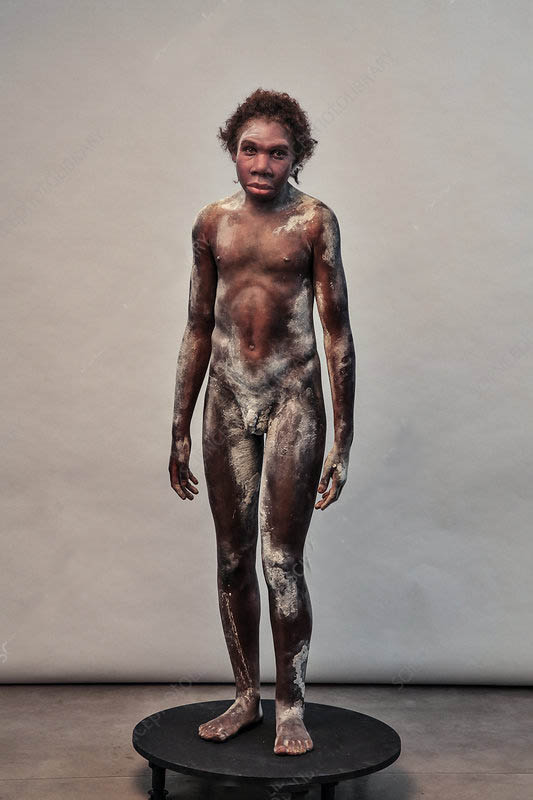
Homo_antecessor child
Forensic reconstruction of the remains of a Homo antecessor child from Gran Dolina Cave in northern Spain (credit Élisabeth Daynès, Museo de la Evolución, Burgos, Spain)

The older a fossil, no matter how well preserved it is, the less chance it has to contain enough undegraded DNA for it to be extracted and sequenced using the most advanced techniques. At present the oldest fossil DNA not to have passed its ‘sell-by’date is that of a 560 to 780 thousand year-old horse’s legbone found in Canadian permafrost. For human remains the oldest mtDNA is that of a ~430 ka individual from the Sima de los Huesos in northern Spain (see: Mitochondrial DNA from 400 thousand year old humans; Earth-logs December 2013). But there is another route to establishing genetic relatedness from the amino-acid sequences of proteins recovered from ancient individuals (see: Ancient proteins: keys to early human evolution?). Fossil teeth have proved to be good repositories of ancient protein and are the most commonly found hominin fossils.

A key species for unravelling the origins of the three most recent human groups (ourselves, Neanderthals and Denisovans) is thought to be Homo antecessor who inhabited the Gran Dolina Cave in the Atapuerca Mountains in northern Spain between about 1.2 Ma and 800 ka ago (see: Human evolution: bush or basketwork? Earth-logs, January 2014). Palaeoanthropologists excavated 170 skeletal fragments from six individuals in the most productive layer at Gran Dolina. Incomplete facial bones suggest a ‘modern-like’ face, although the remains as a whole are insufficient to reconstruct the oldest Europeans with sufficient detail to place them in anatomical relation to the younger groups. But there are several teeth. One of them, a permanent molar, has yielded informative proteins (Welker, F. and 26 others 2020. The dental proteome of Homo antecessor. Nature, v. 580, p. 235-238; DOI: 10.1038/s41586-020-2153-8) and has been dated to between 772 to 949 ka.

Amino acids in the dental proteins, sequenced using mass spectrometry, were compared with those of other hominins. Because protein sequences are coded by an animal’s genome they are a ‘proxy’ for DNA. The outcome is that the Gran Dolina proteins are roughly equally related to Denisovans, Neanderthals and ourselves, suggesting that, although the younger three groups are closely related, H. antecessor is an ‘outlier’. Being significantly older, it is likely to be the common ancestor of all three. Another species with close anatomical affinities is H. heidelbergensis (700 to 300 ka) found in Africa as well as in Europe. Its mtDNA (see: Mitochondrial DNA from 400 thousand year old humans; Earth-logs December 2013) matches that of Denisovans better than it does Neanderthals, yet without protein and full-genome analysis all that can be concluded is that it may be an intermediary between H. antecessor and the well known interbreeding triad of more recent times.

We are getting closer to a documented web of interrelationships between humans in general whose time span from 2 Ma ago is now well established. The remaining genetic link to be documented is that to H. erectus, the longest lived and most travelled of all ancient humans. Frido Welker and co-workers also had a shot at the proteomics of one of the first humans known to have migrated from Africa, using an isolated, presumably H. erectus, molar found at the 1.77 Ma site at Dmanisi in the Caucasus foothills of Georgia. Although inconclusive in placing that precociously intrepid group firmly in the human story, the fact that dental proteins were discovered is cause for optimism.

See also: Campbell, M. 2020. Protein analysis of 800,000-year-old human fossil clarifies dispute over ancestors (Technology Networks, 1 April 2020)

More time for modern humans to have mingled with Neanderthals

When anatomically modern humans (AMH) became established in Europe the days of the Neanderthals were numbered. Yet, genomic evidence is mounting for many instances of interbreeding between the two groups (see Human evolution links). The longer they were in contact the chances of meeting and having sex were likewise increased. So, for how long were the two groups able to make contact? Neanderthals declined and eventually disappeared between 41 and 39 ka, except for a possible refuge for a tiny number in southern Spain until 37 ka and maybe in the northern Urals where there are disputed Mousterian stone tools as young as 34 to 31 ka. Undoubtedly, the appearance of AMH somehow contributed to the demise of our close relatives, but there are many possible reasons why. Until recently, the earliest European entry of AMH had been placed at around 41 ka, based on dating of H. sapiens remains in Romania (but note: a single 210 ka possible AMH skull from Greece). This is now exceeded by data from a Bulgarian cave.

Bacho Kiro cave in Bulgaria (credit: Getty images)

The Bacho Kiro site was first excavated in the 1970s, and revealed stone tools that represent the earliest Upper Palaeolithic culture, known as the Bachokirian. Mitochondrial DNA from excavated bone fragments is clearly of AMH origin (Hublin, J.-J. and 31 others 2020. Initial Upper Palaeolithic Homo sapiens from Bacho Kiro Cave, Bulgaria. Nature, v. 581, online; DOI: 10.1038/s41586-020-2259-z). Dating the Bacho Kiro cave sediments has been difficult, but new analytical and statistical approaches using the radiocarbon (14C) method have yielded ages between 46 to 44 ka and perhaps as far back at 47ka (Fewlass, H. and 20 others 2020. A 14C chronology for the Middle to Upper Palaeolithic transition at Bacho Kiro Cave, Bulgaria. Nature Ecology and Evolution, v. 4, online; DOI: 10.1038/s41559-020-1136-3). This is the earliest unequivocal, direct evidence of our species in Europe and its association with the initial Upper Palaeolithic culture. Among the finds are perforated animal teeth and ivory beads that probably formed pendants, which resemble those found elsewhere in association with late Neanderthals: the Chatelperronian culture that seems to have been shared between AMH and Neanderthals.

The new data add up to 6 thousand years to the period of AMH-Neanderthal co-occupation of Europe, or about 400 generations. Plenty of time to ‘get to know one another’, and perhaps to assimilate genetically

See also: Rincon, P. 2020. Longer overlap for modern humans and Neanderthals. (BBC News 11 May 2020); Metcalfe, T. 2020. A tooth offers evidence modern humans reached Europe earlier than previously thought. (NBC News 11 May 2020)

Human evolution links

Time and energy permit me to summarise only one or two research developments each week. Yet there is a continual flow of other publications in fields which interest me, and hopefully most readers of Earth-logs. I come across them during my weekly search for suitable inspiration, so have decided occasionally to provide links to informative summaries in other blogs.

Last week, Science Daily reported on a paper in the journal Genetics that evaluates new genetic evidence that interbreeding between anatomically modern humans (AMH) occurred more often than previously suggested, when the two groups were in contact in Eurasia (New research adds to growing evidence that our ancestors interbred with Neanderthals at multiple times in history. Science Daily 1 April 2020). Other Neanderthals also left signs that around 40 ka ago they wove cordage from woody cellulose (in Scientific Reports): they were clearly as technologically adept as contemporary AMH (40,000 year old evidence that Neanderthal’s wove string. Science Daily 9 April 2020).

The early-April issue of Science also published dating of a key site in South Africa to show that around 2 Ma ago the earliest known Homo erectus co-inhabited the surrounding area with Australopithecus naledi and the earliest known Paranthropus. One of the highlights is that this rules out A. naledi as a direct human ancestor, as previously claimed by some. (When three species of human ancestor walked the Earth. Science Daily 2 April 2020).

In its last March issue Science carried a paper suggesting that Neanderthals in Portugal were avid consumers of seafood (Neanderthals ate mussels, fish, and seals too. Science Daily 26 March 2020).

Further back in the Eurasian human story

About 800 to 950 thousand years (ka) ago the earliest human colonisers of northern Europe, both adults and children, left footprints and stone tools in sedimentary strata laid down by a river system that then drained central England and Wales. The fossil flora and fauna at the Happisburgh (pronounced ‘Haze-burra’) site in Norfolk suggest a climate that was somewhat warmer in summers than at present, with winter temperatures about 3°C lower than now: similar to the climate in today’s southern Norway. At that time the European landmass extended unbroken to the western UK, so any hunter-gatherers could easily follow migrating herds and take advantage of seasonal vegetation resources. These people don’t have a name because they left no body fossils. A group known from their fossils as Homo antecessor had occupied Spain, southern France and Italy in slightly earlier times (back to 1200 ka). Since the discovery of their unique mix of modern and primitive traits, they have been regarded as possible intermediaries between H. erectus and H. heidelbergensis – once supposed to be the predecessor of Neanderthals and possibly anatomically modern humans (AMH). Since the emergence about 10 years ago of ancient genomics as the prime tool in examining human ancestry the picture has been shown to be considerably more complex. Not only had AMH interbred with Neanderthals and Denisovans, those two groups were demonstrably interfertile too, and a complex web of such relationships had been pieced together by 2016. But there has been a new development.

700 ka Homo erectus from Java: a possible Eurasian ‘super-archaic’ human (credit: Gibbons 2020)

Population geneticists at the University of Utah, USA, have devised sophisticated means of making more of the detailed ATCG nucleotide sequences in ancient human DNA, despite there being very few full genomes of Neanderthals and Denisovans (Rogers, A.R. et al. 2020. Neanderthal-Denisovan ancestors interbred with a distantly related hominin. Science Advances, v. 6, article eaay5483; DOI: 10.1126/sciadv.aay5483). In Earth-logs you may already have come across the idea of the ancestral ‘ghosts’ that are represented by unusual sections of genomes from living West African people. Those sections seem likely to have resulted from interbreeding with an unknown archaic population – i.e. neither Neanderthal nor Denisovan. It now seems that both Neanderthal and Denisovan genomes also show traces of such introgression with ‘ghost’ populations during much earlier times. The ancestors of both these groups separated from the lineage that led to AMH perhaps 750 ka ago. Rogers et al. refer to the earliest as ‘neandersovans’ and consider that they split into the two groups after they entered Eurasia, at some time before 600 ka – perhaps around 740 ka. This division may well have occurred as a result of a population of ‘neandersovans’ having spread over the vastness of Eurasia and growing genetic isolation. The reanalysis of both sets of genomes show evidence of a ‘neandersovan’ population crash before the split. Thereafter, the early Neanderthal population may have risen to around 16 thousand then slowly declined to ~3400 individuals.

A ‘state-of-play’ view of human interbreeding in Eurasia since 2 Ma ago (credit: Gibbons 2020)

However, the ‘neandersovans’ did not enter a new continent devoid of hominins, for as long ago as 1.9 Ma archaic H. erectus had arrived from Africa.  Both Neanderthal and Denisovan genomes record the presence of sections of ‘super-archaic’ DNA, which reflect early  interbreeding with earlier Eurasian populations. Indeed, Denisovans seem to have repeated their ancestors’ sexual exploits, once they became a genetically distinct group.  From the ‘ghost’ DNA fragments Rogers et al. conclude that the ‘super-archaics’ separated from other humans about two million years ago. They were descended from the first ‘Out-of-Africa’ wave of humans, represented by the fossils humans from Dmanisi in Georgia (see First out of Africa, November 2003 and An iconic early human skull,  October 2013 in Earth-logs Human evolution and migrations). A measure of the potential of novel means of analysing available ancient human DNA is the authors’ ability even to estimate the approximate population size of the interbreeding ‘super-archaic’ group at 20 to 50 thousand. Long thought to be impossible, it now seems possible to penetrate back to the very earliest human genetics, and the more DNA that can be teased out of other Neanderthal and Denisovan fossils the more we will know of our origins.

See also: Gibbons, A. 2020. Strange bedfellows for human ancestors. Science, v. 367, p. 838–839; doi:10.1126/science.367.6480.838

Everyone now has their Inner Neanderthal

For 20 years, we have known the full human genome. For 10 years the full content of Neanderthal DNA has been available, courtesy of Svante Paabo’s team at the Max Planck Institute for Evolutionary Anthropology in Leipzig, Germany. The two were compared and suddenly every living person with a Eurasian ancestry learned that they had significant and functional bits of Neanderthal in their make-up: some beneficial, some not so good (see: Yes, it seems that they did… in Human evolution and migrations, May 2010). Then the Denisovan connection emerged for East Asians and original populations of Australasia. Africans seemed not to share such a privilege. But now it seems that they do, but as a result of a somewhat tortuous route (Lu Chen et al. 2020. Identifying and interpreting apparent Neanderthal ancestry in African individuals. Cell v. 180, p. 1–11; DOI: 10.1016/j.cell.2020.01.012).

Reconstruction of Neanderthal male

Lu and colleagues used a new approach to discover that 2500 people from five widespread subpopulations living in Africa carry in their DNA several million base-pairs of Neanderthal origin (about 0.3% of their genomes). This happened in two steps. The most recent resulted when ancient anatomically modern humans (AMH), who carried Neanderthal DNA as a result of repeated interbreeding, migrated back to Africa from Europe about 20 thousand years ago. But the modern Africans’ DNA also suggests that their ancestral Neanderthals had also interbred with a much earlier group of Africans who had left their home continent between 150 to 100 thousand years ago. The Neanderthals already carried sections of that earlier AMH genome. The relationship between modern humans and Neanderthals seems to have been a great deal more complex that previously thought.

The authors conclude, …  our data show that out-of-Africa and in-to-Africa dispersals must be accounted for when interpreting archaic hominin ancestry in contemporary human populations. It is notable that Neanderthal sequences have been identified in every contemporary modern human genome analyzed to date. Thus, the legacy of gene flow with Neanderthals likely exists in all modern humans, highlighting our shared history’. Palaeo-geneticists have also shown that a similarly complex social relationship may have characterised Neanderthals and Denisovans, where their ranges overlapped (see Neanderthal Mum meets Denisovan Dad in Human evolution and migrations, August 2018). It would come as no surprise to learn, eventually, that wherever different human groups crossed paths in the more distant past they engaged in similar practices, that is, they behaved humanly. Things have changed a bit in recorded history, when only a single human group has existed; perhaps a consequence of the emergence of what today passes for ‘economy’.

Watch Chris Stringer discussing his views on Neanderthal-AMH interactions

See also: Price, M. 2020. Africans, too, carry Neanderthal genetic legacy. Science, v. 367, p. 497; DOI: 10.1126/science.367.6477.497

Note added 14 February 2020

Several studies of DNA from living Africans have suggested introgression (interbreeding) of an even earlier archaic population into ancient AMH in Africa. Because this cannot be related to any known fossils, such as Homo erectus, such a population is known in palaeogenetic circles as a ‘ghost’. A new paper (Durvasula, A. & Sankararaman, S. 2020. Recovering signals of ghost archaic introgression in
African populationsScience Advances, v. 6, article eaax5097; DOI: 10.1126/sciadv.aax5097) suggests that two living groups from West Africa (Yoruba and Mende) derive 2 to 19% of their genetic ancestry from such a ‘ghost’ population. It seems that this archaic group diverged from the descent path of AMH before the split of Neanderthals and AMH. But when the Neanderthal-AMH event took place is uncertain, estimates ranging from 185 to 800 ka. This time uncertainty further obscures the genetic ‘trail’. Curiously, as far as I know non-Africans whose AMH ancestors were of African origin, show no sign of this particular ‘ghost’ among their forebears. That perhaps suggests that few if any West Africans engaged in ‘out-of-Africa’ migrations …

The last known Homo erectus

There are a lot of assumptions made about Homo erectus and, indeed, there is much confusion surrounding the species (see: various items in Human evolution and migrations logs for 2001, 2002, 2003 and several other years). For a start, the name derives from Eugene Dubois’s 1891 discovery of several hominin cranial fragments in sediments deposited by the Solo River in Java. Dubois was the first to recognise in ‘Java Man’ the human-ape ‘missing link’ about which Charles Darwin speculated in his The Descent of Man, and Selection in Relation to Sex (1871). Dubois named the beings Pithecanthropus (now Homo) erectus. Once the “multiregional” versus “out-of-Africa” debate about the origin of anatomically modern humans (AMH) emerged after a variety of H. erectus-like fossils had also turned up in Africa and Europe, as well as in East and SE Asia, ‘Java Man’ was adopted by the multiregionalists as ‘evidence’ for separate evolution of AMH in Asia. Such a view remains adhered to by a tenacious number of Chinese palaeoanthropologists, but by virtually no-one else.

Reconstruction of the Nariokotome Boy from the skeleton found in the Turkana Basin of Kenya (credit: Atelier Daynes/Science Photo Library)

The earliest of the African ‘erects’ were distinguished as H. ergaster, represented by the 1.6 Ma old, almost intact skeleton of Nariokotome Boy from the Turkana area of Kenya. In Africa the specific names ergaster and erectus often seem to be used as synonyms, whereas similar-looking fossils from Asia are almost always referred to as ‘Asian ­H. erectus’. Matters became even more confusing when the earliest human migrants from Africa to Eurasia were discovered at Dmanisi in Georgia (see; Human evolution and migrations logs for 2002, 2003, 2007, 2013). Anatomically they deviate substantially from both H. ergaster and Asian erectus – and from each other! – and at 1.8 Ma they are very old indeed. Perhaps as a palliative in the academic rows that broke out following their discovery, for the moment they are called Homo erectus georgicus; a sub-species. But, then, how can Asian H. erectus be regarded as their descendants. Yet anatomically erectus-like fossils are known in East and SE Asia from 1.5 Ma onwards.

There is another mystery. Homo ergaster/erectus in Africa made distinctive tools, typified by the bifacial Acheulian hand axe. Their tool kit remained substantially the same for more than a million years, and was inherited by all the descendants of H. erectus in Africa and Europe: by H. antecessor, heidelbergensis, Neanderthals and early AMH. Yet in Asia, such a technology has not been discovered at sites older than around 250 thousand years. Either no earlier human migrants into Asia made and carried such artefacts or stone tools were largely abandoned by early Asian humans in favour of those more easily made from woods, for instance bamboo.

In 1996 the youngest Solo River sediments that had yielded H. erectus remains in the 1930s were dated using electron-spin resonance and uranium-series methods. The results suggested occupation by ‘erects’ between 53 and 27 ka, triggering yet more astonishment, because fully modern humans had by then also arrived in Indonesia. Could anatomically modern humans have co-existed with a species whose origin went back to almost two million years beforehand? It has taken another two decades for this perplexing issue to be clarified – to some extent. The previous dates were checked using more precise versions of the original geochronological methods covering a wider range of sediment strata (Rizal, Y. et al. 2019. Last appearance of Homo erectus at Ngandong, Java, 117,000–108,000 years ago. Nature, published online; DOI:10.1038/s41586-019-1863-2). No AMH presence in Asia is known before about 80 ka, so can the astonishment be set aside? Possibly, but what is known for sure from modern and ancient DNA comparisons is that early modern human migrants interbred with a more ancient Asian group, the Denisovans. At present that group is only known from a site in Siberia and another in Tibet through a finger bone and a few molar teeth that yielded DNA significantly different from both living humans and ancient Neanderthals. So we have no tangible evidence of what the Denisovans looked like, unlike Asian H. erectus of whom there are many substantial fossils. Yet DNA has not been extracted from any of them. That is hardly surprising for the Indonesian specimens because hot and humid conditions cause DNA to break down quickly and completely. There is a much better chance of extracting genomes from the youngest H. erectus fossils from higher latitudes in China. Once that is achieved, we will know whether they are indeed erects or can be matched genetically with Denisovans.

See also:  Price, M. 2019. Ancient human species made ‘last stand’ 100,000 years ago on Indonesian island (Science)