
The theory of plate tectonics had a long gestation. Continental drift, one of its central tenets, was first proposed by the meteorologist Alfred Wegener in 1912. Apart from a few enthusiasts of such a dynamic aspect of geology, such as Alex du Toit and Arthur Holmes, the majority of geoscientists remained with the non-revolutionary fixist ideology of their Victorian predecessors. Wegener’s stumbling block was his proposed driving mechanism – polflucht (flight from the poles) – which assumed that supercontinents had formed in polar regions to be subject to centrifugal force resulting from Earth’s rotation. This broke them apart to be driven towards the Equator. Such a mechanism being easily invalidated, most contemporary geologists preferred to ‘throw Wegener’s baby out with the bathwater’. Yet every piece of his evidence that continents had moved around and most of his ideas about the nature of their movements were steadily verified and amplified over the next six decades, which attracted more curious and flexible scientists. What is now the central paradigm of the Earth Sciences had to wait for a set of major discoveries in the 1950s and ‘60s enabled by emerging technologies, such as the magnetometers used by Fred Vine and Drummond Matthews to discover sea-floor magnetic striping and thus sea-floor spreading. Their breakthrough presented a plausible mechanism for continental drift and launched a near frenzy of collaborative research among a global milieu of young geoscientists, one of whom being W. Jason Morgan.
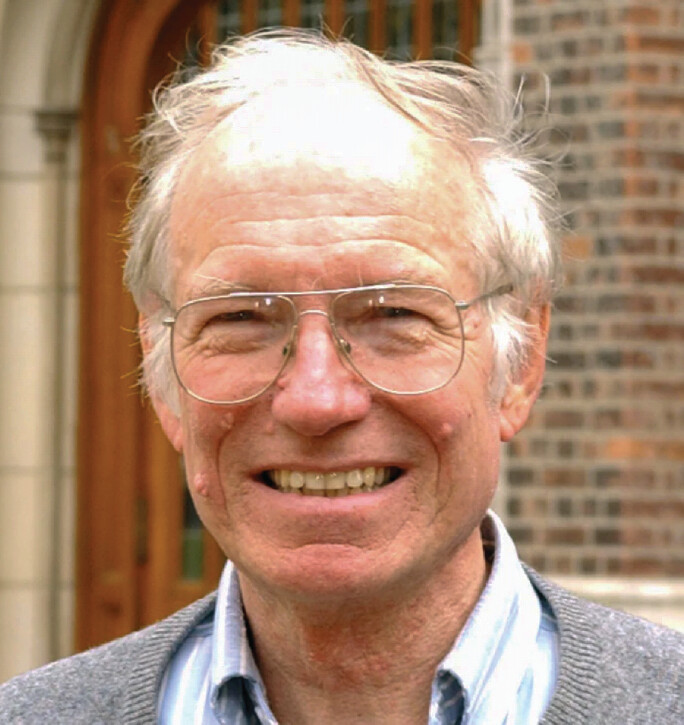
His initial interest was in the great fracture zones on the floors of the Atlantic and Pacific Oceans. He grasped that each of them was very nearly a great circle. This was a central key to unifying seafloor spreading and continental drift – to move across a spherical surface every point on the seafloor had to follow such a path. Morgan recognised that the fracture zones could only result from rigid plates having to fracture to accommodate that motion. Using spherical geometry he was able to link together ridges, trenches and these huge transform faults with poles of rotation and triple junctions to predict plate motions in a quantitative manner. That insight provided a key to active earthquakes, mountain belts and volcanoes. His scientific unification was a result of genius: in just a few weeks Morgan established the fundamentals of what became known as plate tectonics.
W. Jason Morgan was one of the revolutionaries who made geology dynamic and launched its resurrection from the boring province of damp field workers in anoraks tramping across tracts of extremely puzzling rocks and structures, noses to the ground. He died at the age of 87 on 31 July 2023.
You can read an obituary by his former research student Richard Hey and his son Jason Phipps Morgan together with a fuller account of his career on Wikipedia.

 Earth-logs